


This article was automatically translated from the original Turkish version.
+2 More
In modern combat aircraft, radar systems play a critical role in target detection, tracking, and engagement processes. In beyond visual range (BVR) air combat scenarios, the operating modes of the radar directly determine engagement effectiveness. Two fundamental modes commonly used in radar systems—Track While Scan (TWS) and Range While Search (RWS)—differ in their technical operation and operational applications. While the RWS mode performs target searches over a wide volume, the TWS mode enables the radar to continue scanning while simultaneously tracking multiple targets. This capability provides a tactical advantage in environments with multiple targets. In TWS mode, the radar continuously updates the position and motion data of tracked targets and directly supports engagement decisions. The RWS mode does not provide continuous tracking of targets but offers a wider coverage area. Both modes are selected based on mission profile, platform technical specifications, and engagement doctrine. The Bayraktar AKINCI unmanned aerial vehicle platform developed in Türkiye has integrated these capabilities through its MURAD AESA radar system.
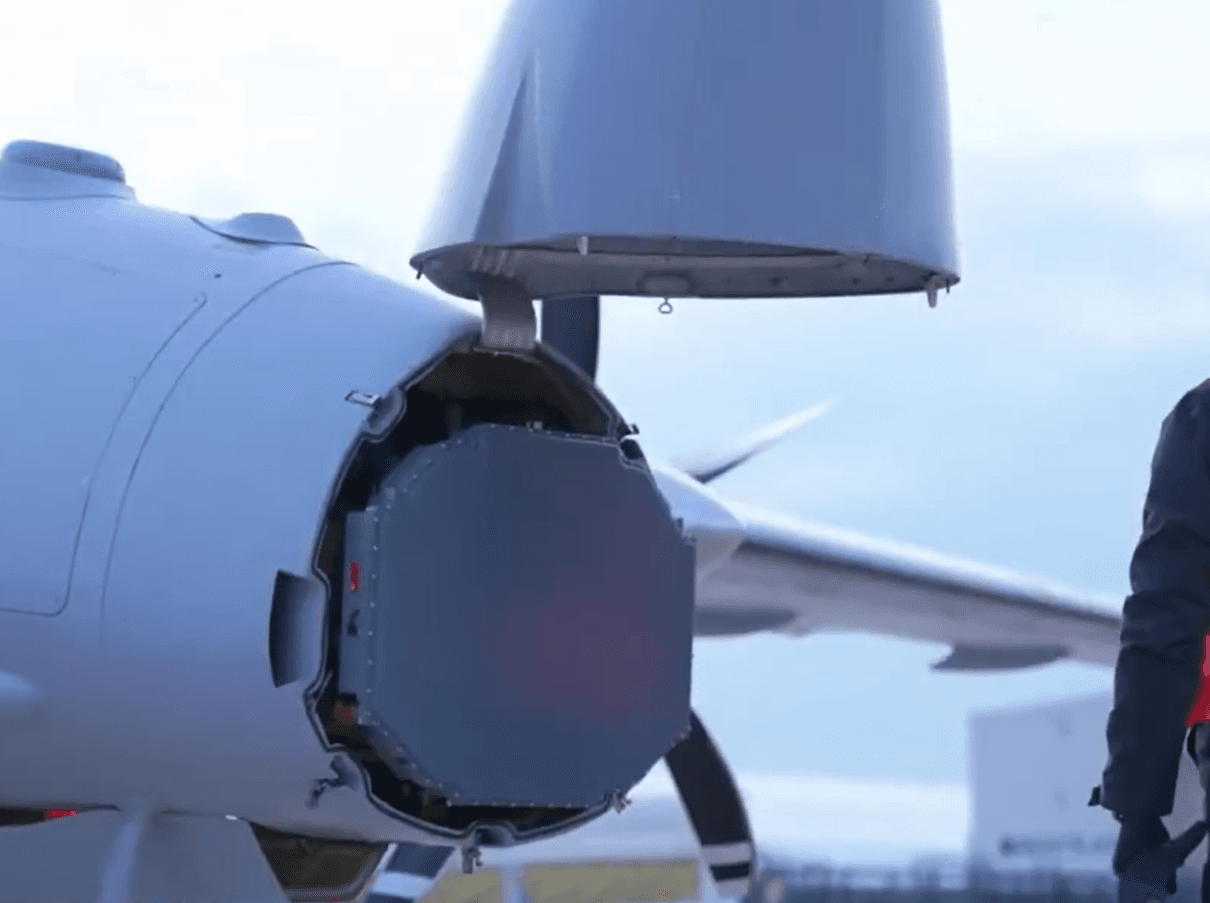
AKINCI Aircraft Integrated with MURAD AESA Radar System (Anadolu Agency)
Track While Scan (TWS) is a search and track mode used in modern radar systems. Its key feature is the ability of the radar to continue scanning while simultaneously tracking multiple targets. TWS was developed primarily to enhance pilot situational awareness and automate target tracking in multi-target environments.
In TWS mode, the radar continues scanning a wide volume while dynamically updating parameters such as position, speed, and direction of previously detected targets in the background. During this process, the radar does not transmit continuous energy directly toward targets; instead, it tracks targets by combining data acquired during each scan cycle. This method preserves tactical stealth while maintaining target tracking without compromising the radar’s ability to search for other targets.
Range While Search (RWS) is one of the primary search modes used in modern airborne radar systems. The fundamental function of RWS is to continuously scan a large airspace volume to detect potential targets. This mode indicates that the radar is in a pure “search” state, actively identifying objects within its range but not actively tracking any specific target.
In RWS mode, the radar collects information on the direction, range, and relative velocity of targets within a defined scan volume. However, this data is temporary and not stored in the radar’s memory; that is, RWS does not retain past target positions or movement vectors. Instead, it performs a new detection with each scan cycle. In this regard, RWS does not provide target tracking functionality; it only delivers instantaneous detection.
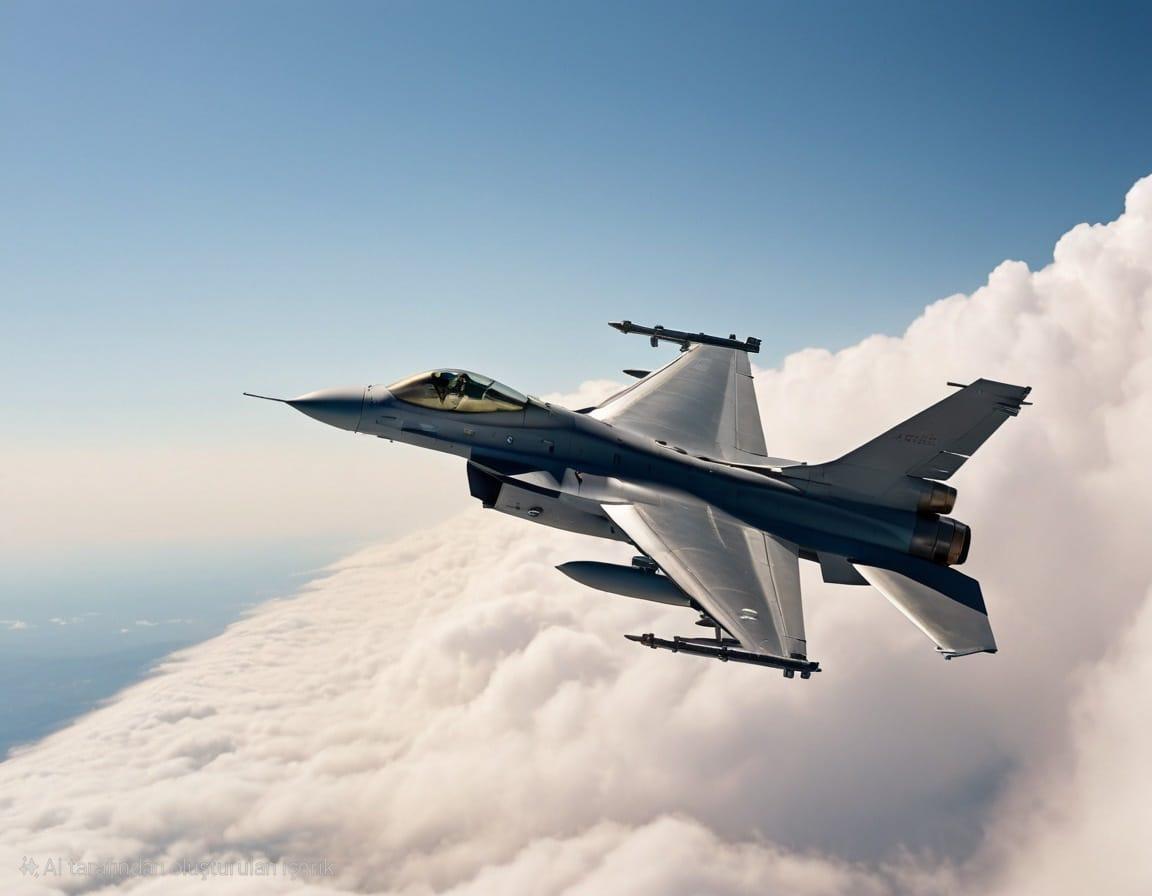
F-16 Fighting Falcon (Generated by Artificial Intelligence)
Track While Scan (TWS) and Range While Search (RWS) are two distinct modes of radar systems used in combat aircraft, each designed for different mission profiles. Both play a role in the target detection process but differ significantly in their methods, the data they produce, and their functions during combat. Although each mode has its strengths and weaknesses, modern radar systems are designed to use these modes together in a synchronized manner. The pilot’s decision on when and how to use each mode has become a decisive factor in tactical success. Below is a summary of the key differences between these two radar modes:
Modern combat aircraft radar systems incorporate numerous modes to support diverse mission profiles. TWS and RWS are among the most frequently used modes and are present in nearly all fourth- and fifth-generation fighter aircraft.
The F-16 Fighting Falcon has been equipped with various radar configurations over the years. The RWS mode is typically used for search missions, while TWS is preferred during BVR engagements with radar-guided missiles.
In the Hornet series, the RWS mode is used for initial target detection; pilots typically switch to TWS mode afterward to begin tracking targets. With AESA radars, TWS enables multi-target tracking with higher precision.
The Typhoon’s CAPTOR-E radar system combines TWS mode with advanced ECCM (Electronic Counter-Countermeasures) capabilities, providing resilient tracking against enemy jamming and establishing a robust tactical foundation for BVR engagements.
Fifth-generation fighter aircraft, thanks to AESA radars, offer advanced TWS capabilities. These platforms can track multiple targets even in passive surveillance modes.
Adamy, David L. EW 102: A Second Course in Electronic Warfare. Norwood, MA: Artech House, 2004.
Scheer, James A. "Air Combat Maneuvering and BVR Engagements." Military Aerospace Technology 7, no. 2 (2011): 34–39.
Skolnik, Merrill I. Introduction to Radar Systems. 3rd ed. New York: McGraw-Hill, 2001.
Skolnik, Merrill I. Radar Handbook. 3rd ed. New York: McGraw-Hill, 2008

No Discussion Added Yet
Start discussion for "TWS and RWS: Radar Tracking in Modern Systems" article
TWS
RWS
Differences Between TWS and RWS – Technical and Tactical Comparison
Real-World Applications
F-16
F/A-18 Hornet
Eurofighter Typhoon
F-22 Raptor & F-35 Lightning II