


This article was automatically translated from the original Turkish version.
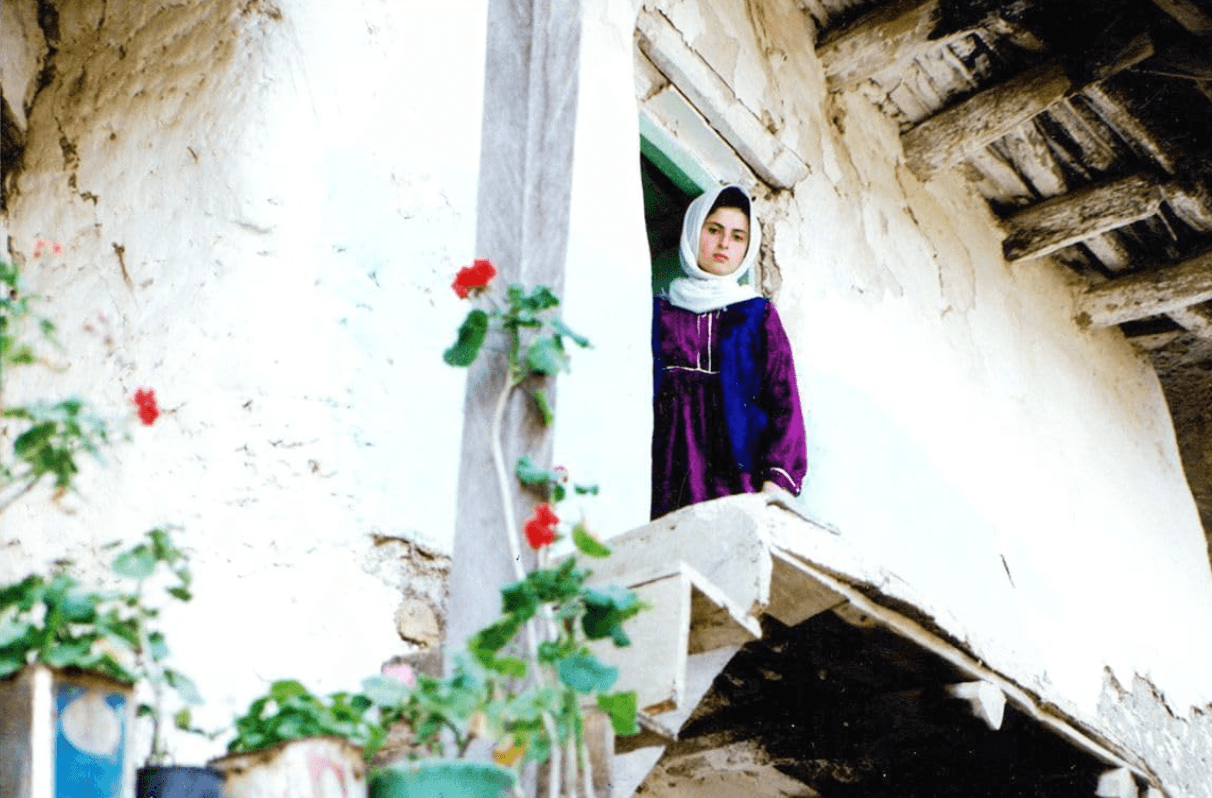
Under Olive Trees
Original Name(s) | Zire Darakhatan Zeyton | ||||||||
|---|---|---|---|---|---|---|---|---|---|
Director(s) | Abbas Kiarostami | ||||||||
Production Year | 1994 | ||||||||
Country | France Iran | ||||||||
Genre | Drama | ||||||||
Awards and Achievements | Valladolid International Film Festival Espiga de Oro (Golden Ear) Award Cannes Film Festival Golden Palm (Nominee) | ||||||||
Under the Olive Trees (Zire Darakhatan Zeyton), internationally known as Through the Olive Trees, is a 1994 drama film by Iranian director Abbas Kiarostami. A co-production between Iran and France, this film is the final installment of Kiarostami’s cinematic trilogy known in film literature as the “Koker Trilogy.” The other two films in the trilogy are Where Is the Friend’s House? (1987) and And Life Goes On (1992).

Under the Olive Trees (IMDb)
The film narrates, in a minimalist style, the continuation of life after the 1990 earthquake in the village of Koker. The central focus is the production process of the previous film, And Life Goes On, employing a “film within a film” technique that reveals the behind-the-scenes of And Life Goes On. In the opening scene, Mohamad Ali Keshavarz, portraying the film’s director, explicitly states he is searching for actors, and Tahereh Ladanian is introduced to the audience here.
The story incorporates amateur actors Hossein and Tahereh, both villagers. The narrative centers on Hossein’s one-sided, unrequited love for Tahereh. Hossein wishes to marry Tahereh, but her elderly grandmother rejects the proposal, citing his lack of a home and his illiteracy (“ignorant”). Although both have lost their homes and parents in the earthquake, equalizing their social status, Tahereh refuses to acknowledge Hossein in the “real life” of the film within the film.
During the shooting of And Life Goes On, Hossein portrays the man who marries Tahereh, while in real life he tries to prove his love to the woman he truly loves. The director (Mohamad Ali Keshavarz) attempts to assist Hossein by organizing his speech, and the young man persistently waits for a response from Tahereh. This effort continues until the film’s closing scene: Hossein follows Tahereh across a flat landscape surrounded by olive trees, captured in a fixed camera frame. The pursuit ends with the changing tempo of Domenico Cimarosa’s Oboe Concerto. This open-ended conclusion leaves interpretation to the viewer and reflects Kiarostami’s cinematic approach rooted in hope.
While the film conveys the interconnectedness of life and death through the earthquake, the innocence and purity of children also form a vital component of its narrative. Kiarostami blurs the boundaries between art and life, fiction and reality.

Under the Olive Trees (IMDb)
Abbas Kiarostami can be viewed in this film as both director and storyteller, poet, and painter. The inspiration for his films stems from the traditions, literature (One Thousand and One Nights, Omar Khayyam, Sohrab Sepehri, Forough Farrokhzad), and broader Persian culture of the region he inhabits. Particularly, Sohrab Sepehri, both a poet and painter, has profoundly influenced Kiarostami. Kiarostami adopts Sepehri’s language and his philosophical approach to reality, where fiction flows seamlessly through lived experience.
Kiarostami uses amateur actors and integrates natural beauty with artificial environments following disasters like the earthquake, aiming to foster social empathy. He invites the viewer to complete missing narrative fragments through fictional gaps—a technique he calls “unfinished cinema.” His films carry the imprints of their geography and culture, presenting life’s hardships in a simple, unembellished flow. The director also offers social critique through dialogue, particularly through Hossein’s reflections on justice and equality.
Travel is a significant motif in Kiarostami’s films; characters typically mature and reveal their identities through journeys. Natural landscapes filled with olive trees—roads, gardens, and fields—symbolize peace, untouched purity, and sanctity.

Under the Olive Trees (IMDb)
Under the Olive Trees received widespread international acclaim and was nominated for the Palme d’Or at the 1994 Cannes Film Festival. The film won the Espiga de Oro (Golden Ear) award at the 1994 Valladolid International Film Festival. It was also submitted by Iran in 1994 for the Academy Award for Best Foreign Language Film but did not make the final shortlist.
Beyazperde. "Zir-e derakhtan-e zeytun - 1994 filmi." Accessed June 9, 2025.
IMDb. "Through the Olive Trees." Accessed June 9, 2025. https://www.imdb.com/title/tt0111845/.
Üçvet, Kadir. "ZEYTİN AĞAÇLARI ALTINDA - Through the Olive Trees - (Zire Darakhatan Zeytondjast), Abbas Kiarostami." Accessed June 9, 2025. https://www.academia.edu/38183196/ZEYT%C4%B0N_A%C4%9EA%C3%87LARI_ALTINDA_Through_the_Olive_Trees_Zire_Darakhatan_Zeytondjast_Abbas_Kiarostami_1994_pdf.

Under Olive Trees
Original Name(s) | Zire Darakhatan Zeyton | ||||||||
|---|---|---|---|---|---|---|---|---|---|
Director(s) | Abbas Kiarostami | ||||||||
Production Year | 1994 | ||||||||
Country | France Iran | ||||||||
Genre | Drama | ||||||||
Awards and Achievements | Valladolid International Film Festival Espiga de Oro (Golden Ear) Award Cannes Film Festival Golden Palm (Nominee) | ||||||||
No Discussion Added Yet
Start discussion for "Under the Olive Trees (Film)" article
Plot and Narrative
Directorial Vision and Artistic Influences
Awards and International Recognition