


This article was automatically translated from the original Turkish version.
+1 More
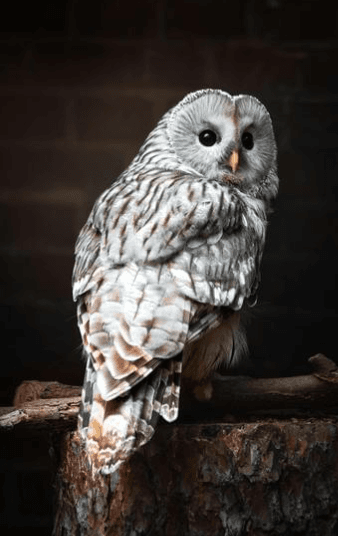
Ural Baykuşu
(Yapay Zeka ile Oluşturulmuştur)
Ural Owl (Strix uralensis) is a large species of owl belonging to the order Strigiformes and the family Strigidae (true owls). The species derives its name from the Ural Mountains in Russia and exhibits a wide distribution across the Palearctic biogeographic region. The Ural Owl is a nocturnal predator primarily inhabiting forested areas of northern and central Eurasia. Its distinguishing morphological features include a long tail a rounded head and the absence of ear tufts. Ecologically the species is closely associated with mature forest ecosystems and plays a key role as a predator in regulating populations of small vertebrates.
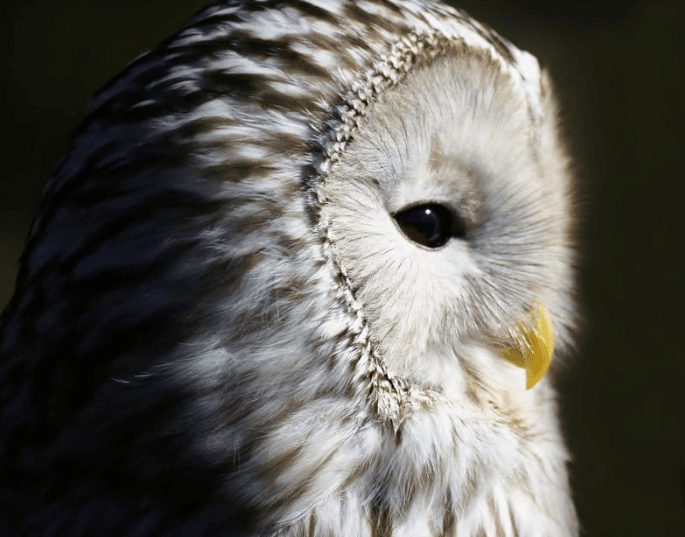
Ural Owl (Strix uralensis)
(Generated by Artificial Intelligence)
The Ural Owl is a species within the class Aves the order Strigiformes and the family Strigidae. It was first scientifically described in 1771 by the naturalist Peter Simon Pallas.
The family Strigidae is a broad group that includes owl species lacking or having inconspicuous ear tufts. The Ural Owl belongs to the genus Strix within this family. Species of this genus are typically characterized by rounded heads large eyes and the ability to fly silently.
Research has shown that the Ural Owl has a wide distribution across Eurasia and is divided into several subspecies due to geographic variation. For example populations in central and southeastern Europe are generally classified as the subspecies Strix uralensis macroura while those in northern Europe and Russia are assigned to Strix uralensis liturata.
The Ural Owl is a medium to large-sized owl. Its body length typically ranges from 50 to 62 cm and its wingspan from approximately 124 to 134 cm. The species exhibits marked sexual dimorphism with females generally larger and heavier than males.
Its primary morphological features include:
These morphological traits provide behavioral advantages such as camouflage and silent flight particularly in dense forest habitats.
The Ural Owl has a broad Palearctic distribution. Its natural range extends from Scandinavia in the west across eastern Europe Russia and Siberia to Japan.
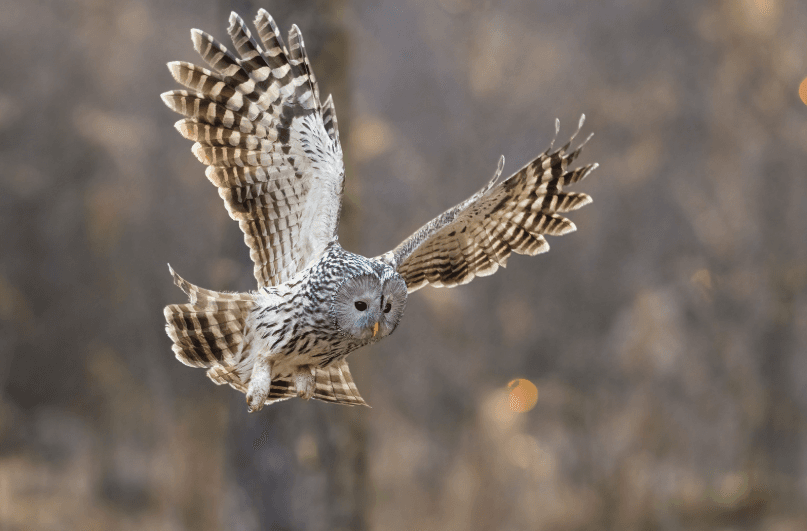
Ural Owl (Strix uralensis)
(Generated by Artificial Intelligence)
Its main distribution regions include:
In some areas populations are isolated in mountainous regions. For example the Alps the Carpathians and the Dinaric Alps are important habitats for this species.
The Ural Owl is strongly associated with mature and extensive forest ecosystems. It primarily inhabits mixed or coniferous forests and prefers areas with old trees for nesting.
Its preferred habitat characteristics include:
The species typically nests in tree cavities broken trunks or abandoned nests of other large birds. Consequently the presence of old-growth forests is a critical factor for its reproductive success.
The Ural Owl is primarily nocturnal; however in regions with long daylight hours such as high northern latitudes it may also hunt during the day.
The owl typically perches on a tree branch or elevated point to observe its prey and then captures it with a silent flight. Enhanced hearing and night vision play essential roles during hunting.
Ural Owls are highly territorial birds. Pairs usually defend a specific area throughout the year. During the breeding season they may display aggressive defensive behaviors toward potential threats approaching their nest.
The diet of the Ural Owl consists primarily of small vertebrates.
Its main prey includes:
Diet composition varies regionally and the abundance of small mammal populations can influence the distribution and density of this species.
The breeding season of the Ural Owl typically begins in spring. Rather than building its own nest the species uses existing cavities or abandoned nests.
Reproductive characteristics:
gibi koruma çalışmaları uygulanmaktadır.
During incubation the female remains primarily at the nest while the male hunts and provides food for both the female and the young.
The Ural Owl is a species found across northern and eastern Europe and the vast forested regions of Asia. Its global population is generally considered stable and it has a wide distribution. As a result assessments by the International Union for Conservation of Nature often classify it in low-risk categories. However local populations in some regions may vary depending on habitat conditions.
The Ural Owl’s habitat is largely dependent on old-growth and structurally complex forest ecosystems. Therefore intensive logging habitat fragmentation and the decline of mature trees are considered major threats to the species. Its reliance on large tree cavities for nesting makes the conservation of old forests critical. Additionally increasing human activity and the conversion of forest areas for agriculture or settlement can negatively affect population densities in certain regions.
The most important conservation approach involves protecting natural forest habitats and promoting sustainable forestry practices. In some countries measures such as installing nest boxes and preserving suitable breeding areas are also employed to support local populations. These efforts contribute to the continuation of the Ural Owl’s natural life cycle and help maintain the balance of predatory birds within its ecosystems.
Askeyev, Oleg, and others. “Owls as Bioindicators: Spatial and Temporal Aspects in Ecosystems.” *European Journal of Ecology*. University of Kansas Journals. Accessed March 7, 2026. https://journals.ku.edu/EuroJEcol/article/download/13407/12623/26422
Higuchi, Aki, and Manabu T. Abe. “Estimation of Food Consumption from Pellets Cast by Captive Ural Owls (Strix uralensis).” U.S. Forest Service Research Database. Accessed March 7, 2026. https://research.fs.usda.gov/treesearch/15633
Rockweit, Jonathan T., and others. “Range-Wide Sources of Variation in Reproductive Rates of the Ural Owl (Strix uralensis).” University of Nebraska–Lincoln Digital Commons. Accessed March 7, 2026. https://digitalcommons.unl.edu/cgi/viewcontent.cgi?article=3620&context=icwdm_usdanwrc
Vrezec, Al, and others. “Breeding Density and Altitudinal Distribution of the Ural Owl (Strix uralensis) in the Dinaric Alps.” Journal of Raptor Research. University of South Florida Digital Commons. Accessed March 7, 2026. https://digitalcommons.usf.edu/cgi/viewcontent.cgi?article=2553&context=jrr
“Chromosome-Level Genome Assembly and Transcriptome Analysis of the Ural Owl (Strix uralensis).” National Institutes of Health – PubMed Central. Accessed March 7, 2026. https://pmc.ncbi.nlm.nih.gov/articles/PMC12767196/
“Numerical Response of Owls to the Dampening of Small Mammal Population Cycles.” National Center for Biotechnology Information (NCBI). Accessed March 7, 2026. https://pmc.ncbi.nlm.nih.gov/articles/PMC9965252/

Ural Baykuşu
(Yapay Zeka ile Oluşturulmuştur)
No Discussion Added Yet
Start discussion for "Ural Owl (Strix uralensis)" article
Taxonomy and Systematics
Morphological Characteristics
Geographic Distribution
Habitat and Living Environment
Behavior and Ecology
Hunting Behavior
Territorial Behavior
Diet
Reproduction and Life Cycleü
Population and Conservation Status