


This article was automatically translated from the original Turkish version.
+2 More
Urban palimpsest is a socio-spatial and architectural concept that refers to a city’s physical, spatial, and cultural fabric accumulating layers of traces from different historical periods, social practices, needs, and ideologies.【1】 The term derives from the Greek words palin, meaning "again," and psestos, meaning "scraped," combining to form palimpsēstos.【2】 In antiquity, due to the rarity and cost of parchment and papyrus, manuscripts with erased or scraped-off older texts rewritten on top were termed palimpsests in paleography.【3】 In this form of recycling, traces of the underlying older text do not vanish entirely and remain legible alongside the newer layer on the same surface.【4】
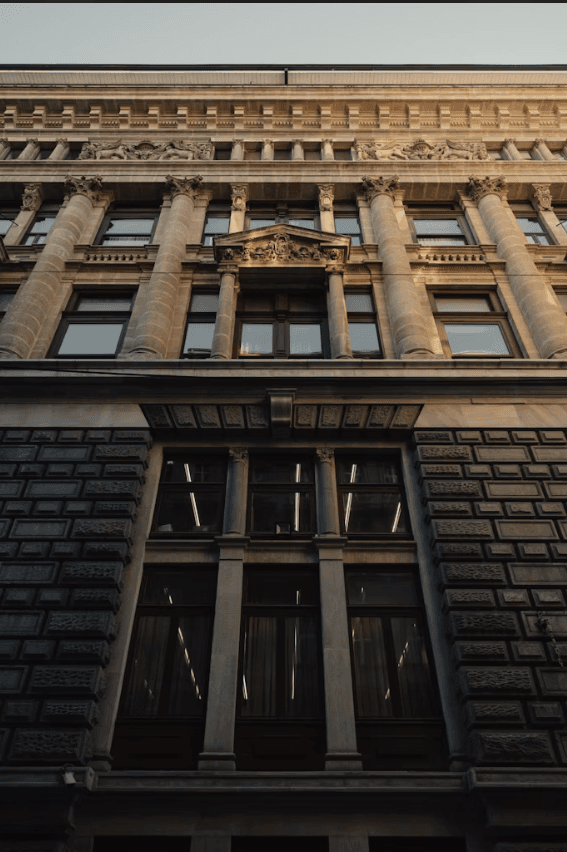
Tarihi Osmanlı Bankası (SALT Galata) Binasının Dış Cephe Mimarisi (Unsplash)
Since Thomas De Quincey’s 1845 article introduced the concept beyond literature, palimpsest has served as a metaphorical and analogical framework in fields such as architecture, urban sociology, geography, and cultural studies.【5】 In the context of space and the city, urban palimpsest denotes the analogy whereby each new spatial layer carries traces of the past, simultaneously sustaining history, the present, and the future within the same spatial plane.【6】 In this sense, the concept is regarded as a dynamic theory that explains collective memory, architectural transformations, and identity construction through layers of space that are written over and erased.【7】
Interpreting space as a palimpsest argues that it is not merely a physical object or geometric plane but an existential "place" shaped by human experience, social processes, and the accumulation of time.【8】 Architecture and urban historians have developed this analogy to describe situations in which material and symbolic elements from different historical periods coexist within a building or urban site.【9】 These interwoven layers, bearing traces of global and regional dynamics, become active catalysts shaping the present and future of urban space through their convergence rather than their separation.【10】
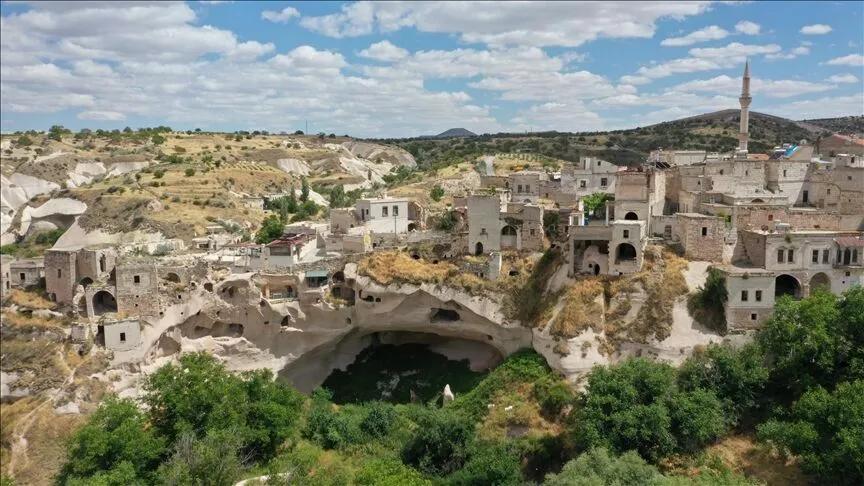
Kapadokya İbrahimpaşa (Babayan) Köyünde Geleneksel Sivil Taş Mimari ve Kaya Oyma Katmanlarının Bir Arada Bulunduğu Yerleşim Dokusu (Anadolu Ajansı)
The urban palimpsest is directly linked to the continuity of social and collective memory. As Maurice Halbwachs noted in his theory of "collective memory," individual memories require concrete carriers such as space, image, and object to exist within a social context of belonging; place and memory constitute an inseparable whole.【11】 Similarly, Gaston Bachelard characterizes space as a repository of memory, while Martin Heidegger defines such socially shaped, time-bound spaces as "existential space" (place).【12】 The French poet Baudelaire compared the human mind and memory to a palimpsest, asserting that overlapping thoughts and images never truly disappear.【13】 Thus, the stratified material pasts within urban space have the power to anchor new cultural and functional activities to that location.【14】
Changes over time in social structures, needs, technological conditions, and environmental standards lead to the functional or structural (physical) obsolescence of buildings.【15】 To ensure the sustainability of reference buildings and urban areas, "adaptive reuse" and repurposing projects have become inevitable methods.【16】 Adaptive reuse aims to preserve a building’s character while integrating contemporary systems and assigning new functional values to space.【17】
In the process of spatial transformation, the palimpsest effect is achieved by interweaving the old fabric with the architectural language of the new era, without erasing the traces of the past and its accumulated layers.【18】 Accordingly, creating a "old-new contrast" (contrast aesthetics) through material and construction techniques in transformed spaces is a typical palimpsest application.【19】 In contemporary architectural interventions, transparent and lightweight materials such as glass and metal (steel) are frequently preferred to highlight the existing historical structure and establish a clear interface between old and new.【20】 Preserving the architectural palimpsest quality and the original urban spirit (Genius Loci) depends on balancing the symbolic significance of tangible and intangible heritage, embracing innovative contemporary designs, and sustaining urban rituals.【21】
The primary architectural intervention types that either constitute the urban palimpsest structure or realize spatial transformation during adaptive reuse are as follows:
Throughout history, Istanbul, having hosted civilizations such as Rome, Byzantium, and the Ottoman Empire, is a quintessential example of a palimpsest city with its collective memory layered and rewritten over time.【30】 Industrial heritage sites, concept hotels, and cultural structures in the city stand as tangible witnesses to this multi-layered structure:
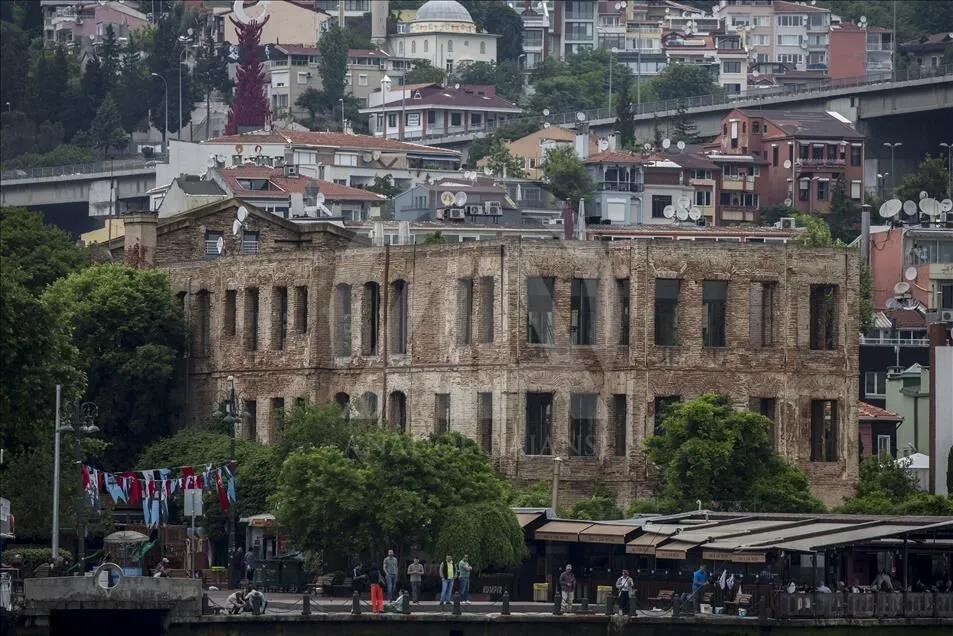
Esma Sultan Yalısı Dış Kabuk Dokusu (Anadolu Ajansı)
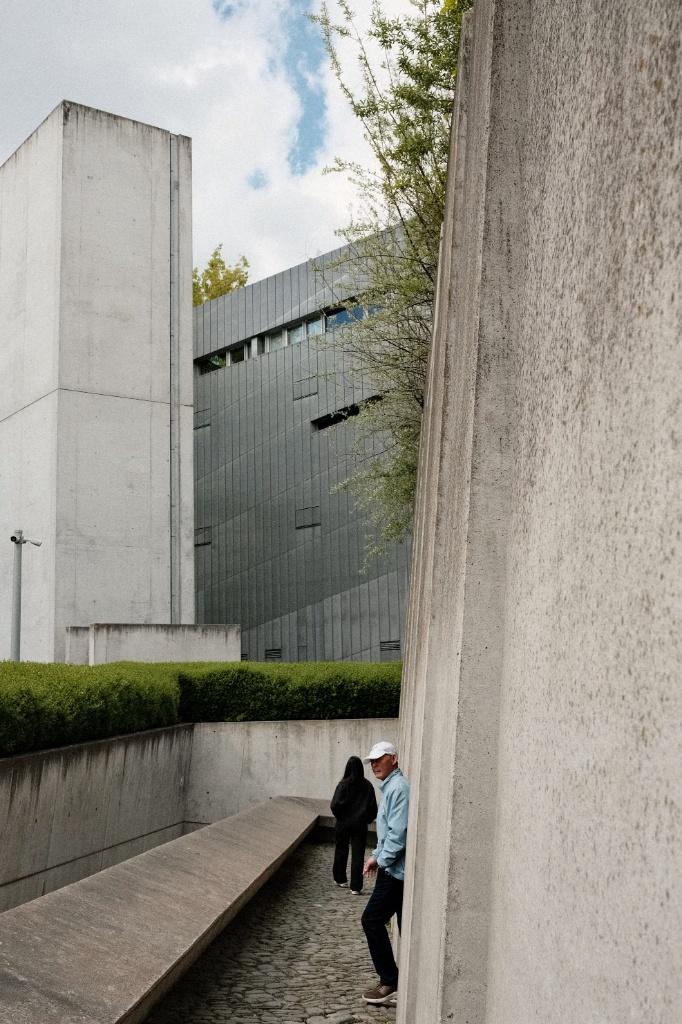
Berlin Yahudi Müzesi Ana Binasının Dış Cephesi ve Doğrusal Olmayan Pencere Yarıkları (Unsplash)
In addition to these examples, the Jewish Museum in Berlin can also be cited as an urban palimpsest. Designed by architect Daniel Libeskind, the building constructs its form by superimposing data drawn from the collective memory of Berlin’s Jewish community—lines, angles, and fractures—like a palimpsest.【38】 The mass and facade dissonance between the 1735 Old Prussian Court Building (Baroque style) and the expressive zinc-clad new structure creates a two-way palimpsest aura that materializes the temporal and spatial distance between two distinct architectural eras.【39】 Spaces such as the Holocaust Tower and the Garden of Exile, presented to visitors, use architectural elements—inclined floors, light leaks, iron faces—to evoke the traces of the past and ensure the continuity of memory.【40】
Urban palimpsest and architectural layering can be vulnerable to manipulation due to ideological interventions or commercial interests.【41】 Dominant powers or specific groups may consciously erase or obscure certain historical layers within urban memory to manipulate cultural identity and distort historical information.【42】 Similarly, neoliberal spatial production processes and unregulated urban transformation policies risk homogenizing the genuine historical depth of space, reducing the city to a uniform consumer object or an artificial "nostalgia/concept museum" zone.【43】 This situation can silence the polyphony inherent in the city’s palimpsest nature, leading to amnesia (memory loss).【44】 For this reason, the urban palimpsest is regarded as a critical method in preservation theories for defending the multi-cultural layers of cities and the justice of collective memory.【45】
Ahmetler, Tolga. "a very tall building with lots of windows." Unsplash. Accessed July 2, 2026.https://unsplash.com/photos/a-very-tall-building-with-lots-of-windows-syPYE2MRnS4
Anadolu Ajansı. "Boğaz'ın İncisi Yalılar Zamana Direniyor." Fotoğraf Galerisi. Anadolu Ajansı. Accessed July 6, 2026.https://www.aa.com.tr/tr/pg/foto-galeri/bogazin-incisi-yalilar-zamana-direniyor/0
Anadolu Ajansı. "Kapadokya'nın Sakin Köylerinden İbrahimpaşa Turistlerin Rotasına Girmek İstiyor." Accessed July 2, 2026.https://www.aa.com.tr/tr/yasam/kapadokyanin-sakin-koylerinden-ibrahimpasa-turistlerin-rotasina-girmek-istiyor/3625964
Apaydın, Banu. "Palimpsest Kavramı ve Mekansal Dönüşüm." *The Turkish Online Journal of Design, Art and Communication* 9, no. 2 (April 2019): 90–103. Accessed July 2, 2026.https://dergipark.org.tr/tr/download/article-file/685265
Aydın, Melih. "Mekân, Zaman ve Madde Bağlamında Turizmde Palimpsest Kavramı." *Journal of Humanities and Tourism Research* 14, no. 2 (2024): 70–80. Accessed July 2, 2026.https://dergipark.org.tr/tr/download/article-file/4060252
Kef, Emine. "Şehrin Kayıp Belleği: Her Şeyin Müzesi." *Selçuk Üniversitesi Sosyal Bilimler Enstitüsü Dergisi*, no. 47 (2022): 319-327. Accessed July 2, 2026.https://dergipark.org.tr/tr/download/article-file/2104827
Lacoste, Valentin. "a man walking down a sidewalk next to a tall building." Unsplash. Accessed July 6, 2026.https://unsplash.com/photos/a-man-walking-down-a-sidewalk-next-to-a-tall-building-YY-3ZMohy4o
Ural, Ayşe Gülçin. "Ontological Evaluation of İstanbul Industrial Heritage Through the Concept of Palimpsest." *Art and Interpretation*, no. 46 (2025): 83-93. Accessed July 2, 2026.https://dergipark.org.tr/tr/download/article-file/4503988
Yavuz, Zeynep, and Adnan Aksu. "Tarihi Yapılara Yapılan Çağdaş Ek/Yapının Palimpsest Kavramı Özelinde Değerlendirilmesi: Berlin Yahudi Müzesi." *ATA Planlama ve Tasarım Dergisi* 3, no. 1 (2019): 31-38. Accessed July 2, 2026.https://dergipark.org.tr/tr/download/article-file/748993
[1]
Banu Apaydın, "Palimpsest Kavramı ve Mekansal Dönüşüm," The Turkish Online Journal of Design, Art and Communication 9, no. 2 (Nisan 2019): 91, https://dergipark.org.tr/tr/download/article-file/685265
Melih Aydın, "Mekân, Zaman ve Madde Bağlamında Turizmde Palimpsest Kavramı," Journal of Humanities and Tourism Research 14, no. 2 (2024): 71, https://dergipark.org.tr/tr/download/article-file/4060252
[2]
Zeynep Yavuz ve Adnan Aksu, "Tarihi Yapılara Yapılan Çağdaş Ek/Yapının Palimpsest Kavramı Özelinde Değerlendirilmesi: Berlin Yahudi Müzesi," ATA Planlama ve Tasarım Dergisi 3, no. 1 (2019): 32, https://dergipark.org.tr/tr/download/article-file/748993
[3]
Aydın, "Turizmde Palimpsest Kavramı," 71.
[4]
Apaydın, "Palimpsest Kavramı," 91.
[5]
Ayşe Gülçin Ural, "Ontological Evaluation of İstanbul Industrial Heritage Through the Concept of Palimpsest," Art and Interpretation, no. 46 (2025): 84, Erişim tarihi: 2 Temmuz 2026 https://dergipark.org.tr/tr/download/article-file/4503988
[6]
Aydın, "Turizmde Palimpsest Kavramı," 71.
[7]
Apaydın, "Palimpsest Kavramı," 91.
[8]
Ural, "Ontological Evaluation," 84-85.
[9]
Aydın, "Turizmde Palimpsest Kavramı," 73.
[10]
Aydın, citing E. Turgut, "Palimpsest Concept in Tourism," 71.
[11]
Yavuz and Aksu, citing M. Halbwachs, "Berlin Jewish Museum," 33.
[12]
Ural, "Ontological Evaluation," 87.
[13]
Yavuz and Aksu, quoting C. Baudelaire, "Berlin Jewish Museum," 33.
[14]
Aydın, citing N. Bartolini, "Palimpsest Concept in Tourism," 71.
[15]
Apaydın, "Palimpsest Kavramı," 91.
[16]
Ural, "Ontological Evaluation," 84.
[17]
Apaydın, "Palimpsest Kavramı," 92.
[18]
Apaydın, citing G. Yıldırım, "Palimpsest Kavramı," 91.
[19]
Apaydın, "Palimpsest Kavramı," 91-92.
[20]
Apaydın, "Palimpsest Kavramı," 94
[21]
Aydın, quoting L. Khirfan, "The Concept of Palimpsest in Tourism," 72.
[22]
Apaydın, "Palimpsest Kavramı," 92.
[23]
Apaydın, "Palimpsest Kavramı," 92.
[24]
Apaydın, "Palimpsest Kavramı," 92-93.
[25]
Apaydın, "Palimpsest Kavramı," 93.
[26]
Apaydın, "Palimpsest Kavramı," 93.
[27]
Apaydın, "Palimpsest Kavramı," 93.
[28]
Apaydın, "Palimpsest Kavramı," 94.
[29]
Apaydın, "Palimpsest Kavramı," 93.
[30]
Apaydın, citing Ö. İtez, "Palimpsest Kavramı," 94.
[31]
Apaydın, citing Ö. İtez, "Palimpsest Kavramı," 94.
[32]
Apaydın, citing H. Tümertekin, "Palimpsest Kavramı," 95.
[33]
Apaydın, citing M. Butler, "Palimpsest Concept," 97.
[34]
Apaydın, "Palimpsest Kavramı," 97-98.
[35]
Apaydın, "Palimpsest Kavramı," 100.
[36]
Apaydın, "Palimpsest Kavramı," 101.
[37]
Ural, "Ontological Evaluation," 88-91.
[38]
Yavuz and Aksu, citing Libeskind, "Berlin Jewish Museum," 34.
[39]
Yavuz ve Aksu, "Berlin Yahudi Müzesi," 34-35.
[40]
Yavuz ve Aksu, "Berlin Yahudi Müzesi," 35
[41]
Aydın, quoting Ren, "The Concept of Palimpsest in Tourism," 74.
[42]
Aydın, quoting Ren, "Palimpsest Concept in Tourism," 74.
[43]
Aydın, "Turizmde Palimpsest Kavramı," 74,
Emine Kef, "Şehrin Kayıp Belleği: Her Şeyin Müzesi," Selçuk Üniversitesi Sosyal Bilimler Enstitüsü Dergisi, no. 47 (2022): 321-322, https://dergipark.org.tr/tr/download/article-file/2104827
[44]
Aydın, "Turizmde Palimpsest Kavramı," 75.
Kef, "Şehrin Kayıp Belleği," 321.
[45]
Apaydın, "Palimpsest Kavramı," 102.

Theoretical Framework, Memory, and Spatial Ontology
Urban Transformation, Repurposing, and Aesthetics of Contrast
Architectural Intervention Types and Spatial Composition
Multi-Layered Urban and Architectural Examples
Conceptual Risks and Current Debates