

This article was automatically translated from the original Turkish version.
+2 More
Origin(s) | Şanlıurfa Türkiye | ||||||||
|---|---|---|---|---|---|---|---|---|---|
Registration Type | Mahreç Sign | ||||||||
Product Type | Bakery and Confectionery Product | ||||||||
Production Method | Baked in Stone Oven, Shaped with Wooden Mold | ||||||||
Varieties | Salty / Sweet | ||||||||
Urfa külünçesi is a traditional baked product of the Şanlıurfa province located in Türkiye’s Southeastern Anatolia Region. This product was officially registered in 2017 by the Turkish Patent and Trademark Office with a “geographical indication” status, granting it protection based on its regional production method, ingredients, and cultural use. Urfa külünçesi is produced in both sweet and savory versions. It holds a prominent place in local traditions, especially on suhoor tables during Ramadan, during holidays, and in hospitality customs.
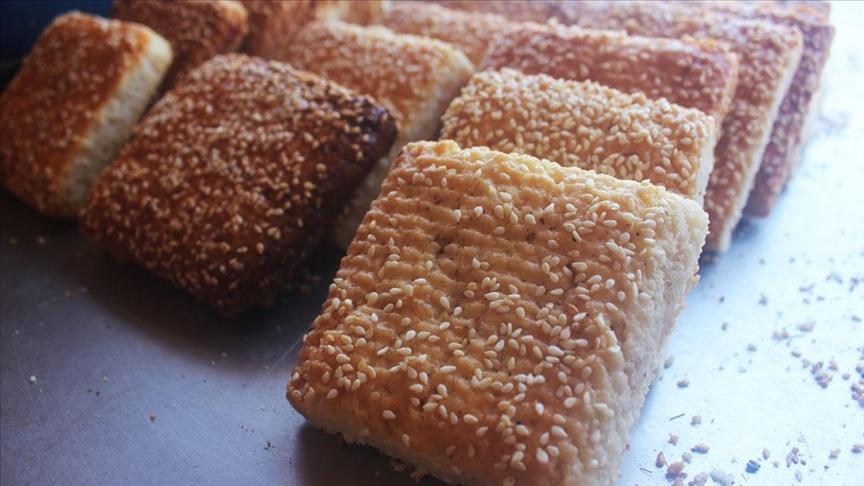
Urfa külünçesi is a dough-based pastry baked in a stone oven, made with flour, butter, olive oil, sourdough starter, anise seed, sesame, a regional spice blend, egg, and optionally sugar or salt. The product is shaped into a round form and decorated with traditional wooden molds before baking to achieve its distinctive appearance. A unique edge-shaping technique called “çirtikleme” is employed during production.
Urfa külünçesi can be produced in both sweet and savory forms. The sweet version is consumed as a dessert pastry, while the savory version is preferred at breakfasts or on suhoor tables.
Urfa külünçesi was registered under geographical indication number 297 on 27 December 2017. The registration application was submitted by the Şanlıurfa Chamber of Commerce and Industry. The traditional production method, ingredients, and cultural uses of the product were formally documented in this registration.

Urfa Külünçesi (Turkish Patent and Trademark Office)
The ingredients used in the production of Urfa külünçesi are as follows:
The dough is initially mixed by combining flour, butter and olive oil. Water and sourdough starter are then added. The spice blend, anise seed, and sesame are incorporated into the mixture, and kneading is completed. Depending on the desired version, salt or sugar is added. After kneading to a medium firmness, the dough is left to rest for 30 to 120 minutes.
The rested dough is rolled out to a diameter of approximately 20 cm and a thickness of 1–2 cm. The edges are shaped using the “çirtikleme” technique. The surface is decorated with traditional motifs using wooden molds. The dough is then cut into triangular pieces, brushed with egg yolk, sprinkled with anise seed, and baked in a stone oven.
Urfa külünçesi is traditionally prepared for consumption at suhoor during the month of Ramadan. It is also a customary offering to guests during holidays. The product’s deep-rooted role in the social and cultural life of the region has elevated it beyond mere food to become an integral part of local identity. With both sweet and savory variants, külünçe enjoys broad usage and continues its cultural continuity through traditional stone oven production in rural areas.
Accessed November 26, 2025.
Accessed November 26, 2025.
Accessed November 26, 2025.
Anadolu Ajansı. "Bayramların Vazgeçilmez Lezzeti Külünçe Tezgâhlardaki Yerini Aldı." Accessed July 2, 2025.
Ministry of Culture and Tourism. "Urfa (Şanlıurfa) Külünçesi." Kültür Portalı. Accessed July 2, 2025.
Turkish Patent and Trademark Office. "Urfa (Şanlıurfa) Külünçesi." Coğrafi İşaretler Ulusal Veri Tabanı. Accessed July 2, 2025.
Turkish Patent and Trademark Office. Urfa (Şanlıurfa) Külünçesi – Coğrafi İşaret Tescil Belgesi No. 297. Accessed July 2, 2025.

Origin(s) | Şanlıurfa Türkiye | ||||||||
|---|---|---|---|---|---|---|---|---|---|
Registration Type | Mahreç Sign | ||||||||
Product Type | Bakery and Confectionery Product | ||||||||
Production Method | Baked in Stone Oven, Shaped with Wooden Mold | ||||||||
Varieties | Salty / Sweet | ||||||||
No Discussion Added Yet
Start discussion for "Urfa (Şanlıurfa) Külünçesi" article
Product Definition and Characteristics
Geographical Indication Registration
Production Process
Ingredients
Preparation and Baking
Cultural Use and Traditional Significance