


This article was automatically translated from the original Turkish version.
Twining is the art of making rope, cord, and string from the fibers of plants such as hemp, cotton, wool, and jute like. These fibers are twisted or wound to produce ropes of varying thickness and length. The word “urGAN” derives from the Old Turkish verb “urmak” (to wind, to twist) and means thick rope.
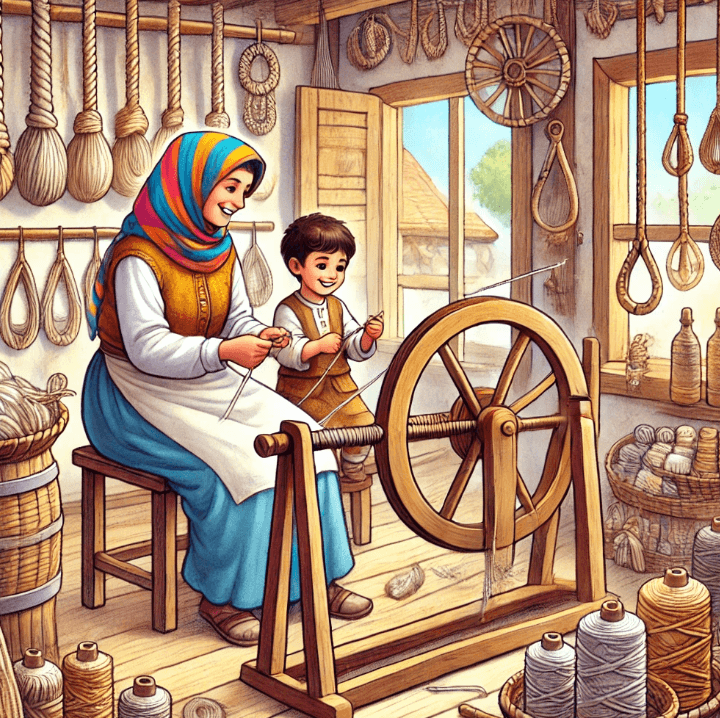
Image Generated by Artificial Intelligence
Twining is one of the oldest handicrafts in human history. Evidence of twining dates back to around 4000 BCE in Mesopotamia. As humans transitioned to settled life, they required rope and cord for agriculture and animal husbandry, leading to the development of urgency.
During the Ottoman period, twining was vital for naval and agricultural activities.
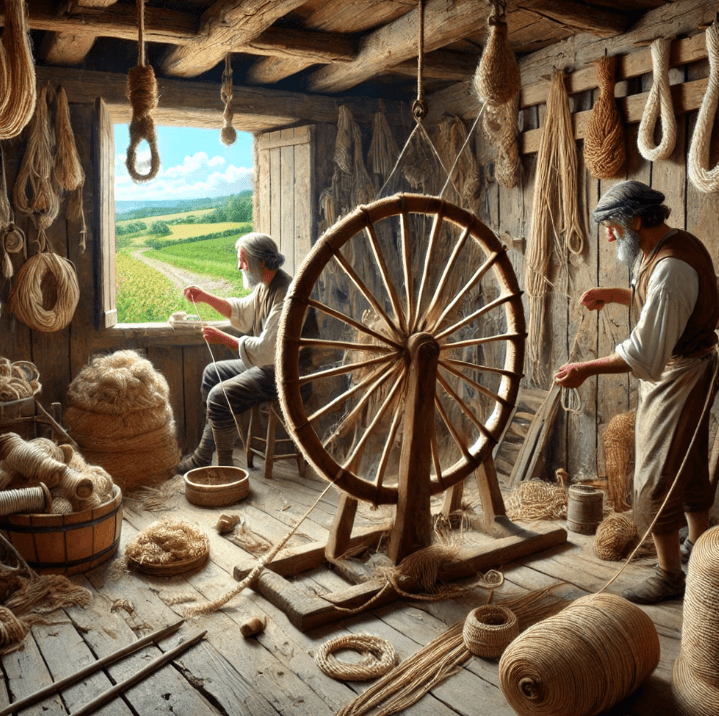
Image Generated by Artificial Intelligence
During the Republican era, traditional twining continued, but industrialization and the widespread use of synthetic materials reduced its importance. Restrictions on hemp cultivation further hindered twining production. Today, workshops producing twining using traditional methods are found in regions such as Kastamonu, Tire, and Vezirköprü still.
Twining has been used in agriculture, animal husbandry, maritime activities, and construction. Today, it continues to be used for both functional and decorative purposes.
Although the widespread adoption of synthetic materials has caused twining to lose its former significance, this tradition is still preserved in certain regions. Moreover, renewed interest in natural materials may help revive twining as a popular craft.
This ancient trade maintains its importance as a heritage passed down from different historical periods to the present day.

The History of Twining
Twining in Ancient Civilizations
Twining in the Ottoman Period
Twining in the Republican Era and Today
How Is Twining Made?
Types of Twining and Their Uses
Twining Today