


This article was automatically translated from the original Turkish version.
+1 More

Uterus Atonisi
(Yapay Zeka ile Oluşturulmuştur)
Uterus atony(Atonia uteri) is a tone disorder that develops when the uterine muscle fibers lose their ability to contract and recoil after placental separation. In the physiological process, uterine contractions following placental delivery compress the spiral arteries to stop bleeding; however, when this mechanism fails, the myometrium becomes flaccid and bleeding becomes uncontrollable. Postpartum hemorrhage (PPH) is defined as blood loss exceeding 500 ml after vaginal delivery and 1000 ml after cesarean delivery. Uterus atony is the most common cause of postpartum hemorrhage, responsible for approximately one quarter of all maternal deaths worldwide. In the literature, causes of postpartum hemorrhage are classified according to the "4T" rule—Tone, Trauma, Tissue, and Thrombin—with uterus atony falling under the category of tone loss and accounting for 75 to 90 percent of all postpartum hemorrhage cases.【1】
Risk factors that predispose to uterus atony include excessive uterine distension, uterine muscle fatigue, or impaired contractility. Conditions such as multiple pregnancy, polyhydramnios, fetal macrosomia, and high parity increase the risk of atony by causing excessive uterine stretching. Additionally, precipitous labor or prolonged labor can lead to uterine muscle fatigue and subsequent atony. Other risk factors include induction of labor, infections such as chorioamnionitis, uterine fibroids, and a history of atony in previous deliveries. Furthermore, halogenated agents such as halothane used during general anesthesia can relax the uterus and contribute to atony.
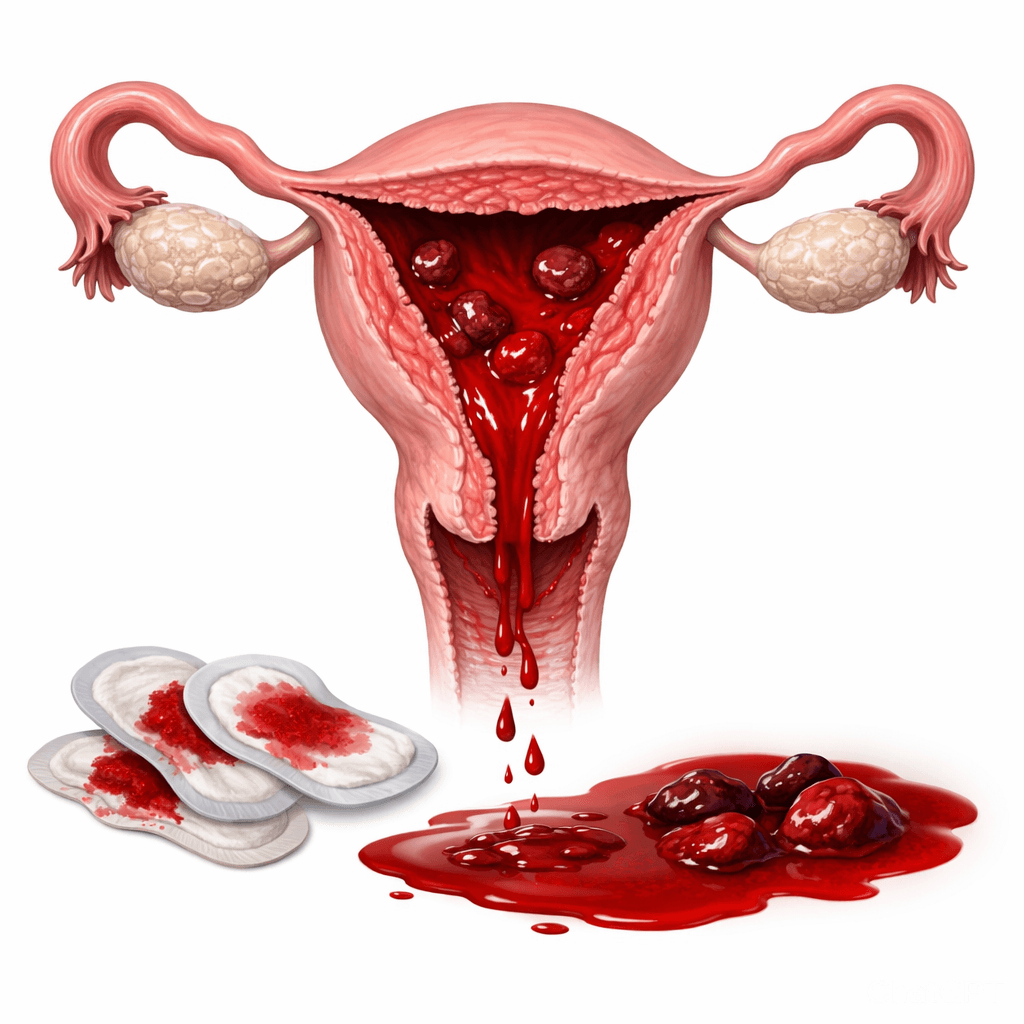
Uterus Atony (Generated by Artificial Intelligence)
The characteristic clinical finding of uterus atony is a soft, flaccid, and boggy uterus on palpation. Although bleeding is typically expelled vaginally, it may sometimes accumulate within the uterine cavity, causing the uterus to appear larger than expected and the fundus to rise. Due to the physiological hypervolemia of pregnancy, signs of hypovolemic shock such as tachycardia, hypotension, and decreased urine output may not manifest until blood loss exceeds 1000 ml. During diagnosis, if bleeding persists despite a firm and well-contracted uterus, atony must be ruled out and genital tract trauma must be investigated. The shock index, calculated from the ratio of pulse rate to systolic blood pressure, is a parameter used to assess the severity of bleeding and the need for transfusion.
The most effective approach to preventing uterus atony is active management of the third stage of labor. International guidelines and the World Health Organization recommend three key components of active management:【2】
When atony develops, treatment proceeds in a stepwise manner, with medical therapy as the first-line option.
When medical treatment fails to control bleeding, mechanical methods are employed.
When conservative measures fail, surgical intervention is required.
The role of nurses and midwives in cases of uterus atony is critical, from early identification of risk factors to emergency intervention management. Care includes monitoring vital signs every 15 minutes, assessing the firmness and height of the uterine fundus, evaluating blood loss, and ensuring bladder emptying. Within frameworks such as the Human Caring Model, psychological support should be provided to alleviate patient anxiety and establish trusting communication. Coordination with a multidisciplinary team is essential during fluid resuscitation and preparation and administration of blood products.【5】
Warning: The content in this article is provided solely for general encyclopedic informational purposes. The information herein should not be used for diagnosis, treatment, or referral. Always consult a physician or qualified healthcare professional before making any health-related decisions. The author and KÜRE Encyclopedia assume no responsibility for any consequences arising from the use of this information for diagnostic or therapeutic purposes.
Ateşalp, Figen, Serpil Bozkurt, and Bektaş Yıldırım. "Postpartum Kanamalar." *İstanbul Tıp Dergisi* 3 (1995): 30-34. Accessed February 14, 2026. https://istanbulmedicaljournal.org/pdf/87200e80-fa4b-4309-8816-eff4c4e638c8/articles/20524/IMJ-1-30-En.pdf
Bekmezci, Ebru, and Halime Esra Meram. "Doğum Sonu Dönemde Sık Görülen Sorunlara Yönelik Güncel Yaklaşımlar." *KTO Karatay Üniversitesi Sağlık Bilimleri Dergisi* 3, no. 1 (2022): 81–92. Accessed February 14, 2026. https://dergipark.org.tr/tr/download/article-file/2010062
Demirhan, İlknur, Semra Tuncay Yılmaz, Sevil Şahin, and Sena Kaplan. "Uterin Atoni Olgusunda Watson’ın İnsan Bakım Modeline Göre Hemşirelik Süreci." *Gümüşhane Üniversitesi Sağlık Bilimleri Dergisi* 8, no. 4 (2019): 510-517. Accessed February 14, 2026. https://dergipark.org.tr/en/download/article-file/913286
Demirtaş, Ömer, Hasan Terzi, Ünal Turkay, and Ahmet Kale. "Peripartum Vajinal Kanamalarda Acil Histerektominin Etkenliği." *Tepecik Eğit Hast Derg* 22, no. 3 (2012): 177-180. Accessed February 14, 2026. https://anatolianjmed.org/pdf/13b035c5-551c-4fd4-a824-19a1febb0519/articles/terh.2012.84264/TERH_22_3_177_180.pdf
Elçi Atılgan, Adeviye, Ali Acar, and Fatma Kılıç. "Postpartum Kanamalı Hastalarda Uygulanan Cerrahi Tekniklerin Retrospektif Analizi." *Fırat Tıp Dergisi* 26, no. 1 (2021): 37–42. Accessed February 14, 2026. https://www.firattipdergisi.com/pdf/pdf_FTD_1239.pdf
Fışkın, Gamze, and Ümran Oskay. "Postpartum Kanama Risk Değerlendirmesi, Yönetimi ve Ebe-Hemşirenin Rolü." *Düzce Üniversitesi Sağlık Bilimleri Enstitüsü Dergisi* 5, no. 3 (2015): 72-77. Accessed February 14, 2026. https://dergipark.org.tr/en/download/article-file/56606
Günaydın, Berrin, Gözde İnan, Ezgi Turgut, Deniz Karçaaltıncaba, Ali Cin, Nazuha Mohd Najit, Selin Erel, and Lale Karabıyık. "Vajinal Doğum Yapan Gebede Uterus Atonisi/Rüptürüne Bağlı Kanamanın Perioperatif Yönetimi ve Yoğun Bakım Takibi: Farmakolojik, Cerrahi ve Girişimsel Tedaviler." *Turk Journal of Intensive Care* 18, no. 1 (2020): 47–53. Accessed February 14, 2026.
Hamlacı, Yasemin, Hediye Bekmezci, and Nebahat Özerdoğan. "Postpartum Kanamalarda Kanıta Dayalı Uygulamalar." *Düzce Üniversitesi Sağlık Bilimleri Enstitüsü Dergisi* 7, no. 1 (2017): 38-44. Accessed February 14, 2026. https://dergipark.org.tr/en/download/article-file/343559
Ünal Toprak, Filiz, Zekiye Turan, and Ayten Şentürk Erenel. "Doğum Sonu Erken Dönem Hemşirelik Uygulamalarında Güncel Yaklaşımlar." *Gümüşhane Üniversitesi Sağlık Bilimleri Dergisi* 6, no. 2 (2017): 96–103. Accessed February 14, 2026. https://dergipark.org.tr/en/download/article-file/373199
[1]
Filiz Ünal Toprak, Zekiye Turan ve Ayten Şentürk Erenel, "Doğum Sonu Erken Dönem Hemşirelik Uygulamalarında Güncel Yaklaşımlar," Gümüşhane Üniversitesi Sağlık Bilimleri Dergisi 6, sy. 2 (2017): 98, sayfa 96-103, erişim tarihi 14 Şubat 2026, https://dergipark.org.tr/en/download/article-file/373199
[2]
Ebru Bekmezci ve Halime Esra Meram, "Doğum Sonu Dönemde Sık Görülen Sorunlara Yönelik Güncel Yaklaşımlar," KTO Karatay Üniversitesi Sağlık Bilimleri Dergisi 3, sy. 1 (2022): 82, erişim tarihi 14 Şubat 2026, https://dergipark.org.tr/tr/download/article-file/2010062
[3]
Berrin Günaydın vd., "Vajinal Doğum Yapan Gebede Uterus Atonisi/Ruptürüne Bağlı Kanamanın Peroperatif Yönetimi ve Yoğun Bakım Takibi: Farmakolojik, Cerrahi ve Girişimsel Tedaviler," Türk Yoğun Bakım Dergisi 17, sy. 3 (2019): 176-181, erişim tarihi: 14 Şubat 2026, https://d1wqtxts1xzle7.cloudfront.net/116090469/tybd.galenos.2019-libre.pdf?1718622686=&response-content-disposition=inline%3B+filename%3DPerioperative_Management_of_Bleeding_due.pdf&Expires=1771073925&Signature=IokHtTq3D-u7IN0nx~eJ32U-o705nNcbYHSOcX1DgjSdGWm0D4nLNB4JB8n6GJQGvgT2YDyYqyIUa8JpH0Uk8xlWqGtYCrvIVpDVkyyGMCgU7zaErhbKkVYGJ28VWx-Hkz1v1onUcQGjg9dDgqjnSu2BQ10Xf4OGumvcdlnSgD1sMyg5LU46fN9sGvA3Tvaf22f6IaFc268-TxD~47C-loZy-Y9rboTjqoONnGg4i6bsNfNn6Yh4UWzaEH8Mo8IKnnYTrr3-Zp2ygrzUthenXWgRKHGRkbDjwshwI4BwaIjnncl619p-FTIDu10eagjhu--ZZrcFVLnKrGn3AudZRQ__&Key-Pair-Id=APKAJLOHF5GGSLRBV4ZA
[4]
Adeviye Elçi Atılgan, Ali Acar ve Fatma Kılıç, "Postpartum Kanamalı Hastalarda Uygulanan Cerrahi Tekniklerin Retrospektif Analizi," Fırat Tıp Dergisi 26, sy. 1 (2021): 37-42, erişim tarihi: 14 Şubat 2026, https://www.firattipdergisi.com/pdf/pdf_FTD_1239.pdf
[5]
Gamze Fışkın ve Ümran Oskay, "Postpartum Kanama Risk Değerlendirmesi, Yönetimi ve Ebe-Hemşirenin Rolü," Düzce Üniversitesi Sağlık Bilimleri Enstitüsü Dergisi 5, sy. 3 (2015): 72-77, erişim tarihi: 14 Şubat 2026, https://dergipark.org.tr/en/download/article-file/56606

Uterus Atonisi
(Yapay Zeka ile Oluşturulmuştur)
No Discussion Added Yet
Start discussion for "Uterine Atony (Atonia uteri)" article
Etiology and Risk Factors
Clinical Signs and Diagnosis
Prevention Strategies and Active Management
Medical and Pharmacological Treatment
Conservative and Mechanical Interventions
Surgical and Interventional Radiological Methods
Care and Monitoring