

This article was automatically translated from the original Turkish version.
+1 More
Geographical Indication Type(s) | Mahreç sign | ||||||||
|---|---|---|---|---|---|---|---|---|---|
Registration Date | 25.10.2018 | ||||||||
Applicant/Registrant(s) | Van Chamber of Commerce and Industry | ||||||||
Product / Product Group(s) | Regional dishes / Dishes and soups | ||||||||
Geographical Boundary | Van province | ||||||||
Main Materials | Tir wheat, milk, butter | ||||||||
Production Method | Wheat is soaked in milk, dried, ground in a hand mill, and fried with butter | ||||||||
Control | Van Chamber of Commerce and Industry, relevant associations, Ministry | ||||||||
Van Kavut is a traditional regional dish specific to Van Province in Türkiye and is considered one of the essential components of Van breakfast. Registered as a geographical indication, Van Kavut was granted protection under the Mahreç trademark system by the Van Chamber of Commerce and Industry on 25 October 2018.
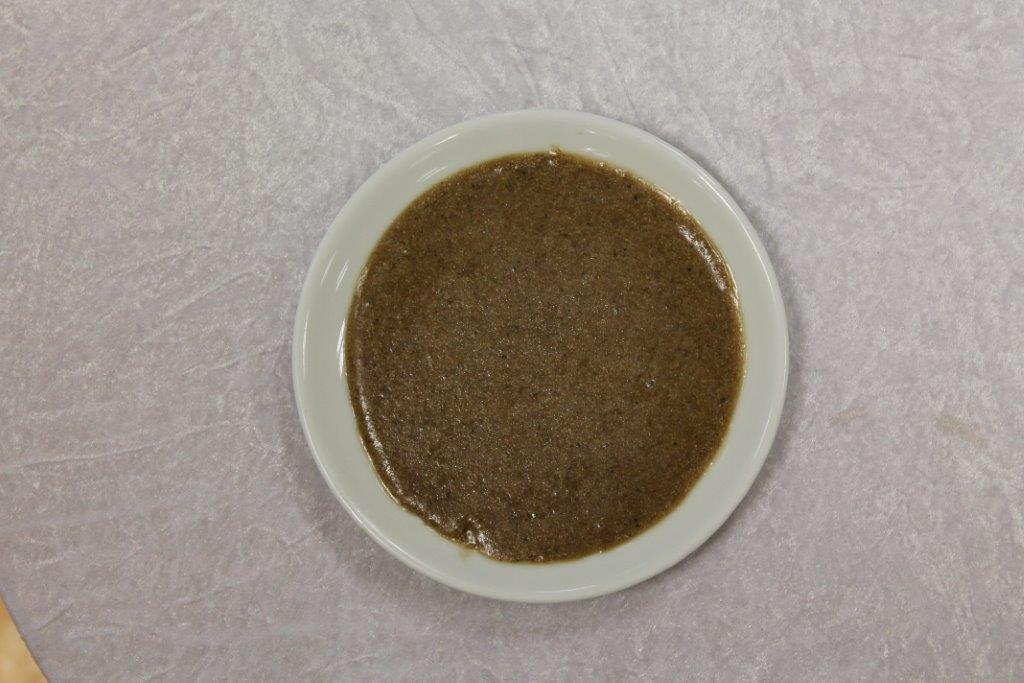
Van Kavut (Turkish Patent and Trademark Office)
The origins of Van Kavut date back to the Urartian period. Forty-two years of archaeological excavations in the region have revealed that the Urartians cultivated wheat, lentils, and chickpeas and maintained storage facilities beneath their fortresses. Remains of kavut dating back 3,000 years have also been uncovered during these excavations. Historical sources record that in the late 16th century, Şeref Han and in the 17th century, Evliya Çelebi, who visited Van and Bitlis, noted that local people frequently consumed kavut made from barley and served it to guests. Evliya Çelebi also mentioned that one of the local names for kavut in Van was “pohin” (or “poksin”).
Kavut is consumed not only in the Van Lake basin but also in certain regions of the Middle East. Traditional apple kavut is no longer produced today; however, kavut continues to be served on open bread alongside molasses, rose jam, or honey. Kavut is made by soaking and grinding hulled wheat in milk, then frying it with butter. It is a nutrient-rich food that has historically been consumed by early risers and at suhoor meals, and it is also mentioned in the tables of prophets. The nutritional composition of Van Kavut has been determined as 94.2–94.8% dry matter, 3.32–3.55% fat, 4.14–4.32% ash, and 13.2–13.9% protein.
The primary ingredient used in the production of Van Kavut is Tir wheat (Triticum aestivum Var. aestivum L. ssp. Leucospermum Körn.), which is unique to Van Province. Tir wheat thrives in Van’s harsh climatic conditions and nutrient-poor soils. Thanks to its long coleoptile, deep root system, and resistance to disease, it can be planted at a depth of 10–15 cm and effectively utilize soil moisture.
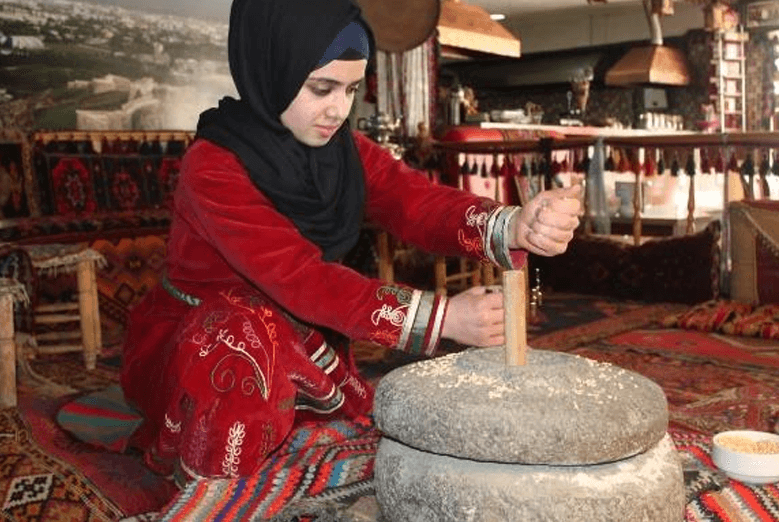
The production process is as follows: Tir wheat is soaked in milk for 12 hours without removing its husk, then dried in a shaded environment and ground in a hand mill. The hand mill operates by manually turning it through a central hole between two cylindrical stones. This method ensures the flour retains its coarse texture and avoids contact with chemical additives.
For a serving intended for four people, approximately 70–80 grams of butter are melted and gently heated in a copper pan. Then, 100 grams of wheat flour are added and cooked for about 15 minutes until a paste forms. Kavut is then served immediately after preparation. All ingredients and production methods must comply with the Turkish Food Code.
Van Kavut is produced exclusively within the boundaries of Van Province. The production process uses Tir wheat sourced from the Van Lake basin, and the resulting flour is ground using a hand mill. The product’s regional character is ensured by the use of this specific wheat and the traditional cooking method.
The protection of Van Kavut under the geographical indication system is coordinated by the Van Chamber of Commerce and Industry. The monitoring authority consists of three representatives: one each from the Van Directorate of the Ministry of Food, Agriculture and Livestock, the Van Association of Chefs and Pastry Makers, and the Van Restaurant and Baker Association. This authority verifies that production methods meet technical and hygienic standards, controls storage, transportation, and marketing processes, and ensures compliance with the geographical indication. Legal action is initiated against those who violate the regulations. Monitoring reports are submitted annually by the Van Chamber of Commerce and Industry to the Turkish Patent and Trademark Office.
Van Kavut is an inseparable part of Van’s breakfast culture and reflects the region’s historical, cultural, and gastronomic heritage. As a distinctive regional product tied to Van Province through its ingredients, production technique, and nutritional profile, kavut holds significant cultural and nutritional value for the local population, with historical roots tracing back to the Urartian period.
Turk Patent ve Marka Kurumu. "Van Kavut – Coğrafi İşaret Dosyası." PDF, Accessed August 16, 2025. https://ci.turkpatent.gov.tr/Files/GeographicalSigns/026861b9-c7d0-4a7a-9910-3ac03a16bcd7.pdf.
Türk Patent ve Marka Kurumu. "Van Kavut – Coğrafi İşaret Detay." Accessed August 16, 2025. https://ci.turkpatent.gov.tr/cografi-isaretler/detay/38386.

Geographical Indication Type(s) | Mahreç sign | ||||||||
|---|---|---|---|---|---|---|---|---|---|
Registration Date | 25.10.2018 | ||||||||
Applicant/Registrant(s) | Van Chamber of Commerce and Industry | ||||||||
Product / Product Group(s) | Regional dishes / Dishes and soups | ||||||||
Geographical Boundary | Van province | ||||||||
Main Materials | Tir wheat, milk, butter | ||||||||
Production Method | Wheat is soaked in milk, dried, ground in a hand mill, and fried with butter | ||||||||
Control | Van Chamber of Commerce and Industry, relevant associations, Ministry | ||||||||
History
Consumption and Cultural Significance
Production Method and Ingredients
Geographical Boundary and Production Conditions
Monitoring and Protection
Characteristics and Importance