

This article was automatically translated from the original Turkish version.
+2 More
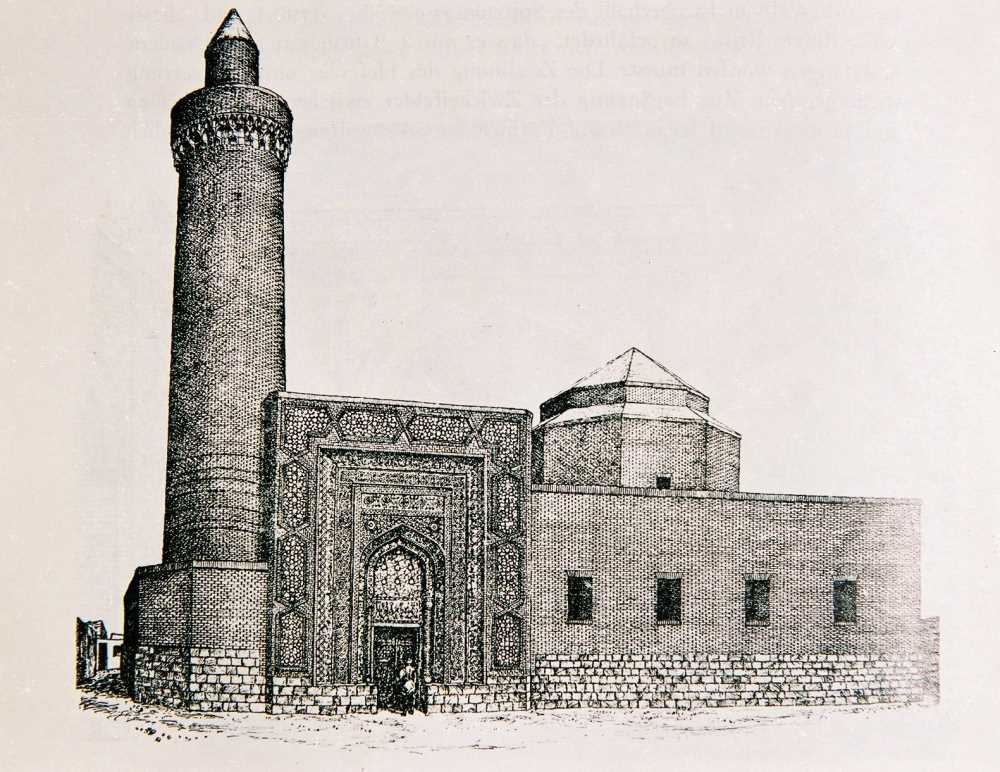
Van Ulu Camii is a historical place of worship located within the boundaries of the Eski Van Şehri district in the İpekyolu district of Van Province, in Eastern Anatolia, Türkiye. The structure is now largely in ruins. Positioned between the Tebriz Gate and the İskele Gate, it belongs to the architectural category of “mosques with a dome over the mihrap area and multiple supports” in art historical terminology. Only fragments of its minaret, foundation remains, and some wall sections have survived from the damage inflicted during World War I.
There is no consensus among researchers regarding the construction date of Van Ulu Camii. One view holds that the structure dates to the Ahlatshah (Sökmenid) period. The 1571 Van Vilayeti Evkaf Tahrir Defteri records the mosque as belonging to the endowments of “Şah-ı Ermen,” supporting the theory that it was built during the reign of either I. Sökmen (1100–1112) or II. Sökmen (1128–1185).
Another view was proposed by art historian Oktay Aslanapa, who conducted excavations at the site between 1970 and 1972. Based on excavation findings, decorative style, and material quality, Aslanapa suggested that the mosque may have been constructed during the early years of Kara Yusuf’s rule as Sultan of the Kara Koyunlu (1389–1400). He pointed to the use of low-quality mortar and structurally weak techniques as indicators that the building was hastily completed before Timur’s arrival.
The structure was abandoned after its roof collapsed in the earthquake of 1844 and was completely destroyed during World War I.
According to the restoration plan drawn by W. Bachmann in 1913 and subsequent archaeological excavations, the mosque has a rectangular plan measuring approximately 26 meters north-south and 30 meters in the qibla direction. The entrance is located on the northern facade. The structure was built entirely of brick on a stone foundation.
The interior layout centers on a square prayer hall of nine bays adjacent to the qibla wall, covered by a muqarnas dome. This dome, estimated to reach a height of about 16 meters, rests on six large arches and is surrounded by barrel-vaulted units. During the Ottoman period, a portal and a colonnaded entrance section were added to the northern facade.
The mosque’s minaret is situated in the northwest corner. Built entirely of brick, it has a cylindrical shaft rising from a square base. Only the base and the lower portion of the shaft have survived; the şerefe (balcony) section has been destroyed.

Visual Related to Van Ulu Camii(Kültür Portalı)
Van Ulu Camii features a distinctive decorative program notable for its brickwork and stucco ornamentation. Decorative elements are concentrated on the mihrap, dome transitions, and wall surfaces. Excavation findings indicate the combined use of geometric motifs, vegetal designs, and epigraphic bands.
The mihrap in the prayer hall is framed by stucco arabesques incorporating geometric patterns and Kufic inscriptions. Above the mihrap, bands of woven Kufic and Sulus script are present. Fragments recovered during excavations reveal vegetal motifs—palmettes, rumi, and scrolling vines—executed in brick and stucco and painted in yellow and blue. Additionally, ten distinct types of brick joints were identified, and rich geometric compositions featuring gamalı crosses, pentagons, and star shapes have been documented.
The first comprehensive scientific study of the structure was conducted between 1970 and 1972 under the leadership of Oktay Aslanapa. During these excavations, the interior surfaces of the walls were cleaned, foundation footings were uncovered, and certain details in Bachmann’s 1913 plan were revised. Numerous stucco fragments and inscribed epigraphic pieces recovered during the excavations were transferred to the Van Museum.
After decades of remaining in ruins, reconstruction and restoration efforts have begun since 2024 under the joint initiative of the Van Provincial Administration and the Ministry of Culture and Tourism, as part of the project “Protecting Our Cultural Heritage and Transmitting It to the Future.” The project aims to revive the mosque in accordance with its original architectural identity and reopen it for worship.
History and Periodization Debates
Architectural Features
Decorative Program
Excavations and Current Status