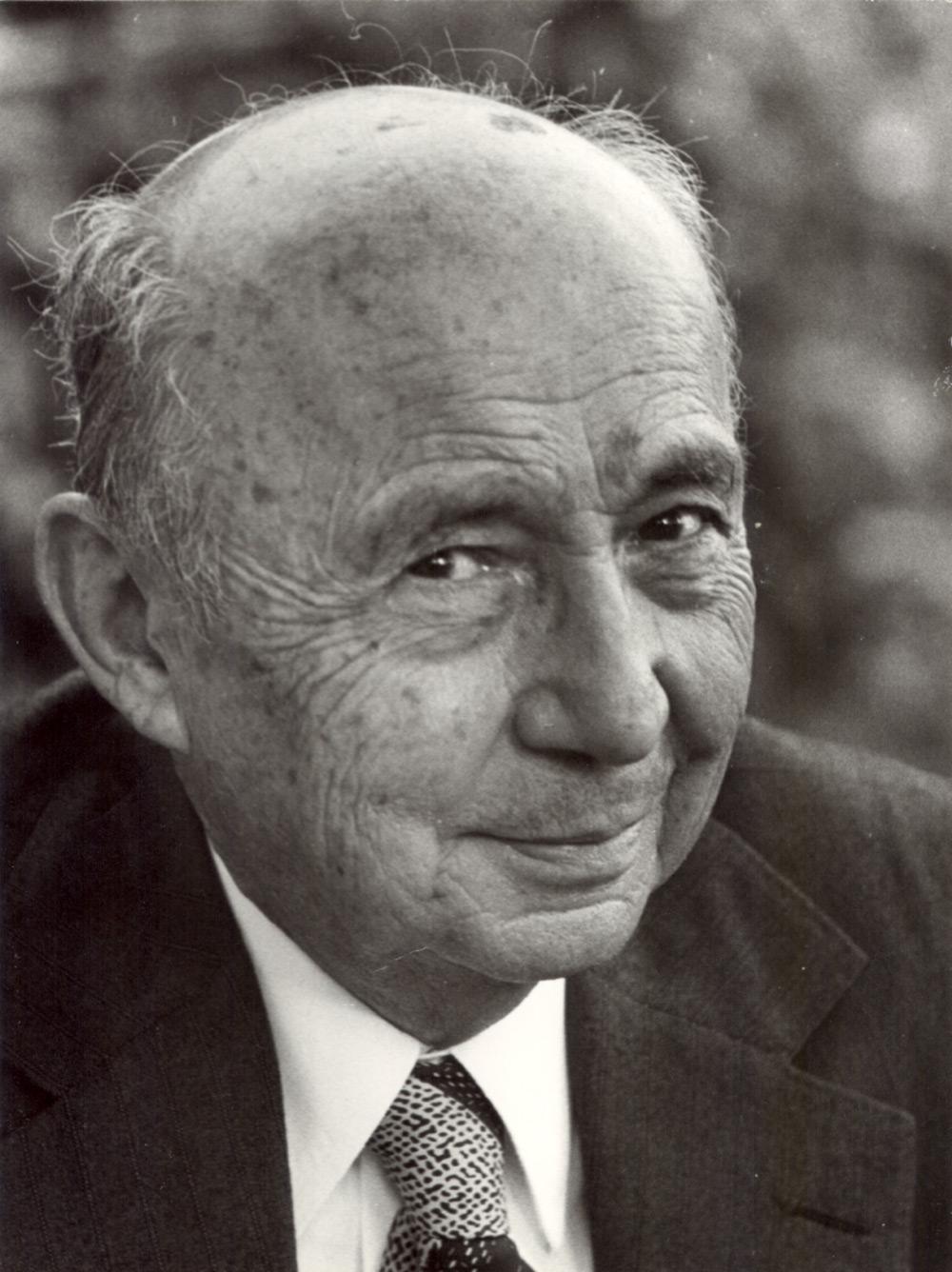
Babası | Koçzade Hacı Mustafa Efendi | ||||||||
|---|---|---|---|---|---|---|---|---|---|
Annesi | Kütükçüzade Fatma Hanım | ||||||||
Çocuk | Suna Koç Kıraç (1941) Sevgi Koç Gönül (1938) Rahmi M. Koç (1930) Semahat Koç Arsel (1928) | ||||||||
Title(s) | Founder of Koç Holding | ||||||||
Death | 25 February 1996, Antalya | ||||||||
Spouse(s) | Sadberk Koç | ||||||||
Birth | 1901, Ankara (Keçiören / Çoraklık) | ||||||||
Profession(s) | Industrialist Businessman | ||||||||
Award(s) | 1991: Honorary Doctorate from ODTÜ 1984: Honorary Doctorate from Anadolu University 1994: World Population Planning Award 1987: ICC Businessman of the Year 1983: Gold Mercury International Award 1975: Italy Grande Ufficiale Order 1974: Federal Germany Order of Merit | ||||||||
Works | Hatıralarım Görüşlerim Öğütlerim (1987) Hayat Hikâyem (1973) | ||||||||
Yaş | 95 | ||||||||
Full Name | Ahmet Vehbi Koç | ||||||||
Vehbi Koç (1901–1996), whose full name is Ahmet Vehbi Koç, was a Turkish businessman and industrialist who played a significant role in the development of the private sector in the Republic of Türkiye. Born in 1901 in Ankara, Koç expanded his early commercial activities over time into industrial investments and institutional ventures, founding Koç Holding, Türkiye’s first holding company, in 1963. Throughout his business career, he was active in trade, industry, and international partnerships, and also contributed to social responsibility initiatives through foundations and institutions he established in education, health, and culture. Vehbi Koç passed away on 25 February 1996 and is remembered among the entrepreneurs of the Republic of Türkiye for his economic initiatives and his vision of institutionalization.
Vehbi Koç was born in 1901 in Çoraklık Neighborhood, Keçiören district of Ankara. He was the only son of Koçzade Hacı Mustafa Efendi, from Ankara’s local elite, and Kütükçüzade Fatma Hanım; two daughters, Zehra and Hüsniye, were born after him.
Vehbi Koç spent his childhood in Ankara, beginning his primary education at age five at the neighborhood school, known as “Topal Hoca’s School,” located near Karaoğlan Street where his family’s winter home stood. He continued his education at another elementary school in Ankara between 1908 and 1913. In 1914, he enrolled at Ankara İdadisi in Hacettepe, known as “Taş Mektep.” However, due to his desire to enter the workforce at an early age and his family’s financial circumstances, he left school in 1916 during his final year of middle school.
Vehbi Koç’s childhood and early youth coincided with the final years of the Ottoman Empire and the establishment of the Republic of Türkiye following the National Struggle. Growing up in Ankara during a period of economic hardship caused by war, Koç gained firsthand exposure to commerce while still a student, visiting his father’s grain trading shop at Atpazarı. He gained commercial experience working in a textile and hardware shop in Çengelhan during summer months and became involved in family business affairs at a young age. These early experiences laid the foundation for his future commercial and industrial activities.
Vehbi Koç became acquainted with commerce during his school years and turned toward professional life at an early age. He regularly visited the grain trading shop opened by his father, Koçzade Hacı Mustafa Efendi, alongside partners at Atpazarı, closely observing commercial operations. During summer months, he gained his first practical experience working in a textile and hardware shop in Çengelhan.
In 1917, at the age of sixteen, he officially entered business life by opening a grocery store in Ankara’s Samanpazarı neighborhood with his father. The shop, located beneath the family home, initially sold basic foodstuffs but soon expanded to include imported goods, hardware, leather, and construction materials. Despite his father’s initial opposition, Koç broadened the product range and expanded the scope of commercial activities. During this period, he traveled to Istanbul to establish contacts with various merchants to secure goods.

Vehbi Koç, Ankara (1926) (Koç Holding)
Vehbi Koç’s family life began to take shape during the early years of his business career. By the end of 1925, his family decided he should marry Nadire Hanım’s daughter, Sadberk Aktar. The engagement and wedding ceremonies took place in the first week of 1926. The couple’s first child, Semahat Koç Arsel, was born in 1928 at the family’s country house in Ankara’s Keçiören district. They were later followed by Rahmi M. Koç (1930), Sevgi Koç Gönül (1938), and Suna Koç Kıraç (1941).
Semahat Koç Arsel noted that her father had a personality characterized by rapid adaptation to changing conditions, a strong emphasis on human relations, and decision-making based on careful analysis. It was stated that after the death of their mother, Sadberk Koç, she became more emotionally open and tolerant, adopting a more transparent and sharing approach in her relationships with her children. During this period, she traveled abroad with her daughters, studying lifestyles and business environments in the countries she visited and drawing conclusions from them.【1】
Rahmi M. Koç recalled that Vehbi Koç valued unity and equality within the family, ensuring equal conditions for his children’s education and upbringing. He embraced a disciplined and orderly lifestyle at home, viewing thrift and acting within available means as fundamental principles. He sought to exemplify his business and life philosophy to his children, promoting a moderate lifestyle by avoiding unnecessary expenditures.【2】
Sevgi Koç Gönül described her father as principled, orderly, and patient, portraying him as a distant yet highly responsible father figure within the family. She noted that changes following her mother Sadberk Hanım’s death also affected family relationships. The establishment of the Sadberk Hanım Museum in Istanbul to honor her mother’s memory reflected the connection between Vehbi Koç’s family life and his cultural initiatives.【3】
Suna Koç Kıraç, while recounting her father’s approach to education and professional life, emphasized the importance of work experience. Koç encouraged his children to join the workforce at an early age and required them to assume the same responsibilities as other employees. Kıraç stated that she began working in 1960 at the Istanbul branch of Koç Ticaret AŞ and worked alongside her father for many years.【4】
Vehbi Koç viewed family life and business life as distinct yet mutually reinforcing spheres, placing discipline, thrift, and responsibility at the center of his children’s upbringing.
In 1926, Vehbi Koç took over his father’s trading business and registered it with the Ankara Chamber of Commerce on 31 May 1926 under the name “Koçzade Ahmet Vehbi.” This date is now recognized as the symbolic birth of the Koç Group and its official founding date. Following Ankara’s designation as the capital of the Republic, rapid urban development and construction activity created opportunities for Koç to expand his commercial activities. Initially focused on basic consumer goods, he quickly shifted toward construction materials and hardware sales, significantly increasing the scale of his operations.
His first major project in construction contracting was the building of Ankara Numune Hospital. Construction began in 1932 and was completed in 1933. This project was followed by the construction of other healthcare facilities, including the Cebeci Children and Maternity Hospital, Ankara Hospital, and the State Railways Hospital. He also participated in the construction of the Elazığ–Palu railway through a partnership with Haymil Company. However, due to low profit margins in contracting, he later divested from construction activities.
One of his earliest manufacturing ventures was the Koç Demir Boru factory, established in 1934 in Istanbul’s Haliç district in partnership with the Hovagimyan Brothers. The factory, which produced iron pipes, was eventually liquidated due to its inability to compete with imported products, marking Koç’s first foray into manufacturing.
In the 1930s, Vehbi Koç expanded his operations beyond Ankara, initiating ventures in Istanbul to broaden his commercial network. To meet the needs of his Ankara-based business, he opened a shop in Galata through which goods were procured and shipped to Ankara. In 1937, he founded the Vehbi Koç ve Ortakları Kollektif Şirketi in Galata, with Israeli Anastasyan and Emin Güraç as partners. The company later expanded with the inclusion of İsak Altabev, organizing Koç’s commercial activities in Istanbul into a more structured framework. In the same year, he also established the Vehbi Koç ve Ortağı Petrol İşleri Kollektif Şirketi to continue his agency for Standard Oil.
The diversification of his activities and the growth of his business volume led Koç toward incorporation. Viewing sole proprietorships as limited in sustainability, Vehbi Koç founded Koç Ticaret AŞ on 29 June 1938 with a capital of 300,000 liras. The company had two stores, one in construction and one in automotive, with Fazıl Öziş serving as general manager.【6】
The institutionalization process continued in 1940 with the establishment of Koç ve Ortağı Kalorifer Havagazı İşleri in Ankara. Thus, between 1926 and 1940, Vehbi Koç gradually transformed his activities into a more institutional structure through expansion of trade, establishment of agencies and partnerships, contracting activities, and incorporation. This period laid the foundation for the industrial investments and holding structure that would follow.
During the 1940s, while continuing his commercial activities, Vehbi Koç began shifting toward industry. During World War II, he established various commercial relationships with German, British, and American companies, expanding his international connections. After the war, he focused on initiatives to develop industrial production in Türkiye, initiating the transition from trade to manufacturing.
In this direction, on 25 April 1945, he established his first overseas company, Ram Commercial Corporation, in New York City. The company provided procurement and advisory services to official delegations coming to the United States to purchase goods. Although it was closed in 1954 due to unmet commercial expectations, this initiative enabled Koç to secure representation rights for various American firms, including General Electric, USA Rubber (Uniroyal), Oliver, Burroughs, York, and Sheaffer, strengthening international business relations.
Vehbi Koç’s 52-day visit to the United States in 1946 proved decisive in his shift toward industry. During this trip, he held discussions with General Electric regarding a joint investment in Türkiye. As a result, in 1948, a partnership was formed with General Electric to establish a facility for light bulb production in Türkiye. This initiative became one of the first joint foreign investments in Türkiye and marked a significant step in the Koç Group’s industrial development. Production began in 1952.【7】
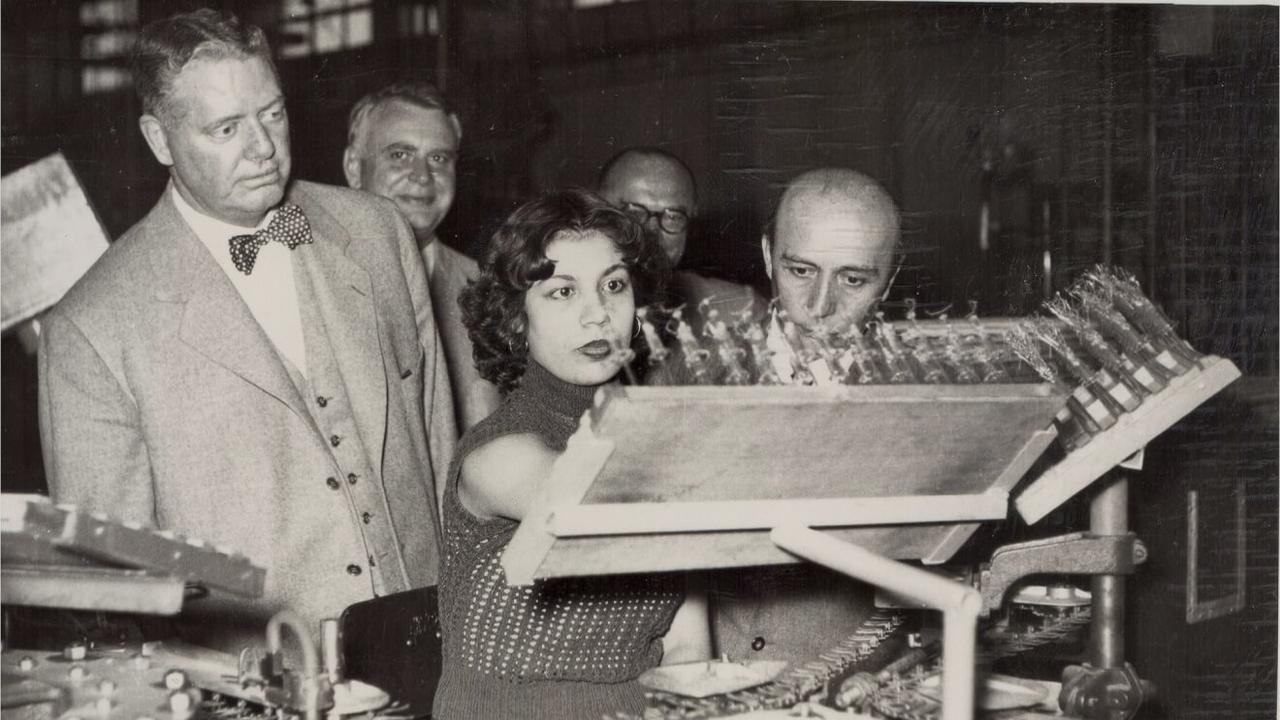
Vehbi Koç Öncülüğünde İlk Yerli Ampul Üretimi (Koç Holding)
One of Koç’s first industrial ventures was the Ankara Oksijen Fabrikası, established in 1947. The facility operated until 1955 and represented the beginning of Koç’s manufacturing initiatives. During the same period, licensing and agency agreements were signed with various foreign companies to boost domestic production and plan local manufacturing investments.
In 1946, Vehbi Koç joined the “Kırklar Meclisi,” an advisory council of the Republican People’s Party, serving for approximately two years. This role led to his recognition as a figure close to the Republican People’s Party. Following disagreements with the Democrat Party government in 1951, he resigned from his position as president of the Ankara Chamber of Commerce and moved with his family to Istanbul that same year.
The 1950s marked a period in which Vehbi Koç focused heavily on industrial investments. In 1955, he founded Arçelik AŞ to produce steel office furniture, later transitioning into durable consumer goods and white goods manufacturing. During the same period, he established various industrial and commercial enterprises, including Türk Demir Döküm, Aygaz, Bozkurt Mensucat, and Türkay, expanding production activities. The Koç Group’s first tourism investment, the Divan Hotel, was opened in 1955.
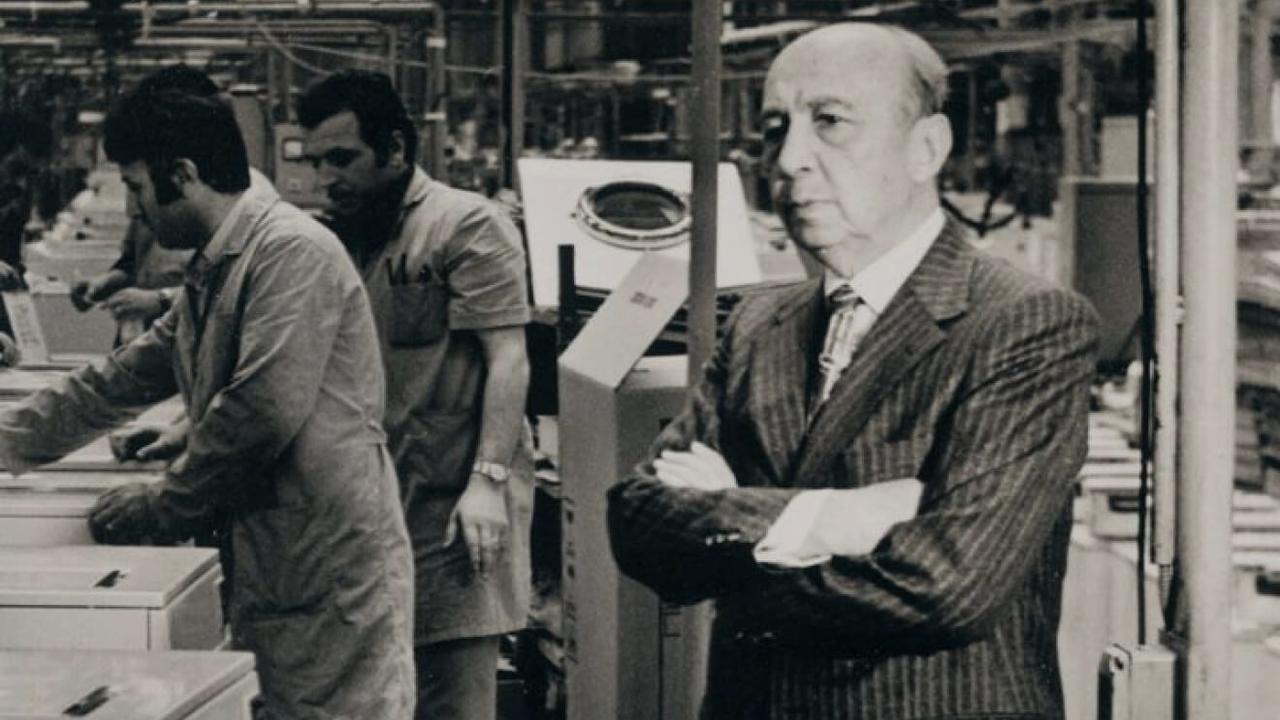
Vehbi Koç Öncülüğünde İlk Yerli Çamaşır Makinesi Üretimi (Koç Holding)
In the second half of the 1950s, investments in the automotive sector were planned. In 1956, during a trip to the United States, Koç held discussions with Henry Ford II, president of Ford Motor Company, regarding the establishment of a truck assembly plant in Türkiye. When this plan was not realized, in 1959 he founded Otosan Otomobil Sanayii AŞ, marking a significant step in automotive manufacturing. Throughout the 1940s and 1950s, Vehbi Koç significantly expanded his trade-oriented activities into industrial production and international partnerships, playing a pivotal role in transforming the Koç Group into a production-based structure.
Vehbi Koç’s rapidly growing industrial and commercial investments in the 1950s evolved into a larger, more institutional structure in the 1960s. To consolidate companies operating in different sectors under a single umbrella, Koç Holding, Türkiye’s first holding company, was established in 1963. This structure, formed by bringing together companies founded or capitalized by Vehbi Koç, became a defining milestone in the institutionalization of the Koç Group.
Throughout the 1960s, the Koç Group diversified its activities in production and trade. In 1966, production began on Anadol, Türkiye’s first domestically produced automobile. Subsequently, investments were made in agriculture and food industries, including the establishment of the Tat Tomato Paste Factory in 1967. In 1968, a partnership with the Italian firm Fiat led to the founding of Tofaş, which began producing Murat-branded automobiles under Fiat licensing.
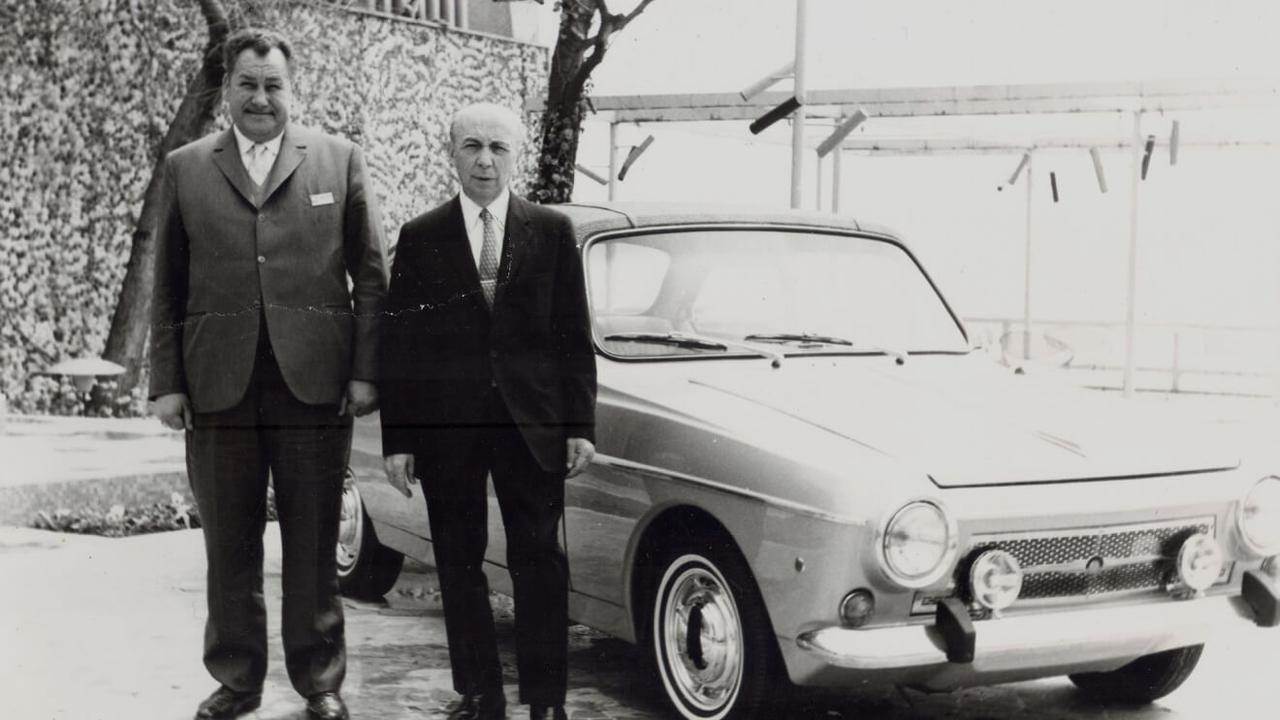
Koç Topluluğu Öncülüğünde Üretilen İlk Yerli Otomobil, Anadol (Koç Holding)
The Koç Group’s activities were not limited to production; it also took steps in exports and foreign trade. In 1970, Ram, Türkiye’s first export-oriented capital company, was established, organizing foreign trade activities into a structured framework. In 1971, production of Murat-branded automobiles at the Tofaş plant expanded the group’s automotive production capacity.
During this period, the institutional structure of the Koç Group was strengthened. Companies operating in different sectors were consolidated under the holding umbrella, adopting a centralized management approach. Thus, the Koç Group transformed into a multi-sectoral structure active in trade, production, automotive, food, foreign trade, and various industrial fields. The initiatives undertaken in the 1960s and 1970s laid the foundation for Koç Holding’s institutionalization and solidified the group’s position within the Turkish economy.
Beyond his business life, Vehbi Koç viewed social responsibility and philanthropy as a societal duty, initiating various projects in education, health, and culture. One of his earliest social initiatives was the opening of the Vehbi Koç Student Dormitory in 1946. This effort was followed by various donations and investments in education and health.
In 1951, the opening of the Vehbi Koç Student Dormitory at Ankara University gave his social contributions a more organized character. From the 1960s onward, these efforts accelerated: in 1963, the Vehbi Koç Eye Bank at Ankara University Faculty of Medicine; in 1964, the Cardiology Institute at Istanbul University Faculty of Medicine; in 1967, the Vehbi Koç Cancer Pavilion at Admiral Bristol Hospital; and in 1968, the Vehbi Koç Student Dormitory at Middle East Technical University and the Vehbi Koç Library and Research Building at Eskişehir Academy of Economic and Commercial Sciences were established.【8】
Vehbi Koç institutionalized his social responsibility activities by spearheading the establishment of the Turkish Education Foundation in 1967 to support education. In 1969, the Vehbi Koç Foundation was founded to operate in education, health, and culture. Through the foundation, various cultural, health, and educational projects were implemented. In 1976, the Atatürk Library, constructed in Istanbul’s Taksim, was completed and donated to the Istanbul Municipality.【9】
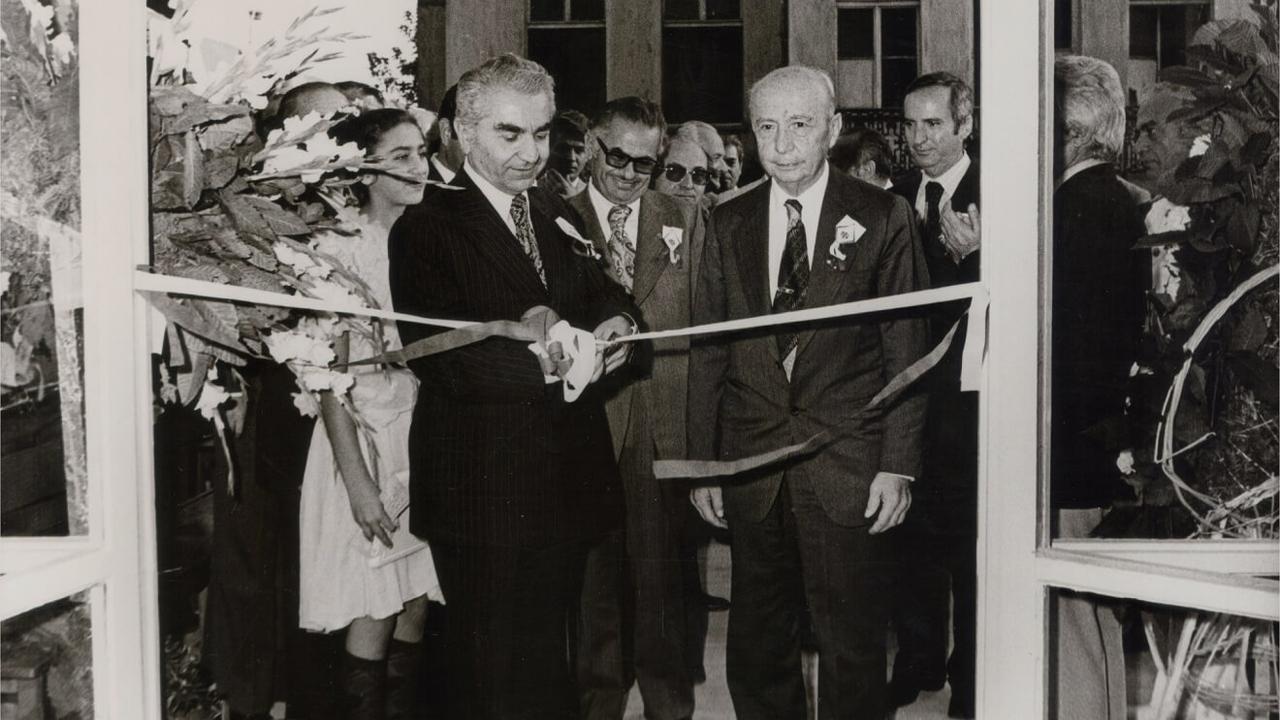
Türk Eğitim Vakfı'nın Açılışı, 1967 (Koç Holding)
In 1980, to honor the memory of his wife Sadberk Koç, the Sadberk Hanım Museum was established in Istanbul. As Türkiye’s first private museum, it became one of the most important cultural initiatives. In the 1980s, social responsibility activities expanded into other areas: in 1984, the Tourism Development and Education Foundation (TUGEV) was founded, and in 1985, the Turkish Family Health and Planning Foundation was established, with Vehbi Koç serving as its chairman until his death.
Educational initiatives continued in 1987 with the founding of the Vehbi Koç Foundation Private High School, followed in 1993 by the establishment of Koç University. In the cultural field, the Vehbi Koç Ankara Research and Application Center (VEKAM) was established in Ankara in 1994. These initiatives, carried out in line with Vehbi Koç’s social responsibility philosophy, enabled the creation and long-term operation of institutions in education, health, and culture.
In 1984, Vehbi Koç stepped down from his role as Chairman of the Board of Koç Holding, transferring the position to his son Rahmi M. Koç. Thereafter, he continued his involvement as Honorary Chairman of Koç Holding. With reduced managerial responsibilities, he devoted more time to social initiatives and foundation activities. During retirement, he focused particularly on education, health, and population planning. He spearheaded the establishment of the Turkish Family Health and Planning Foundation in 1985 to address Türkiye’s population and family health challenges, serving as its chairman until his death. Throughout this period, he continued his social responsibility activities within an institutional framework.
Vehbi Koç passed away on 25 February 1996 in Antalya, where he was spending the holiday. He died of a heart attack at the hotel where he was staying, having completed a 95-year life marked by entrepreneurial initiatives and the creation of institutional structures. Following his death, he left behind a legacy through the companies, foundations, and educational and cultural institutions he established.
Vehbi Koç received numerous national and international awards throughout his life for his activities in business and social responsibility. In 1987, he was named “Businessman of the Year” by the International Chamber of Commerce and received the award from Indian Prime Minister Gandhi at a ceremony in New Delhi.【11】 In 1994, he was awarded the United Nations World Population Planning Award for his work through the Turkish Family Health and Planning Foundation. He also received various international honors, including the Federal Republic of Germany’s Order of Merit (1974), Italy’s Grande Ufficiale Order of Merit (1975), and the Gold Mercury International Award (1983). He was awarded honorary doctorates by Anadolu University (1984) and Middle East Technical University (1991).【12】
Vehbi Koç authored two books to share his business and life experiences. His 1973 publication, “Hayat Hikâyem”, chronicled his life and business experiences. In his 1987 book, “Hatıralarım, Görüşlerim, Öğütlerim”, he offered reflections on the business world, the economy, and social issues. These works were later published in various languages and included in multiple compilations. Numerous research and memoir books have also been published about Vehbi Koç’s life and work, containing evaluations of his business career, institutionalization philosophy, and social responsibility activities.【13】
Anadolu Ajansı. "Koç Holding’in Kurucusu Vehbi Koç’un vefatının 25’inci yılı." Accessed February 9, 2026. https://www.aa.com.tr/tr/portre/koc-holding-in-kurucusu-vehbi-koc-un-vefatinin-25-inci-yili/2155205
Koç Holding. "Kurucu: Vehbi Koç." koc.com.tr. Accessed February 9, 2026. https://www.koc.com.tr/hakkinda/tarihce/kurucu-vehbi-koc
Koç Holding. "Tarihçe." koc.com.tr. Accessed February 9, 2026. https://www.koc.com.tr/hakkinda/tarihce
Koç Holding. “Anılarımdaki Vehbi Koç.” *Bizden Haberler* 164, (2015): 5–12. Accessed February 9, 2026. https://cdn.koc.com.tr/cmscontainer/kocholding/media/koc/06medya-merkezi/bizden-haberler-dergisi/pdf/2015/bh-422.pdf
Vehbi Koç Foundation. "Koç, (Ahmet) Vehbi." *encyclopedia.vkv.org.tr.* Accessed February 9, 2026. https://encyclopedia.vkv.org.tr/Categories/People/Koc-Family/Koc,-(Ahmet)-Vehbi
[1]
Koç Holding, “Anılarımdaki Vehbi Koç,” Bizden Haberler 164, (2015): 6, Access date: 9 February 2026,
[2]
A.e., syf 7
[3]
A.e., syf 8
[4]
A.e., syf 9
[6]
Vehbi Koç Foundation, ''Koç, (Ahmet) Vehbi,'' encyclopedia.vkv.org.tr, Erişim tarihi: 9 Şubat 2026, https://encyclopedia.vkv.org.tr/Categories/People/Koc-Family/Koc,-%28Ahmet%29-Vehbi
[7]
Koç Holding, ''Kurucu: Vehbi Koç,'' koc.com.tr, Erişim tarihi: 9 Şubat 2026, https://www.koc.com.tr/hakkinda/tarihce/kurucu-vehbi-koc
[8]
Vehbi Koç Foundation, ''Koç, (Ahmet) Vehbi,'' encyclopedia.vkv.org.tr, Erişim tarihi: 9 Şubat 2026, https://encyclopedia.vkv.org.tr/Categories/People/Koc-Family/Koc,-%28Ahmet%29-Vehbi
[9]
Vehbi Koç Foundation, ''Koç, (Ahmet) Vehbi,'' encyclopedia.vkv.org.tr, Erişim tarihi: 9 Şubat 2026, https://encyclopedia.vkv.org.tr/Categories/People/Koc-Family/Koc,-%28Ahmet%29-Vehbi
[11]
Koç Holding, ''Kurucu: Vehbi Koç,'' koc.tom.tr, Erişim tarihi: 9 Şubat 2026, https://www.koc.com.tr/hakkinda/tarihce/kurucu-vehbi-koc
[12]
Vehbi Koç Foundation, ''Koç, (Ahmet) Vehbi,'' encyclopedia.vkv.org.tr, Erişim tarihi: 9 Şubat 2026, https://encyclopedia.vkv.org.tr/Categories/People/Koc-Family/Koc,-%28Ahmet%29-Vehbi
[13]
Koç Holding, ''Kurucu: Vehbi Koç,'' koc.tom.tr, Erişim tarihi: 9 Şubat 2026, https://www.koc.com.tr/hakkinda/tarihce/kurucu-vehbi-koc

Babası | Koçzade Hacı Mustafa Efendi | ||||||||
|---|---|---|---|---|---|---|---|---|---|
Annesi | Kütükçüzade Fatma Hanım | ||||||||
Çocuk | Suna Koç Kıraç (1941) Sevgi Koç Gönül (1938) Rahmi M. Koç (1930) Semahat Koç Arsel (1928) | ||||||||
Title(s) | Founder of Koç Holding | ||||||||
Death | 25 February 1996, Antalya | ||||||||
Spouse(s) | Sadberk Koç | ||||||||
Birth | 1901, Ankara (Keçiören / Çoraklık) | ||||||||
Profession(s) | Industrialist Businessman | ||||||||
Award(s) | 1991: Honorary Doctorate from ODTÜ 1984: Honorary Doctorate from Anadolu University 1994: World Population Planning Award 1987: ICC Businessman of the Year 1983: Gold Mercury International Award 1975: Italy Grande Ufficiale Order 1974: Federal Germany Order of Merit | ||||||||
Works | Hatıralarım Görüşlerim Öğütlerim (1987) Hayat Hikâyem (1973) | ||||||||
Yaş | 95 | ||||||||
Full Name | Ahmet Vehbi Koç | ||||||||
Early Years and Family
First Steps into Business and the Beginning of Trade
Family Life
Early Ventures and Institutionalization
Transition from Trade to Industry
Establishment of Koç Holding and Institutionalization
Social Responsibility and Foundation Activities
Retirement Period
Death
Awards and Works