This article was automatically translated from the original Turkish version.
Family | Cercopithecoidea | ||||||||
|---|---|---|---|---|---|---|---|---|---|
Common Name | Green monkey | ||||||||
Habitat | Sub-Saharan Africa urban areas swamps forest edges savannas | ||||||||
Diet(s) | Omnivore (vegetarian-based rodents) bird eggs insects | ||||||||
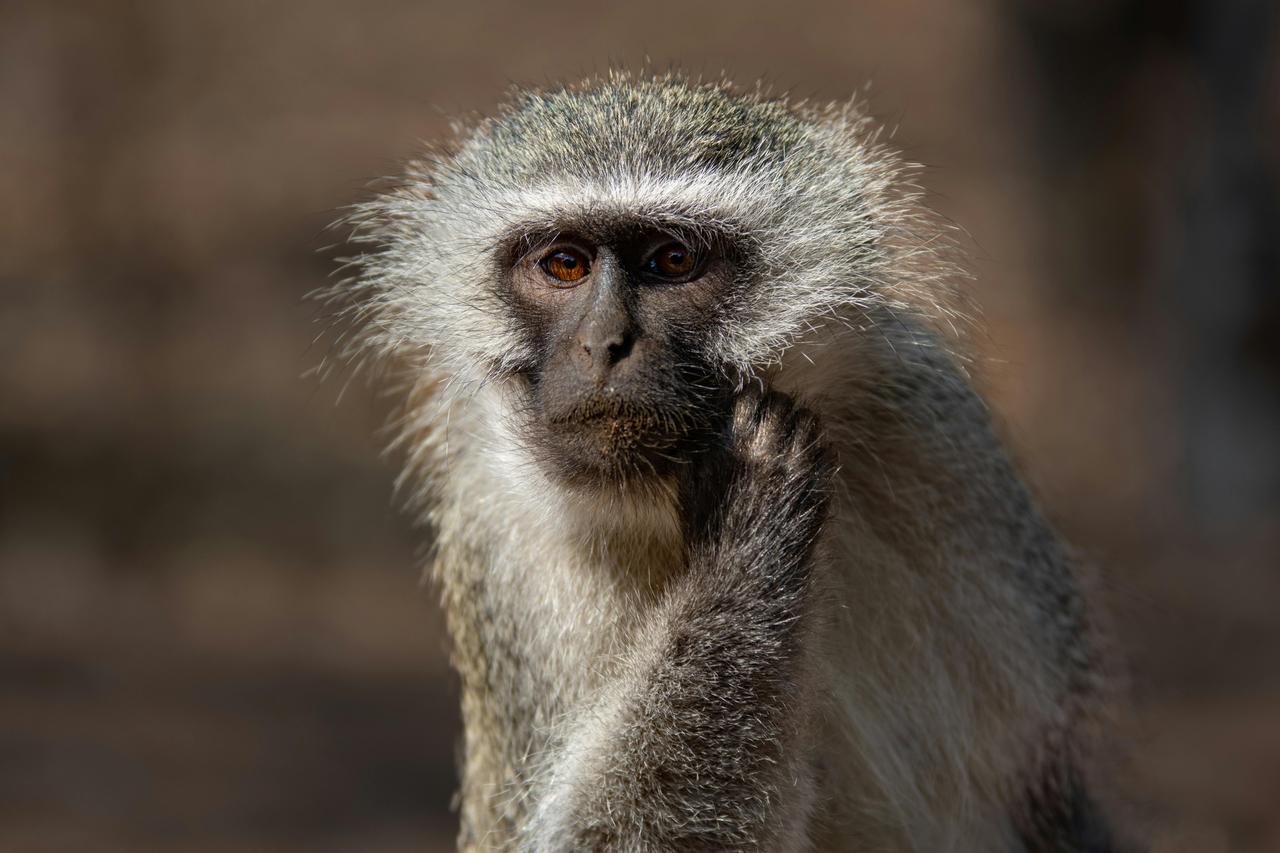
The vervet monkey is a medium-sized, social, and agile primate species widely distributed across a broad region of sub-Saharan Africa. These monkeys belong to the superfamily Cercopithecoidea and are commonly referred to as "green monkeys." Vervet monkeys are particularly recognized for their physical characteristics and social behaviors.
Vervet monkeys have bodies that are typically olive-green or silvery-gray in color. Their faces, ears, hands, feet, and the tips of their tails are black. They have a prominent white band across the forehead and short whiskers. Male vervet monkeys have blue scrotums and red penises, features that make them easily distinguishable from females. Females reach an average body length of 38 cm, while males reach 48 cm. Females weigh between 3.2 and 5 kg, while males weigh between 3.6 and 7.7 kg.
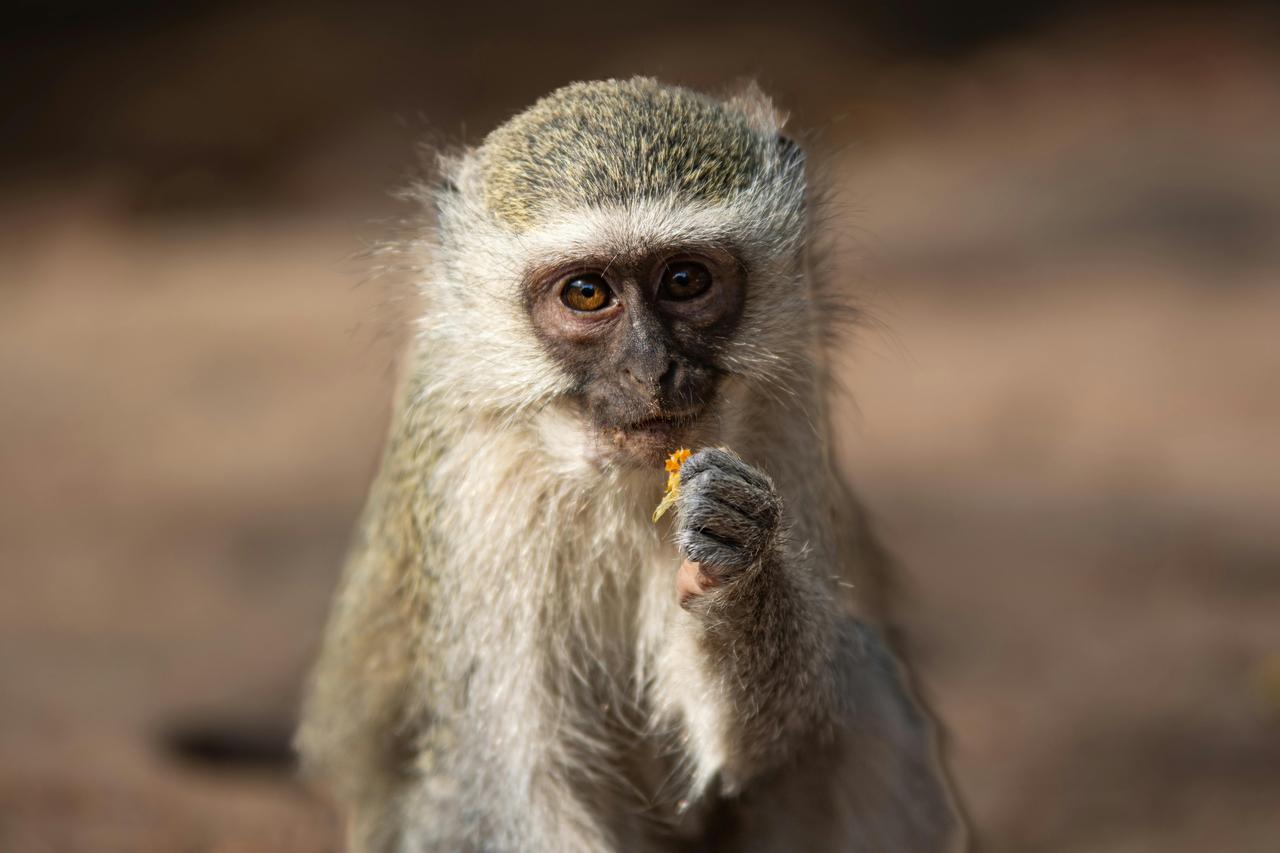
Vervet Monkey (Pexels)
Vervet monkeys inhabit savannas, open woodlands, and grasslands in eastern and southern Africa. They can also adapt to urban environments. They are found at elevations as high as 6,300 feet (approximately 1,900 meters). Vervet monkeys interact extensively with human settlements and agricultural areas. Their habitat preferences strongly depend on the availability of large trees suitable for feeding, drinking, and resting.
Vervet monkeys live in social, hierarchical groups ranging from 10 to 50 individuals. These groups are primarily composed of adult females and their offspring. Within vervet society, social hierarchies determine dynamics such as dominant individuals receiving more grooming. Juveniles strengthen social bonds by grooming each other and cleaning one another’s fur. Males leave their natal group during adolescence and migrate to join new groups.
Communication is a critical survival tool for vervet monkeys. Alarm calls vary depending on the type of threat. For example, a leopard alarm call prompts monkeys to climb trees, while an eagle alarm call causes them to look skyward or flee to safer ground. This complex vocal alarm system significantly enhances their chances of survival.
Vervet monkeys primarily follow a vegetarian diet, consuming leaves, shoots, seeds, fruits, flowers, and roots. Occasionally, they also eat animal matter such as insects, eggs, rodents, and birds. They use their cheek pouches to store food while foraging, carrying it for later consumption. During the day, they spend much of their time searching for food, and afternoons are typically devoted to grooming and resting.
The gestation period of vervet monkeys is approximately 5.5 months, and each birth results in a single infant. At birth, infants have black fur and pink faces. It takes about 3 to 4 months for them to develop their adult coloration. Females reach sexual maturity between 2.5 and 4 years of age, while males typically do not mature until they are about 5 years old.
Vervet monkeys usually give birth in November or December, just before the rainy season. Newborns cling to their mothers for the first few weeks and rely exclusively on their mother’s milk. Infants are weaned between eight and nine months of age and begin foraging for food independently.
According to the IUCN, vervet monkeys are listed as "Least Concern" and are not considered threatened. However, these primates can cause damage to crops and are sometimes hunted or caught in traps. They are also captured and sold as pets, which poses a further threat. Nevertheless, vervet monkeys are protected in certain conservation areas and reserves.
African Wildlife Foundation. "Vervet Monkey." African Wildlife Foundation, 2023. Accessed June 24, 2025. https://www.awf.org/wildlife-conservation/vervet-monkey/
Born Free Foundation. “Vervet Monkeys.” Born Free, 2023. Accessed June 24, 2025. https://www.bornfree.org.uk/animals/vervet-monkeys/
Pexels. “Vervet Monkey.” Pexels, 2023. Accessed June 24, 2025. https://images.pexels.com/photos/32632063/pexels-photo-32632063.jpeg
Pexels. “Vervet Monkey.” Pexels, 2023. Accessed June 24, 2025. https://images.pexels.com/photos/32632096/pexels-photo-32632096.jpeg
Primate Info Net. "Vervet Monkey." Primate Info Net, Wisconsin Primate Research Center, 2023. Accessed June 24, 2025. https://primate.wisc.edu/primate-info-net/pin-factsheets/pin-factsheet-vervet-monkey/
San Diego Zoo Wildlife Alliance. “Vervet Monkey.” San Diego Zoo Wildlife Alliance, 2023. Accessed June 24, 2025. https://animals.sandiegozoo.org/animals/vervet-monkey/

Family | Cercopithecoidea | ||||||||
|---|---|---|---|---|---|---|---|---|---|
Common Name | Green monkey | ||||||||
Habitat | Sub-Saharan Africa urban areas swamps forest edges savannas | ||||||||
Diet(s) | Omnivore (vegetarian-based rodents) bird eggs insects | ||||||||
No Discussion Added Yet
Start discussion for "Vervet Monkey (Chlorocebus pygerythrus)" article
Physical Characteristics
Habitat and Distribution
Social Structure and Behavior
Diet and Nutrition
Reproduction and Life Cycle
Conservation Status