This article was automatically translated from the original Turkish version.
+1 More
Name(s) | Veysel Karani Tomb (Üveys el-Karâni Tomb) | ||||||||
|---|---|---|---|---|---|---|---|---|---|
Location | Baykan District Siirt Veysel Karani Village | ||||||||
Construction Period | The Ottoman period structure was largely shaped after its reconstruction in 1901 | ||||||||
Restoration/Modification | 1901 (original construction), 1967 (demolition and reconstruction), 1974–2001 numerous repairs | ||||||||
Plan Type | Square plan with an octagonal drum and dome, adjacent small mosque section | ||||||||
Architectural Elements | Ashlar stone, dome and pendentives, tiled interior space, wooden minbar and pulpit | ||||||||
Visitor Profile | Pilgrims visiting for devotional tourism; high interest during Ramadan and holidays | ||||||||
Conservation Status | Within the scope of cultural heritage the reconstruction process is being planned | ||||||||
Cultural Role | A significant mausoleum of the makam type; symbolic structure of Sufi devotion | ||||||||
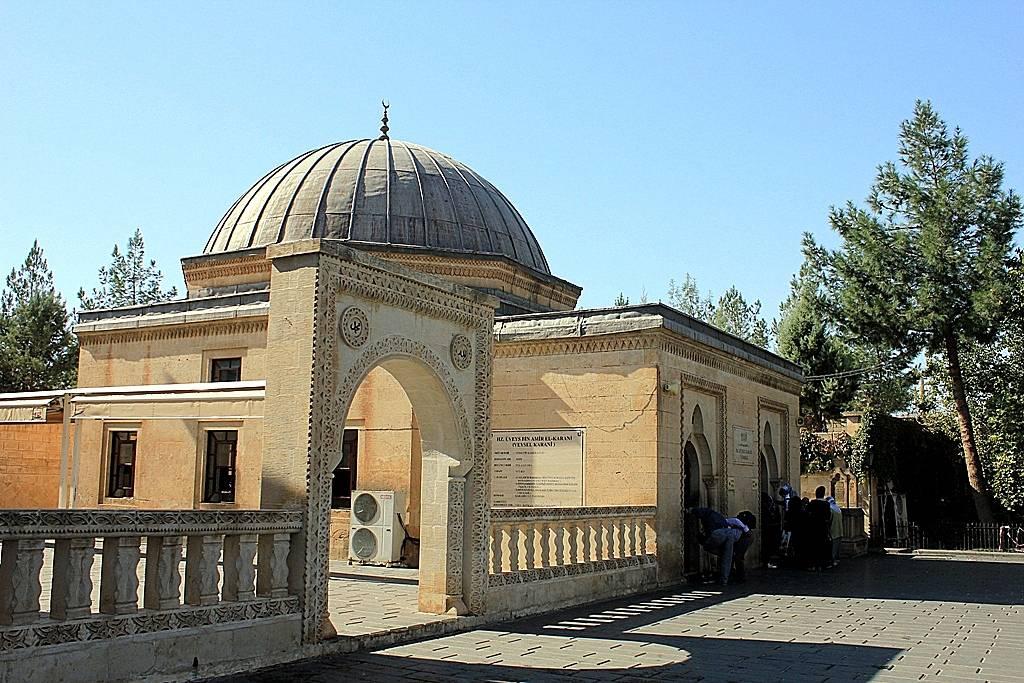
The Veysel Karani Türbesi is located in the Veysel Karani Village of the Baykan District, dependent on Siirt Province, along the Diyarbakır–Siirt highway. It is approximately 40 km from the provincial center and about 8 km from Baykan. The türbe is situated on a natural hilltop within an area characterized by dense religious structures and settlements.
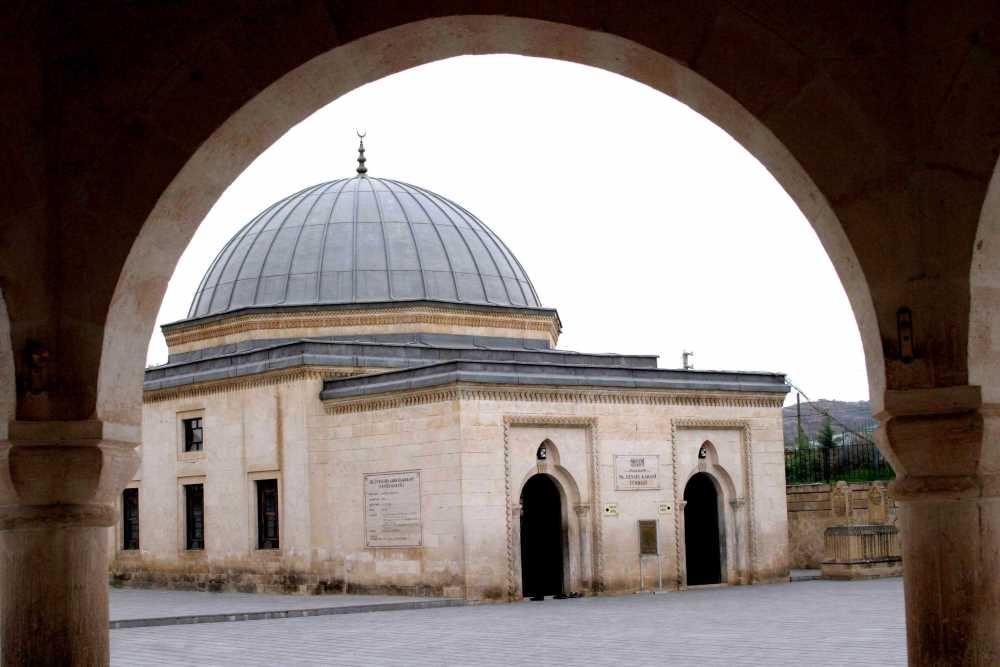
Veysel Karani Türbesi (Culture Portal)
Hz. Veysel Karani (Üveys b. Âmir al-Karanî) was born in the village of Karen in Yemen and lived during the time of our Prophet. Although he did not meet the Prophet physically, he is remembered in Islamic history as the possessor of “ruz-i makbul du’as” — accepted prayers. According to tradition, he participated in the Battle of Siffin alongside Hazreti Ali and was martyred in 657. The prevailing view is that the türbes in Anatolia are symbolic, as his actual grave is believed to be in Yemen.
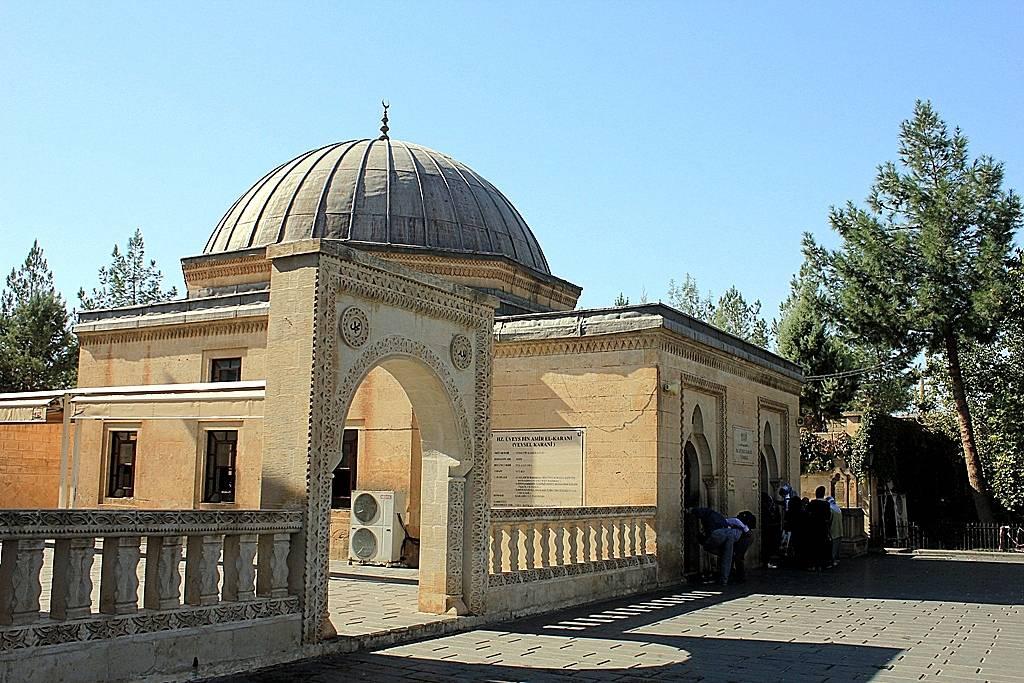
Veysel Karani Türbesi - Siirt (Culture Portal)
Although the earliest structural traces of the türbe are unclear, sources indicate that after the Seljuk period, Turkmen dervishes regarded this site as a “makam türbe.” During the Ottoman period, with state support, it was formally transformed into a türbe and külliye complex. In 1901, the first concrete structure was built using local “cas” taxes. However, due to moisture and dampness, this structure deteriorated and was demolished in 1967. It was then reconstructed faithfully to its original dimensions under the guidance of provincial plans. From 1974 onward, the General Directorate of Foundations expanded the külliye through additional constructions, including an courtyard, slaughterhouse, and guesthouse. Restoration works were carried out in 1987, 1991, and 1998, and between 1998 and 2001, the türbe and its surroundings were modernized to accommodate visitors.
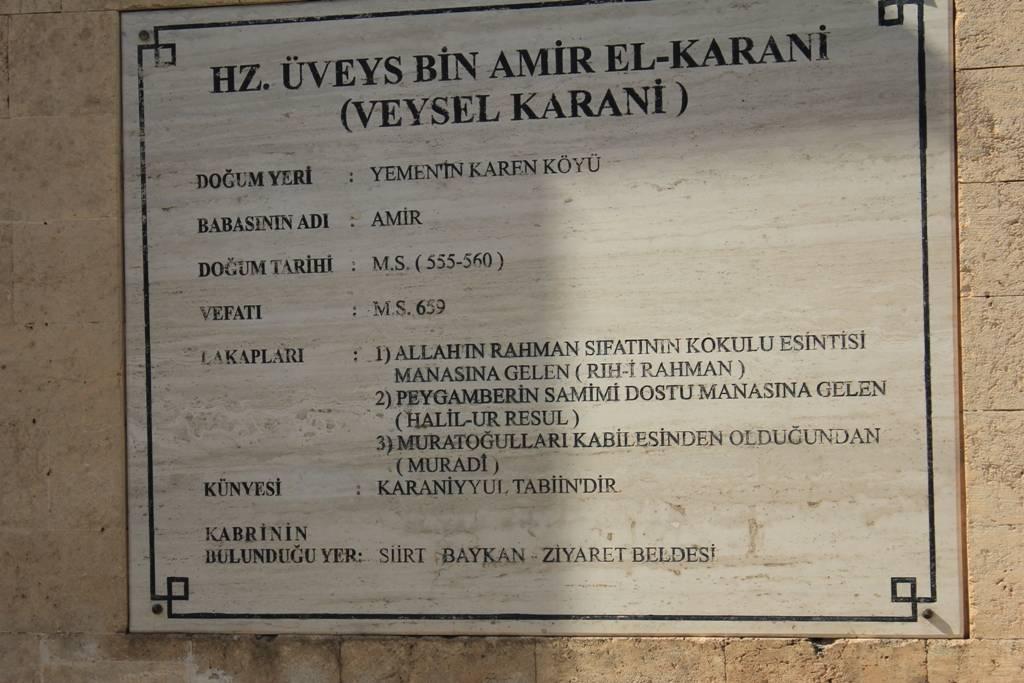
Veysel Karani Türbesi - Siirt (Culture Portal)
The Veysel Karani Türbesi has a square plan oriented toward the qibla and is covered by an octagonal drum-supported dome. Externally, the dome is shaped like a conical roof, while internally it is associated with a flat dome. Inside the space, a symbolic sarcophagus believed to belong to Veysel Karani is placed. Natural light enters through strategically positioned windows. The türbe was constructed adjacent to the mosque, with its minaret attached directly to the mosque wall and built from finely cut stone. The final prayer hall follows a three-domed architectural arrangement. The interior of the harem is surrounded by round-arched windows at the lower level and adorned with tile decorations above. The mihrab is crafted with simple stone masonry, while the minbar and pulpit are made of wood.
Following the demolition of the original concrete structure, the türbe was rebuilt with renewed attention to authentic architectural details. The most recent restoration works took place between 1998 and 2001, adapting the structure and its surroundings for visitor access. As of 2025, the türbe has been demolished in preparation for reconstruction, sparking public reaction, and new construction projects are being planned. It remains under protection and is safeguarded within the framework of cultural heritage laws.
The Veysel Karani Türbesi is one of the most well-known examples of makam türbes in Anatolia. It represents devotion to spiritual figures within the Islamic Sufi tradition and serves as a spiritual center shaping the cultural identity of the Siirt and Baykan regions. It is a destination for pilgrims and visitors from within Türkiye and abroad under the framework of faith-based tourism.
Accessed November 26, 2025.
Ministry of Culture and Tourism. "Veysel Karani Türbesi – Siirt." Kültür Portalı. Accessed July 24, 2025.
TDV İslâm Ansiklopedisi. "Veysel Karânî Külliyesi." İbrahim Yıldırım. Accessed July 23, 2025.

Name(s) | Veysel Karani Tomb (Üveys el-Karâni Tomb) | ||||||||
|---|---|---|---|---|---|---|---|---|---|
Location | Baykan District Siirt Veysel Karani Village | ||||||||
Construction Period | The Ottoman period structure was largely shaped after its reconstruction in 1901 | ||||||||
Restoration/Modification | 1901 (original construction), 1967 (demolition and reconstruction), 1974–2001 numerous repairs | ||||||||
Plan Type | Square plan with an octagonal drum and dome, adjacent small mosque section | ||||||||
Architectural Elements | Ashlar stone, dome and pendentives, tiled interior space, wooden minbar and pulpit | ||||||||
Visitor Profile | Pilgrims visiting for devotional tourism; high interest during Ramadan and holidays | ||||||||
Conservation Status | Within the scope of cultural heritage the reconstruction process is being planned | ||||||||
Cultural Role | A significant mausoleum of the makam type; symbolic structure of Sufi devotion | ||||||||
No Discussion Added Yet
Start discussion for "Veysel Karani Türbesi - Siirt" article
Historical Background and the Identity of Veysel Karani
Construction Process and Külliye Structure
Architectural Features
Conservation, Restoration, and Current Status
Cultural, Religious, and Touristic Significance