
This article was automatically translated from the original Turkish version.
+2 More
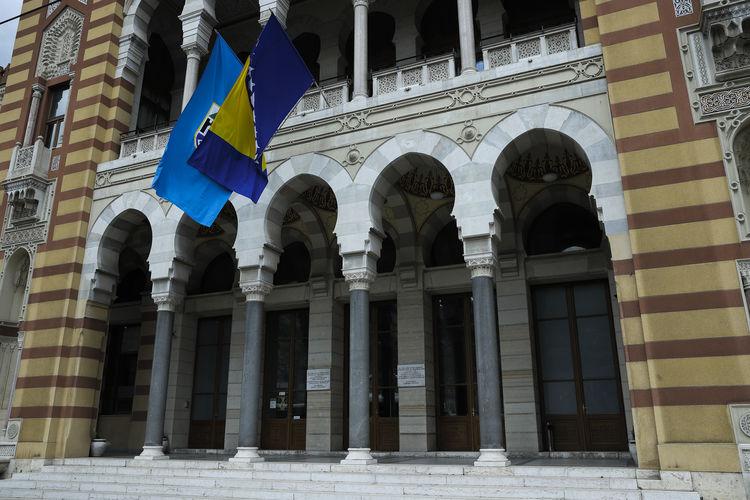
Vijećnica Library is a historic building located in Sarajevo, the capital of Bosnia and Herzegovina. Originally opened as a municipal building, it was later converted into a national library after World War II and for many years served as one of the institutions preserving Bosnia and Herzegovina’s cultural memory.
The design journey of Vijećnica began in 1892 when the Austro-Hungarian administration appointed architect Aleksandar Witek. To ensure the project had a unique identity and achieved aesthetic harmony with Bosnia’s Islamic heritage, Witek traveled to Cairo, the capital of Egypt, to conduct technical studies on Mamluk and Andalusian architecture.
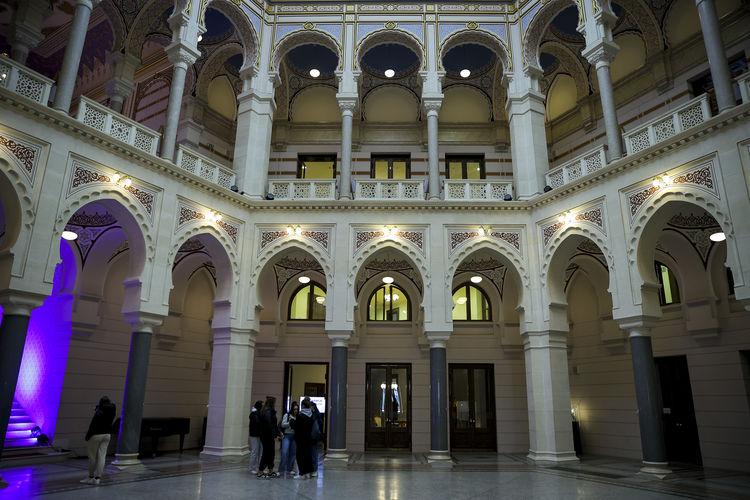
Vijećnica Library Architecture (Anadolu Ajansı)
Witek died before the project’s completion, and architectural leadership was transferred to Ćiril Iveković.【1】 Iveković managed the construction process while remaining faithful to his predecessor’s fundamental design principles. Vijećnica was officially inaugurated on 20 April 1896 with a ceremony as the Sarajevo City Hall. The building served as the city’s administrative center until the end of World War II. Additionally, it holds a pivotal place in world political history as the last official stop visited by Archduke Franz Ferdinand of Austria-Hungary immediately before his assassination in 1914.【2】
Following World War II, changing political conditions and societal needs led to a complete change in the building’s function in 1945. From that date onward, it was transformed into a center for knowledge and culture. Under this new identity, the building brought together millions of books, manuscripts, and archival documents belonging to Bosniak, Serb, Croat, and Jewish communities under one roof.
The designation “Memory of Sarajevo” stems from the cultural heritage represented by these collections and the building’s reflection of the intellectual diversity of the Balkans. After its conversion into a library, its central atrium, expansive reading halls, and archival rooms began operating as one of the region’s most important centers of scholarship.
Vijećnica Library suffered one of the most severe blows during the Bosnian War (1992–1995) and the Siege of Sarajevo, one of the longest sieges in modern history. On 25 August 1992, Serb forces positioned on the hills surrounding the city launched a systematic artillery bombardment directly targeting the library.【3】 The bombardment, carried out with incendiary shells, quickly ignited a fire due to the building’s predominantly wooden interior architecture and the vast quantity of paper documents it housed.
The fire could not be contained for three days due to water shortages in the city, inadequate firefighting equipment, and sharpshooter fire directed at firefighters by the besieging forces to prevent extinguishing efforts.【4】 During this time, the building’s glass dome and central atrium collapsed with a loud crash, leaving the structure reduced to an empty skeleton.
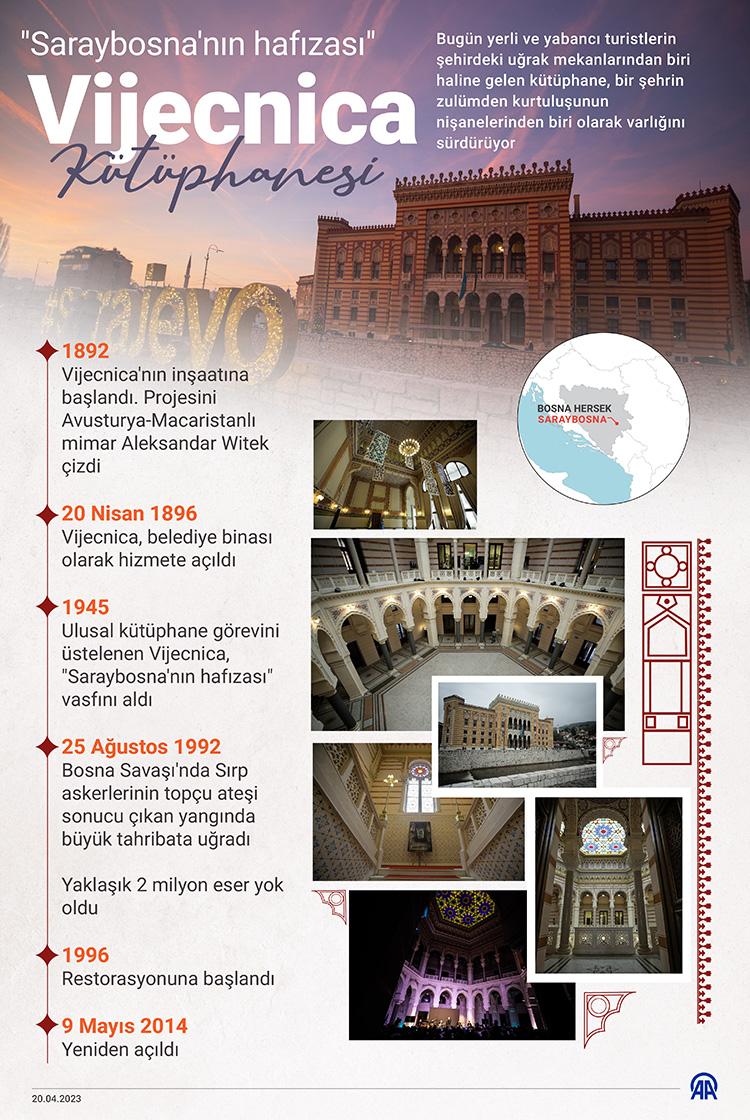
"Sarajevo’s Memory" Vijećnica Library (Anadolu Ajansı)
Before the attack, the library, which served as the country’s information repository with approximately six million books, periodicals, and archival documents, lost about two million items entirely to ashes. Among the destroyed collections were 155,000 manuscripts, the country’s official national archives, and centuries-old cultural heritage belonging to the Bosniak, Serb, Croat, and Jewish communities of the region.【5】
Indeed, a limited number of items rescued by library staff and Sarajevo volunteers who entered the flames during the fire are now exhibited as symbols of resistance.
Restoration efforts for Vijećnica Library began immediately after the end of the Bosnian War in 1996 and, with international support, evolved into an 18-year reconstruction journey. In the initial phases, efforts focused on stabilizing the building’s severely damaged structural framework; collapsing load-bearing elements and damaged exterior facades were secured to prevent total collapse.
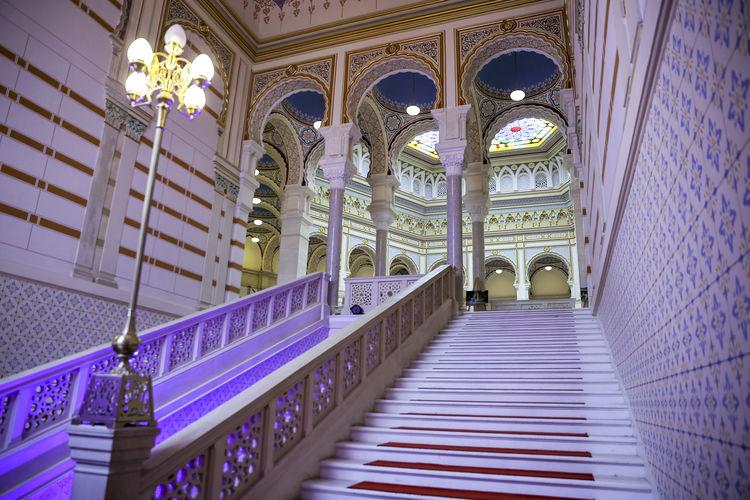
Vijećnica Among Sarajevo’s Symbolic Structures (Anadolu Ajansı)
Upon completion of the restoration work, the building reopened its doors to the public in a ceremony on 9 May 2014. Today, Vijećnica functions not only as a library but also as an administrative center hosting Sarajevo City Council activities, an official venue for state receptions, and a multi-purpose museum.
Exhibition spaces located in the basement and ground floors display photographs documenting the war’s destruction and rare documents rescued from the fire, ensuring the city’s story is passed on to future generations.
[1]
"Vijećnica Sarajevo" Cultural Inventory, accessed 9 March 2026. https://kulturenvanteri.com/bs/yer/saraybosna-belediye-binasi/
[2]
"The First Shot of World War I" Anadolu Ajansı, accessed 9 March 2026. https://www.aa.com.tr/tr/dunya/1-dunya-savasinin-ilk-kursunu/147324
[3]
"Sarajevo’s Memory" Vijećnica Library’s Doors Opened 127 Years Ago" Anadolu Ajansı, accessed 9 March 2026. https://www.aa.com.tr/tr/kultur/saraybosnanin-hafizasi-vijecnica-kutuphanesinin-kapilari-127-yil-once-acildi/2877076
[4]
"It has been 26 years since Serbian soldiers erased Sarajevo’s memory" TRT Haber, accessed 9 March 2026. https://www.trthaber.com/haber/kultur-sanat/sirp-askerleri-saraybosnanin-hafizasini-sileli-26-yil-oldu-381629.html
[5]
"Sarajevo’s Memory" Vijećnica Library’s Doors Opened 127 Years Ago" Anadolu Ajansı, accessed 9 March 2026. https://www.aa.com.tr/tr/kultur/saraybosnanin-hafizasi-vijecnica-kutuphanesinin-kapilari-127-yil-once-acildi/2877076


No Discussion Added Yet
Start discussion for "Vijećnica Library (Vijećnica)" article
Historical Development and Construction Process
The Bosnian War and the Destruction of Vijećnica Library
Restoration Process and Current Status