

This article was automatically translated from the original Turkish version.
+1 More
Geographical Location | Part of the Leeward Islands chain In the region where the Atlantic Ocean meets the Caribbean Sea A group of islands located in the northern section of the Lesser Antilles At the eastern end of the Caribbean Sea | ||||||||
|---|---|---|---|---|---|---|---|---|---|
Regional Classification | The Caribbean, Lesser Antilles, and Leeward Islands subregion constitute an archipelago | ||||||||
Political Division | British Virgin Islands (BVI), United States Virgin Islands (USVI) | ||||||||
Sovereign States and Status | BVI is a British overseas territory with extensive self-governance in internal affairs, while USVI is a U.S. unincorporated territory under the oversight of the Office of Insular Affairs within the U.S. Department of the Interior | ||||||||
Major Administrative Centers | The capital of BVI is Road Town on the island of Tortola, and the capital of USVI is Charlotte Amalie on the island of St. Thomas | ||||||||
Major Large Islands | BVI: Tortola, Virgin Gorda, Anegada, Jost Van Dyke; USVI: St. Thomas, St. John, St. Croix and surrounding small islets | ||||||||
Climate | Under the influence of a tropical marine climate Where temperatures remain relatively stable throughout the year A geography characterized by trade winds and the risk of tropical storms and hurricanes | ||||||||
Population (USVI) | 84.138 | ||||||||
Population (BVI) | 39,000 (2025) | ||||||||
Official / Common Languages | In BVI, English is the official and predominant language, with local dialects and Creole influences in daily speech; in USVI, English is the primary language of communication | ||||||||
Sports and International Representation | Athletics, swimming, sailing, cricket, football, water sports | ||||||||
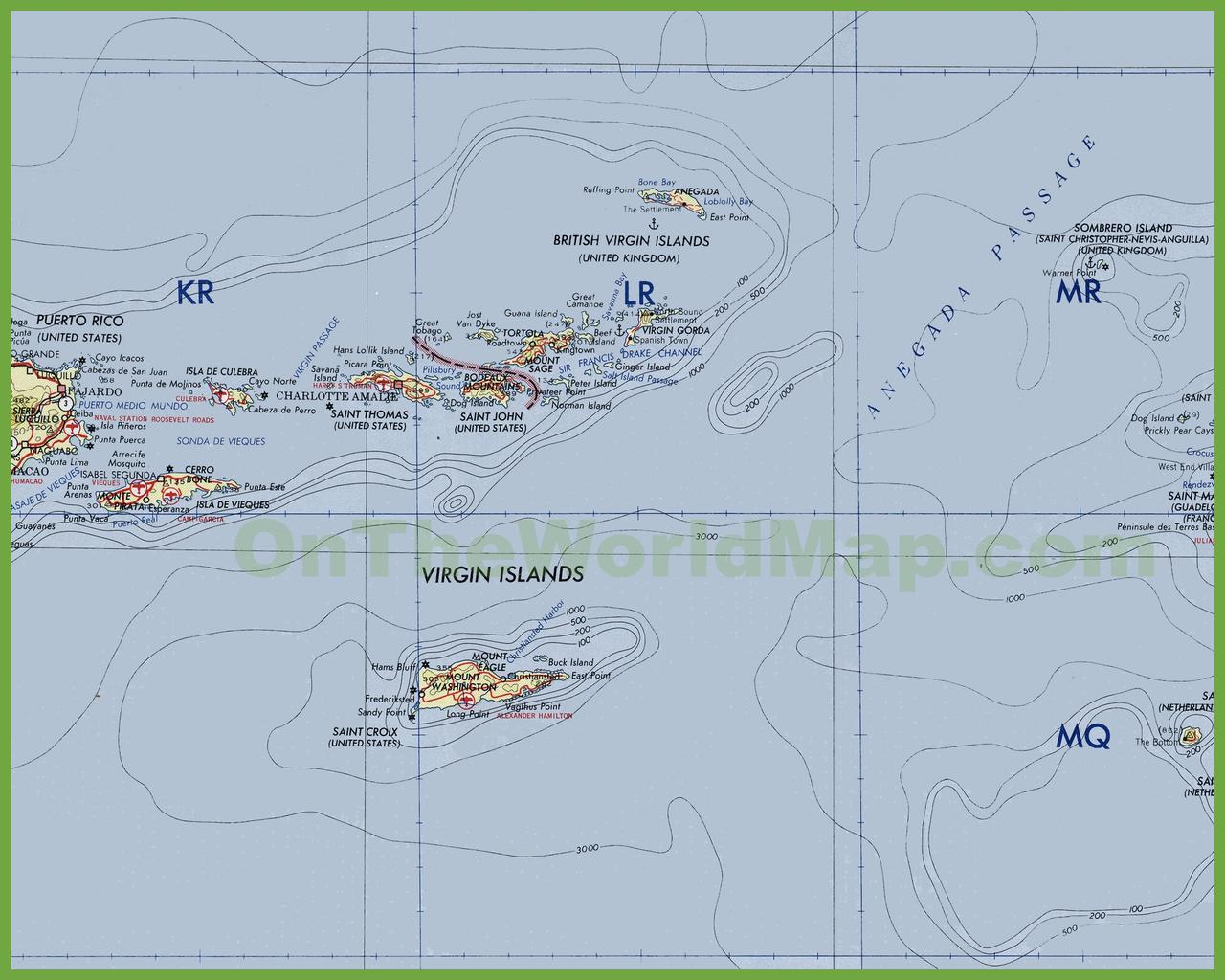
The Virgin Islands are an island group located in the eastern Caribbean Sea, at the intersection of the Atlantic Ocean and the Caribbean Sea. Historically, the archipelago has been divided into two main political entities: British Virgin Islands (BVI) and United States Virgin Islands (USVI). In the 17th century, part of the islands came under British control while another part fell under Denmark; in 1917, the islands under Danish control were sold to the United States.【1】
Today, the British Virgin Islands are an overseas territory of the United Kingdom, while the U.S. Virgin Islands are an unincorporated territory of the United States.
The Virgin Islands archipelago lies geographically in the northern section of the Lesser Antilles and forms part of the Leeward Islands chain. The main inhabited islands of the British Virgin Islands are Tortola, Virgin Gorda, Anegada, and Jost Van Dyke, while the U.S. Virgin Islands consist of larger islands such as St. Thomas, St. John, and St. Croix, along with smaller islets. The archipelago generally lies within the tropical climate zone and features a mix of mountainous volcanic islands and low-lying coral islands.【2】
Tortola is the largest island of the British Virgin Islands, with an area of approximately 55.7 square kilometers and a population exceeding 24,000. The island is characterized by steep slopes and coastal strips on the north, and elevated hills rising near Sage Mountain in the interior. The administrative capital, Road Town, is located on Tortola and serves as both the political and financial center.【3】
Virgin Gorda, with an area of about 8 square miles, is the third largest island after Tortola and Anegada. Its geography consists of coves where granite rock formations meet the sea, low-lying hills, and beaches stretching along the coast. Rock formations and coves such as The Baths and Devil’s Bay are central to both the natural landscape and tourist attractions. Anegada is the only major coral island in the archipelago, known for its maximum elevation of approximately 8–9 meters, extensive salt ponds, and coral reefs such as Horseshoe Reef surrounding the island. Jost Van Dyke is smaller, volcanic in origin, and steep-sided, associated particularly with its natural coves and coastal settlements and a thriving marine tourism industry.
The U.S. Virgin Islands are among the islands under the jurisdiction of the Office of Insular Affairs within the U.S. Department of the Interior. The main inhabited islands are St. Thomas, St. John, and St. Croix; the capital, Charlotte Amalie, is located on St. Thomas and serves as the administrative center of the archipelago. Due to its position along Caribbean and Atlantic sea routes, the islands have historically held strategic importance.【4】

St Thomas, Virgin Islands - Flickr
Archaeological findings in the islands now constituting the British Virgin Islands indicate the presence of Arawak communities and possibly earlier Ciboney groups prior to European arrival. While the extent of permanent and intensive settlement on the islands remains debated, evidence points to settlements linked to fishing and seasonal camping activities. It is generally accepted that the Arawak population inhabited the region until the 15th century, after which they were displaced by the Carib communities, who gave their name to the Caribbean islands.【5】
The region became visible in European records in 1493 during Christopher Columbus’s second voyage. It is recorded that Columbus named the islands “Santa Ursula y las Once Mil Vírgenes,” a long designation that was later shortened to “Las Vírgenes.” Although the Spanish claimed the islands through discovery, no permanent Spanish settlement developed, and the area remained for centuries a zone used primarily for piracy, small-scale trade, and fishing.【6】
From the early 17th century, Dutch seafarer and pirate Joost van Dyk began establishing more regular settlements, particularly around Tortola, creating small-scale production centers combining cotton and tobacco cultivation with trade. The Netherlands West India Company assigned strategic importance to these settlements and used the islands as a supply and trading stop between its colonies in South America and New Amsterdam in North America. However, during this period, Spanish attacks repeatedly destroyed the small settlements.【7】
In 1672, with the outbreak of the Third Anglo-Dutch War, Britain seized Tortola and surrounding islands, initiating a process of permanent British control. Although the Treaty of Westminster following the war theoretically provided for the return of some territories, strategic considerations ensured that the islands remained effectively under British control. By the late 17th and early 18th centuries, the islands became one of the Caribbean colonies of the British Empire, with an economy based on sugar cane plantations and enslaved labor.
The history of the British Virgin Islands is typically divided into periods of British administration, slavery and its abolition, and the emergence of modern self-governing political structures. Within this framework, the abolition of slavery in the British Empire in 1834 is regarded as a turning point; from the 1950s onward, the modern era is characterized by the strengthening of representative institutions, constitutional reforms, and the development of self-governance mechanisms.【8】
A portion of the Virgin Islands archipelago came under Danish control from the 17th century and was known as the Danish West Indies. After the abolition of slavery in the 19th century, the decline of the sugar economy led to economic difficulties under Danish administration. In 1917, amid the conditions of the First World War, the United States purchased the Danish West Indies for $25 million, incorporating the islands as the U.S. Virgin Islands.
In 1927, U.S. citizenship was granted to the islanders; in 1931, federal authority was transferred to the U.S. Department of the Interior. The Organic Act of 1936 established the first framework for local governance; the revised Organic Act of 1954 introduced a more comprehensive model of self-government. With the first elections for constitutional offices in 1970, the U.S. Virgin Islands became a territory with an elected governor and a local legislature but limited representation in the U.S. Congress.【9】
The British Virgin Islands are an overseas territory of the United Kingdom, organized as a parliamentary democracy with extensive internal self-government. The Governor, representing the British monarch, holds authority over defense and foreign affairs, areas under the responsibility of the United Kingdom. The head of the local government, the Premier, is appointed as the leader of the party or coalition that wins the majority in elections; cabinet members are selected from among elected members of the legislature.
The legislative body is the unicameral House of Assembly, composed of 13 elected members, one ex officio member (such as the Attorney General), and the Speaker. The electoral system features a mixed structure in which voters cast ballots for both constituency representatives and at-large members. The judiciary operates as an integrated system with the High Court, the Court of Appeal, and the Judicial Committee of the United Kingdom Privy Council serving as the final appellate authority.【10】
The Constitution of the Virgin Islands is the foundational legal document defining the modern governance structure and the system of fundamental rights and freedoms. It outlines the division of powers among the executive, legislative, and judicial branches; regulates the roles of the Governor, Premier, and Cabinet; and establishes the electoral system and principles of public administration.【11】

St John, Virgin Islands - Flickr
The U.S. Virgin Islands are an unincorporated territory of the United States, meaning that not all provisions of the U.S. Constitution apply automatically, but only those specifically extended by Congress. Administrative responsibility at the federal level is vested in the Office of Insular Affairs under the U.S. Department of the Interior.
The territory has an elected Governor who serves as head of the local executive branch; the Governor is chosen by popular vote of the U.S. Virgin Islands population. The legislative body has authority to enact local laws within the framework of federal statutes and the supremacy of the U.S. Constitution. The territory is represented in the U.S. House of Representatives by a non-voting delegate.
According to Worldometer data, the population of the U.S. Virgin Islands is estimated at 84,138 in 2025. The population, spread over a land area of 350 square kilometers, exhibits a relatively high population density of 240 people per square kilometer. The same source notes that the population’s share of the global total is negligible (0%) and ranks 200th globally.【12】
The demographic profile indicates an aging population. The median age for 2025 is calculated at 44.8 years. The total fertility rate stands at 2.1 children per woman, a level considered sufficient for population replacement without migration.
Life expectancy at birth, combining both sexes, is 75.9 years; for women it is 81.6 years and for men 70.9 years. The infant mortality rate (4.7 deaths per 1,000 live births) and under-five mortality rate (5.4 deaths per 1,000 live births) indicate health indicators consistent with a high level of development.【13】
The population of the British Virgin Islands is estimated at 39,000 in 2025. This structure renders BVI a small-population society significantly affected by internal migration and seasonal movements tied to tourism.【14】
The economy of the British Virgin Islands rests on two main pillars: international financial services and tourism. Government assessments indicate that a significant portion of public revenue is derived from corporate registrations and related institutional services, as well as licensing fees and levies; it is emphasized that nearly half of fiscal revenues during the 2017/2018 period came from international business companies and financial services.
In the financial services sector, hundreds of thousands of international business companies are registered in the British Virgin Islands, establishing it as a significant offshore financial center within the global financial architecture. This economic model, with limited diversification, is highly sensitive to international regulations, tax transparency standards, and developments in competitive judicial jurisdictions.【15】
The tourism sector generates considerable revenue through the islands’ coastlines, coral reefs, yachting facilities, and natural parks, particularly on Tortola, Virgin Gorda, Anegada, and Jost Van Dyke. Cruise tourism, yachting, and luxury accommodation facilities are vital for employment and foreign exchange earnings. In addition, construction, small-scale agriculture, and fishing serve as secondary economic components.【16】
Detailed economic statistics for the U.S. Virgin Islands, when considered in light of the region’s historical and geographic position, its status as U.S. territory, and its location along maritime shipping routes, reveal a service-oriented economic profile. Federal and local public expenditures, tourism, and port activities are among the principal components of the regional economy.【17】
The culture of the British Virgin Islands has been shaped by the interaction of an African-descended population, European colonial heritage, and the unique island lifestyle of the Caribbean. English is the dominant language, but local dialects and Creole influences are evident in daily life. The local cuisine is recognized through fish and seafood dishes and “fungi,” a cornmeal-based preparation; Fungi & Fish, regarded as the national dish, has become a symbol of cultural identity.【18】
Music and festivals are integral to island life. The musical genre known as “fungi” is a traditional expression centered on local instruments and rhythms. Annual festivals, maritime events, and religious and cultural celebrations enliven the social life of both the local population and visitors.
In sports, the British Virgin Islands participates in international competitions in athletics, swimming, sailing, cricket, football, and water sports. Athletes and delegations from the islands have competed in events such as the 2014 Sochi Winter Olympics, the 2014 Glasgow Commonwealth Games, and the Nanjing Youth Olympics. Such events enhance the international visibility of this small island community and contribute to the emergence of athletes who serve as role models for youth.

Virgin Islands National Symbols (English)- Government of the Virgin Islands
The national symbols of the British Virgin Islands reflect a unity that connects both ties to the British monarchy and local cultural elements. The flag features the Union Jack in the upper hoist corner and the territory’s coat of arms on the right. The coat of arms depicts a saint holding a lamp, surrounded by other lamps; this design carries symbolism linked to the islands’ historical and cultural narrative.
The white cedar (White Cedar) and its flower are recognized as the national tree and flower. These species are important as part of the local ecosystem and traditional uses such as boat building. The national bird is designated as the Turtle Dove; colors associated with the territory include yellow, green, blue, white, and red.【19】
Virgin Islands National Symbols (English)- Government of the Virgin Islands
The national anthem of the British Virgin Islands is the United Kingdom’s anthem, “God Save Our Gracious King”; in addition, the regional song “Oh, Beautiful Virgin Islands” is recognized as a symbolic expression of local identity and belonging.
Virgin Islands National Symbols (United States)- TheMarches09
British Virgin Islands Government. "2025 Budget Address." Accessed January 14, 2025.https://bvi.gov.vg/sites/default/files/2025_Budget_Address.pdf
British Virgin Islands Government. "Appendix B – 2023–2025 Macro Economic Review and Outlook." Accessed January 14, 2025.https://bvi.gov.vg/sites/default/files/Appendix_B_-_2023_2025_Macro_Economic_Review_and_Outlook.pdf
British Virgin Islands Government. "Elections." Accessed January 14, 2025.https://www.bvi.gov.vg/elections
British Virgin Islands Government. "Geography." Accessed January 14, 2025.https://www.bvi.gov.vg/content/geography
British Virgin Islands Government. "National Symbols." Accessed January 14, 2025.https://www.bvi.gov.vg/national-symbols
British Virgin Islands Government. "News." Accessed January 14, 2025.https://www.bvi.gov.vg/news
British Virgin Islands Government. "Our Culture." Accessed January 14, 2025.https://www.bvi.gov.vg/content/our-culture
British Virgin Islands Government. "Our Economy." Accessed January 14, 2025.https://www.bvi.gov.vg/content/our-economy
British Virgin Islands Government. "Our History." Accessed January 14, 2025.https://www.bvi.gov.vg/content/our-history
British Virgin Islands Government. "Our Islands." Accessed January 14, 2025.https://www.bvi.gov.vg/content/our-islands-0
British Virgin Islands Government. "Our Sports." Accessed January 14, 2025.https://www.bvi.gov.vg/content/our-sports
British Virgin Islands Government. "Politics." Accessed January 14, 2025.https://www.bvi.gov.vg/politics
British Virgin Islands Government. "Premier’s Office." Accessed January 14, 2025.
British Virgin Islands Government. "Virgin Islands Constitution." Accessed January 14, 2025.https://www.bvi.gov.vg/virgin-islands-constitution
British Virgin Islands Government. “2025 Budget Estimates – Final.” Accessed January 14, 2025.https://bvi.gov.vg/sites/default/files/2025_Budget_Estimates_-_Final_V4.pdf
British Virgin Islands Government. “Governors Group & Deputy Governor’s Office.” Accessed January 14, 2025.https://www.bvi.gov.vg/content/governors-groupdeputy-governors-office
British Virgin Islands Government. “History of the Cabinet.” Accessed January 14, 2025.https://www.bvi.gov.vg/history-cabinet
British Virgin Islands Government. “Inflation Rate by Category (2013–2021).” Accessed January 14, 2025.https://bvi.gov.vg/sites/default/files/inflation_rate_by_category_2013-2021.pdf
British Virgin Islands Government. “Ministry of Communication and Works.” Accessed January 14, 2025.https://www.bvi.gov.vg/content/ministry-communication-and-works
British Virgin Islands Government. “Ministry of Environment, Natural Resources and Climate Change.” Accessed January 14, 2025.https://www.bvi.gov.vg/ministry/ministry-environment-natural-resources-and-climate-change
British Virgin Islands Government. “Ministry of Finance.” Accessed January 14, 2025.https://www.bvi.gov.vg/ministry/ministry-of-finance
British Virgin Islands Government. “Ministry of Financial Services, Economic Development and Digital Transformation.” Accessed January 14, 2025.https://www.bvi.gov.vg/ministry/ministry-financial-services-economic-development-and-digital-transformation
British Virgin Islands Government. “Ministry of Health and Social Development.” Accessed January 14, 2025.https://www.bvi.gov.vg/content/ministry-health-and-social-development
British Virgin Islands Government. “Ministry of Tourism, Culture and Sustainable Development.” Accessed January 14, 2025.https://www.bvi.gov.vg/ministry/ministry-tourism-culture-and-sustainable-development
DK Consulate USVI. “Transfer Procedures.” Accessed January 14, 2025.https://www.dkconsulateusvi.com/TRANSFER/transfer.html
Flickr (Navin75). Virgin Islands (St John). Accessed January 14, 2025.
Flickr (Photra99). St Thomas, Virgin Island, Caribbean. Accessed January 14, 2025.
Government of the United States Virgin Islands. FY24–FY25 Printed Executive Budget Book. Accessed January 14, 2025.https://omb.vi.gov/wp-content/uploads/2023/05/FY24-FY25-Printed-Executive-Budget-Book-Final.pdf
Government of the United States Virgin Islands. Governor Bryan – Official Biography. Accessed January 14, 2025.https://www.vi.gov/governor-bryan/
Government of the United States Virgin Islands. The Official Site of the United States Virgin Islands Government. Accessed January 14, 2025.https://www.vi.gov/cabinet/
U.S. Department of the Interior. "Virgin Islands." Accessed January 14, 2025.https://www.doi.gov/oia/islands/virgin-islands
Worldometer. "ABD Virjin Adaları Demografisi." Accessed January 14, 2025.https://www.worldometers.info/tr/demografi/abd-virjin-adalari-demografisi/
[1]
U.S. Department of the Interior. “Virgin Islands.” Erişim Tarihi: 14 Ocak 2025. https://www.doi.gov/oia/islands/virgin-islands
[2]
British Virgin Islands Government. “Our Islands.” Erişim Tarihi: 14 Ocak 2025. https://www.bvi.gov.vg/content/our-islands-0
[3]
British Virgin Islands Government. “Our Islands.” Erişim Tarihi: 14 Ocak 2025. https://www.bvi.gov.vg/content/our-islands-0
[4]
U.S. Department of the Interior. “Virgin Islands.” Erişim Tarihi: 14 Ocak 2025. https://www.doi.gov/oia/islands/virgin-islands
[5]
British Virgin Islands Government. “Our History.” Erişim Tarihi: 14 Ocak 2025. https://www.bvi.gov.vg/content/our-history
[6]
British Virgin Islands Government. “Our History.” Erişim Tarihi: 14 Ocak 2025. https://www.bvi.gov.vg/content/our-history
[7]
British Virgin Islands Government. “Our History.” Erişim Tarihi: 14 Ocak 2025. https://www.bvi.gov.vg/content/our-history
[8]
British Virgin Islands Government. “Our History.” Erişim Tarihi: 14 Ocak 2025. https://www.bvi.gov.vg/content/our-history
[9]
U.S. Department of the Interior. “Virgin Islands.” Erişim Tarihi: 14 Ocak 2025. https://www.doi.gov/oia/islands/virgin-islands
[10]
British Virgin Islands Government. “Politics.” Erişim Tarihi: 14 Ocak 2025. https://www.bvi.gov.vg/politics
[11]
British Virgin Islands Government. “Politics.” Erişim Tarihi: 14 Ocak 2025. https://www.bvi.gov.vg/politics
[12]
Worldometer. “ABD Virjin Adaları Demografisi.” Erişim Tarihi: 14 Ocak 2025. https://www.worldometers.info/tr/demografi/abd-virjin-adalari-demografisi/
[13]
Worldometer. “İngiltere Virjin Adaları Demografisi.” Erişim Tarihi: 14 Ocak 2025.
https://www.worldometers.info/tr/dunya-nufusu/britanya-virjin-adalari-nufusu/
[14]
Worldometer. “ABD Virjin Adaları Demografisi.” Erişim Tarihi: 14 Ocak 2025. https://www.worldometers.info/tr/demografi/abd-virjin-adalari-demografisi/
[15]
British Virgin Islands Government. “Our Economy.” Erişim Tarihi: 14 Ocak 2025. https://www.bvi.gov.vg/content/our-economy
[16]
British Virgin Islands Government. “Our Economy.” Erişim Tarihi: 14 Ocak 2025. https://www.bvi.gov.vg/content/our-economy
[17]
Worldometer. “ABD Virjin Adaları Demografisi.” Erişim Tarihi: 14 Ocak 2025. https://www.worldometers.info/tr/demografi/abd-virjin-adalari-demografisi/
[18]
British Virgin Islands Government. “National Symbols.” Erişim Tarihi: 14 Ocak 2025. https://www.bvi.gov.vg/national-symbols
[19]
British Virgin Islands Government. “National Symbols.” Erişim Tarihi: 14 Ocak 2025. https://www.bvi.gov.vg/national-symbols

Geographical Location | Part of the Leeward Islands chain In the region where the Atlantic Ocean meets the Caribbean Sea A group of islands located in the northern section of the Lesser Antilles At the eastern end of the Caribbean Sea | ||||||||
|---|---|---|---|---|---|---|---|---|---|
Regional Classification | The Caribbean, Lesser Antilles, and Leeward Islands subregion constitute an archipelago | ||||||||
Political Division | British Virgin Islands (BVI), United States Virgin Islands (USVI) | ||||||||
Sovereign States and Status | BVI is a British overseas territory with extensive self-governance in internal affairs, while USVI is a U.S. unincorporated territory under the oversight of the Office of Insular Affairs within the U.S. Department of the Interior | ||||||||
Major Administrative Centers | The capital of BVI is Road Town on the island of Tortola, and the capital of USVI is Charlotte Amalie on the island of St. Thomas | ||||||||
Major Large Islands | BVI: Tortola, Virgin Gorda, Anegada, Jost Van Dyke; USVI: St. Thomas, St. John, St. Croix and surrounding small islets | ||||||||
Climate | Under the influence of a tropical marine climate Where temperatures remain relatively stable throughout the year A geography characterized by trade winds and the risk of tropical storms and hurricanes | ||||||||
Population (USVI) | 84.138 | ||||||||
Population (BVI) | 39,000 (2025) | ||||||||
Official / Common Languages | In BVI, English is the official and predominant language, with local dialects and Creole influences in daily speech; in USVI, English is the primary language of communication | ||||||||
Sports and International Representation | Athletics, swimming, sailing, cricket, football, water sports | ||||||||
Geography and Island Groups
History
Precolonial Period and Early Contacts
Dutch and British Colonization
Formation of the U.S. Virgin Islands
Political Status and Governance
British Virgin Islands
U.S. Virgin Islands
Demographics
Economy
Economy of the British Virgin Islands
Economy of the U.S. Virgin Islands
Culture, Society, and Sports (BVI)
National and Regional Symbols