


This article was automatically translated from the original Turkish version.
+2 More
Wet-cell batteries are early-generation battery types that operate using liquid electrolyte solutions and facilitate electrochemical energy conversion. These batteries consist of an anode, a cathode, and a liquid electrolyte; subtypes include lead-acid and nickel-iron batteries. Lead-acid batteries are widely used in fields such as automotive applications due to their low cost and high current capacity, while nickel-iron batteries, despite their long lifespan and durability, have limited use due to low energy efficiency. Wet-cell systems offer high performance but require maintenance and pose risks of tipping or leakage due to their liquid content.
Dry-cell batteries, in contrast, contain a gelled or absorbed electrolyte instead of a liquid, offering advantages in portability, safety, and leak resistance. These batteries are produced in both primary (single-use) and secondary (rechargeable) forms. Thanks to their compact design, they are used in numerous everyday applications ranging from remote controls to portable electronic devices. This more modern structure is preferred due to factors such as low-cost production and widespread availability.
Wet-cell batteries are an older battery type that forms the foundation of modern dry-cell battery technologies. Their defining characteristic is the presence of electrolyte solutions in liquid form. Due to their liquid electrolyte content, these batteries are termed “wet-cell.” Their basic structure consists of three main components: an anode (negative electrode), a cathode (positive electrode), and a liquid electrolyte solution that enables ion transfer between the two electrodes. Wet-cell batteries are structurally divided into two groups:
The most commonly used wet-cell battery types today are lead-acid and nickel-iron based batteries. These batteries are widely employed, particularly in the automotive industry and energy storage systems.
In wet-cell batteries, each cell consists of two fundamental terminals: a positive (cathode) and a negative (anode). The electrode assemblies within the cell undergo chemical reactions with the electrolyte to generate electrons. These electrons, produced as a result of the reactions, move from the negative terminal to the positive terminal, creating an electric current.
The primary advantages of wet-cell systems are their high current delivery capacity, use of low-cost materials, and ability to operate across a wide temperature range. However, due to the presence of liquid electrolyte, they require careful handling and regular maintenance because of risks associated with tipping, leakage, or evaporation.
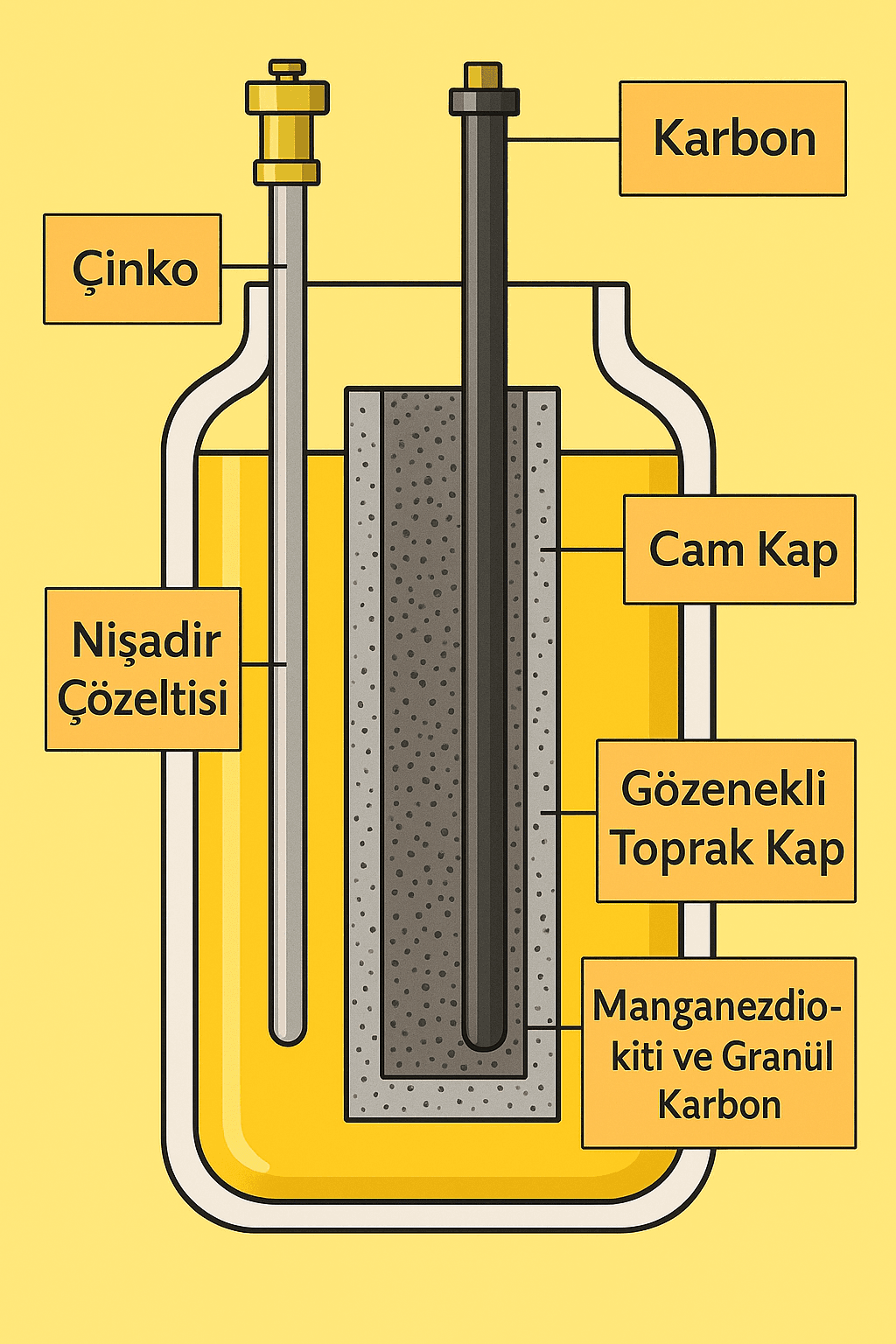
Wet-Cell Structure (Generated by artificial intelligence.)
One of the oldest and most commonly used rechargeable wet-cell energy storage systems, lead-acid batteries can be recharged and reused multiple times due to their electrochemical structure. Although they offer lower energy density compared to newer-generation batteries such as lithium-ion or nickel-metal hydride, they are still preferred in many applications due to their cost-effectiveness and ease of manufacturing.
One of the most notable disadvantages of lead-acid batteries is their heavier weight compared to other rechargeable battery technologies. While this can be a drawback in mobile applications, they continue to function effectively in stationary systems or short-distance transportation. Today, lead-acid batteries are frequently used in the following areas:
In lead-acid batteries, the electrolyte is a mixture of sulfuric acid (H₂SO₄) and water. Two different types of electrodes are present within the cell:
During charging and discharging, these plates undergo chemical reactions with the electrolyte to generate energy. During discharge, lead dioxide (PbO₂) and lead (Pb) react with sulfuric acid to form lead sulfate (PbSO₄), releasing electrical energy. During charging, this reaction is reversed, restoring the battery to a usable state.
Although lead-acid batteries offer advantages such as high current delivery, reliability, and low production cost, their application areas are gradually narrowing due to factors like weight, gas emission, and maintenance requirements, as technology advances.
Structurally classified as wet-cell batteries, nickel-iron batteries share a similar electrochemical structure to lead-acid batteries. This battery type was developed in 1901 by the renowned inventor Thomas Edison and patented the same year, initiating commercial production. Edison’s primary motivation for developing this battery was to create a more durable and long-lasting energy storage solution.
Nickel-iron batteries were historically widely used in railway transportation and industrial applications. However, due to their low charge-discharge efficiency and relatively low specific energy, they have become a secondary option in 21st-century portable energy applications requiring high performance.
The electrolyte solution in these batteries consists of a mixture of potassium hydroxide (KOH) and water (H₂O). The electrode materials are as follows:
Chemical reactions occur between these materials during the charge-discharge process, generating electrical energy. One notable feature of nickel-iron batteries is their long cycle life and resistance to harsh environmental conditions.
Additionally, they are advantageous in terms of safety due to their thermal stability and resistance to overcharging. However, their low energy efficiency and high internal resistance impose performance limitations in systems requiring rapid energy delivery.
Dry-cell batteries are structurally designed differently from wet-cell batteries and do not contain a flowing liquid electrolyte. The electrolyte is typically in a gelled or absorbed form, making the battery more portable, leak-proof, and safer.
Dry-cell batteries are divided into two main categories based on usage:
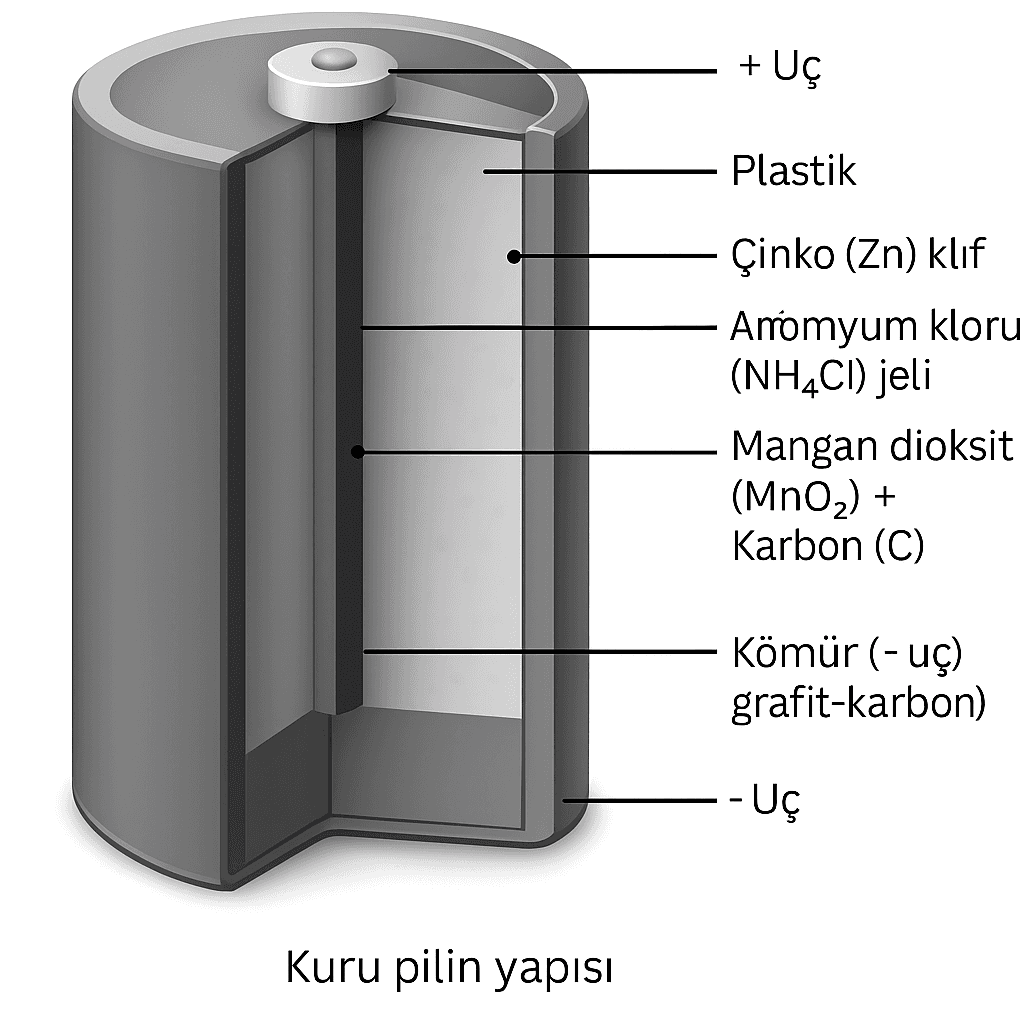
Dry-cell structure (Generated by artificial intelligence.)
Like in wet-cell batteries, energy generation in dry-cell batteries occurs through chemical reactions between electrodes and the electrolyte. Free electrons produced during these reactions travel from the negative electrode to the positive electrode, generating an electric current. The primary advantages of dry-cell batteries are:
These batteries are prominent as everyday energy sources, used in applications ranging from clocks and remote controls to portable electronic devices and flashlights.
Abarro, J. M. E., J. N. L. Gavan, D. E. D. Loresca, M. A. A. Ortega, A. E. Esparcia Jr., and J. A. D. R. Paraggua. "A Tale of Nickel-Iron Batteries: Its Resurgence in the Age of Modern Batteries." *Batteries* 9, no. 7 (2023): 383. Accessed May 16, 2025. https://doi.org/10.3390/batteries9070383.
Meng, Jinhao, Mattia Ricco, Guangzhao Luo, Maciej Swierczynski, Daniel-Ioan Stroe, and Ana-Irina Stroe. "An Overview and Comparison of Online Implementable SOC Estimation Methods for Lithium-Ion Battery." *IEEE Transactions on Industry Applications* 54, no. 2 (2018): 1583–1591. Accessed May 16, 2025. https://doi.org/10.1109/TIA.2017.2775179.
Ünsal, Eren. *Lityum-İyon Bataryalarda SoC Tahmini / Estimation of SoC in Lithium-Ion Batteries.* Master's thesis, Bursa Uludağ Üniversitesi, Fen Bilimleri Enstitüsü, Hibrid ve Elektrikli Taşıtlar Anabilim Dalı, 2024. Accessed May 16, 2025. https://tez.yok.gov.tr/UlusalTezMerkezi/TezGoster?key=E_eEUHQic_C-LvhxNQn1W7O-74MnCIAzK0NUQpFBo_foVVm8gzk-sCAcwAEz2Jk6.

No Discussion Added Yet
Start discussion for "Wet and Dry Cell Batteries" article
Wet-Cell Batteries
Lead-Acid Batteries
Nickel-Iron Batteries
Dry-Cell Batteries