

This article was automatically translated from the original Turkish version.
Type of Geographical İndication | Place of Origin | ||||||||
|---|---|---|---|---|---|---|---|---|---|
Application Date | 18.09.2018 | ||||||||
Registration Number | 593 | ||||||||
Registration Date | 16.11.2020 | ||||||||
Product / Product Group(s) | Honey | ||||||||
Province(s) | Kayseri | ||||||||
Applicant/Registrant(s) | Özvatan Subdistrict Governorship | ||||||||
Özvatan Flower Honey is a floral honey produced in the Özvatan district of Kayseri Province, generated by Caucasian hybrid bees based on the region’s rich flora. An application for geographical indication status was submitted on 18 September 2018 under Law No. 6769 on Industrial Property and was officially registered on 15 November 2020 by the Özvatan District Governorship. This honey is produced exclusively within the boundaries of Özvatan district and bears the geographical indication emblem “Özvatan Flower Honey” on the product or packaging.
Özvatan is a favorable region for beekeeping due to its abundant water resources, variable elevation, and rich vegetation. The district hosts 103 species of flowering plants and approximately 50 tree species. This diversity allows for an extended flowering period, thereby prolonging the honey production season. The region’s flora includes key plant species from which bees collect pollen and nectar, such as forage crops Trifolium spp. (clover), Vicia spp. (vetch, winter vetch), and Onobrychis viciifolia (sainfoin). Additionally, Trigonella foenum-graecum (fenugreek), Pimpinella anisum (anise), and various fruit trees are intensively utilized by bees. Naturally occurring plants such as Eryngium campestre (field eryngo), Centaurea spp. (knapweed, star thistle), Bupleurum rotundifolium (round-leaved bupleurum), Cirsium arvense (creeping thistle), and Brassica spp. (mustards) are significant contributors to the honey’s distinctive characteristics. Thyme and geven plants dominate the area, and the staggered flowering phases across the rugged terrain provide a productivity advantage for honey production.
The pollen identified in the honey belongs to families including Fabaceae, Apiaceae, Asteraceae, Rosaceae, and Brassicaceae. Major pollen sources include Trifolium spp., Eryngium campestre, Pyrus spp., Vicia spp., Brassica spp., Cirsium arvense, Pimpinella anisum, Onobrychis viciifolia, and Trigonella foenum-graecum. Secondary pollen sources such as Lotus spp., Thymus spp., and Lotus corniculatus are present in minor amounts, while taxa like Carduus nutans, Plantago lanceolata, and Taraxacum officinale are observed in trace quantities. Species contributing negligible amounts of pollen include Pinus spp., Cistus spp., Euphorbia macroclada, and Castanea sativa.
The primary distinguishing feature of Özvatan Flower Honey is the high concentration of pollen from widely cultivated forage plants and endemic species native to the region. Particularly, pollen from native plants such as Centaurea spp., Eryngium campestre, Bupleurum rotundifolium, Cirsium arvense, and Brassica spp. defines the honey’s unique character. The honey is produced by Caucasian hybrid bees, which possess long tongues that enable them to efficiently collect nectar from deep-flowered plants.
Beekeeping in Özvatan is carried out using approximately 5000 hives, all of which are registered in the beekeeper-hive tracking system. Production occurs entirely within the boundaries of Özvatan district. Hives and bees are overwintered in the region; hive cleaning is performed using physical methods. Beekeepers place their hives in designated areas within a 10 km flight radius. In pest and disease control, agricultural pesticides are applied in quantities permitted under the Turkish Food Codex.
In autumn, after maintenance procedures, bees are overwintered in Özvatan. Bees kept in enclosed or covered areas are not disturbed until spring. During this period, treatments against parasites are administered, and bees are fed with honey stored in combs, kek (a mixture of honey and powdered sugar), or syrup (a mixture of sugar and water).
Honey harvesting begins in the second half of July and continues until the first week of August, depending on climatic conditions and honey maturity. Due to the absence of migratory beekeeping in the region, only a single harvest is conducted. Harvesting follows traditional methods: frames are removed from hives using gentle smoke and a smoker, combs are cleaned with knives or combs, and honey is extracted using centrifugal extractors. After resting for one to two days, the honey is filtered through sieves and bottled in glass jars.
In spring, queen bee inspections and hive reductions are performed. Bees are fed with kek or syrup according to weather conditions, and parasite treatments are applied. Feeding is discontinued at least 15 days before the start of honey production (by mid-June). After harvest, syrup supplementation is provided to encourage brood rearing, and final autumn preparations for winter are completed.
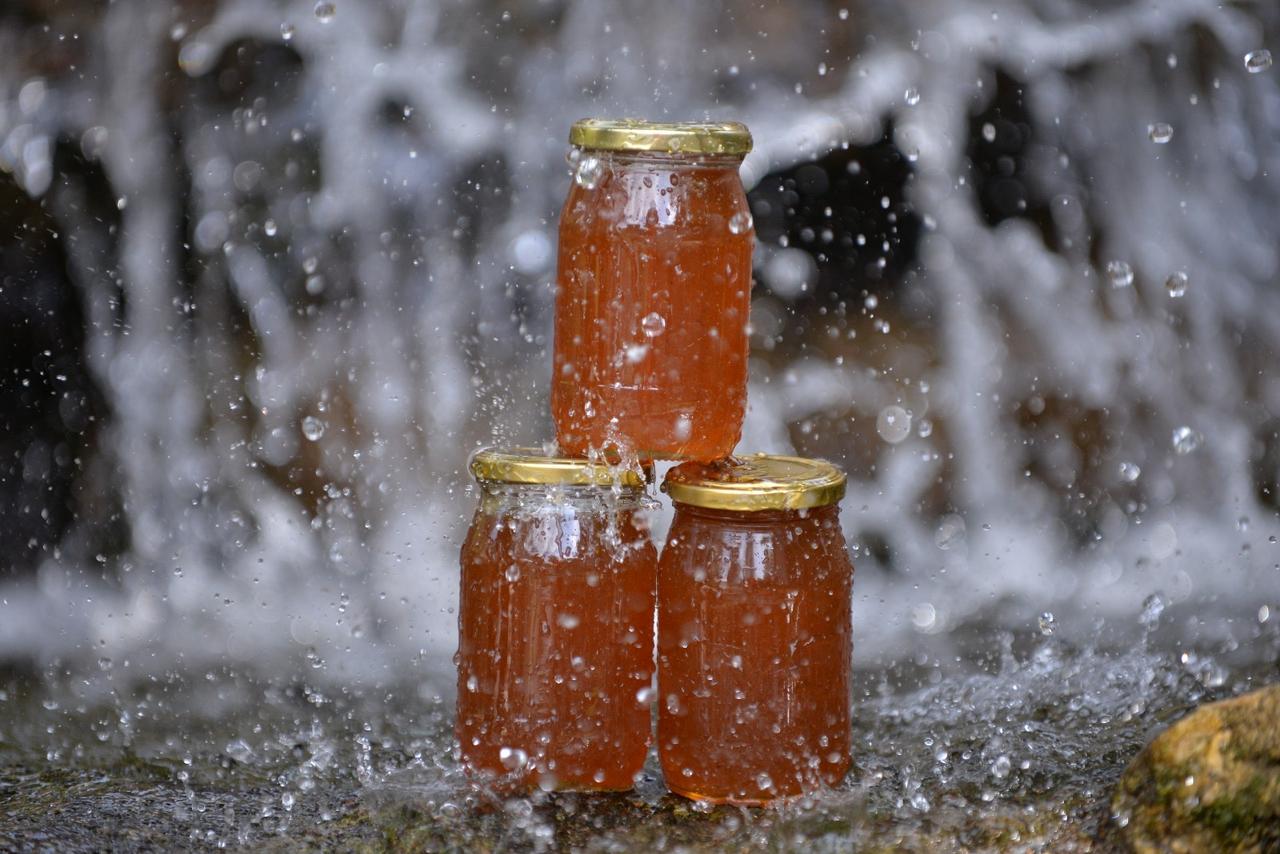
After harvesting, the honey is bottled in glass jars of 0.5 kg, 1 kg, and 2 kg capacities at the Özvatan Agricultural Development Cooperative. The honey is stored in facilities maintained above 15°C.
The production of Özvatan Flower Honey is monitored three times annually—during overwintering, harvesting, and marketing/sales periods—by a minimum four-member oversight body coordinated by the Özvatan District Governorship, comprising the District Governorship, Özvatan District Directorate of Agriculture and Forestry, Özvatan Municipality, and Özvatan Agricultural Development Cooperative. Additional inspections are conducted as needed or upon complaint. Sample analyses are carried out by provincial control laboratories or other accredited laboratories. Inspections verify compliance with production methods and, when necessary, include chemical, physical, and sugar composition analyses.
Turk Patent and Trademark Office. "Özvatan Çiçek Balı Coğrafi İşaret Belgesi." Turk Patent and Trademark Office. Accessed August 16, 2025. https://ci.turkpatent.gov.tr/Files/GeographicalSigns/f43e8f31-0e04-42ca-9a37-0992dfec26ab.pdf
Türk Patent ve Marka Kurumu. "Özvatan Çiçek Balı." Türk Patent ve Marka Kurumu. Accessed August 16, 2025. https://ci.turkpatent.gov.tr/cografi-isaretler/detay/38627
Özvatan Kaymakamlığı. "Özvatan Çiçek Balı Tescillendi." T.C. Özvatan Kaymakamlığı. Accessed August 16, 2025. http://www.ozvatan.gov.tr/ozvatan-cicek-bali-tescillendi

Type of Geographical İndication | Place of Origin | ||||||||
|---|---|---|---|---|---|---|---|---|---|
Application Date | 18.09.2018 | ||||||||
Registration Number | 593 | ||||||||
Registration Date | 16.11.2020 | ||||||||
Product / Product Group(s) | Honey | ||||||||
Province(s) | Kayseri | ||||||||
Applicant/Registrant(s) | Özvatan Subdistrict Governorship | ||||||||
Production Area and Flora Characteristics
Distinctive Characteristics
Physical and Chemical Properties
Production Process
Overwintering
Harvesting
Maintenance and Feeding
Storage and Packaging
Monitoring