


+1 More

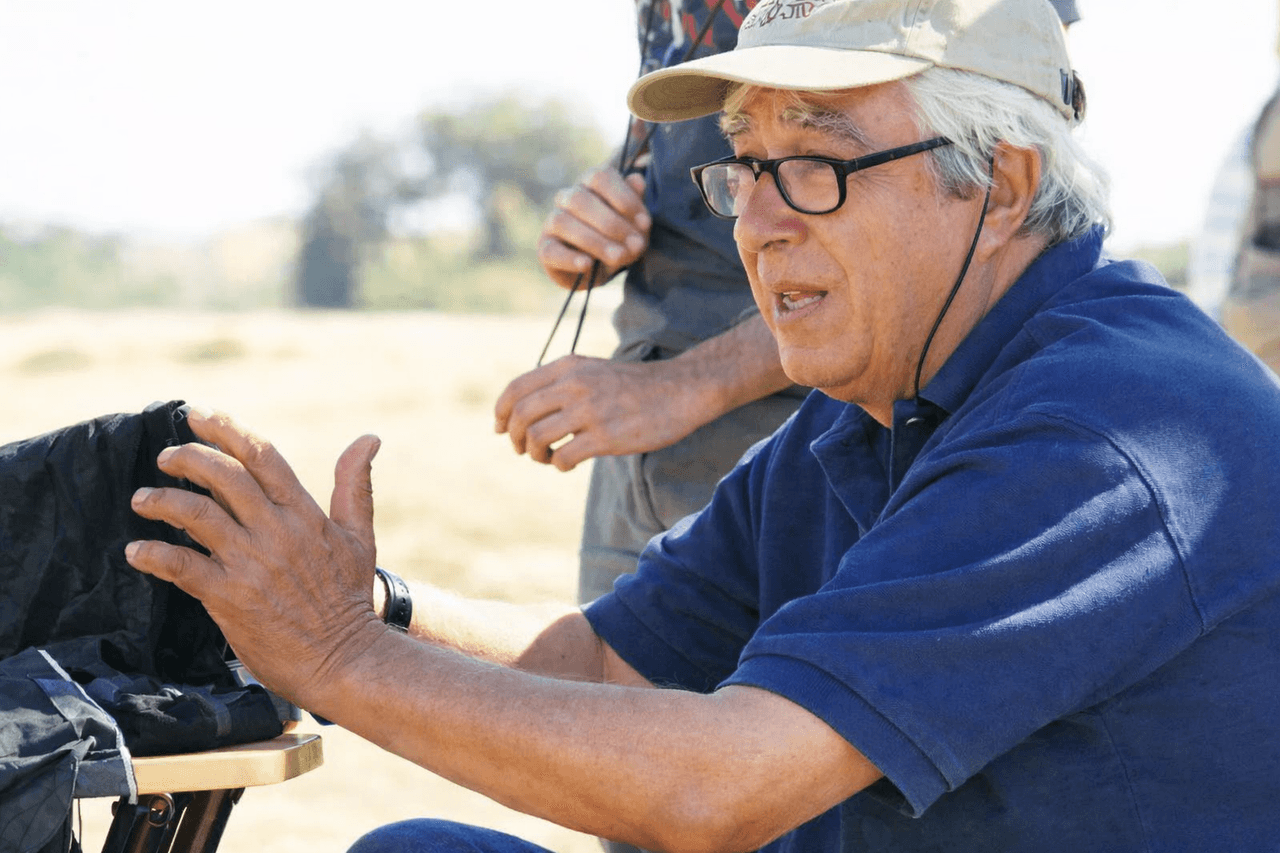
Generated with YZ
Zeki Ökten
Eş | Güler Ökten | ||||||||
|---|---|---|---|---|---|---|---|---|---|
Birth | 4 August 1941, Istanbul | ||||||||
Death | 19 December 2009, Istanbul | ||||||||
Period of Activity | 1960s–2000s | ||||||||
Notable Works | King of Doorkeepers, King of Garbage Collectors, Herd, Enemy, Attack on Interest, Dutturu World, Goodbye | ||||||||
Burial | Zincirlikuyu Cemetery | ||||||||
Profession(s) | Director | ||||||||
Zeki Ökten was born on 4 August 1941 in Istanbul. His childhood and youth coincided with a period when cinema production in Türkiye was accelerating and the Yeşilçam system was becoming clearly defined. This environment shaped the social and cultural framework of the professional field he would later join.
Ökten completed his secondary education at Haydarpaşa High School. During this time he developed an interest in theatre and gained exposure to stage practice. His theatre experience served as an important preparation for his later focus on acting direction rhythm and dramatic structure.
Information about his family remains limited in the public domain. However it is known that he experienced an early loss during childhood and that family responsibilities became prominent at a young age.
Zeki Ökten’s first step into the cinema industry began in 1961 as an assistant director. Set practice was one of the most common pathways into the profession within the Yeşilçam production system and Ökten was trained within this “master-apprentice” relationship. This period was decisive for learning technical processes and building connections within the film community.
His directing career began with the 1963 film Ölüm Pazarı. He subsequently returned to assistant directing roles on various projects and increased his output as a director during the 1970s. This era marked a period of significant expansion in both the quantity and genre diversity of his filmography.
Throughout the 1970s he directed films across comedy and drama genres. While producing works that reached broad audiences within popular cinema he also directed films that more prominently highlighted social issues. As a result his filmography formed a cohesive whole characterized by transitions between genres and variations in narrative intensity.
Ökten’s films engage with themes of urbanization labor relations everyday life practices and class tensions in 1970s and 1980s Türkiye. In his comedies these themes were primarily constructed through humor. In this vein he foregrounded aspects such as apartment living workplace relationships small traders and urban poverty.
In his dramatic films the social structure is portrayed more directly as a field of tension. Films such as Sürü and Düşman are associated with broader social conflicts and transformations. These works carry a sharper narrative intensity that intersects with the political and social atmosphere of the era.
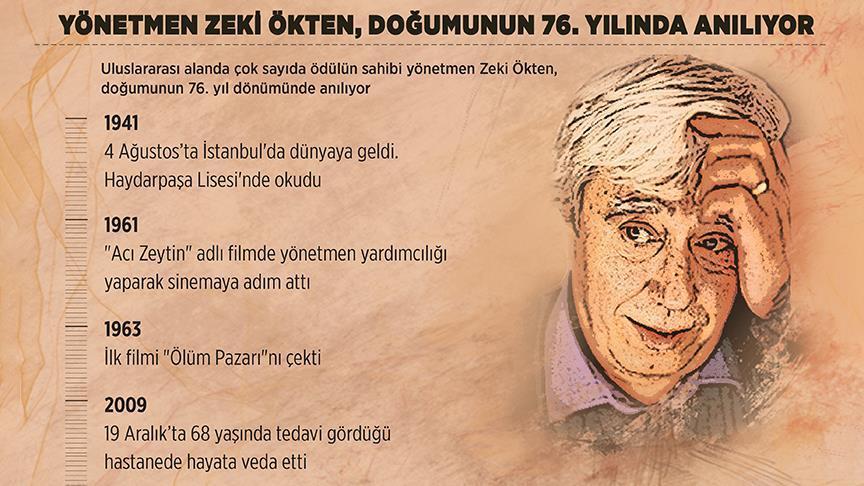
Infographic on Ökten’s life – Anadolu Agency
After the 1980s a change in production pace became evident. Following Düttürü Dünya he continued to make a limited number of films and remained active as a director through the 1990s and 2000s. Thus his career can be viewed not merely as a phenomenon of the 1970s but as a continuous trajectory extending into the 2000s.
Zeki Ökten’s cinematic career intersected with the national festival circuit. Several of his films from the 1970s and 1980s were recognized with directing awards. This demonstrates that popular cinema and festival circulation could coexist within the same filmography.
Some of his films notably Sürü were screened at various international festivals and selections. Award recognition and selection visibility serve as indicators that Ökten’s filmography engaged not only with local audiences but also with the international cinema community.
Ökten’s professional standing is defined by his position as a director emerging from the Yeşilçam production system who produced works that combined industrial practices with a degree of artistic ambition. Films that reached wide audiences through comedy coexist within the same filmography as more intense dramatic works.

Ökten’s funeral – Anadolu Ajansı
Zeki Ökten’s private life was only partially revealed to the public.
In his later years he suffered from health problems and died in Istanbul on 19 December 2009 following a period of medical treatment. His death received widespread attention within Türkiye’s cinema circles and was covered extensively in the press.
The funeral was held in Istanbul. The funeral prayer was performed at Teşvikiye Camii and he was buried at Zincirlikuyu Cemetery. Following his death renewed evaluations and commemorative content were published primarily centered on his films from the 1970s and 1980s.
2006 – Çinliler Geliyor
2003 – Gülüm
2000 – Güle Güle
1995 – Aşk Üzerine Söylenmemiş Her şey
1992 – Saygılar Bizden
1988 – Düttürü Dünya
1987 – Davacı
1986 – Yoksul
1986 – Ses
1984 – Pehlivan
1982 – Faize Hücum
1980 – Düşman
1978 – Sürü
1977 – Çöpçüler Kralı
1977 – Sevgili Dayım
1976 – Kapıcılar Kralı
1976 – Ne Umduk Ne Bulduk
1975 – Hanzo
1975 – Şaşkın Damat
1975 – Pisi Pisi
1975 – Askerin Dönüşü
1975 – Kaynanalar
1974 – Boşver Arkadaş
1974 – Hasret
1973 – Bitirimler Sosyetede
1973 – Bir Demet Menekşe
1973 – Vurgun
1973 – Bitirim Kardeşler
1973 – Ağrı Dağı’nın Gazabı
1972 – Kadın Yapar
1972 – Kırık Hayat
1963 – Ölüm Pazarı
Anadolu Ajansı. “Unutulmayan filmlerin yönetmeni: Zeki Ökten.” Updated December 18, 2020. Accessed December 18, 2025. https://www.aa.com.tr/tr/kultur-sanat/unutulmayan-filmlerin-yonetmeni-zeki-okten/2081324
Anadolu Ajansı. “Yönetmen Zeki Ökten, doğumunun 76. yılında anılıyor.” August 4, 2017. Accessed December 18, 2025. https://www.aa.com.tr/tr/kultur-sanat/yonetmen-zeki-okten-dogumunun-76-yilinda-aniliyor/876020
Beyazperde. "Zeki Ökten — Biyografi." Accessed December 18, 2025. https://www.beyazperde.com/sanatcilar/sanatci-24341/biyografi/
Biyografiler.com. "Zeki Ökten." Accessed December 18, 2025. https://www.biyografiler.com/kimdir/zeki-okten
IMDb. "Zeki Ökten — Awards." Accessed December 18, 2025. https://www.imdb.com/name/nm0006703/awards/?ref_=nm_ov_at_pop_4
IMDb. "Zeki Ökten — Biography." Accessed December 18, 2025. https://www.imdb.com/name/nm0006703/bio/?ref_=nm_ov_at_pop_2
IMDb. "Zeki Ökten." Accessed December 18, 2025. https://www.imdb.com/name/nm0006703/
Sinemalar.com. "Zeki Ökten — Filmleri." Accessed December 18, 2025. https://www.sinemalar.com/filmleri/26513/zeki-okten
T24. “Zeki Ökten hayatını kaybetti.” Accessed December 18, 2025. https://t24.com.tr/haber/zeki-okten-hayatini-kaybetti,64654
Yeni Şafak. “Ünlü yönetmen bugün uğurlanıyor.” Accessed December 18, 2025. https://www.yenisafak.com/gundem/unlu-yonetmen-bugun-ugurlaniyor-230063
İstanbul Kültür Sanat Vakfı (İKSV). "Zeki Ökten." Accessed December 18, 2025. https://film.iksv.org/tr/onur-odulleri/zeki-okten-2

Generated with YZ
Zeki Ökten
Eş | Güler Ökten | ||||||||
|---|---|---|---|---|---|---|---|---|---|
Birth | 4 August 1941, Istanbul | ||||||||
Death | 19 December 2009, Istanbul | ||||||||
Period of Activity | 1960s–2000s | ||||||||
Notable Works | King of Doorkeepers, King of Garbage Collectors, Herd, Enemy, Attack on Interest, Dutturu World, Goodbye | ||||||||
Burial | Zincirlikuyu Cemetery | ||||||||
Profession(s) | Director | ||||||||
Entry into Cinema and Professional Development
Themes and Narrative Lines in the Filmography
Awards Festivals and Professional Standing
Private Life Later Years and Death
Filmography