

+1 More

Skedittt
Zheng He (1371–1433) was a military strategist diplomat and court official who commanded seven major maritime expeditions on behalf of the Ming Dynasty extending from the Far East to the eastern coast of Africa. Born as Ma He and also known by the honorific title Sanbao Zheng He came from a Hui Muslim family in Yunnan province. During the reign of Emperor Yongle Zhu Di he led the fleet established to establish China’s overseas diplomatic influence and expand the tribute trade system. These voyages between 1405 and 1433 represent some of the most extensive documented maritime operations in terms of 15th century naval technology and logistical capacity.

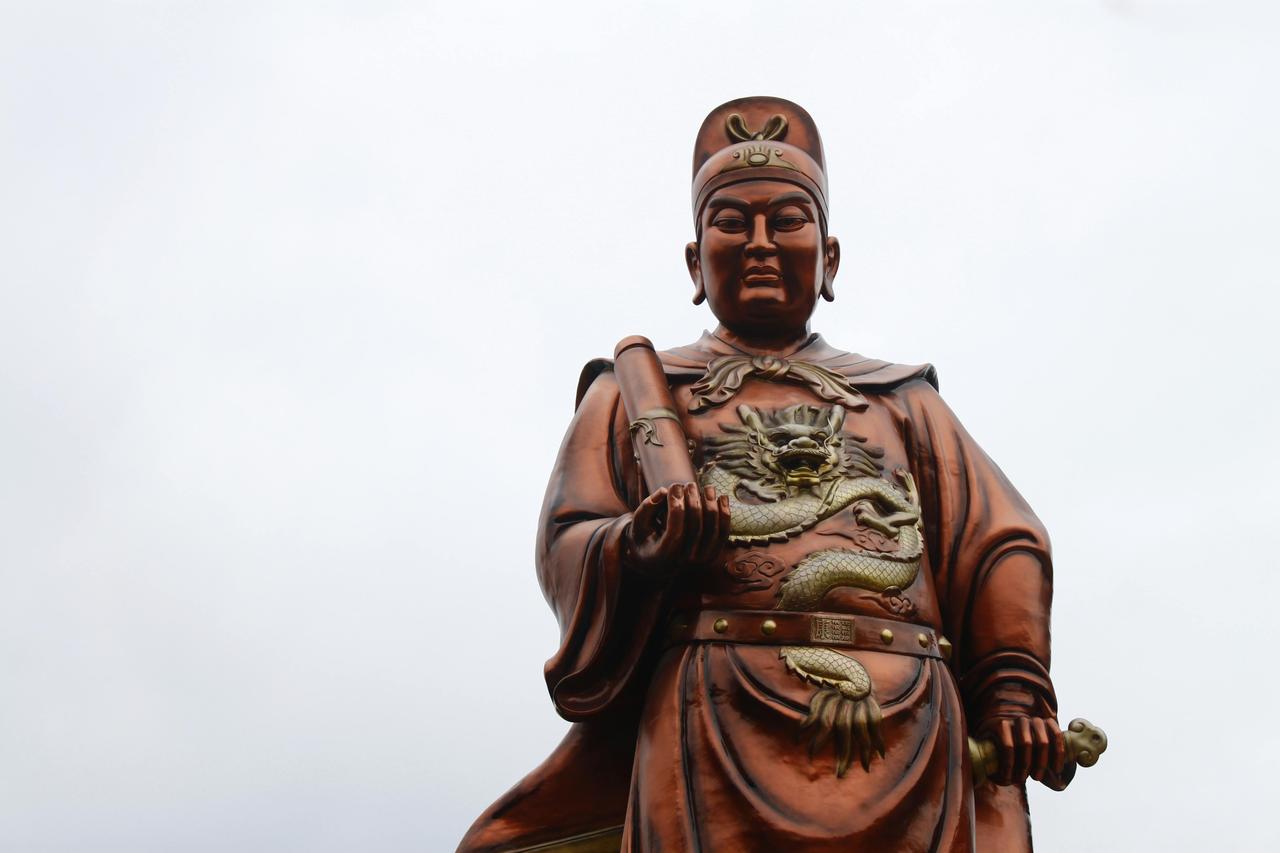
Statue of Zheng He (Pexels)
Zheng He was born in 1371 in the Kunming region of Yunnan province. His family belonged to the Hui Muslim community whose origins trace back to Central Asia and who settled in China during the Mongol Yuan Dynasty. Historical records indicate that Zheng He’s lineage descends from Saiyid Ecel Shemseddin Omar who served as governor of Yunnan. The fact that his father Ma Haji and his grandfather had both completed the Hajj pilgrimage confirms the family’s ties to regional Islamic networks.
In 1381 during the Ming army’s conquest of Yunnan Ma He was captured taken to Nanjing and castrated before being assigned to the service of Prince Zhu Di. For his military support during the Jingnan Campaigns for the throne Zheng He was granted the surname Zheng by the emperor and promoted to the high-ranking court position of Chief Eunuch of the Imperial Harem.
Financed by Emperor Yongle the expeditions featured ships built with advanced 15th century shipbuilding techniques characterized by high tonnage and multiple masts. The Treasure Ships Baochuan possessed distinct technical features in terms of physical dimensions cargo capacity and hull design that differed from vessels used by other seafaring societies of the period.

Zheng He’s ship compared with Columbus’s ship (flickr)
The operational structure of the fleet consisted of between 250 and 300 ships per voyage. This fleet included specialized vessels such as cavalry transports food supply ships water tankers and patrol ships. According to historical records the crew numbered between 27000 and 28000 individuals. The personnel hierarchy encompassed not only sailors and soldiers but also technical and administrative staff including astrologers interpreters medical experts carpenters and religious officials.
The fleet employed compass technology and star charts for navigation across open seas. Records and maps compiled during the voyages the Zheng He Navigation Charts provided detailed data on the coastlines shallow waters and port locations throughout the Indian Ocean.
The seven expeditions conducted between 1405 and 1433 influenced commercial and political structures across the Indian Ocean basin.
The fleet focused on Southeast Asia and the western coast of India including Calicut. During this period it established military authority against pirate activities in the Strait of Malacca.
For the first time the fleet reached the Arabian Peninsula and the Strait of Hormuz thereby directly integrating into Middle Eastern trade networks.
During these phases the fleet extended its reach to the eastern coast of Africa including Mogadishu Malindi and Mombasa. The seventh voyage was conducted under the orders of Emperor Xuande and it was during this expedition that Zheng He died.
The primary purpose of the voyages was not military conquest or colonization but to establish the Tribute System a framework of tribute and allegiance. Local rulers in visited regions were invited to recognize the authority of the Ming Dynasty and engage in reciprocal gift exchange to foster commercial relations.
China exported silk porcelain and lacquerware in return for spices ivory precious stones and exotic animals such as giraffes lions and zebras.
Zheng He intervened in local affairs only when Ming interests or security were threatened. Examples include his military actions against the Kingdom of Kotte in Sri Lanka and his involvement in succession disputes in Sumatra.
Zheng He’s Muslim identity played a functional role in building communication with Muslim trading colonies and port states across the Indian Ocean.
The voyages facilitated the organization of Muslim populations in Southeast Asia particularly in Java and Malacca and encouraged the settlement of Chinese Muslims in these regions. Many mosques and community centers in the area are associated with these interactions.
Zheng He participated not only in Islamic rituals but also in Buddhist and Taoist ceremonies in his capacity as imperial representative. The trilingual inscription erected in Sri Lanka in Chinese Tamil and Persian documents the era’s multicultural diplomatic approach.
Zheng He is believed to have died in 1433 either during the return journey of his seventh voyage or in Nanjing. After his death Ming Dynasty maritime policy underwent significant change. Rising threats from the north from the Mongols and bureaucratic opposition to the high costs of the expeditions led to the cessation of fleet operations restrictions on the construction of large ships and China’s gradual retreat into isolation known as the Haijin policy.
BBC Türkçe. "Müslüman Çinli Amiral Zheng He." Accessed February 3, 2026. https://www.bbc.com/turkce/izlenim/2012/08/120803_china_zheng
Cartwright, Mark. "Zheng He'nin Yedi Yolculuğu." World History Encyclopedia. Translated by Mert Erdemir. Accessed February 3, 2026. https://www.worldhistory.org/trans/tr/2-1334/zheng-henin-yedi-yolculugu/
Ceylan, Fatma Ecem. "Müslüman Çinli Amiral Zheng He'nin Aile Tarihine Genel Bir Bakış." *Current Research in Social Sciences* 2, no. 2 (2016): 37-45. Accessed February 3, 2026. https://dergipark.org.tr/tr/pub/curesosc/article/262806
Ceylan, Fatma Ecem. "Çin Tarihine Damgasını Vurmuş İki Türk Denizci Zheng He ve Yighmish." *Türk Tarih Kurumu.* Accessed February 3, 2026. https://www.ttk.gov.tr/wp-content/uploads/2022/03/05-FatmaEcemCeylan.pdf
JSTOR Daily. "The Great Eunuch Admiral." Accessed February 3, 2026. https://daily.jstor.org/zheng-he-the-great-eunuch-admiral/

Family Origins and Early Life
Technical and Logistical Structure of the Expeditions
Fleet Capacity and Personnel
Navigation Technology
Chronology and Geographic Scope of the Seven Major Voyages
First Three Voyages (1405–1411)
Fourth Voyage (1413–1415)
Fifth Sixth and Seventh Voyages (1417–1433)
Diplomatic Functions and the Tribute System
Economic Exchange
Limits of Military Intervention
Religious and Social Impact
Spread of Islam
Cultural Diplomacy
Death and Shift in Ming Maritime Policy
