


This article was automatically translated from the original Turkish version.
+1 More
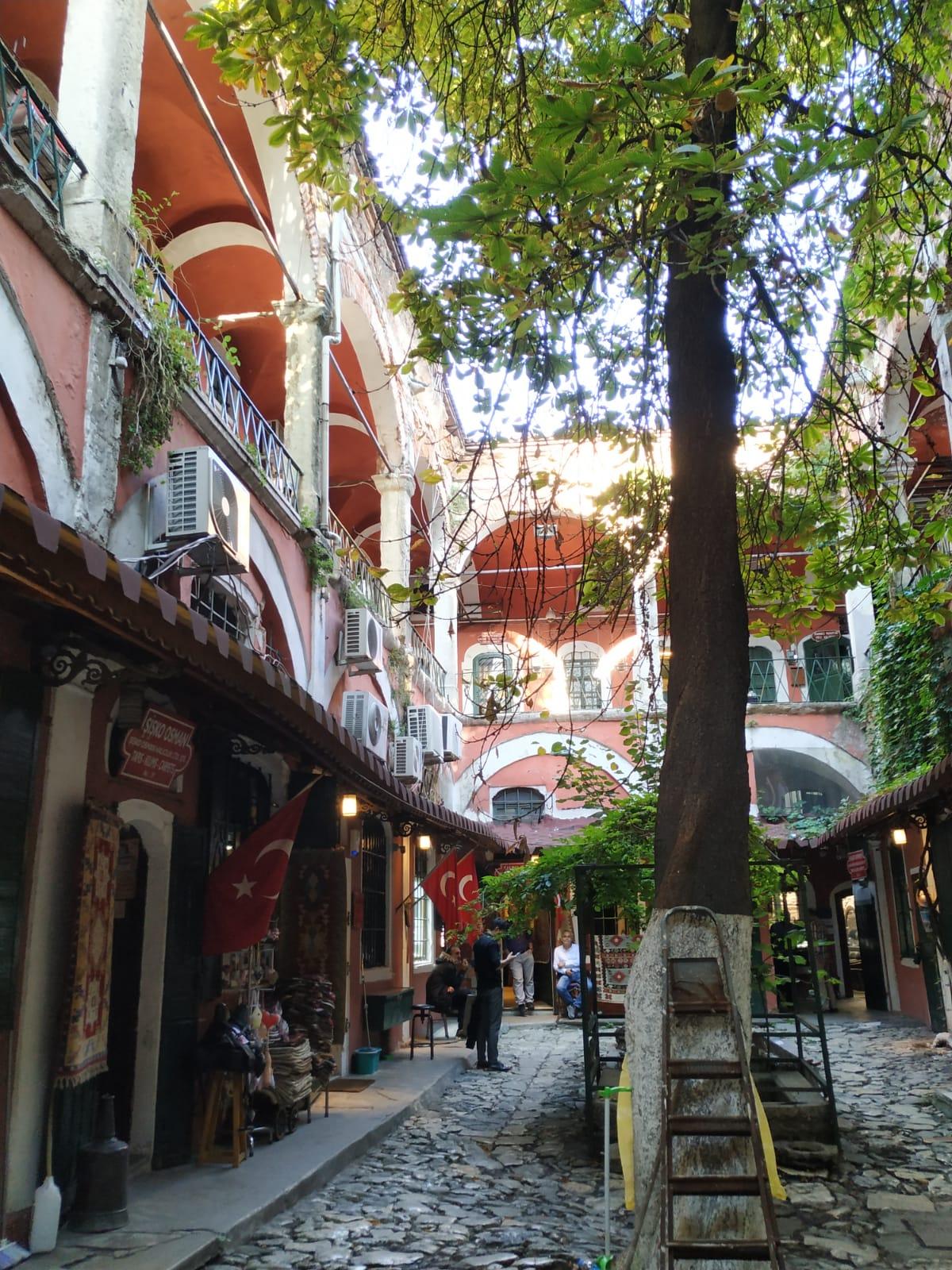
Zincirli Han (Photo: Yusuf Bilal Akkaya)
Location | North of the Grand Bazaar in Istanbul | ||||||||
|---|---|---|---|---|---|---|---|---|---|
Year of Construction | 1708 | ||||||||
Type(s) | A two-story Ottoman commercial inn with a single courtyard | ||||||||
Connection | An inner inn with no direct exit to the outside | ||||||||
Ground Floor | Shops | ||||||||
Upper Floor | Workshops, accommodation places | ||||||||
Architecture(s) | green shutters terracotta-colored walls stone floor brick arches Rubble stone | ||||||||
Zincirli Han is one of the characteristic structures of the Istanbul Covered Bazaar and exemplifies Ottoman commercial life. Built in 1708, it is a single courtyard, two-story inner caravanserai with no direct external access. The ground floor contains shops, while the upper floors house workshops and lodging spaces—a layout preserved to this day. The building retains much of its original architectural identity through its rubble stone and brick arches, historic stone flooring, terracotta-colored walls, and green shutters, making it a living example of the traditional commercial life that combined production and sales within the Covered Bazaar.
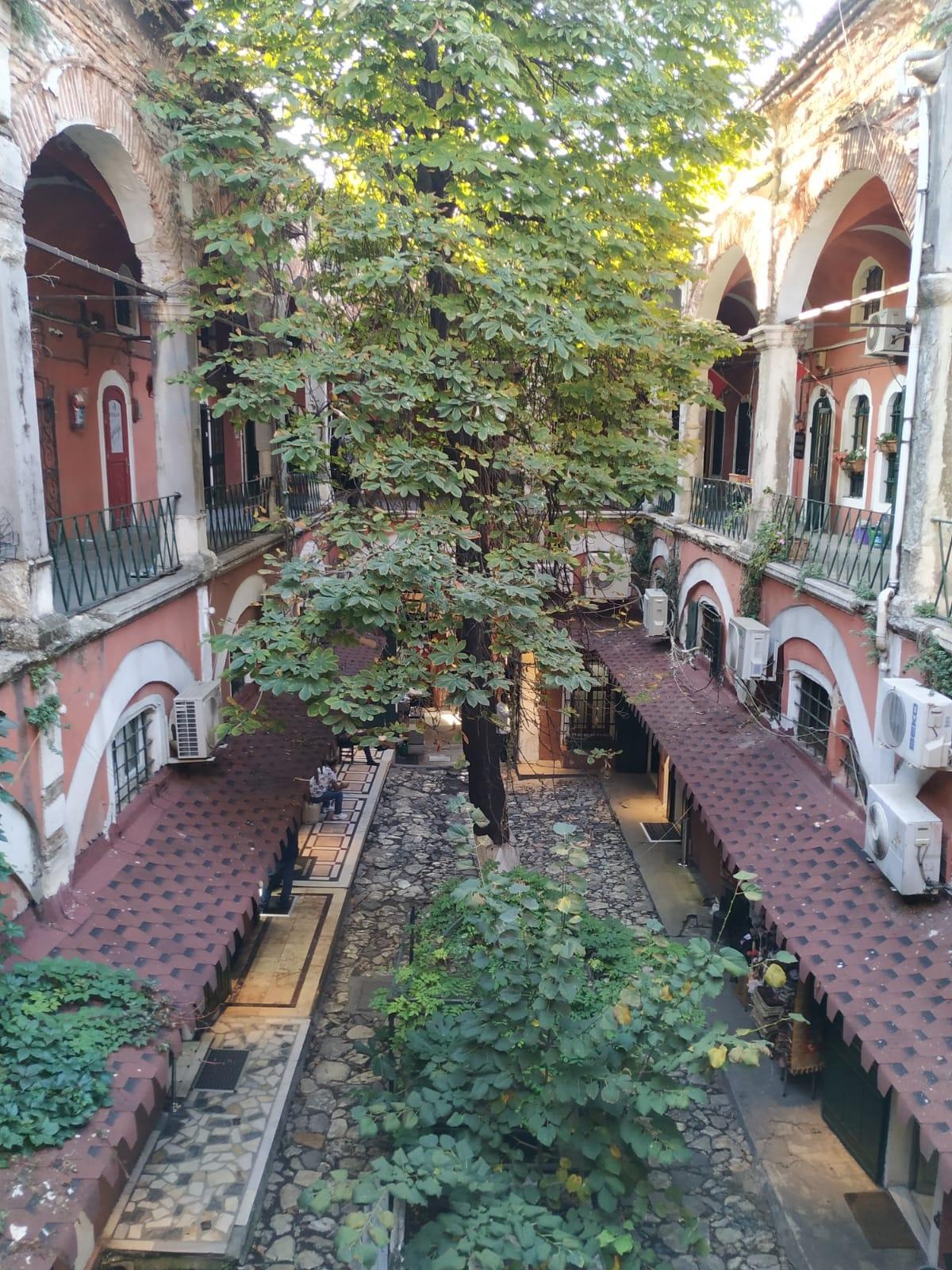
Zincirli Han (Photo: Yusuf Bilal Akkaya)
During the Ottoman period, chains suspended from the roofs of certain caravanserais and buildings were used to guide rainwater gently to the ground in a controlled manner. Rainwater collected on the roof was channeled through gutters and then descended along the chains in a regulated fashion until it reached the ground.
This method prevented water from falling directly onto the ground and splashing, which could damage the structure. Thanks to the chains, rainwater met the soil or surface more softly.
One such example is Zincirli Han in the Covered Bazaar, and it is widely accepted that the building’s name derives from these functional chains.
Zincirli Han is a single courtyard, two-story Ottoman commercial caravanserai located in the northern section of the Istanbul Covered Bazaar. Constructed in 1708, it was added to the Covered Bazaar complex. The structure, which has no direct external access and functions as an inner caravanserai, has largely preserved its architectural character. Its arched stone entrance connects to the courtyard via a barrel-vaulted passage.
The ground floor contains shops, while the upper floors house workshops and lodging spaces, a usage pattern that continues today. The building is an example that maintains its distinctiveness through its rubble stone and brick arches, historic stone floor, terracotta-colored walls, and green shutters.
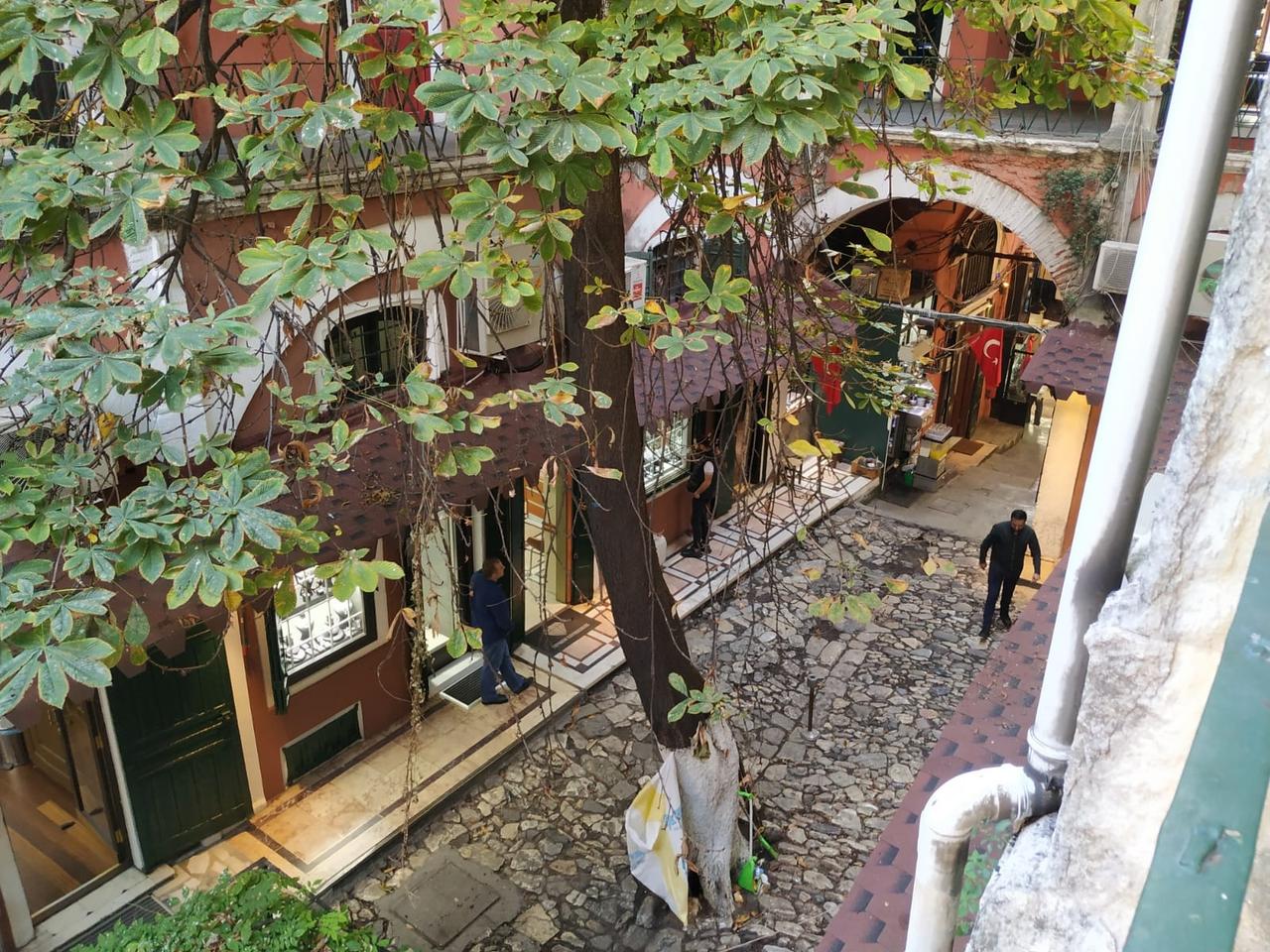
Zincirli Han (Photo: Yusuf Bilal Akkaya)
At the center of Zincirli Han’s courtyard stands a historic fountain surrounded by ivy, forming a small resting area. Two-story rows of shops line the perimeter of the courtyard. In the past, rooms in the han contained stoves; although these stoves have not survived to the present day, the staircases remain intact. The architecture of Zincirli Han is one of the examples in the Covered Bazaar that integrated production and commercial functions within the same space.
The han has historically hosted various crafts including carpet weaving, coppersmithing, carpet repair, antiquities dealing, jewelry making, and goldsmithing. These activities continue to a large extent today. It is recorded that in the past, the Covered Bazaar had a higher number of carpet repairers and non-Muslim artisans, but over time the number of these crafts and their masters has declined.
“There were especially Greek masters in Zincirli Han. There were masters from Dagestan and Iran who had migrated from the Caucasus. There were two Jewish masters, one of whom specialized in stringing pearls. There were Armenians and Turks. Friends were lost.”【1】
The importance of the Ahilik tradition and the principle of honesty in artisan relationships is emphasized, along with the practice of setting prices according to the mezat tradition.
The han also has a long-standing history in goldsmithing. It is noted that the master-apprentice relationships within the han have gradually weakened, and the new generation no longer chooses this profession.
The Zincirli Han in Istanbul is sometimes confused with the Zincirli Han that is part of the Nasuh Paşa Külliyesi in Aydın. This confusion can lead to informational inaccuracies in the literature.
Dilaveroğlu, İnci. "Tarihsel Süreç İçerisinde Kapalıçarşı." PhD thesis, Yıldız Teknik Üniversitesi Fen Bilimleri Enstitüsü, İstanbul, 2021.
Eyice, Semâvî. “Büyük Çarşı.” TDV İslâm Ansiklopedisi. Accessed September 25, 2025. https://islamansiklopedisi.org.tr/buyuk-carsi--istanbul
GZT. “Kapalıçarşı’nın Gözdesi: Zincirli Han.” GZT. Accessed September 25, 2025. https://www.gzt.com/video/arkitekt/kapalicarsinin-gozdesi-zincirli-han-2213485
Kültür Envanteri. "Zincirli Han / Kapalıçarşı." Kültür Envanteri. Accessed September 25, 2025. https://kulturenvanteri.com/yer/zincirli-han-kapalicarsi/#18.52/41.0113665/28.9690893
Türkmen, Gülsüm. “Ticaretin Kalbi Zincirli Han’da Atıyor.” *Yeditepe Fatih*. Accessed September 25, 2025. https://yeditepefatih.com/2023/manset/ticaretin-kalbi-zincirli-handa-atiyor/
Yeditepe Fatih. "Han ve Bedestenler." Accessed September 25, 2025. https://yeditepefatih.com/2021/ekim-kasim-aralik/han-ve-bedestenler/
Öksüz, Meltem. "Kültürel Bir Mekân Olarak İstanbul Kapalıçarşı." PhD thesis, Hacı Bayram Veli Üniversitesi Lisansüstü Eğitim Enstitüsü, Ankara, 2025.
[1]
Meltem Öksüz. Kültürel Bir Mekân Olarak İstanbul Kapalıçarşı. Doktora tezi, Hacı Bayram Veli Üniversitesi Lisansüstü Eğitim Enstitüsü, Ankara, 2025. S.175.

Zincirli Han (Photo: Yusuf Bilal Akkaya)
Location | North of the Grand Bazaar in Istanbul | ||||||||
|---|---|---|---|---|---|---|---|---|---|
Year of Construction | 1708 | ||||||||
Type(s) | A two-story Ottoman commercial inn with a single courtyard | ||||||||
Connection | An inner inn with no direct exit to the outside | ||||||||
Ground Floor | Shops | ||||||||
Upper Floor | Workshops, accommodation places | ||||||||
Architecture(s) | green shutters terracotta-colored walls stone floor brick arches Rubble stone | ||||||||
Origin of the Name Zincirli Han
General Features
Architecture and Courtyard Layout
Commercial Life and Craftsmanship Culture
Confusion and Misattributions