
+1 Daha

Acıpayam (District)
Province(s) | Denizli | ||||||||
|---|---|---|---|---|---|---|---|---|---|
Population | 54.994 | ||||||||
Elevation(s) | 885 meters | ||||||||
Surface Area | 1628 km² | ||||||||
District Governor | Ramazan CANKALOĞLU | ||||||||
Mayor(s) | Levent YILDIRIM | ||||||||
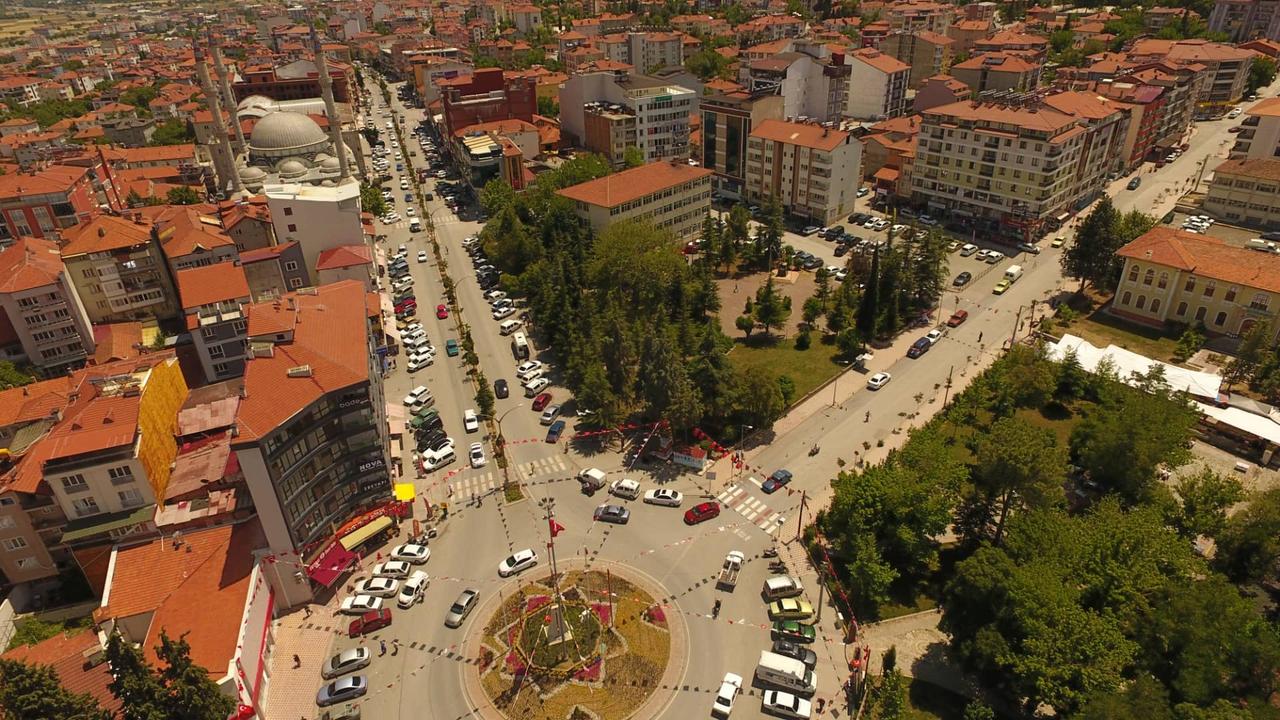
Acıpayam is a district of Denizli province in Türkiye, located at a transitional point between the Aegean and Mediterranean regions. With a surface area of 1,628 km², it is the largest district of the province. Situated at an altitude of 885 meters, the district lies in southwestern Anatolia, at the southeastern tip of the Aegean and the northwestern tip of the Mediterranean. It is bordered by Çavdır, Yeşilova, and Gölhisar of Burdur to the east; Tavas and Beyağaç to the west; Serinhisar and Çardak to the north; and Köyceğiz and Çameli to the south. Under the Metropolitan Law, along with the central district, 14 municipalities that previously held township status and 38 villages were reclassified as neighborhoods, forming a total of 56 settlements within the district organization.

Acıpayam (Acıpayam Municipality)
The earliest known name of Acıpayam is "Hamit Plain." When it was connected to the Isparta Sanjak in the historical process, it was referred to as "Garbikaraağaç," and during the Germiyanid period, as "Asikaraağaç." Although the exact origin of the current name "Acıpayam" is uncertain, it is believed to derive from the bitter almond trees abundantly found in the region, locally known as "payam."
The history of settlement in Acıpayam dates back to the 2000s BCE. The Hittites dominated the region around 1500 BCE, followed by the Ionians (1200 BCE), Lydians (800 BCE), Persians (456 BCE), and Macedonians (440 BCE). The Roman Empire captured the region in 133 BCE, and in 395 CE it passed into the hands of the Eastern Roman (Byzantine) Empire.
Turkish rule in the region began in 1195. The first conquests are known to have been carried out by Afşin Bey. In the late 11th century, within the scope of the second conquest campaigns led by the Seljuk armies under Mehmet Gazi and Server Gazi, major battles were fought with the Byzantine army around Yeşilyuva (ancient Diokaiseria), and the area was captured by the Turks. Shrines were built in honor of Semerkandi Baba and Beyazıd Han, who were martyred in this war.
During the Seljuk period, Acıpayam was connected to Gölhisar, and later came under the rule of the Beyliks of Hamitoğulları and Germiyanoğulları. The unrest during the Germiyanid period led to frequent conflicts between the local Avşar population and the beylik’s soldiers. The region came under Ottoman rule in the 14th century. Initially connected to Isparta, then to Burdur, Acıpayam became a district of Denizli Sanjak in 1871.
During the Beyliks period, the region lived peacefully under the Hamitoğulları until conflicts arose following the arrival of the Germiyanoğulları. Under the leadership of Karaağaç Baba, who belonged to the Avşar tribe, local resistance formed, and he played a significant role in the Turkification of the region and the formation of surrounding villages. In the Ottoman period, Acıpayam was referred to as "Asikaraağaç" and was connected to the Burdur Sanjak for a time. It became an official district in 1871.
Acıpayam lies in a transitional climatic zone between the Aegean and Mediterranean regions. While the northern areas show characteristics of a continental climate due to the influence of the Lakes Region, the southern areas along the Gireniz Valley display clear Mediterranean climate features. Summers are hot and dry, while winters are generally cold and rainy.
Although Acıpayam Plain has fertile sandy soils, the irrigation infrastructure is inadequate. Groundwater is used via well drilling. Most agricultural products can be cultivated, except for heat-demanding crops like bananas, figs, and cotton. The district is especially known for its melons, but watermelons, tomatoes, peppers, cabbage, apples, and spinach are also grown.

Keloğlan Cave (Acıpayam Municipality)
Acıpayam Municipality. History. Accessed June 30, 2025. https://acipayam.bel.tr/tarihi/.
Acıpayam Municipality.Dodurga Keloğlan Cave. Accessed June 30, 2025. https://acipayam.bel.tr/turizm/dodurga-keloglan-magarasi/4502/.
Acıpayam Municipality.Geography and Climate. Accessed June 30, 2025. https://acipayam.bel.tr/cografya-iklimi/.
Acıpayam Municipality.Photo Gallery. Accessed June 30, 2025. https://acipayam.bel.tr/acipayam-fotograf-galerisi/.
District Governorship of Acıpayam.Local Administrations. Accessed June 30, 2025. http://www.acipayam.gov.tr/mahalli-idareler.
Turkish Statistical Institute (TURKSTAT).Address-Based Population Registration System Results, 2024. Accessed June 30, 2025. https://data.tuik.gov.tr/Bulten/Index?p=Adrese-Dayali-Nufus-Kayit-Sistemi-Sonuclari-2024-53783.
Yılmaz, Zeynel.Natural Formations. Pamukkale University. Accessed June 30, 2025. https://www.pau.edu.tr/zyilmaz/tr/sayfa/dogal-yapilar.
Yılmaz, Zeynel.Tombs. Pamukkale University. Accessed June 30, 2025. https://www.pau.edu.tr/zyilmaz/tr/sayfa/turbeler.

Acıpayam (District)
Province(s) | Denizli | ||||||||
|---|---|---|---|---|---|---|---|---|---|
Population | 54.994 | ||||||||
Elevation(s) | 885 meters | ||||||||
Surface Area | 1628 km² | ||||||||
District Governor | Ramazan CANKALOĞLU | ||||||||
Mayor(s) | Levent YILDIRIM | ||||||||
Henüz Tartışma Girilmemiştir
"Acıpayam (District)" maddesi için tartışma başlatın
Origin of the Name
History
Beyliks and Ottoman Period
Geographical and Climatic Characteristics
Agriculture
Natural and Historical Structures
Natural Structures
Historical Figures and Shrines
Bu madde yapay zeka desteği ile üretilmiştir.