This article was automatically translated from the original Turkish version.
+1 More
Registration Number | 368 | ||||||||
|---|---|---|---|---|---|---|---|---|---|
Registration Date | 27.07.2018 | ||||||||
Application Number | C2016/104 | ||||||||
Application Date | 24.11.2016 | ||||||||
Name of the Geographical Indication | Çameli Fasulyesi | ||||||||
Name of the Product | Fasulye | ||||||||
Type of Geographical Indication | Place of origin | ||||||||
Applicant/Registrant(s) | Çameli Municipality | ||||||||
Address of the Registrant | Yeni Mah. Cumhuriyet Meydanı No:31 Çameli DENİZLİ | ||||||||
Geographical Boundary | Boundaries of Çameli district Denizli province | ||||||||
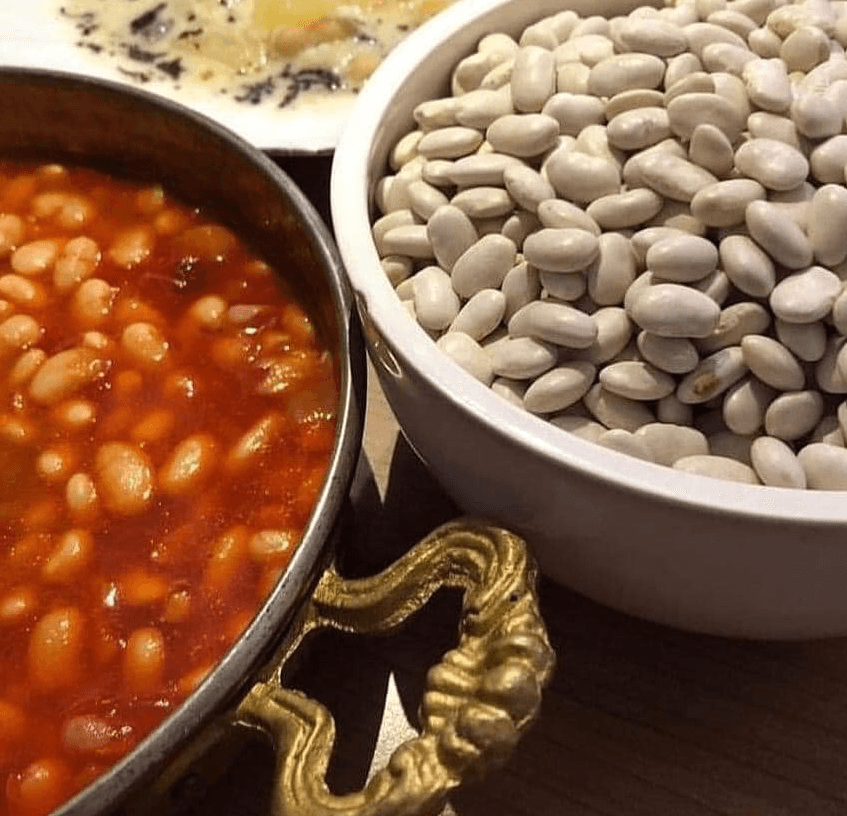
Çameli bean is a local legume variety cultivated in the Çameli district of Denizli province, Turkey, and registered under its place of origin. The unique alpine climate of the region, high elevation (1350 m), significant day-night temperature variations, and clay-loam soils rich in organic matter determine the bean’s distinctive aroma and flavor characteristics.
Çameli bean is an agricultural product registered under its place of origin, cultivated exclusively within the boundaries of the Çameli district in Denizli province, located in Türkiye’s Aegean Region. The region’s elevation reaching up to 1350 meters, alpine climate, pronounced day-night temperature differentials, and organic-rich soil structure impart unique characteristic traits to this bean. The geographical indication was officially registered on 27 July 2018 and recorded under the name of Çameli Municipality.
Çameli bean is produced through a traditional practice of seed transmission from generation to generation using heirloom seeds. The crop is cultivated in three distinct ecotypes within Çameli district and its villages:
These ecotypes differ in both physical appearance and maturation period.
The key distinguishing features of Çameli bean include:
These characteristics arise as a result of climatic factors and traditional farming methods.
The physicochemical properties of Çameli bean vary according to its three main ecotypes: Yerli Horoz, Yerli Gıcık, and Çalıbasan. For the Yerli Horoz type, the weight of 100 seeds ranges from 50.3 to 59.9 grams, dry weight from 28.1 to 38.1 grams, and fresh weight from 29.3 to 37.2 grams. The dry volume measures between 48.5 and 78.1 ml, while the wet volume ranges from 118 to 120 ml. Protein content is between 18.4% and 18.6%, with dry cooking time ranging from 20.2 to 23.2 minutes and wet cooking time from 13 to 21 minutes.
In the Yerli Gıcık type, the weight of 100 seeds ranges from 49.1 to 59.4 grams, fresh weight from 99.7 to 121.7 grams, dry volume from 140 to 152 ml, wet volume from 236 to 261 ml, and protein content from 21.9% to 23.4%. The dry cooking time for this type is 68–85 minutes, while the wet cooking time is 10–16 minutes.
For the Çalıbasan type, the weight of 100 seeds ranges from 20.7 to 21.6 grams, fresh weight from 19.6 to 22.2 grams, dry volume from 125 to 132 ml, and wet volume from 192 to 220 ml. The dry cooking time for this ecotype is 41–63 minutes, and the wet cooking time is 14–19 minutes.
Soils in Çameli are clay-loam or loam in structure. Soil pH ranges from 7 to 7.5, with high potassium content and low salinity. The district’s average annual rainfall is 655 mm. This ecological profile positively influences both the growth and nutritional composition of the bean plant. Due to the small and fragmented nature of agricultural land in the district, production is carried out traditionally on limited areas rather than through extensive farming methods.
The production season for Çameli bean spans from 15 May to 30 September. Production occurs in two ways:
Soil preparation is carried out using a plow in a secondary tillage method. Manure is applied before sowing. When the soil reaches optimal condition, seeds are sown either by hand broadcasting or using a seed drill. A basal fertilizer of 20–25 kg per decare is applied at sowing. Herbicide applications may follow emergence. Irrigation is conducted every 10 days after emergence and continues until 15–20 days before harvest.
Harvesting is performed by manually pulling up the plants. The pulled plants are left in piles to dry. Subsequently, the seeds are separated by beating with sticks or crushing with a tractor. Stems are removed by wind or winnowing. The beans are dried in the sun for 3–4 days, then bagged and stored in dark, cool, and dry environments.
The production process of Çameli bean is monitored under the coordination of Çameli Municipality, in collaboration with Çameli Chamber of Agriculture, Çameli District Directorate of Food, Agriculture and Livestock, District Gendarmerie Command, and District Governorship. Seed quality and production methods are tracked through field inspections, while marketing and packaging processes are verified for correct labeling and proper storage conditions. In necessary cases, specialized public or private institutions or experts may be involved in the monitoring process. Additionally, in the event of a complaint, the monitoring process may be restarted.
Türk Patent ve Marka Kurumu. *Çameli Fasulyesi Coğrafi İşaret Tescil Belgesi ve Teknik Şartnamesi*. Ankara: TÜRKPATENT, 2018. https://ci.turkpatent.gov.tr/Files/GeographicalSigns/368.pdf.
Türk Patent ve Marka Kurumu. “Çameli Fasulyesi.” Accessed July 20, 2025. https://ci.turkpatent.gov.tr/cografi-isaretler/detay/38235.
Çameli Kaymakamlığı. "Çameli’nin Fasulyesi." Accessed August 20, 2025. http://www.cameli.gov.tr/camelinin-fasulyesi.

Registration Number | 368 | ||||||||
|---|---|---|---|---|---|---|---|---|---|
Registration Date | 27.07.2018 | ||||||||
Application Number | C2016/104 | ||||||||
Application Date | 24.11.2016 | ||||||||
Name of the Geographical Indication | Çameli Fasulyesi | ||||||||
Name of the Product | Fasulye | ||||||||
Type of Geographical Indication | Place of origin | ||||||||
Applicant/Registrant(s) | Çameli Municipality | ||||||||
Address of the Registrant | Yeni Mah. Cumhuriyet Meydanı No:31 Çameli DENİZLİ | ||||||||
Geographical Boundary | Boundaries of Çameli district Denizli province | ||||||||
Geographical Boundary
Botanical Characteristics and Ecotypes
Distinguishing Characteristics
Physicochemical Properties
Soil and Climatic Conditions of Cultivation
Production Period and Method
Harvest and Storage
Monitoring Mechanism