

+2 Daha

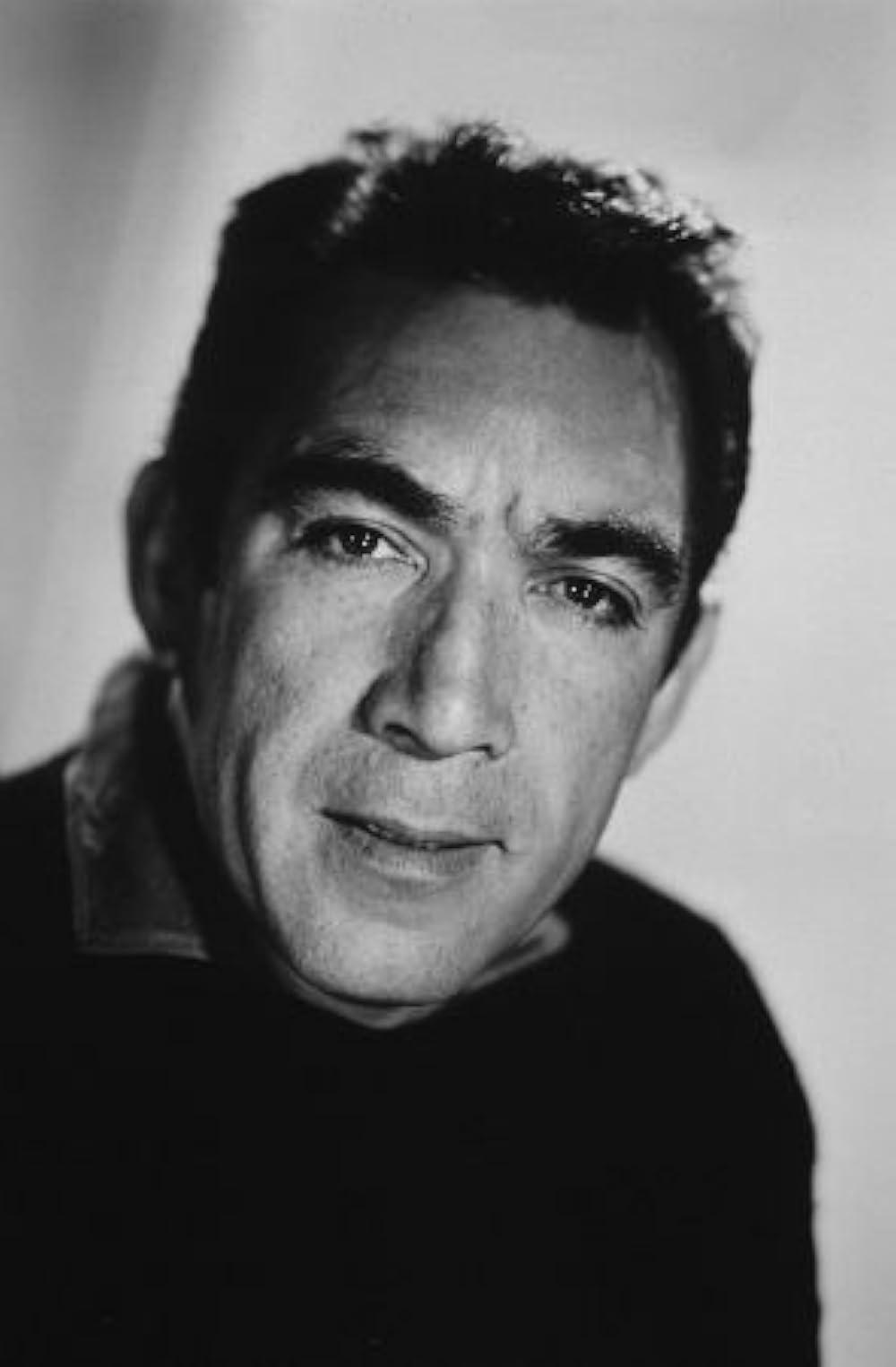
Anthony Quinn was an actor renowned for his ability to portray diverse cultural identities in 20th century cinema. His life, which began in México, continued with a career in cinema, theater and visual arts in the United States. In addition to acting, Quinn was prolific in painting and statue like and demonstrated his talents across various art disciplines.

Anthony Quinn (Beyazperde)
Anthony Quinn, born Manuel Antonio Rodolfo Quinn Oaxaca, was born on 21 April 1915 in the city of Chihuahua, México. His mother, Manuela Oaxaca, was of Aztec descent; his father, Francisco Quinn, was a Mexican of Irish heritage. Both parents fought alongside Pancho Villa during Mexican Revolution.
When Quinn was yet small years old, his family first moved to El Paso, Texas, and later to Los Angeles. He spent his childhood in the Boyle Heights and Echo Park neighborhoods of Los Angeles. To support his financially struggling family, he worked in various jobs including newspaper sales, shoe shining, luggage carrying, window cleaning, butchery, carpentry and cutting in a textile factory.
Anthony Quinn’s interest in art began in childhood, shaped by economic hardship and his multicultural environment. During this period he developed a natural inclination toward drawing, sculpture and architecture. His fascination with architecture particularly led to his encounter with famous architect Frank Lloyd Wright.
Quinn worked for a time at Wright’s studio as both student and assistant. This experience refined his aesthetic sensibility and instilled in him a disciplined approach to art. Encouraged by Wright, he turned to acting and began taking small roles in theater.
Quinn’s early engagement with art was not limited to acting. Throughout his life he remained devoted to painting and sculpture, producing works in these fields. In this way he cultivated a multifaceted artist identity, building a reputation in both visual arts and performing arts.

Anthony Quinn, Call to Arms(IMDb)
Anthony Quinn began his cinematic career in 1936 with a minor role in the film Parole! His part in this film was silent and brief, but the experience motivated him to seek more roles in Hollywood. In his early roles he was frequently cast as ethnic characters—Native American, Asian and Latin—due to his heritage.
He also appeared in supporting roles in films such as The Plainsman (1936), The Buccaneer (1938) and Road to Morocco (1942). These roles were typically stereotypical side characters and reinforced his typecasting as a character actor.
In the 1940s, Anthony Quinn began taking on more serious roles. Films such as They Died with Their Boots On (1941) and Guadalcanal Diary (1943) played a significant role in establishing his connection with American audiences. He also expanded his professional network by working with figures such as John Barrymore, Mae West and Marlene Dietrich.
The 1950s marked a turning point in Anthony Quinn’s career. In particular, his portrayal of “Eufemio Zapata” in the 1952 film Viva Zapata! earned him the Academy Award for Best Supporting Actor. Playing opposite Marlon Brando, Quinn received widespread critical acclaim for his performance.
In the 1956 film Lust for Life, he portrayed Paul Gauguin and won his second Academy Award for Best Supporting Actor. With this achievement, he became one of the rare actors to win two Oscars four years apart.
One of Anthony Quinn’s most significant cinematic performances was his portrayal of “Alexis Zorba” in the 1964 film Zorba the Greek. Based on Nikos Kazantzakis’s novel, this leading role made him an international icon. The character of Zorba, with his zest for life, passionate spirit and populist demeanor, secured a lasting place in cinema history. Quinn’s performances in this role demonstrated that he could convey emotion not only through facial expressions and dialogue but also through body language.
During this period he also appeared in major productions such as The Guns of Navarone (1961), Lawrence of Arabia (1962) and The Shoes of the Fisherman (1968). Thanks to his talent for embodying characters from diverse cultures, Quinn found roles in numerous international productions.

Anthony Quinn, The Lion of the Desert(IMDb)
In the 1970s and 1980s, Anthony Quinn continued to appear in both cinema and television projects. In the 1972 film The Message (Call), he portrayed Hamza, the uncle of the Prophet Muhammad, becoming a well-known figure in the Islamic world. Although the film faced censorship in many countries, Quinn’s performance received universal acclaim.
During the same period he appeared as Omar Village headman in the film Lion of the Desert (1981). This role again demonstrated his success in portraying complex characters. Quinn’s performances during this era stood out for their enduring energy and commanding screen presence despite his advancing age.
In the 1990s, Anthony Quinn remained active in cinema, appearing in small but meaningful roles in both American and Europe productions. Films such as A Walk in the Clouds (1995), Seven Servants (1996) and Oriundi (2000) revealed his enduring commitment to cinema despite his advancing years. In the final phase of his acting career, he was often cast as elderly wise figures or patriarchal characters.
Anthony Quinn appeared alongside Sylvester Stallone in his final film, Avenging Angelo, completing filming in Toronto in May 2001.

Anthony Quinn in his final film, Avenging Angelo(IMDb)
Anthony Quinn also made his mark on television and theater beyond cinema. His performances in series such as The Long Trail (1954), Jesus of Nazareth (1977), Treasure Island (1987) and Gotti (1995) demonstrated that his acting extended far beyond the silver screen.
As one of cinema’s most significant actors, Anthony Quinn received numerous prestigious awards and nominations throughout his career. Some of these include:
Anthony Quinn married three times and had many children:
He also had two children from his relationship with Friedel Dunbar.
After a prolific and vibrant artistic life, Anthony Quinn spent his final years in a quieter, more private life. Beginning in the late 1980s, he slowed the pace of his cinematic career, choosing more selective projects and dedicating more time to his family. Due to his international fame, he received honorary awards from various countries and was invited to numerous cultural events. However, as he aged, health problems increasingly emerged.
Quinn spent his final years in the town of Bristol, Rhode Island. He died on 3 June 2001 from long-standing respiratory failure. Death he was surrounded by his family. His official cause of death was listed as respiratory failure. The master actor, who passed away at age 86, left behind a cinematic career spanning over six decades, countless iconic roles and a broad cultural legacy.

Anthony Quinn’s grave (Find a Grave)
His funeral was held as a private ceremony, reflecting his deep connection to nature and simple way of life. As per his will, he was buried beneath his favorite tree in the garden of his home.
Following Anthony Quinn’s death, tributes were issued by numerous art institutions and film authorities world. Recognized as one of Latin American cinema’s most iconic figures, Quinn was also regarded as a pioneering representative of multicultural casting in Hollywood. His name became the subject of numerous retrospectives, biographies and documentary studies after his passing. Thus, he left a lasting impact not only through his acting but also through his multifaceted contributions to the arts.

Henüz Tartışma Girilmemiştir
"Anthony Quinn" maddesi için tartışma başlatın
Birth
Childhood and Youth
First Steps in Art
Career
Transition to Cinema and Early Roles
1940s
1950s
1960s
1970s and 1980s
1990s and Final Works
Television and Other Media
Awards and Nominations
Personal Life
Later Years and Death