

Bu içerik Türkçe olarak yazılmış olup yapay zeka ile otomatik olarak İngilizceye çevrilmiştir.
+2 Daha
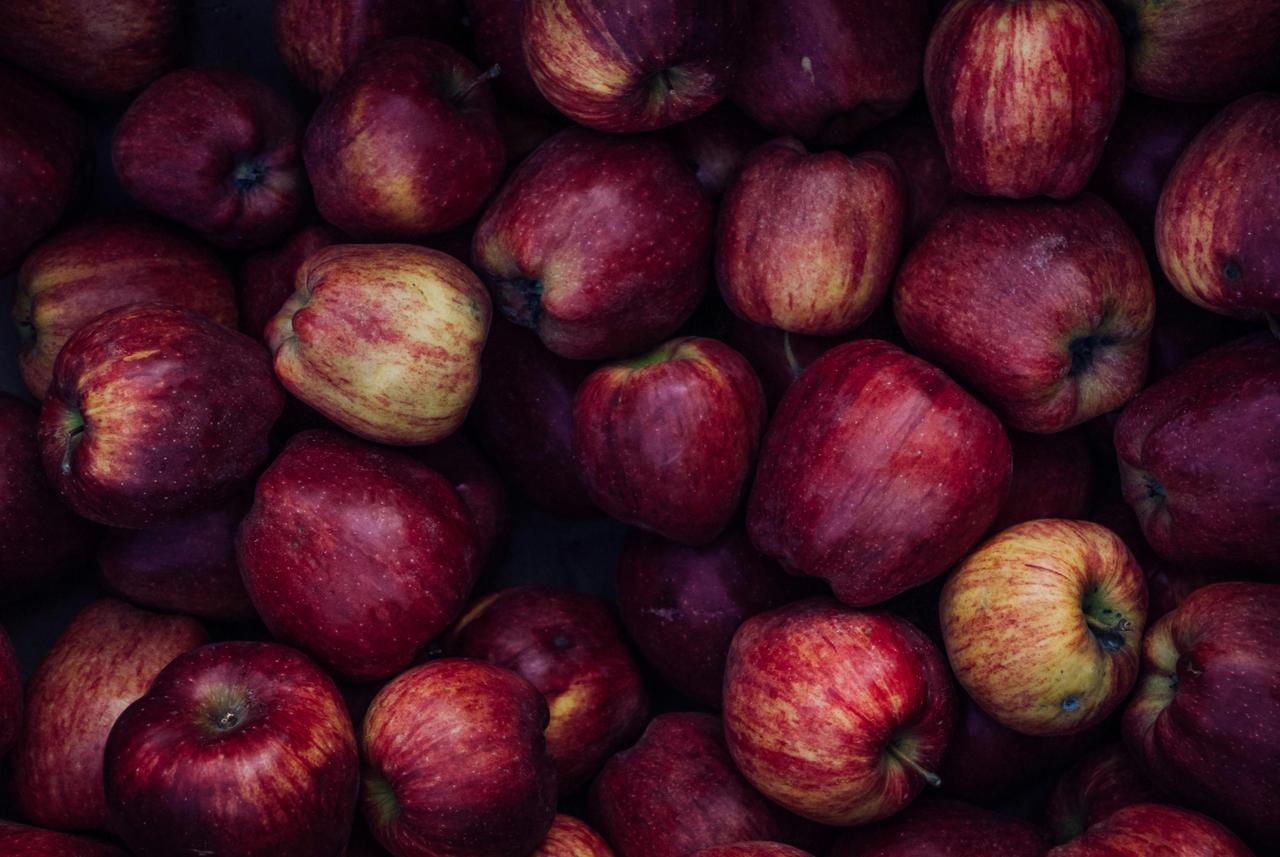
Red apples. (Pexels)
The apple is one of the most economically and culturally significant fruit species globally, classified in botany as Malus domestica and belonging to the genus Rosaceae (Rosaceae). Apple cultivation has developed in parallel with human history, with evidence of its presence in Central European and Asian societies since the Neolithic period (8000–5500 BCE). This deciduous plant, characterized by a broad crown and small tree form, has achieved a wide geographic distribution across nearly every region of the world due to its climatic adaptability and genetic diversity, ranging from the cold areas of Canada to tropical Africa. The genetic center of the apple is widely accepted to be the South Caucasus region, including Anatolia, and it is believed that all apple varieties spread across the globe from Central Asia. Over thousands of years, through grafting and breeding efforts, the apple has evolved into over 6,500 to 7,000 distinct cultivars, creating immense biological diversity. Used both as a fresh fruit and extensively in vinegar, wine, fruit juice, and food industries, the apple is a critical component of human health due to its high nutritional value and mineral content.
The scientific classification of the apple tree is based on a multi-layered hierarchy that reveals its evolutionary development and phylogenetic relationships within the plant kingdom. Malus domestica possesses a complex structure classified under the domain Neomura and the kingdom Eukaryota (Eukaryotes).
Malus domestica is taxonomically categorized according to modern biological classification systems as follows:
【1】
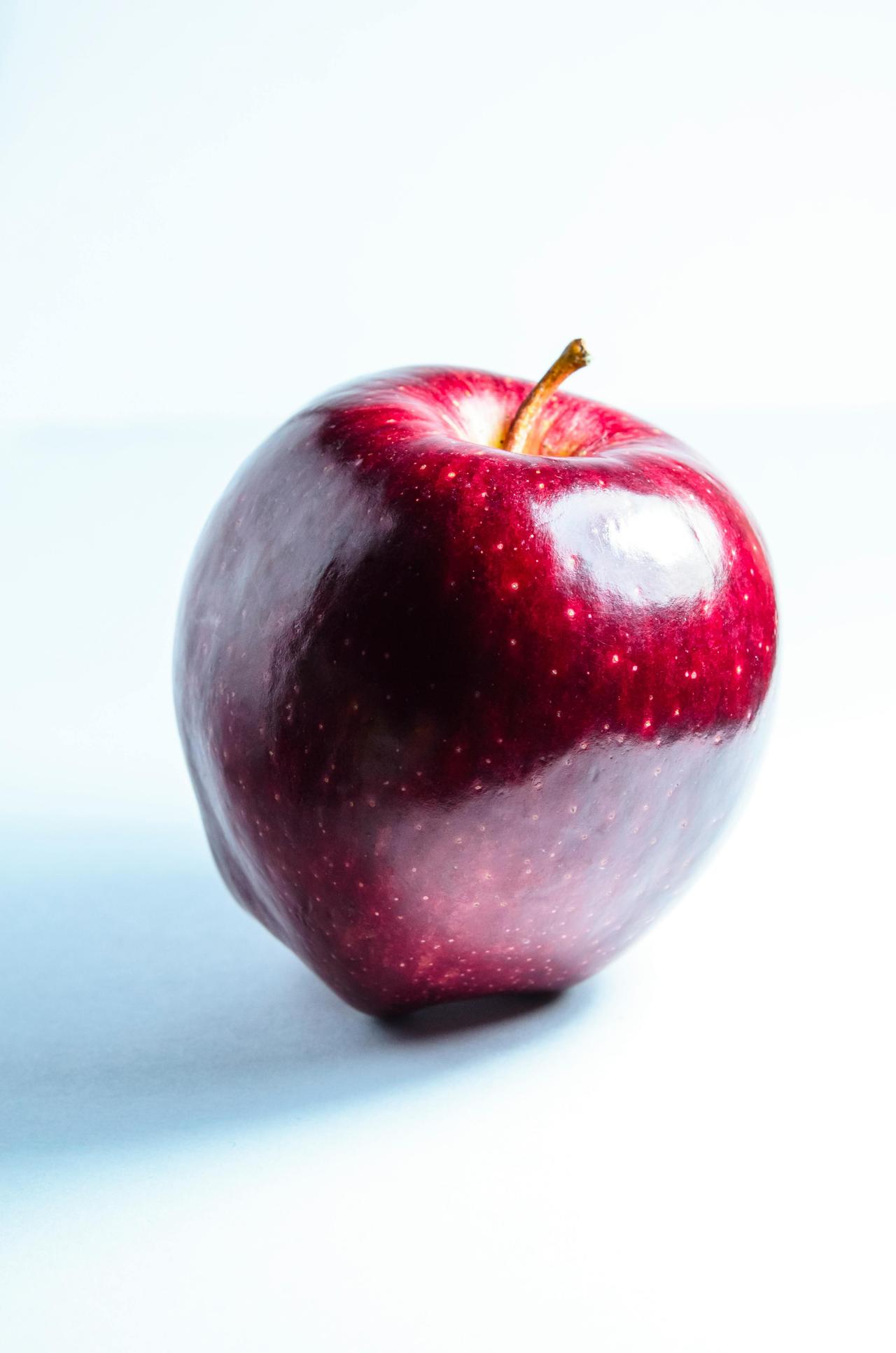
A single red apple on a white background. (Pexel)
Malus domestica is typically a tree reaching 5 to 12 meters in height with a broad and spreading crown. However, in commercial cultivation and orchard management, tree height varies depending on the rootstock used. A standard apple tree averages about 5 meters in height, while semi-dwarf and dwarf varieties are limited to 2 to 6 meters. The leaves are simple, oval-shaped, with pointed tips and characteristically serrated margins. Leaf arrangement is opposite, with the upper surface smooth and the lower surface slightly hairy; this pubescence is considered one of the plant’s mechanisms for reducing water loss. Leaf length ranges from 5 to 12 cm and width from 3 to 6 cm, with petioles measuring 2 to 5 cm.
Flowering is a critical stage in the apple tree’s life cycle, with blossoms typically opening in spring alongside the leaves. Buds initially appear in pale pink tones and turn white when fully open. Each flower has five petals and measures 2.5 to 3.5 cm in diameter. The apple tree is hermaphroditic, meaning both male and female reproductive organs are present within the same flower. However, despite this morphological hermaphroditism, most apple cultivars are self-incompatible and require cross-pollination for successful fruit set. Consequently, commercial apple orchards must plant at least two different cultivars in close proximity—typically within 25 meters.
The skin color of the apple fruit results from a complex pigment synthesis process determined by the interaction of its genetic program with external factors such as sunlight and sugar metabolism. Three primary pigment groups determine fruit color: chlorophyll, carotenoids, and anthocyanins.
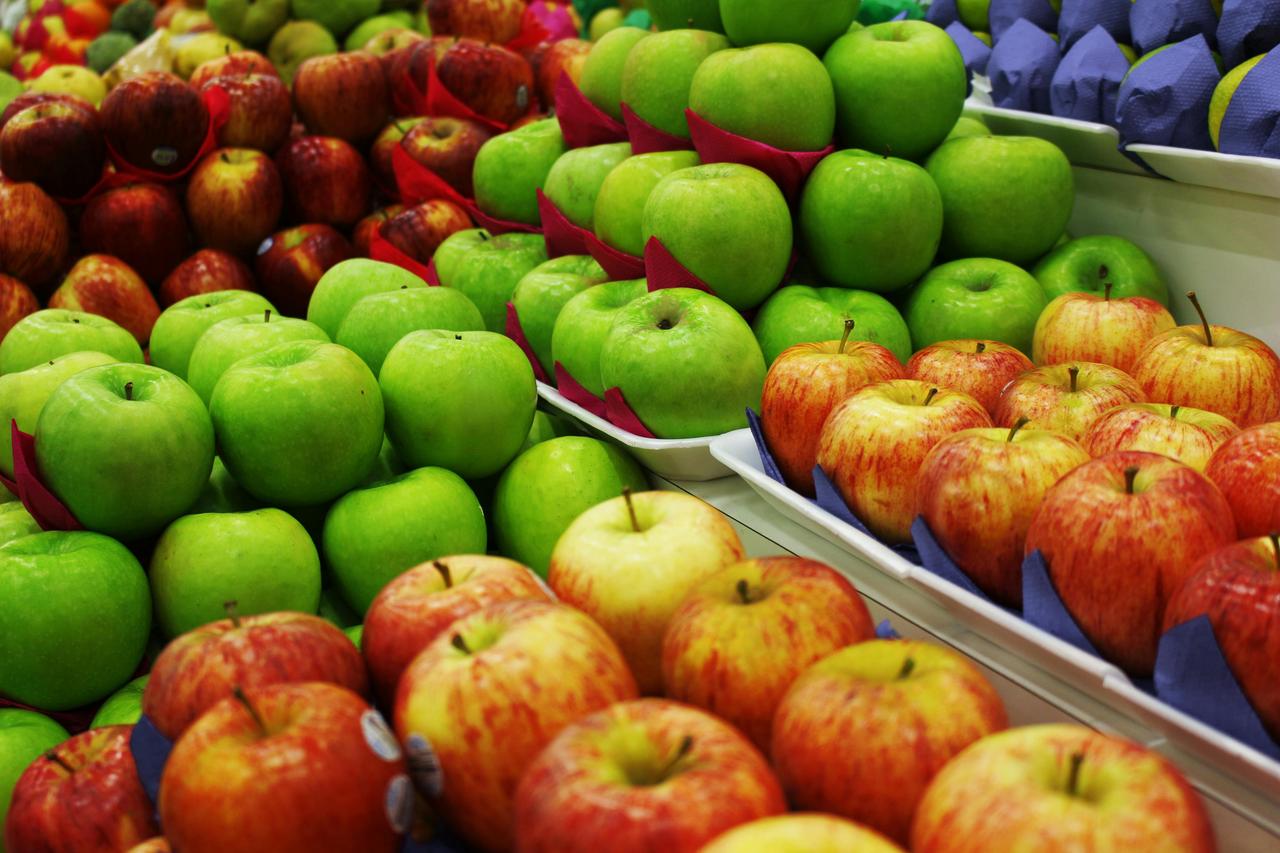
Red, yellow, and green apples in the same frame. (Pexel)
In green apples, chlorophyll is the dominant pigment, imparting the characteristic green color. In yellow apples, the process differs: these fruits begin green, but as they ripen, chlorophyll production ceases and existing chlorophyll breaks down. During this process, yellow carotenoid pigments—present from the outset but masked by chlorophyll—become visible. The primary pigment responsible for the red color in red apples is anthocyanin. Anthocyanin synthesis is triggered by increasing natural sugar levels as the fruit matures. Direct sunlight accelerates sugar development and, consequently, anthocyanin synthesis. For this reason, apple growers prune leaves on the upper parts of trees before harvest to enhance light exposure to the fruit. From an evolutionary perspective, the apple’s bright red color serves as a survival strategy by making the fruit more easily detectable to animals, facilitating seed dispersal over wide areas.
Research on the genetic center and evolutionary origin of the apple indicates that the species first emerged in the South Caucasus and Central Asia, including Anatolia. The Turkish Folklore Dictionary records that the apple is regarded as the ancestor of all fruits and spread to Earth from the Caucasus region. The presence of apples in Central Europe since the Neolithic period demonstrates that human communities began domesticating and cultivating this fruit during their transition to settled life.
The historical development of the word "apple" parallels the evolution of the Turkish language. In Kaşgarlı Mahmud’s 1073 work Divan-i Lugati't-Türk, the word is recorded as "alma." Kaşgarî noted that the Oghuz Turks called the fruit "alma," while other Turkic tribes used "almıla." The form "alma" is preserved in Turkish texts such as the 1367 translation of Hüsrev ü Şirin. The etymology of the word is linked to the Old Turkic root "al" (red) or "alım" (attractiveness). Linguistic research suggests that "elma" may have originated from Indo-Iranian sources or may derive from a common root shared with Ancient Greek mēlon/mālon and Latin mālum, which spread globally from Inner Western Asia during the Bronze Age. In the 1876 work Lehce-i Osmani, the term "apple" is also found in anatomical contexts such as "elmacık kemiği" (apple of the cheek) and in alternative plant names such as "yer elması" (earth apple).
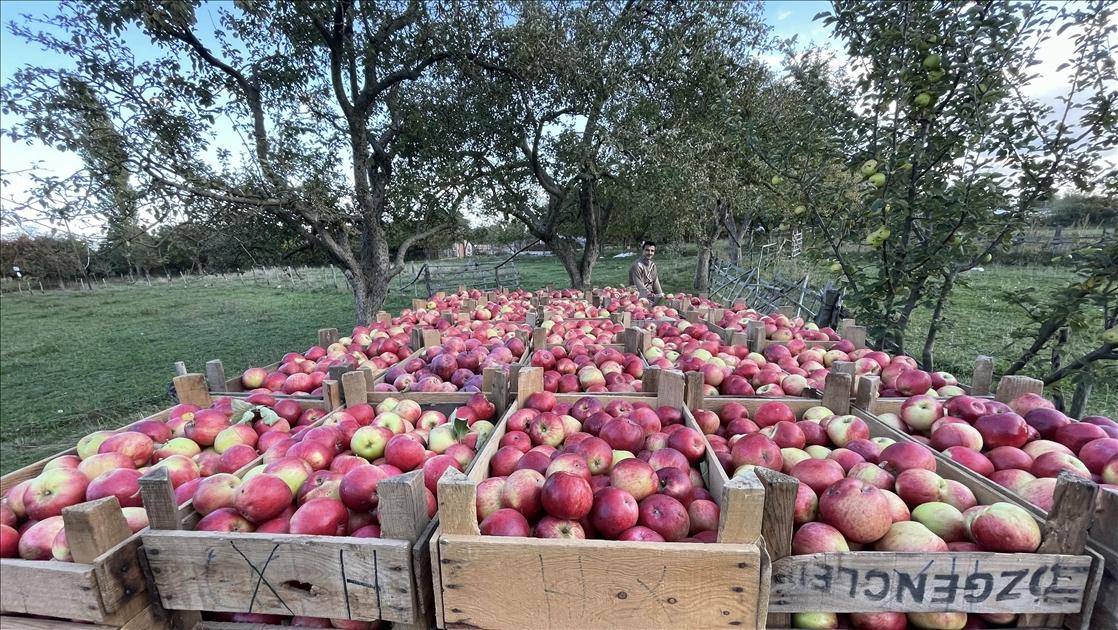
An apple orchard in Kastamonu. (Anadolu Ajansı)
The apple owes its status as one of the world’s most economically valuable fruits to its high climatic adaptability. Apple trees are deciduous perennial plants whose cold tolerance varies by cultivar but can withstand temperatures as low as −30 °C.
According to 2002 data, the global apple cultivation area was 5.67 million hectares, with total production reaching approximately 57 million tons. Seventy-two percent of global production is accounted for by just ten countries.
The table below illustrates major changes and leading countries in global apple production between 1993 and 2002:
【2】
Analysis of the table data reveals that China leads the world in both cultivated area and production volume. With a production of 2.5 million tons, Türkiye ranks third globally.
When dried, the nutritional components of the fruit become concentrated. According to Türkomp data, the detailed nutritional values of 100 grams of dried apple (Malus communis) are as follows:
Türkiye is a global force in apple cultivation due to its status as one of the apple’s genetic centers and its favorable ecological conditions. According to 2001 data, 76.4% of Türkiye’s apple production is concentrated in ten provinces. Isparta alone accounts for 21.1% of Türkiye’s total production, making it the most significant center.
The leading provinces in Türkiye’s apple production and their shares:
【3】
Despite its high production volume, only 0.9% of Türkiye’s total apple output is exported. The primary export markets are Saudi Arabia, Egypt, Russia, and the Turkish Republic of Northern Cyprus.
Globally, the number of apple varieties ranges between 6,500 and 7,000. In Türkiye, approximately 460 local and foreign apple varieties have been identified. The main commercial varieties with high yields and global market demand include Starking, Golden Delicious, Starkrimson, Granny Smith, Starkspur, Beacon, and Jonathan. In Türkiye, the most widely cultivated varieties are Starking, Golden, Starkrimson, and the distinctive Amasya apple.
Among apple varieties, one of the most historically and scientifically significant is "Flower of Kent." This variety is the type of the tree in the famous garden at Woolsthorpe Manor, from which, according to legend, an apple fell and inspired physicist Sir Isaac Newton to formulate his law of universal gravitation. Documented since the 15th century, Flower of Kent is a large, greenish-yellow apple with red streaks. When eaten fresh, it has a soft, low-acid flesh, but its true value lies in its ability to transform into a smooth puree when cooked, classifying it as a "cooker" apple in culinary traditions. The original tree at Woolsthorpe Manor was felled by a storm in 1816 but regrew from its roots and survives today as a living heritage over 350 years old. Cuttings and seeds from this tree were taken to the International Space Station in 2015 by British astronaut Tim Peake, where they remained for six months under microgravity before being returned to Earth and replanted.
The apple contains a balanced composition of vitamins, minerals, and dietary fiber essential to the human body. It is rich in minerals such as phosphorus, calcium, potassium, sodium, magnesium, and silicon, as well as vitamins A, B1, B2, C, and E. Additionally, its organic acids and natural aromatic compounds contribute to its refreshing quality.
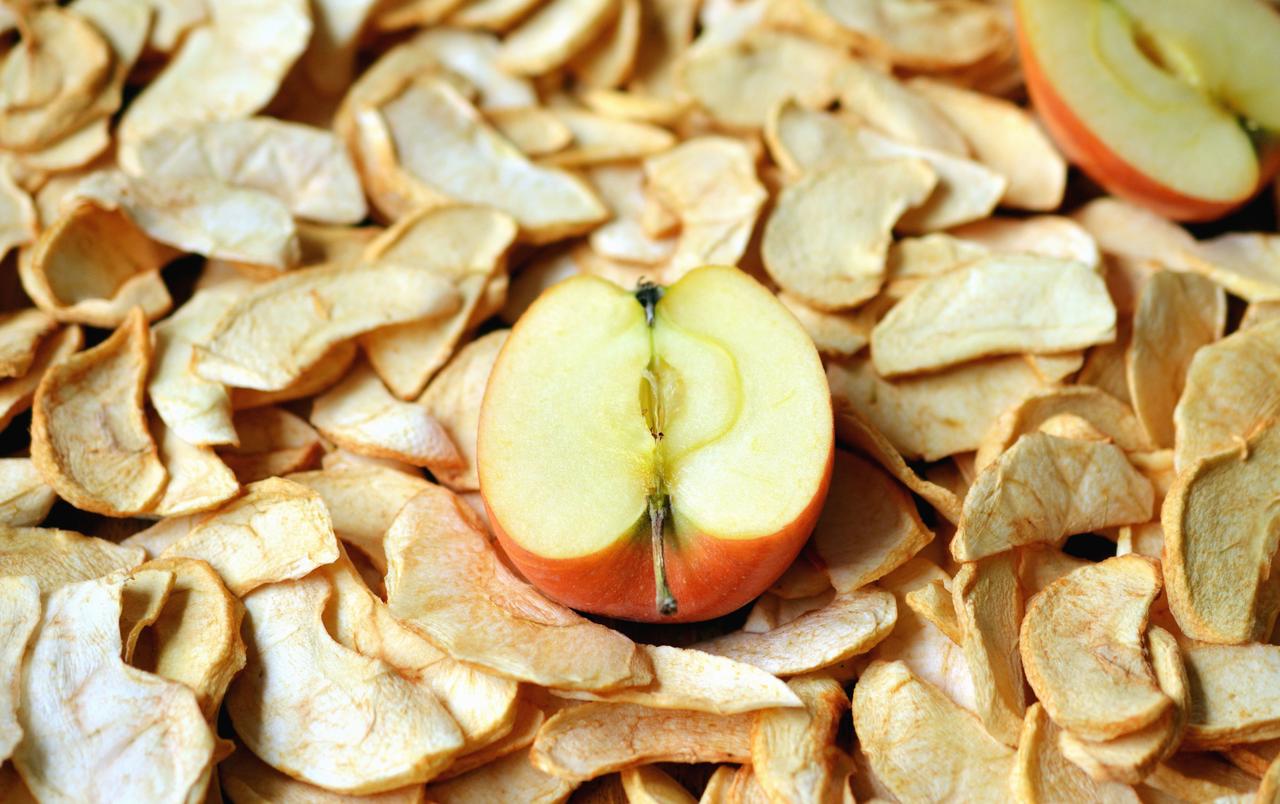
Fresh half apple above dried thin apple slices. (Pixnio)
【4】
The apple is one of the most frequently used symbols in myths, folktales, and religious texts since the dawn of human history. This symbolism is generally built upon dualities: life and death, knowledge and ignorance, youth and old age, beauty and hypocrisy.
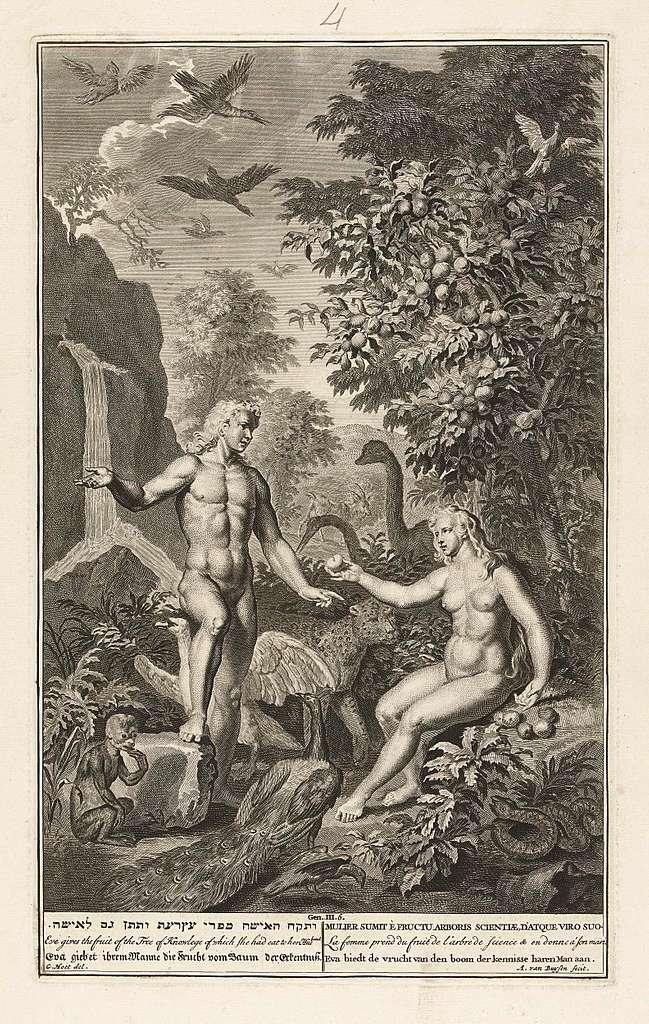
Depiction according to biblical narratives of the forbidden fruit, an apple, being offered by Hawwa to Adam. (Picryl)
Although the specific fruit is not clearly identified in sacred texts, the "forbidden fruit of the Tree of Knowledge" is commonly interpreted as an apple. According to the narrative, Adam and Eve, tempted by Satan in the form of a serpent, ate the apple, resulting in the commission of the "Original Sin" and their expulsion from Paradise. In this story, the apple symbolizes disobedience to the Creator, the desire to transgress prohibitions, and the awakening of sexual awareness (the feeling of shame). According to Bishop Augustine, Adam’s theft of the apple condemned the human lineage to death.【5】
In Greek mythology, the apple symbolizes chaos and competition. In the legend of "The Judgment of Paris," the golden apple inscribed with "To the Fairest," left by the goddess Eris at a wedding she was not invited to, triggered a fierce dispute among Hera, Athena, and Aphrodite. Paris’s decision to award the apple to Aphrodite set in motion the chain of events leading to the Trojan War. Here, the apple is both the prize of beauty and the seed of discord (Zankapfel). In another Greek myth, Heracles (Hercules) is tasked with stealing the golden apples from the Garden of the Hesperides; this demonstrates the apple’s perception as a divine elixir of immortality.【6】
In Norse mythology, the goddess of youth, Idun, provides the gods with fresh apples daily to prevent their aging. In the legend "The Theft of Idun’s Apples," when the cunning god Loki helps giants kidnap Idun and her apples, the gods of Asgard rapidly begin to age. Only after Idun is rescued and her apples restored do the gods regain their former vitality. In this narrative, the apple emerges as a metaphysical force capable of halting biological time.【7】
In Turkish culture, the apple symbolizes abundance, progeny, and sovereignty. The "Red Apple" ideal represents the distant goal, conquest, and world domination in the Turkish state tradition. For the Ottomans, Istanbul was once the Red Apple; after its conquest, this goal was transferred to the dome of St. Peter’s Basilica in Rome. In folk tales and stories, the apple is a miracle that grants children to those unable to conceive. In the tale of Kerem and Aslı, two women eat a single apple and give birth to the heroes. At the end of many tales, three apples fall from the sky, distributing peace and justice among the narrator, the listener, and the heroes.【8】
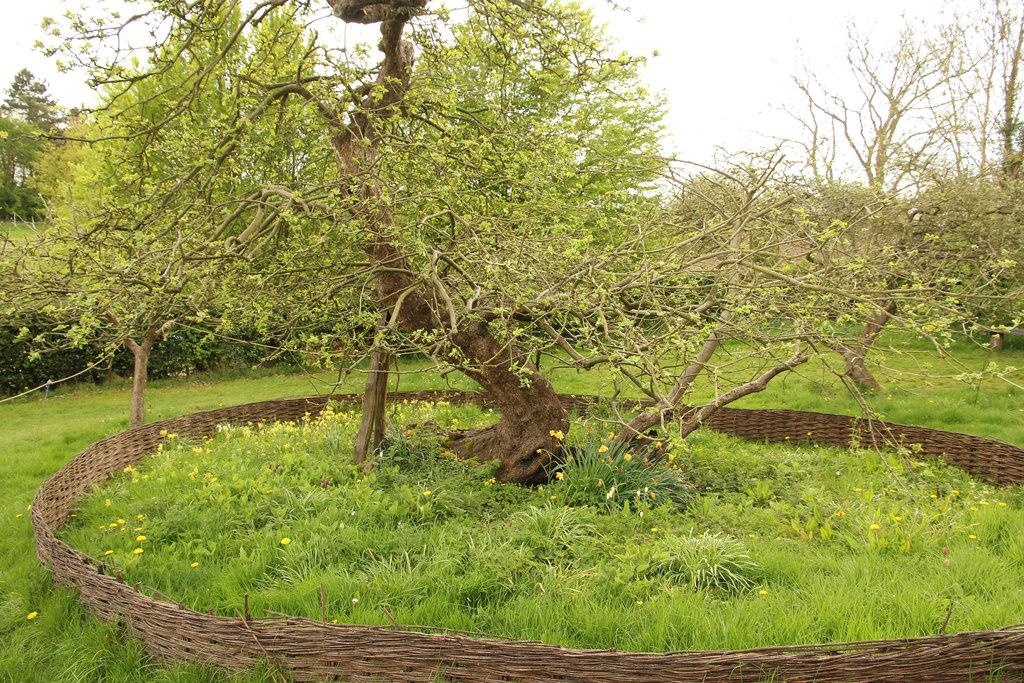
The tree from which the apple is said to have fallen on Isaac Newton’s head. (Richard Croft, Geograph Britain and Ireland, CC BY-SA 2.0)
In the history of science, the apple has become synonymous with the moment of discovery of the law of universal gravitation. According to William Stukeley’s 1752 work Memoirs of Sir Isaac Newton's Life, Newton returned to his family’s farm in Woolsthorpe during the plague outbreak of 1665–66. One day while meditating in the orchard, he observed an apple fall and asked himself, "Why does this apple always fall perpendicularly to the ground? Why does it not move sideways or upward, but instead toward the center of the Earth?" This momentary observation laid the foundation for the idea that all objects in the universe attract each other in proportion to their masses. Newton recounted this story in his later years to friends and relatives (Catherine Barton, John Conduitt); over time, the anecdote became mythologized and exaggerated into the popular image of the apple striking Newton’s head.【11】
Akyıldız, Ercan, Cemile. "Söylencelerde ve Masallarda Elma Sembolü." Atatürk Üniversitesi Sosyal Bilimler Enstitüsü Dergisi 21, no. 3 (September 2017): 1043–1060. Accessed May 13, 2026. https://dergipark.org.tr/tr/download/article-file/468217
Atay, Ersin, and Ayşe Nilgün Atay. “History and Taxonomy.” ResearchGate, Accessed May 14, 2026. https://www.researchgate.net/publication/285054355_History_and_Taxonomi
Gerson, D. “Rainbow Apple.” December 20, 2020. Accessed May 14, 2026. https://wavesinthekitchen.com/rainbow-apples/
Gümüş, İnci Selin. "Mitolojide, Sembol Biliminde Ve Marka Göstergesinde Elma Meyvesi." *International Academic Social Resources Journal* 7, no. 37 (May 2022): 602–606. Accessed May 13, 2026. https://asrjournal.org/files/asrjournal/00be7dee-94dd-4f24-86da-8b69e6c46bd0.pdf
Nişanyan Sözlük. "Elma." Last updated May 5, 2026. Accessed May 13, 2026. https://www.nisanyansozluk.com/kelime/elma
Stukeley, William. *Memoirs of Sir Isaac Newton's Life*. 1752. Royal Society online manuscript archive. Accessed May 13, 2026. https://ttp.royalsociety.org/ttp/ttp.html?id=1807da00-909a-4abf-b9c1-0279a08e4bf2&type=book&_ga=2.243449797.1115929948.1704188280-1209525634.1700154565.
Tasting Table. "The Type of Apple That Likely Inspired Isaac Newton's Theory of Gravity." Accessed May 13, 2026. https://www.tastingtable.com/1173944/the-type-of-apple-that-likely-inspired-isaac-newtons-theory-of-gravity/.
TürKomp (National Food Composition Database). "Elma, kuru (Malus communis)." Ministry of Agriculture and Forestry. Accessed May 13, 2026. https://turkomp.tarimorman.gov.tr/food-elma-kuru-335.
University of York. "Isaac Newton's Apple Tree." Accessed May 13, 2026. https://www.york.ac.uk/physics-engineering-technology/about/newtons-apple-tree/.
Wikifarmer. "Elma Ağacı." Accessed May 13, 2026. https://wikifarmer.com/library/tr/article/elma-agaci-2.
Yıkar, Emiş. "Elma." TEAE-Bakış 4, no. 7 (September 2003). Accessed May 13, 2026. https://web.archive.org/web/20070808094709/http://www.aeri.org.tr/pdf/bks/4-7.pdf.
[1]
In the literature, the apple is also referred to by names such as Malus pumila or Malus communis. This classification demonstrates not only that the apple is a cultivated plant but also that it is a highly evolved member of the group of flowering, dicotyledonous plants. (Researchgate)
[2]
The data in this table are derived from FAOSTAT statistics published in the "Bakış" bulletin by the Institute of Agricultural Economics (TEAE). The statistics cover global changes between 1993 and 2002.
[3]
These regional production distribution data for Türkiye in 2001 are taken from "Chart 6" in the relevant report by the Institute of Agricultural Economics (TEAE).TEAE.
[4]
The nutrient analyses in this table are based on results from the 100 gram edible dried apple (Malus communis) in the Turkomp National Food Composition Database maintained by the Ministry of Agriculture and Forestry.
[5]
"The Apple Fruit in Mythology, Symbolism, and Brand Signifiers." pp.603-604 (International Academic Social Resources Journal 7)
[6]
"The Apple Fruit in Mythology, Symbolism, and Brand Signifiers." pp.603-604(International Academic Social Resources Journal 7)
[7]
"The Apple Fruit in Mythology, Symbolism, and Brand Signifiers." p.603 (International Academic Social Resources Journal 7)
[8]
"The Apple Fruit in Mythology, Symbolism, and Brand Signifiers." pp.603-604 (International Academic Social Resources Journal 7)
[10]
"The Apple Symbol in Legends and Folktales." pp.1056-1057 (Atatürk University Journal of Social Sciences Institute)
[11]

Henüz Tartışma Girilmemiştir
"Apple (Malus domestica)" maddesi için tartışma başlatın
Taxonomy and Botanical Characteristics
Scientific Classification and Taxonomic Hierarchy
Morphological Structure and Physical Characteristics
Color Formation and Pigment Analysis
History and Origin
Historical Records and Etymology
Cultivation and Agricultural Characteristics
Global Production and Yield Statistics
Situation and Regional Distribution in Türkiye
Varieties and Cultivars
"Flower of Kent" and Isaac Newton’s Apple
Nutritional Value and Chemical Composition
Nutritional Composition of Dried Apple
Mythology, Symbolism, and Cultural Meanings
Abrahamic Religions and the Tree of Knowledge
Greek Mythology: Beauty and War
Germanic Mythology and Eternal Youth
Turkic Mythology and Folk Culture
Folktales and Literature: The Apple Symbol
Scientific Perspective: Gravity and Newton