


Bu içerik Türkçe olarak yazılmış olup yapay zeka ile otomatik olarak İngilizceye çevrilmiştir.
+7 Daha
Uygulamalı Nanoteknoloji
Nanotechnology, in its general definition, is the science and technology of controlling, understanding, and manipulating matter at the scale of 1 to 100 nanometers (one billionth of a meter). This discipline encompasses the study of materials at the atomic and molecular levels to discover unique physical, chemical, and biological properties not exhibited by their bulk counterparts, and to exploit these properties in developing new materials, devices, and systems with enhanced functionalities. Nanotechnology lies at the intersection of many disciplines including physics, chemistry, biology, materials science, and engineering, and is regarded as one of the foundational technologies of the 21st century’s industrial revolution. First conceptualized by physicist Richard Feynman in 1959 and coined as a term by Norio Taniguchi in 1974, the field has advanced rapidly since the 1980s with the invention of the scanning tunneling microscope and the discovery of structures such as carbon nanotubes. Applied nanotechnology focuses on using this fundamental scientific knowledge to develop tangible products and solutions across diverse sectors including medicine, energy, electronics, automotive, and food.
One of the most fundamental applications of nanotechnology is the development of new materials with superior properties. At the nanoscale, materials can be lighter, stronger, programmable, and exhibit different optical, electrical, or magnetic characteristics compared to their macroscopic counterparts. For example, carbon nanotubes (CNTs), formed by the cylindrical arrangement of carbon atoms, are fifty times stronger than steel yet significantly lighter. These properties make them valuable across a wide range of applications from composite materials to electronics.
Nanocomposites are produced by incorporating nanoparticles into a matrix material such as a polymer. Even small additions of 0.5% to 5% can substantially enhance the mechanical strength, thermal resistance, or electrical conductivity of the material. In the automotive industry, components such as dashboards and interior panels manufactured using such materials can be both lighter and more durable.
Nanotechnology has also revolutionized surface coatings. Inspired by the self-cleaning property of lotus leaves, hydrophobic (water-repellent) and oleophobic (oil-repellent) coatings have enabled the production of stain-resistant, water-repellent fabrics, glasses, and exterior paints. These coatings also increase resistance to scratching and corrosion.
Two primary approaches are used to produce nanomaterials: top-down and bottom-up. In the top-down approach, a bulk material is reduced to nanoscale dimensions using physical or chemical methods such as grinding or etching. In the bottom-up approach, atoms and molecules are assembled in a controlled manner through chemical synthesis to form the desired nanostructure. These manufacturing processes typically rely on microfabrication techniques developed in the semiconductor industry and are carried out in highly precise cleanroom environments.
The potential impact of nanotechnology on human health has given rise to a new field known as nanomedicine. One of its most significant applications is targeted drug delivery. Drugs are loaded into nano-sized capsules or particles and directed specifically to diseased tissues such as cancer cells. These “nano-bullets” can significantly reduce the side effects of chemotherapy by ensuring the drug acts only at the targeted site without harming healthy cells. This approach aims to protect the body’s critical organs from the toxic effects of medication.
In diagnostics, nanosensors and lab-on-a-chip systems are emerging as key tools. These systems enable rapid and early detection of diseases using only minute samples of blood or saliva. Nano-labels used in biomedical imaging allow for clearer visualization of specific cells or molecules within the body.

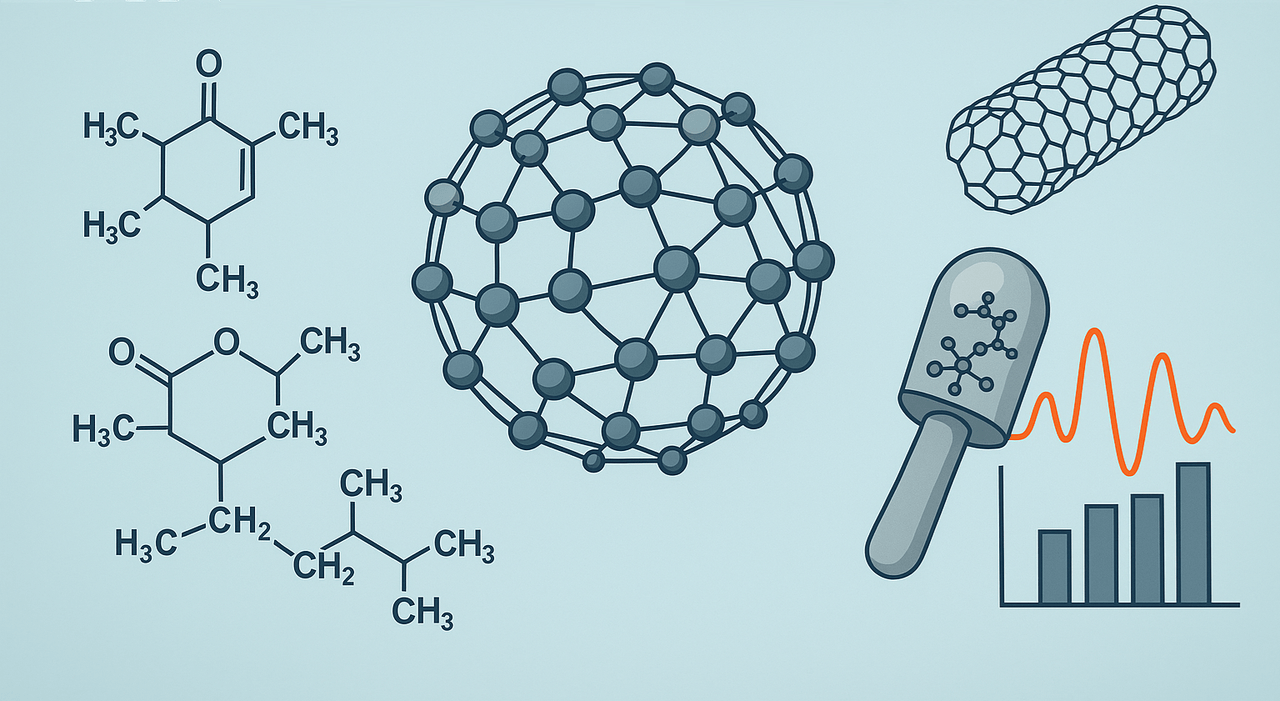
Applied Nanotechnology (generated by artificial intelligence.)
Tissue engineering and regenerative medicine also benefit greatly from nanotechnology. Techniques such as bioprinting and 3D bioprinting allow cells to be precisely deposited onto nano-scale scaffolds, enabling the creation of artificial tissues and organs. In the future, nanorobots capable of being injected into the bloodstream to repair damaged tissues, open blocked vessels, or combat viruses are being targeted. These technologies offer a broad vision ranging from treating neurological damage such as paralysis to creating artificial immune systems.
Applied nanotechnology offers innovative solutions to global energy and environmental challenges. In energy production, nanomaterials are used to develop more efficient, lightweight, and flexible solar panels. Lightweight and durable nanocomposite materials used in wind turbine blades enhance energy generation efficiency. Energy storage is one of the areas most profoundly impacted by nanotechnology. Nanostructured materials used in the anodes and cathodes of lithium-ion batteries improve their charge capacity, lifespan, and safety. Alternative energy storage systems such as supercapacitors and fuel cells are also becoming more efficient and cost-effective thanks to nanotechnology.
In energy efficiency, fuels containing nano-scale additives enable better combustion, resulting in fuel savings and reduced exhaust emissions. Nano-coatings and lubricants used in engines and mechanical systems reduce friction, minimizing energy loss and extending system life. Additionally, transmission lines produced using nanotechnology may enable electricity to be transmitted over long distances with significantly less loss. In environmental technologies, nanoparticles are effectively used in wastewater treatment and the removal of hazardous chemicals. Nanofiber-based solutions are also being developed for applications such as cleaning up oil spills and filtering airborne pollutants.
The primary driver behind the miniaturization and increased power of modern electronic devices is nanotechnology. Billions of transistors in computer processors, each thousands of times smaller than a human hair, are manufactured using micro/nanofabrication techniques. These advancements have enabled the development of faster, more powerful computers, smartphones, and other electronic devices. Nanoelectronics pushes these efforts further, laying the groundwork for future technologies such as quantum computers. Quantum computers are expected to solve problems of complexity beyond the reach of today’s computers by exploiting the quantum mechanical properties of particles at the nanoscale.
Microelectromechanical Systems (MEMS) are a major subfield of nanotechnology. This interdisciplinary field, combining physics, chemistry, electronics, and mechanical engineering, has enabled the development of numerous compact and efficient devices, from accelerometers in smartphones to airbag sensors in automobiles. In imaging technologies, nanotechnology has made possible the production of higher-resolution, brighter, and more energy-efficient displays such as Quantum Dot LED (QLED) screens.
The automotive industry is heavily leveraging innovations from nanotechnology. Reducing vehicle weight is critical for improving fuel efficiency. Nano-metal alloys and carbon nanotube-reinforced polymer composites enable the production of body and chassis components that are significantly lighter and stronger than traditional materials. This reduces fuel consumption while enhancing crash safety. Nano-ceramic particles in vehicle paints increase surface resistance to scratches, while self-cleaning coatings help maintain the vehicle’s cleanliness for longer periods. In electric vehicles, battery technology has achieved higher energy density and faster charging times through the use of nanostructured electrode materials.
In aerospace and space exploration, weight is the most critical factor affecting cost. Lightweight and high-strength composite materials developed through nanotechnology are used in the manufacturing of aircraft and spacecraft, reducing fuel costs and enabling longer-range missions. In the defense industry, nanotechnology is used to enhance military equipment. Examples include stain-resistant, abrasion-resistant, and even bulletproof fabrics; fog- and water-repellent eyewear that ensures clear vision in adverse weather conditions; and bio-sensors that monitor soldiers’ health in real time.
Nanotechnology brings innovations across the food industry, from processing to packaging. During food processing, nanoemulsions can enhance sensory properties such as taste, color, aroma, and texture. Additionally, the bioavailability of nutrients such as vitamins and minerals can be increased through nanoencapsulation techniques. In food packaging, nanotechnology has enabled the development of “smart” and “active” packaging. Nanosensors integrated into packaging materials can inform consumers about product freshness or spoilage through visible color changes. Packaging containing antimicrobial materials such as silver nanoparticles extends shelf life and inhibits pathogen growth.
In agriculture, nanotechnology is used to improve the efficiency of pesticides and fertilizers. Through nano-carriers, active ingredients can be delivered directly to target plants or pests, reducing the amount of chemicals released into the environment. In the textile industry, nanotechnology has made it possible to produce fabrics that are stain- and water-repellent, wrinkle-resistant, UV-protective, and flame-retardant. Additionally, nanofibers produced through methods such as electrospinning are used in a wide range of applications, from high-efficiency air and water filters to wound dressings.
Türkiye has made significant strides in nanotechnology in recent years. Research in this field is conducted by research centers within the Scientific and Technological Research Council of Türkiye (TÜBİTAK) and various universities. Institutions such as the Nanotechnology Research and Application Center (SUNUM) at Sabancı University and the National Nanotechnology Research Center (UNAM) at Bilkent University are recognized as national research infrastructures and are leading scientific and technological advancements in this domain. Leading universities including Istanbul Technical University, Middle East Technical University, Boğaziçi University, and Koç University offer undergraduate and graduate programs in nanoscience and nanotechnology and conduct significant research. In the private sector, major companies such as Aselsan, Arçelik, and Vestel utilize nanotechnology in their product development processes. Increasing R&D investments and international collaborations is essential for Türkiye to become more competitive on the global stage in this field.

Uygulamalı Nanoteknoloji
Henüz Tartışma Girilmemiştir
"Applied Nanotechnology Topics" maddesi için tartışma başlatın
Materials Science and Manufacturing Technologies
Applications in Medicine and Health (Nanomedicine)
Energy and Environmental Technologies
Electronics, Computing, and Communication Technologies
Automotive, Aerospace, and Defense Industries
Food, Agriculture, and Textiles
Nanotechnology Research in Türkiye