


Bu içerik Türkçe olarak yazılmış olup yapay zeka ile otomatik olarak İngilizceye çevrilmiştir.
+2 Daha
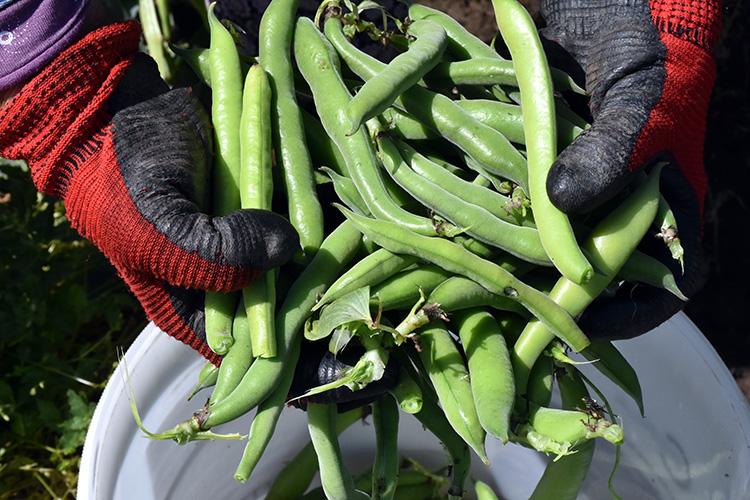
Broad bean (Vicia Faba)
Broad bean (Vicia faba)
Type(s) | Legumes (Fabaceae) | ||||||||
|---|---|---|---|---|---|---|---|---|---|
Plant Type | Annual, frost-tolerant | ||||||||
Leaf | Compound, glabrous, broad | ||||||||
Climate(s) | Suitable for temperate and cold climates | ||||||||
Growing Area | Central Anatolia, Aegean, Marmara | ||||||||
Vitamin/Mineral | B-group vitamins, iron, magnesium | ||||||||
Fava bean (Vicia faba) is an annual, cold-tolerant crop plant belonging to the legume family (Fabaceae). Widely cultivated as a food source in many regions of the world, fava bean is an important legume consumed both fresh and dried. Throughout history, it has been one of the fundamental sources of protein and carbohydrates in human nutrition and has gained a significant role in agricultural production due to its soil-improving properties. Fava bean is evaluated in terms of its structural characteristics, ecological requirements, and agricultural importance.

Fava beanAA
The fava bean plant is an annual herbaceous species reaching a height of 50–150 cm, with an upright and branched stem. Its leaves are compound and arranged alternately, characterized by a hairless and broad structure. The flowers are typically white, sometimes featuring purple or black spots. The fruits are long, wide pods containing 3–8 seeds. The seeds are oval-shaped and vary in color from green to yellow or brown tones. These morphological features serve as key identifiers for the fava bean plant.
Fava bean is a species well adapted to temperate and cold climatic conditions. Although not highly selective regarding soil type, it exhibits more productive growth in well-drained, organically rich soils with neutral or slightly alkaline pH. Excessively hot and dry climates negatively affect the plant’s development and yield. The physical and chemical properties of the soil directly influence root development and nitrogen-fixing capacity.
Fava bean is an ecologically and economically significant crop in agriculture. Thanks to rhizobium bacteria residing in its roots, it fixes atmospheric nitrogen into the soil, thereby enhancing soil fertility. Because of this trait, it is preferred in crop rotation systems and contributes to soil improvement. In Türkiye, fava bean is widely cultivated in the Central Anatolian, Aegean and Marmara regions, where it is valued both as a fresh vegetable and as a dried legume source of protein. It is also used as animal feed. In agricultural production, fava bean plays a role in promoting crop diversity and sustainability.
Fava bean is a nutritious plant rich in protein, carbohydrates and dietary fiber. It contains B-group vitamins, iron, magnesium and other minerals. Fresh fava beans are cooked as a vegetable, while dried fava beans are primarily used in meals, salads and as animal feed. In addition to its important role in nutrition, its high dietary fiber content supports digestive health. Various studies have also demonstrated the positive health effects of fava bean consumption.
Alan, Özlem, and Hakan Geren. “Ödemiş-İzmir Ekolojik Koşullarında Yetiştirilen Bazı Bakla (Vicia faba var. major) Çeşitlerinde Tohum Verimi ve Diğer Özelliklerin İncelenmesi.” *Ege Üniversitesi Ziraat Fakültesi Dergisi* 43, no. 1 (2006): 13–20. Accessed June 24, 2025. https://dergipark.org.tr/en/download/article-file/59199
Anadolu Ajansı. “Datça’da Erkenci Bakla ve Bezelye Hasadına Başlandı.” Anadolu Ajansı, April 21, 2022. Accessed June 24, 2025. https://www.aa.com.tr/tr/ekonomi/datcada-erkenci-bakla-ve-bezelye-hasadina-baslandi/2569387.
Anadolu Ajansı. “’Bakla’ Parkinson Tedavisini Olumsuz Etkiliyor.” Anadolu Ajansı, March 9, 2015. Accessed June 24, 2025. https://www.aa.com.tr/tr/saglik/bakla-parkinson-tedavisini-olumsuz-etkiliyor/68605.
Pekşen, Aysun, Erkut Pekşen, and Cengiz Artık. “Bazı Bakla (Vicia faba L.) Populasyonlarının Bitkisel Özellikleri ve Taze Bakla Verimlerinin Belirlenmesi.” *Ondokuz Mayıs Üniversitesi Ziraat Fakültesi Dergisi* 21, no. 2 (2006): 225–230. https://dergipark.org.tr/tr/download/article-file/187623
Pekşen, Erkut. “Bakla (Vicia faba L.)’da Özellikler Arasındaki İlişkiler ve Tane Verimi Bakımından Seleksiyon Kriterlerinin Belirlenmesi.” *Ondokuz Mayıs Üniversitesi Ziraat Fakültesi Dergisi* 22, no. 1 (2007): 73–78. Accessed June 24, 2025. https://dergipark.org.tr/tr/download/article-file/187656

Broad bean (Vicia Faba)
Broad bean (Vicia faba)
Type(s) | Legumes (Fabaceae) | ||||||||
|---|---|---|---|---|---|---|---|---|---|
Plant Type | Annual, frost-tolerant | ||||||||
Leaf | Compound, glabrous, broad | ||||||||
Climate(s) | Suitable for temperate and cold climates | ||||||||
Growing Area | Central Anatolia, Aegean, Marmara | ||||||||
Vitamin/Mineral | B-group vitamins, iron, magnesium | ||||||||
Henüz Tartışma Girilmemiştir
"Broad bean (Vicia faba)" maddesi için tartışma başlatın
Morphological Characteristics
Ecological Requirements
Cultivation and Agricultural Importance
Nutritional Value and Uses