


Bu içerik Türkçe olarak yazılmış olup yapay zeka ile otomatik olarak İngilizceye çevrilmiştir.
+2 Daha
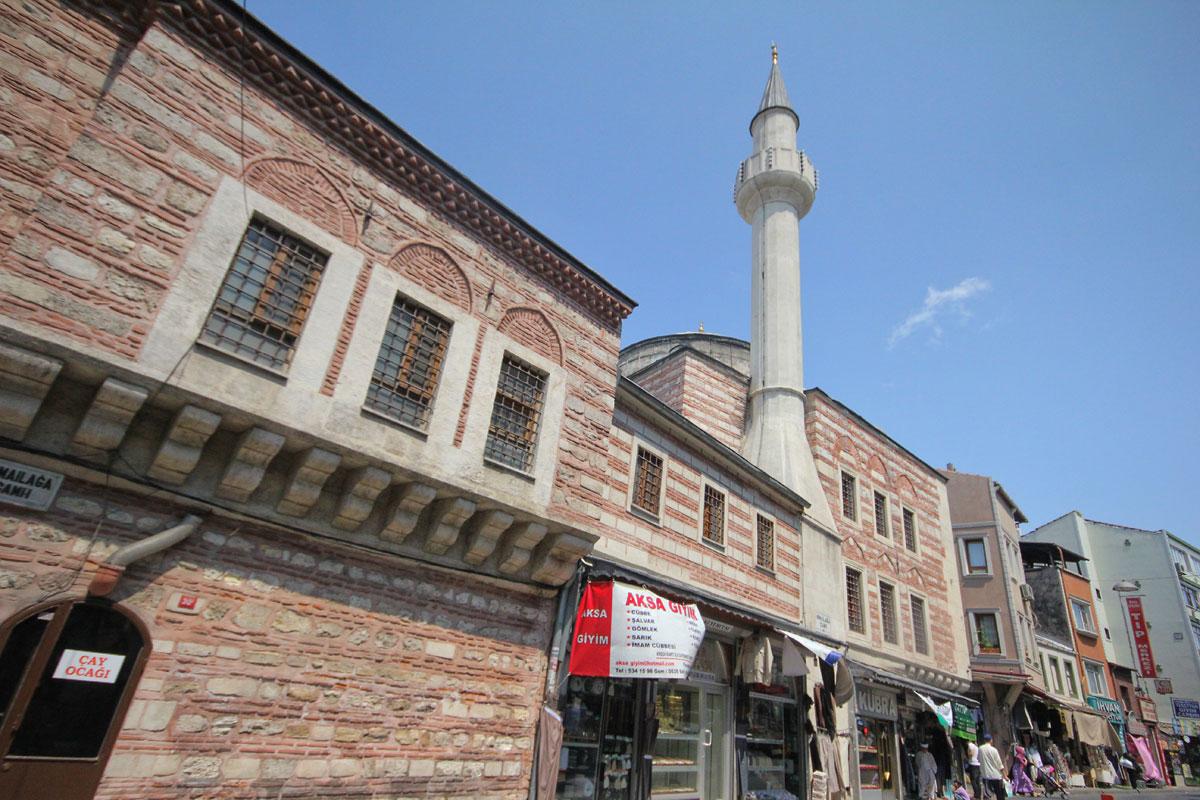
İsmail Ağa Mosque was constructed in 1723 by Ebu İshak İsmail Efendi, the Ottoman Sheikh al-Islam. The site on which the mosque stands is the founder’s own residence and stands out as a synthesis of the architectural style characteristic of the Ottoman Tulip Period, blending Islamic architecture with local elements. The mosque’s dimensions were designed to correspond to the width, length, and height of the Kaaba-i Şerîf.
The great earthquake that struck Istanbul in 1894 caused severe damage to the mosque, resulting in the collapse of its minaret. With the closure of medreses during the Republican period, the mosque’s 200-year-old medrese was left neglected for decades and became a derelict structure. For a prolonged duration ruined, the mosque remained closed to worship.
In 1952, under the supervision of the Directorate of Foundations and with public contributions, the mosque was rebuilt faithfully to its original form and reopened for worship. During this restoration, a concrete addition of harim size was appended to the mosque, and a new fountain with eight columns, marble niches, and baroque reliefs was constructed in place of the old şadırvan. Gold gifts presented by Sultan Abdülhamid II to Batumi-Ahıskalı Ali Haydar Efendi, who served as a teacher in Fatih, were also used in this renovation. Mahmut Ustaosmanoğlu, who began his service as imam here in 1954, held this position until 1997.
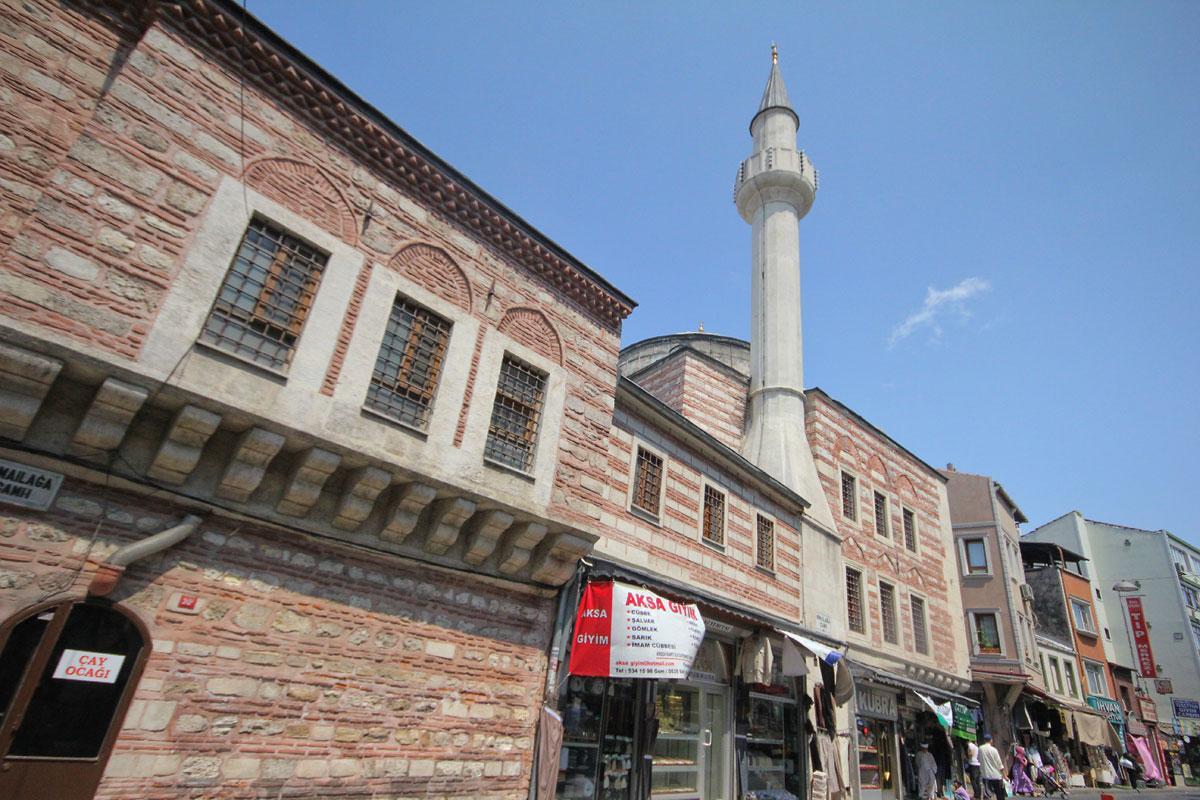
İsmail Ağa Mosque serves not only as a place of worship but also as a center for Islamic sciences. After Mahmud Efendi became imam in 1954, the mosque evolved into a center for the teaching of Sufi sciences. Today, it continues its activities through religious and social events, madrasa education, and chat circles.
The mosque’s main dome is supported by three arches on each side. Inside the prayer hall, a women’s gallery is situated on three sides, resting on eight marble column on. The pulpit is entirely made of marble, while the sermon lectern is constructed of wood. The minaret, built of cut stone, has a single balcony, and its entrance is accessed from the women’s gallery.
In the mosque’s cemetery lie its founder, Sheikh al-Islam Ebu İshak İsmail Efendi, his elder son İshak Efendi, his younger son Sheikh al-Islam Mehmet İshak Efendi, and other Sheikh al-Islams. Additionally, Diyanet Affairs President Nasuhi Bilmen and Ahıskalı Sheikh Ali Haydar Efendi served as preachers in this mosque.
İsmail Ağa Mosque is located in the Çarşamba neighborhood of the Fatih district in Istanbul, on Manyasızâde Street. The mosque is situated at one of the historic peninsula’s important points, surrounded by numerous structures from the Ottoman and Byzantine periods.
Yavuz Sultan Selim Mosque: A mosque commissioned by Ottoman Sultan Yavuz Sultan Selim, located among Istanbul’s highest elevations.
Türbe of İsmet Garibullah Hazretleri: This tomb, housing the grave of İsmet Garibullah, holds a significant place in Ottoman Sufism tradition and serves as an important Sufi stop for visitors.
Fener Greek Orthodox Patriarchate: Located on the shore of the Golden Horn, this building is one of the most important religious centers of the Orthodox world.
Balat Neighborhood: Known for its historic streets, colorful houses, and cultural diversity, Balat features old synagogues, Greek Orthodox churches, and Jewish settlements.
Medreses: Several medreses from the Ottoman period remain in the mosque’s vicinity, institutions that once taught Islamic sciences and formed an essential component of the Ottoman educational system.
Habervitrini. "İşte İsmailağa Camii'nin Hikayesi." Habervitrini Haber Sitesi. Accessed February 7, 2025. https://www.habervitrini.com/iste-ismailaga-camiinin-hikayesi/684531.
İsmailağa Cami. "Camimizin Tarihçesi." İsmailağa Camii Resmî Web Sitesi. Accessed February 7, 2025. https://www.ismailaga.org.tr/camimizin-tarihcesi.
İstanbul’daki Camiler. "İsmailağa Camii (Fatih)." *İstanbul’daki Camiler Tanıtım Sayfası*. Accessed February 7, 2025. https://www.istanbuldakicamiler.com/ismail-aga-camii-fatih/.

Henüz Tartışma Girilmemiştir
"Ismail Ağa Camii" maddesi için tartışma başlatın
History
Founder of the Mosque
The Great Istanbul Earthquake and Its Aftermath
Reconstruction
Current Function of the Mosque
Architectural Features
Location
Important Structures in the Vicinity