
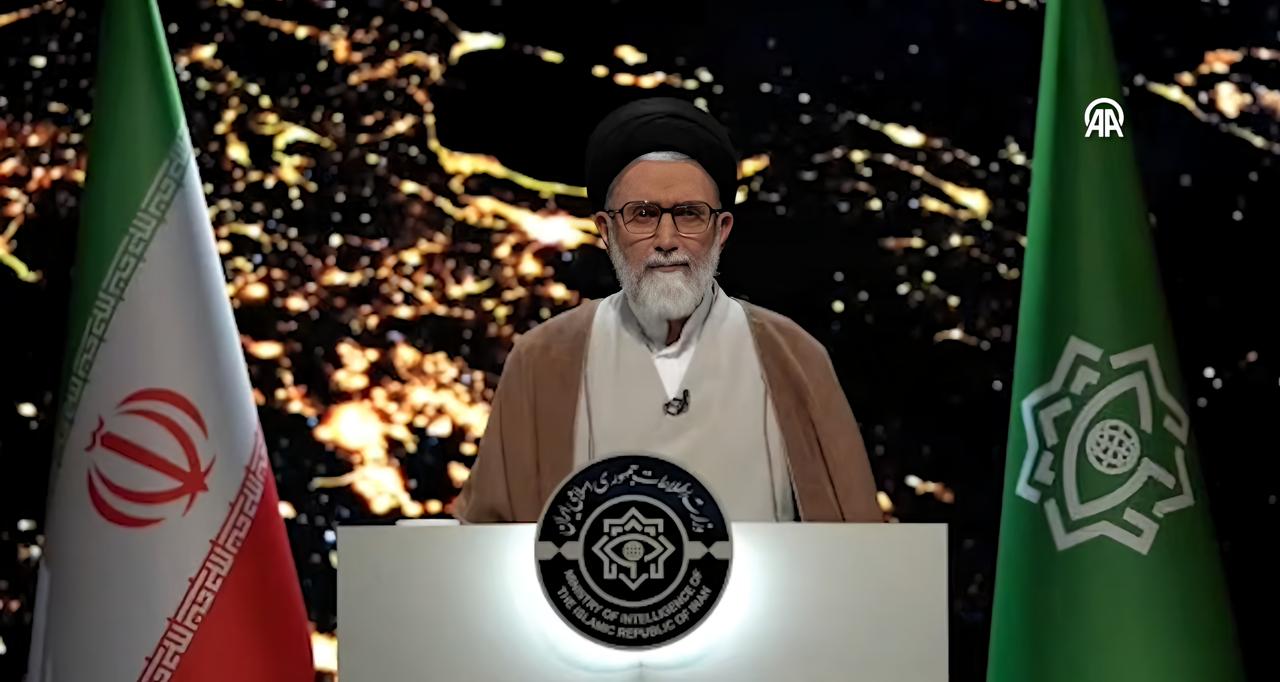

İsmail Hatib (Anadolu Ajansı)
Ismail Hatib (Persian: سید اسماعیل خطیب; b. 1961, Kain/Kāinat, South Khorasan – d. 18 March 2026) is an Iranian religious figure, security bureaucrat and intelligence officer. He was trained within Iran’s religiously educated security cadre and held various positions in units affiliated with the Islamic Revolutionary Guard Corps, the Ministry of Intelligence, the judiciary and religious leadership circles. In August 2021 he became Iran’s Minister of Intelligence and retained the same position in the 2024 cabinet of Masoud Pezeshkian.
Ismail Hatib was born in 1961 in the Kain/Kāinat region of South Khorasan Province. In his youth he joined the religious education circles in Qom. He began his studies in the Qom seminary in 1975 where he studied jurisprudence and its principles. His educational environment included prominent figures such as Ali Khamenei, Morteza Tahrani, Muhammad Fazel Lankarani and Nasir Makarim Shirazi.
Hatib’s educational trajectory was rooted in classical madrasa training. His career was shaped not by modern political science or independent intelligence academy education but by religious instruction and institutional experience. Within Iran’s political system he was known by the title “Hujjat al-Islam”.
Information regarding Hatib’s family life is limited. His wife died in 2016. It is recorded that his brother and uncle were killed during the Iran-Iraq War.
Following the 1979 Iranian Revolution he engaged in propaganda and organizational activities. When the Iran-Iraq War began he was deployed to the front. During the war years he shifted toward intelligence and operations; it is noted that he was influenced by Hasan Bakri in this field. His active combat role ended after sustaining serious injuries on the battlefield; thereafter he transitioned into the security and intelligence bureaucracy.
Hatib’s initial security career was tied to the Islamic Revolutionary Guard Corps. In the mid-1980s he served in intelligence and operational units of the Guards. This period marked his acquisition of experience in both military security and the institutionalized post-revolutionary intelligence structure.
In early 1985 or 1986 he moved into the Ministry of Intelligence. He participated in security and judicial processes linked to the investigation of Mehdi Hashemi. This period established Hatib not merely as a field operative but as an intelligence bureaucrat involved in investigations with political and institutional consequences.
From the 1990s onward Hatib served for an extended period within the Ministry of Intelligence’s structure in Qom. As Qom is a sensitive center for seminary circles religious authority and debates over regime legitimacy this assignment held high importance in Iran’s domestic politics.
During his tenure in Qom his responsibilities included monitoring religious circles overseeing organizations deemed oppositional or extralegal to the regime and conducting security surveillance. This role also proved decisive in establishing his closeness to Ali Khamenei and his connections with religious-political centers.
In 2010 Hatib assumed a position within the security and protection structure affiliated with the Office of the Religious Leadership. In this capacity he worked in units responsible for the security of the leadership’s facilities and personnel.
In 2012 he became head of the Center for Intelligence Protection under the judiciary. This role encompassed the security of judicial personnel internal oversight and coordination between the judiciary and intelligence. His activities between 2012 and 2019 contributed to his recognition as one of the figures who strengthened institutional ties between the judiciary and intelligence.
Within the framework of security and administrative duties Hatib also served in the Astan Quds Razavi structure affiliated with the Imam Reza Shrine in Mashhad and around the Hazrat Masume Shrine in Qom. These roles demonstrate that his influence extended beyond the classical intelligence bureaucracy into the security and administration of religious institutions.
On 20 August 2021 President Ibrahim Raisi nominated Ismail Hatib for the position of Minister of Intelligence. He received a vote of confidence in the Islamic Consultative Assembly with 222 votes in favor 48 against and 17 abstentions thereby becoming Iran’s Minister of Intelligence.
His appointment was linked to his long-standing institutional experience his knowledge of religious circles in Qom his record in the judiciary-intelligence nexus and his proximity to Ali Khamenei. After assuming office under the Raisi administration he retained the same position in the 2024 cabinet of Masoud Pezeshkian.
Hatib’s tenure as minister focused on domestic security counterintelligence cyber operations allegations of foreign operations and monitoring anti-regime movements. At the time of his appointment overlapping jurisdictions and institutional competition between the Ministry of Intelligence and the Islamic Revolutionary Guard Corps Intelligence Organization were prominent issues.
One of the defining features of his ministry was the enhancement of domestic security through digital surveillance and cyber monitoring tools beyond classical intelligence methods. Within this framework countering cyber threats monitoring the digital domain and strengthening counterintelligence capacity became prominent elements of his term.
In public statements Hatib emphasized that threats to Iran were not merely military but also political social cultural and digital. He adopted an approach that evaluated domestic protests armed activity along borders foreign-sponsored sabotage attempts and online propaganda within a single security framework.
This doctrine framed state security interventions using concepts such as hybrid warfare multi-layered threats and externally linked destabilization. Hatib explicitly identified the United States Israel the United Kingdom and Saudi Arabia as principal actors in anti-Iran security operations.
Hatib’s tenure coincided directly with the protests that erupted in 2022 following the death of Mahsa Amini. During this period the ministry assessed the events as an externally linked security crisis and an attempt at social destabilization. Hatib described the protests as an extension of a foreign-backed hybrid war.
In the same year the United States Department of the Treasury added Hatib and the Iranian Ministry of Intelligence to its sanctions list. Sanction justifications included cyber operations foreign-linked digital campaigns and practices linked to human rights violations. Cyberattacks targeting Albania were also brought into this context. The Tehran administration rejected these allegations.
During Hatib’s tenure the Ministry of Intelligence expanded its cyber capabilities and placed greater emphasis on digital surveillance and cyber operations. This period marked Iran’s assertion of its capacity in counterintelligence digital tracking countering online propaganda and deterring foreign cyber threats.
Cyber entities linked to the ministry such as APT39 and MuddyWater became subjects of international debate. Hatib’s name was associated with Iran’s cybersecurity and cyber operations agenda during this period.
His retention as Minister of Intelligence in the 2024 cabinet formed by Masoud Pezeshkian demonstrated that Hatib was not merely a figure of the Ibrahim Raisi administration but also remained embedded in the security apparatus of the subsequent government. This underscores that Iran’s intelligence and security bureaucracy maintains a degree of continuity independent of changes in government.
On 18 March 2026 Iranian President Masoud Pezeshkian announced that Ismail Hatib had been assassinated. The announcement appeared in an official condolence message issued for Iranian officials killed in U.S.-Israel attacks thereby officially confirming earlier reports of his death.

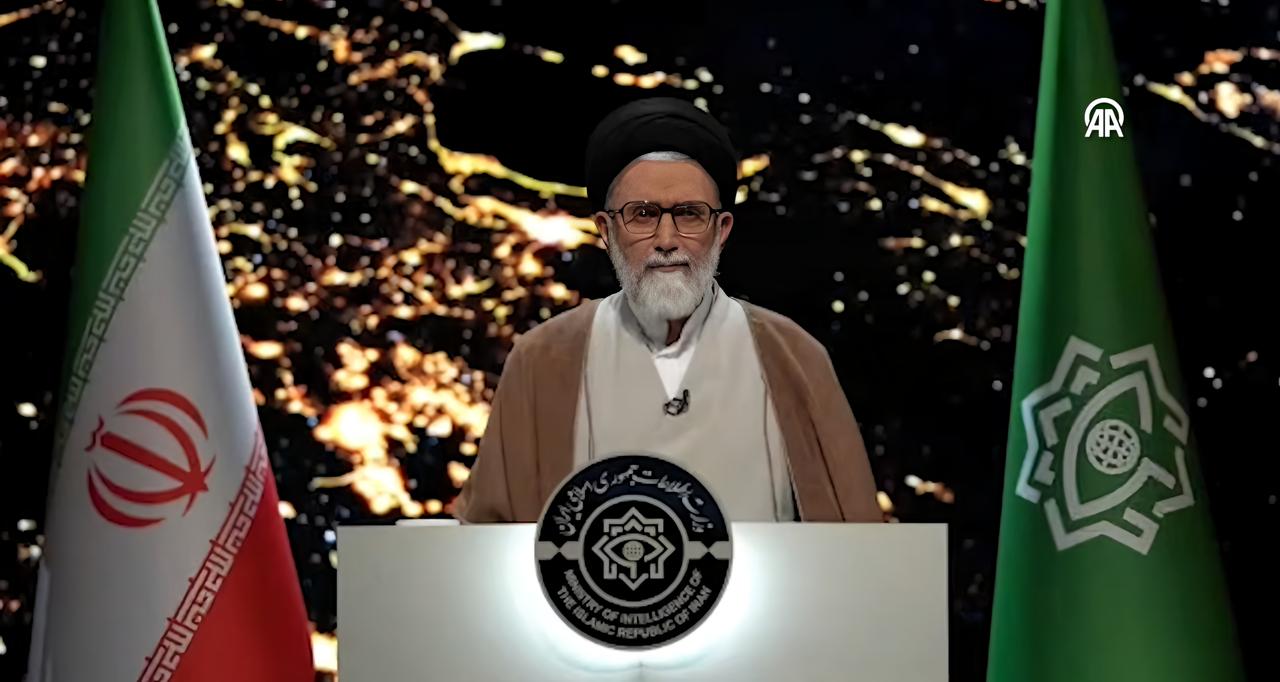
İsmail Hatib (Anadolu Ajansı)
Henüz Tartışma Girilmemiştir
"Ismail Hatib" maddesi için tartışma başlatın
Life and Education
Family Background
Early Post-Revolutionary Activities
Revolutionary Guards and Early Intelligence Career
Assignments in Qom
Roles in the Office of the Religious Leadership and the Judiciary
Administrative Roles in Shrines and Foundations
Rise to Minister of Intelligence
Tenure as Minister of Intelligence
Security Doctrine
2022 Protests and Sanctions
Cybersecurity and Foreign Operations
Position in the Pezeshkian Government
Death