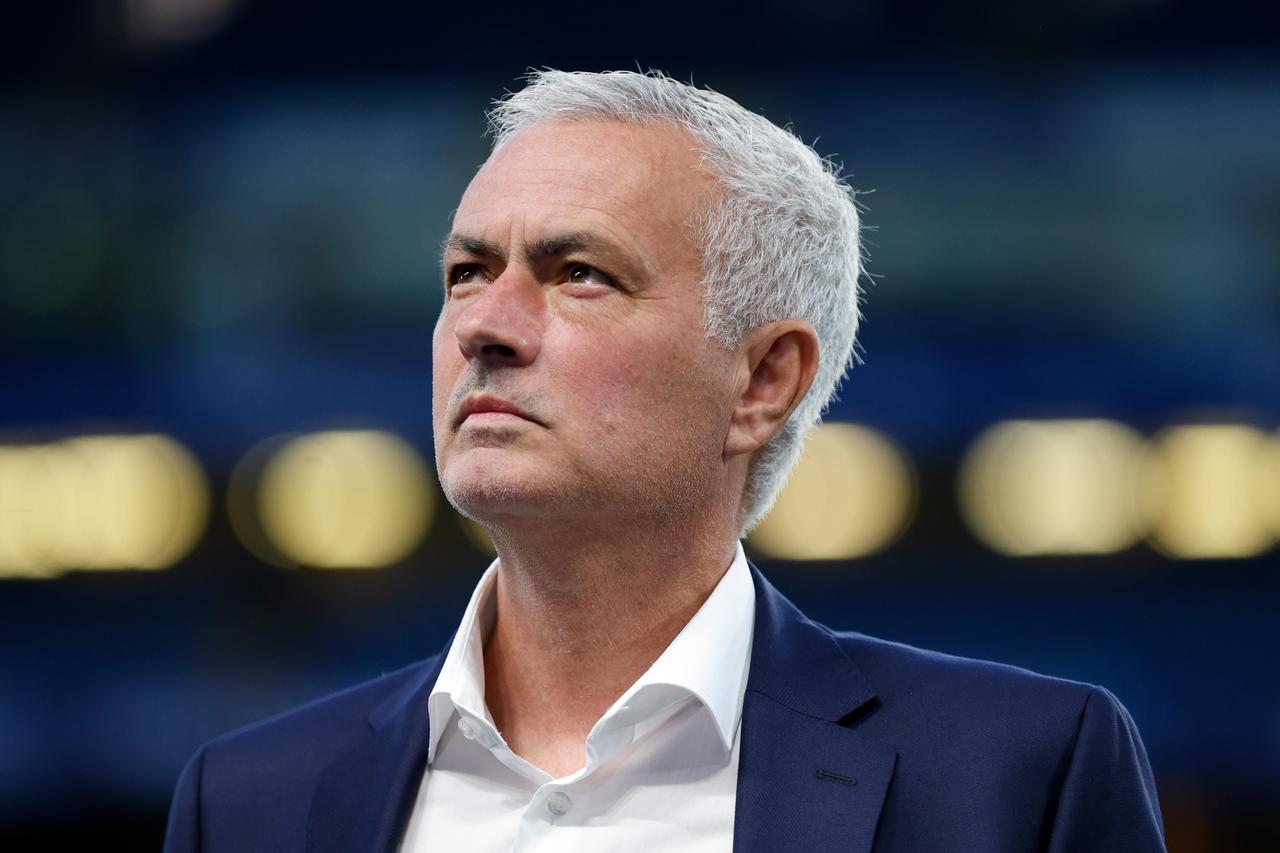

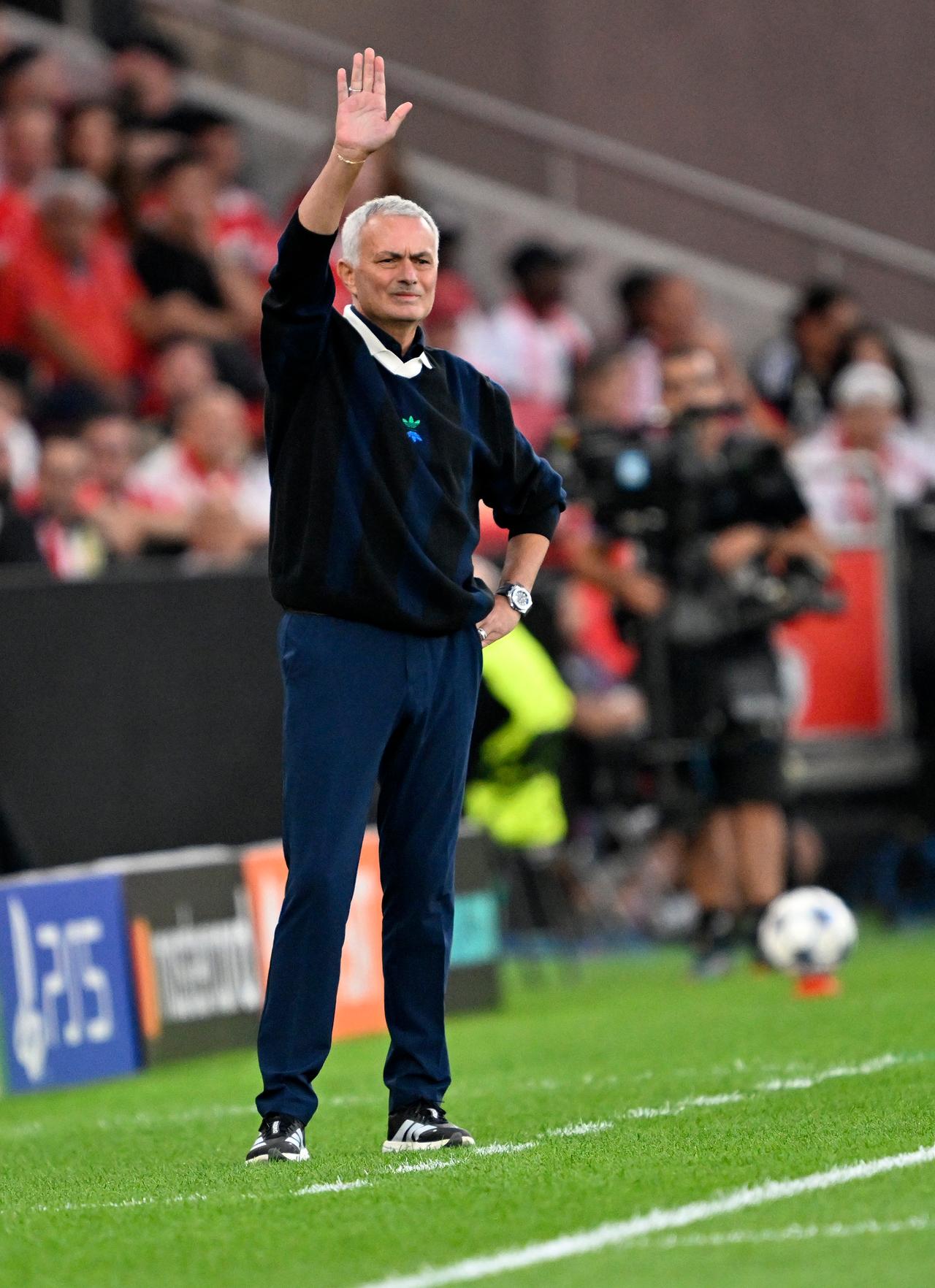
Jose Mourinho (AA)
José Mário dos Santos Mourinho Félix, born on 26 January 1963 in Setúbal, Portugal, is a Portuguese professional football manager. He is widely regarded as one of the most admired and debated managers in football history. He has won league titles in Portugal, England, Italy and Spain, and is among the rare managers to have lifted the UEFA Champions League trophy with two different clubs. He was named Portugal’s Manager of the Century by the Portuguese Football Federation. Known by the nickname “The Special One,” bestowed by the media, Mourinho has won over 26 major trophies during his more than 24-year top-level managerial career and has managed over 1,000 matches. His career has included stints at FC Porto, Chelsea, Internazionale, Real Madrid, Manchester United, AS Roma, Fenerbahçe and Benfica.
José Mourinho was born on 26 January 1963 in Setúbal, south of Lisbon, Portugal’s capital. At the time of his birth, Portugal was under the authoritarian Estado Novo regime and engaged in the colonial wars known as the Portuguese Colonial War. This political environment ended with the overthrow of the regime in 1974.
His father, José Félix Mourinho, was a professional footballer who played as a goalkeeper for Vitória de Setúbal and Belenenses. Félix Mourinho also wore the Portugal national team jersey in a match against the Republic of Ireland in 1972. Later transitioning into coaching, he worked with various clubs including Rio Ave and Belenenses, becoming a beloved figure at every stop. In an interview years later, Félix Mourinho said of his son: “If my son had been as humble as I am, football people would have swallowed him long ago.”
José Mourinho grew up immersed in football. From a young age, he assisted his father with scouting duties. Forced to abandon his playing ambitions at age 22, Mourinho enrolled at the Technical University of Lisbon after a failed day at a business school and began studying sports science. He completed his education between 1982 and 1986, specializing in football.
During his playing career, Mourinho primarily competed in Portugal’s lower divisions, playing as a midfielder for Rio Ave, Belenenses, Sesimbra and Comércio e Indústria. He later stated that he never resented his inability to reach a higher level as a player: “If some people think I was disappointed because I wasn’t a top-level player, they are wrong. I never felt like a player—I always felt like a manager. When I finished my academic studies and coaching courses, it was natural for me to move into that field.”
After earning his sports science diploma, Mourinho began working as a physical education teacher at a primary school in 1987. In 1988, he attended the first stage of the UEFA coaching course in Largs, Scotland, where he trained alongside figures such as former Scotland and Manchester United player Gordon Strachan. In 2009, he was awarded an honorary doctorate by the University of Lisbon.
After completing the first stage of the UEFA coaching course, Mourinho began his managerial career in 1989 as a youth coach at Vitória de Setúbal. He later continued youth development work at Estrela da Amadora and Ovarense, laying the foundations of his managerial career.
The first major turning point in Mourinho’s career came in 1992 when Bobby Robson became manager of Sporting Lisbon. Introduced to Robson by the club president as his interpreter, Mourinho began working alongside the English manager. Robson recalled their first meeting: “The president brought me a bright young man named José Mourinho to be my interpreter. He looked good—I told him, ‘Don’t hang around me too much!’ I could see his enthusiasm and knew one day he would leave me.”
When Robson left Sporting Lisbon in December 1993 to join FC Porto, he took Mourinho with him. A strong master-apprentice bond formed, and Robson increasingly came to trust Mourinho’s ideas. Together, they won two Primeira Liga titles, one Taça de Portugal, the Portuguese and Spanish Super Cups, the Copa del Rey and the UEFA Cup Winners’ Cup.
In 1996, Robson was appointed manager of Barcelona, and Mourinho followed him once again. At Camp Nou, Mourinho served as a crucial bridge between the technical staff and the players. During this period, he developed a close relationship with Pep Guardiola, then a key figure at the club. Mourinho later reflected on his time at Barcelona: “I have never been influenced as deeply by any other manager as I was by Barcelona’s philosophy. Those four years were fundamental to my life.”
Barcelona legend Xavi remembers Mourinho from that era and says: “He was excellent during his three years at Barça. They called him ‘the interpreter.’ Nonsense. He was an assistant coach who understood Barcelona’s philosophy. The players held him in high regard. I was surprised when he later became known for a more defensive style—he was nothing like that with us.”
After Bobby Robson’s departure from Barcelona, Mourinho remained at Camp Nou under the management of Louis van Gaal. The Dutch coach entrusted Mourinho with responsibility for managing both the first and reserve teams. This period is considered a critical stage in the maturation of Mourinho’s tactical understanding and managerial philosophy.
As his reputation grew in Portugal, Mourinho was appointed manager of Benfica in September 2000. The club had not won a league title in six years and was facing financial difficulties. After dismissing Jupp Heynckes, club president João Vale e Azevedo sought a figure capable of revitalizing the team without a transfer budget and chose the 37-year-old Mourinho.
Upon arrival, Mourinho found the squad extremely weak. In his official biography, he described the team as “a squad with no future or ambition, lacking quality,” noting that the players were “accustomed to losing” and “did not care much.” His first match ended in a 1–0 defeat to Boavista.
Mourinho implemented revolutionary training methods during his tenure. Adopting the “tactical periodization” concept developed by Portuguese academic Victor Frade, he restructured training into short, intense sessions integrating physical, technical and tactical elements. Diogo Luis, a left-back who played for Benfica at the time, described the change: “Before Mourinho, we used to run for 15 to 20 minutes on the pitch. With him, we never ran without the ball. We trained with the ball for an entire hour, and nothing else mattered. When you entered the training ground, it was divided into sections like an airport. Mourinho was 10 years ahead of everyone else—20 years ahead, actually.”
Mourinho also demonstrated exceptional skill in individual player motivation. He identified trusted senior players and integrated younger talents and new recruits from academia. Extremely strict on discipline, he publicly reprimanded Egyptian player Abdel Sattar Sabry both in the dressing room and at a press conference for taking seven minutes to tie his laces before a match.
The historic 3–0 victory over city rivals and reigning champions Sporting Lisbon marked the peak of Mourinho’s success at Benfica. However, this triumph paradoxically endangered his future: new club president Manuel Vilarinho planned to appoint former player Toni as manager, threatening Mourinho’s position. After the Sporting match in November 2000, Mourinho announced he would leave if his contract was not extended. When the request was denied, he departed Benfica. In his 11 matches, he recorded six wins, three draws and two losses.
In later reflections, Mourinho admitted he had applied pressure on Vilarinho and expressed regret for his behavior. After his departure, Benfica finished the season in sixth place—their worst position to date.
After leaving Benfica, Mourinho was appointed manager of União de Leiria. In the 2001–02 season, he managed the team in 19 league matches before the winter break, guiding them to fourth place. This success attracted the attention of FC Porto and opened a new chapter in Mourinho’s career. In his 20 matches, he recorded nine wins, seven draws and four losses, achieving a win rate of 45 percent.
Appointed manager of FC Porto in January 2002, Mourinho over the course of two and a half years elevated the club to the pinnacle of Portuguese and European football. This period is remembered as the first great triumphs of his career.
In his first full season (2002–03), Porto won the league title, the Taça de Portugal and the UEFA Cup. Mourinho led Porto to victory in the 2002–03 UEFA Cup final against Celtic, gaining recognition in English football circles. The following 2003–04 season became the most glorious in Porto’s history. Porto eliminated Manchester United with a goal by Costinha and entered the global spotlight when Mourinho famously sprinted along the touchline after the Champions League quarter-final win at Old Trafford. Porto then defeated AS Monaco 3–0 in the 2004 UEFA Champions League final, securing their first European trophy since 1987 and cementing Mourinho’s legacy.
During his 127 matches at FC Porto, Mourinho recorded 91 wins, 21 draws and 15 losses, achieving a win rate of 71.65 percent. His trophies included two Primeira Liga titles (2002–03, 2003–04), one Taça de Portugal (2002–03), one UEFA Cup (2002–03), one UEFA Champions League (2003–04) and one Supertaça (2003–04).
After winning the Champions League with Porto, Mourinho attracted interest from Europe’s leading clubs and joined Chelsea in the summer of 2004. Under Roman Abramovich’s ownership, Chelsea was in a position of immense financial strength, and Mourinho was introduced as the club’s most successful manager ever.
At his unveiling at Stamford Bridge on 2 June 2004, his words became legendary: “Please don’t call me arrogant, because what I say is true. I am a European champion, not someone who came out of a bottle. I think I am special.” These remarks cemented his enduring nickname “The Special One.” At the same event, he highlighted the presence of top players and added: “And now we have a top-level manager.”
In his first season at Chelsea, Mourinho transitioned from a 4–diamond–2 formation to a 4–3–3 system, deploying Damien Duff and Arjen Robben as wingers. Chelsea seized the league lead in November and, thanks to two goals from Frank Lampard against Bolton, won their first league title in 50 years. Under Mourinho, Chelsea amassed 95 points in the Premier League and conceded only 15 goals. They also won the League Cup that season.
In the 2005–06 season, Chelsea won their second consecutive league title. Mourinho’s tactical flexibility and attention to detail drew widespread attention. One anecdote widely circulated in club circles was that, despite a ban on entering the dressing room during halftime, Mourinho hid inside a laundry basket to speak with his players.
In the 2006–07 season, which marked the end of his first spell at Chelsea, the club won the FA Cup and the League Cup. However, tensions between Mourinho and owner Roman Abramovich escalated. In September 2007, it was announced that Mourinho and Chelsea had mutually agreed to part ways, just days after the team’s match at Old Trafford.
In his first spell at Chelsea, Mourinho managed 185 matches, recording 124 wins, 40 draws and 21 losses—a win rate of 67.03 percent. His trophies included two Premier League titles (2004–05, 2005–06), one FA Cup (2006–07), two League Cups (2004–05, 2006–07) and one Community Shield (2005–06).
Approximately a year after leaving Chelsea, Mourinho became manager of Italian club Internazionale in 2008. At his introductory press conference, he spoke entirely in Italian, claiming he had learned the language in just three weeks.
His two seasons at Inter are considered among the brightest of his career. In 2008–09, Inter won the Serie A title and the Supercoppa Italiana. The 2009–10 season delivered a historic achievement: Inter became the first Italian club to win Serie A, Coppa Italia and the UEFA Champions League in the same season. This treble made Mourinho one of only five managers to win the Champions League with two different clubs, etching his name in football history in golden letters. He also won the inaugural FIFA World Coach of the Year award that year.
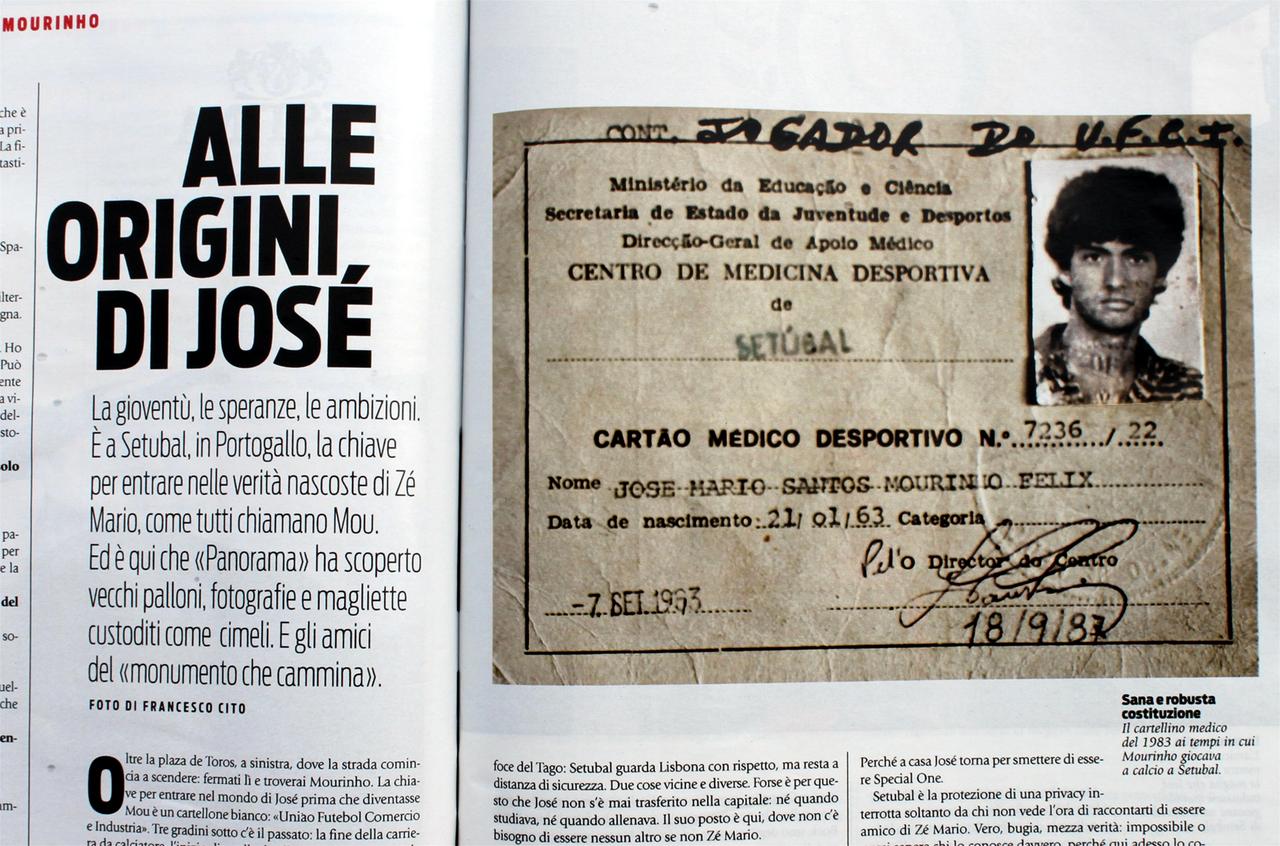
Jose Mourinho featured on the cover of Panorama magazine—14 May 2010 (AA)
Mourinho’s relationship with star striker Zlatan Ibrahimovic also attracted attention. In his autobiography, Ibrahimovic described Mourinho as: “The leader of his army. But he also cares. He always messages me, asking how I am. Mourinho eventually became a man I would die for.” Similarly, Wesley Sneijder said of Mourinho: “I was ready to kill and die for him.”
In the Champions League final, Mourinho lifted the trophy with Inter after defeating Bayern Munich, managed by his former mentor Louis van Gaal, 2–0. His emotional embrace with Marco Materazzi on the pitch and his sprint onto the field after the semi-final victory over Barcelona became iconic moments in Inter’s history.
In his 108 matches at Inter, Mourinho recorded 67 wins, 26 draws and 15 losses, achieving a win rate of 62.04 percent.
In July 2010, Mourinho was appointed manager of Real Madrid with the mission of breaking the dominance of Pep Guardiola’s Barcelona. Real Madrid had been eliminated in the Champions League round of 16 for six consecutive seasons, suffering a heavy aggregate score of 18–8 across those 16 matches. Upon his arrival, Mourinho described the club: “In Portugal, we say a big ship brings a big storm. I am lucky to have always been on big ships. Real Madrid is considered the biggest ship in the world.”
Shortly after taking charge, Mourinho announced that Raul and Guti would no longer feature in the team and took control of the transfer policy. He strengthened the squad with players such as Ángel Di María, Sami Khedira and Mesut Özil, and brought Ricardo Carvalho into defense.
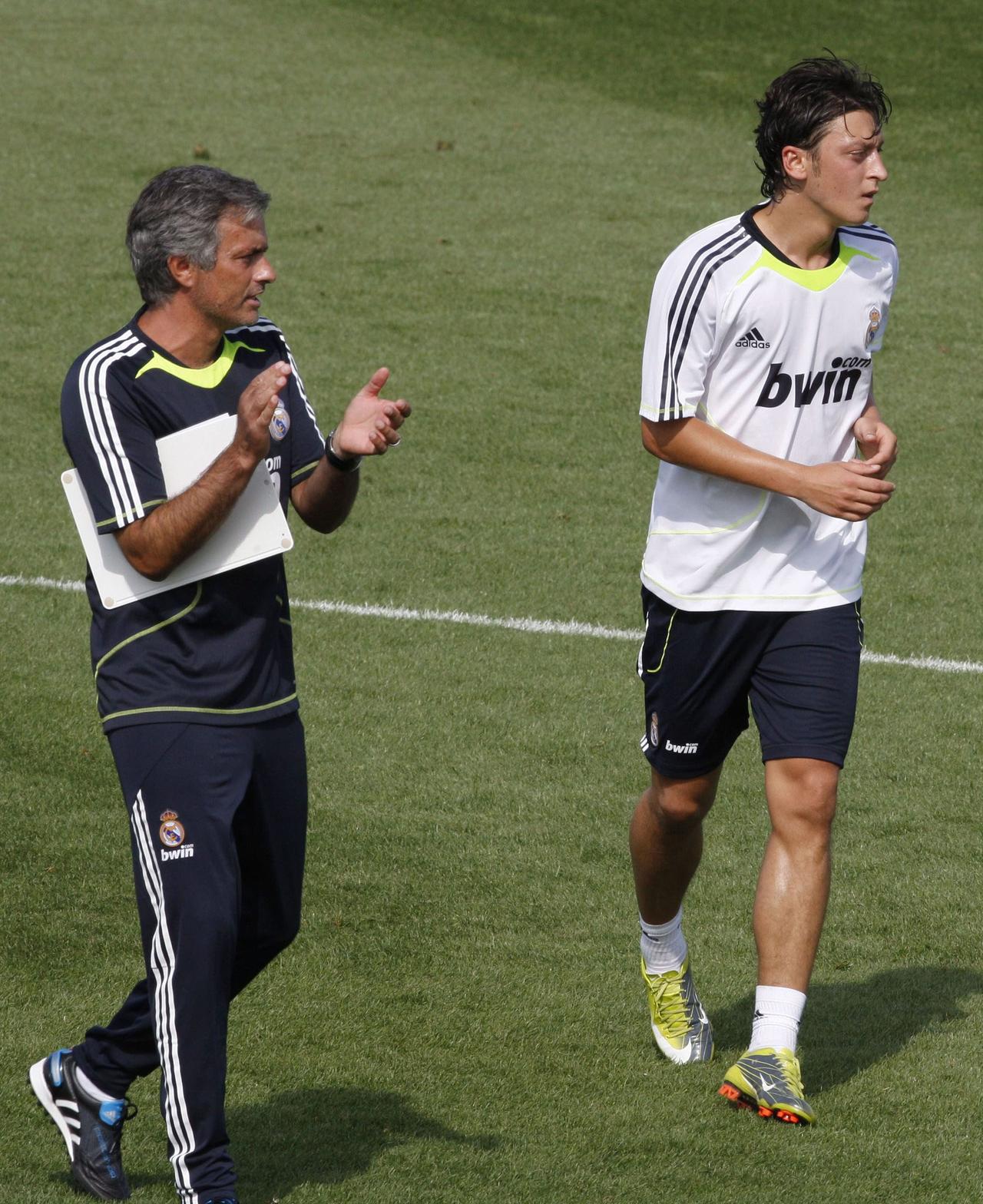
Jose Mourinho and Mesut Özil (AA)
In his first season (2010–11), Real Madrid finished second in La Liga. In the 2011–12 season, they delivered a historic performance to win the title. That season, they amassed 100 points, scored 121 goals, 46 of which came from Cristiano Ronaldo. The club broke records for most wins (32), most away wins (16) and highest points total (100) in its history. They also won the Copa del Rey in the 2010–11 season.
The most dramatic chapter of this era was Real Madrid’s four Clásico matches against Barcelona within 18 days. These included league fixtures, the Copa del Rey final and the Champions League semi-final in April–May 2011. Real Madrid won the Copa del Rey final 1–0 thanks to a stoppage-time goal from Ronaldo, carrying psychological momentum into the semi-final. However, in the Champions League semi-final, after Pepe received a red card and Mourinho delivered a fiery post-match press conference criticizing the referees, Real Madrid lost to Barcelona and failed to win the trophy.
During his three seasons at Real Madrid, the club failed to progress beyond the Champions League semi-finals: eliminated by Barcelona in 2011, Bayern Munich in 2012 and Borussia Dortmund in 2013. Mourinho described the 2012 defeat to Bayern as the most shattering loss of his career: “The only night I cried after a defeat was that night. My assistant Aitor and I parked outside our house and cried. We were the best team that season.”
Mourinho’s final season at Real Madrid (2012–13) was marked by significant tensions. A chain of incidents—from club officials entering the dressing room to alleged leaks from within—led to serious friction within the squad. His strained relationship with Iker Casillas became one of the defining features of this period. In a 2026 assessment, Mourinho described his time in Madrid as “almost violent.”
In his 178 matches at Real Madrid, Mourinho recorded 128 wins, 28 draws and 22 losses, achieving a win rate of 71.91 percent.
After leaving Real Madrid, Mourinho was contacted by clubs in Spain, Italy and England, and in 2013 announced his return to Chelsea. This time, he described himself as “The Happy One” and resumed his duties at Stamford Bridge.
In his first season back (2013–14), Chelsea competed closely in both the Premier League and the Champions League. Despite losing the first leg of their Champions League quarter-final against Paris Saint-Germain 3–1, they advanced after a dramatic goal from Demba Ba. In the semi-final against Atlético Madrid, they drew 0–0 at home but were eliminated 3–1 away, finishing the season without a trophy.
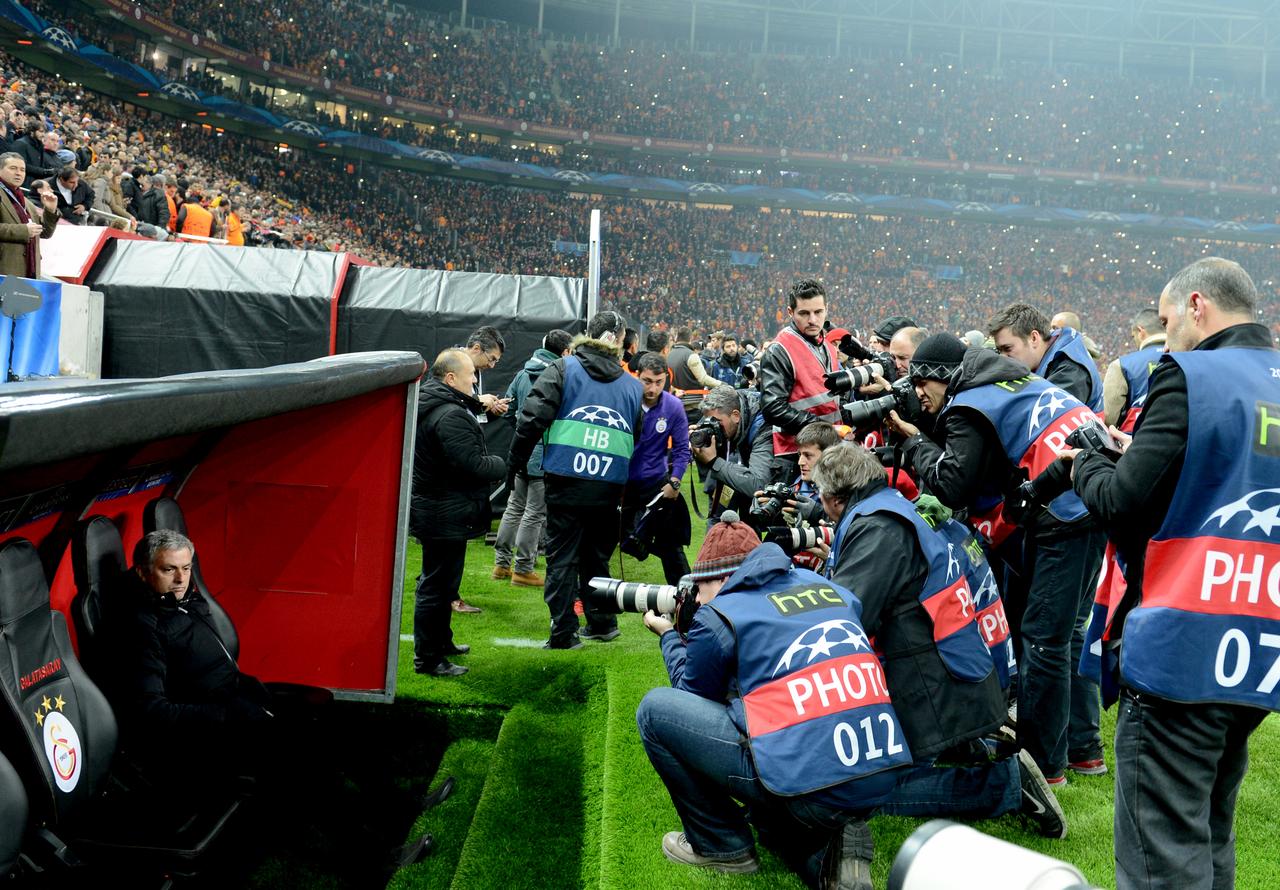
UEFA Champions League Second Qualifying Round First Leg: Galatasaray - Chelsea (AA)
The peak of Mourinho’s second spell at Chelsea came in the 2014–15 season. With new signings Cesc Fàbregas and Diego Costa strengthening the squad, Chelsea won the league title by an eight-point margin. They lost only three matches all season. They also won the Capital One Cup, defeating Tottenham 2–0 at Wembley. This was Mourinho’s third League Cup win at Chelsea, having previously won it against Liverpool in 2005 and Arsenal in 2007.
The 2015–16 season, in which Chelsea defended their title, saw a sharp decline. After losing seven of their first 14 league matches and suffering back-to-back defeats to newly promoted Bournemouth and Leicester City, Chelsea sat in 16th place at the winter break. In December 2015, the club and Mourinho parted ways for the second time.
In his second spell at Chelsea, Mourinho managed 136 matches, recording 80 wins, 29 draws and 27 losses, achieving a win rate of 58.82 percent.
In May 2016, Mourinho agreed to manage Manchester United, succeeding his former mentor Van Gaal. In his first statement, he said: “Being the manager of Manchester United is a special honor in football. It is a club known and admired around the world.”
In his first season (2016–17), Mourinho led United to victory in the Europa League and the EFL Cup, and also won the Community Shield. They defeated Ajax 2–0 in the Europa League final in Stockholm, Sweden. In the 2017–18 season, United finished second in the Premier League and reached the FA Cup final.
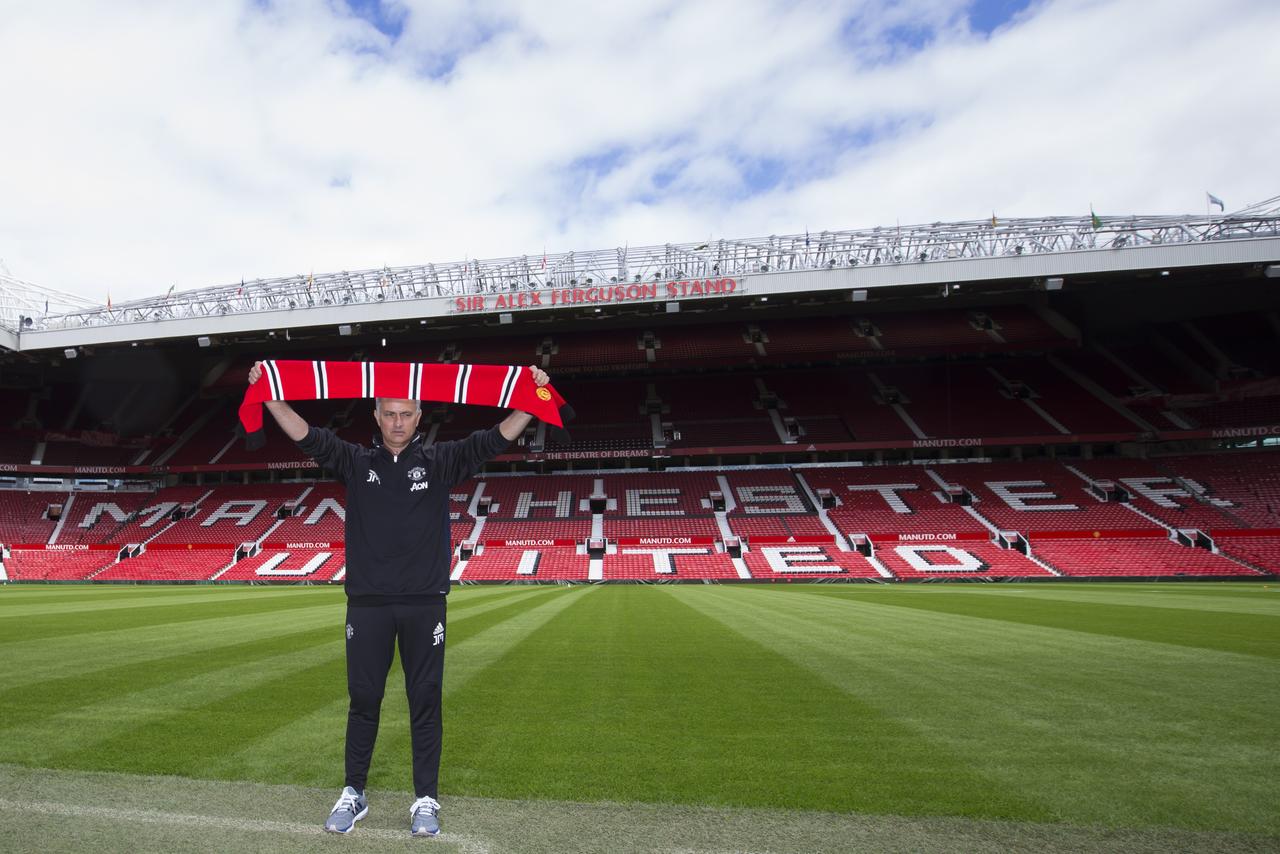
Jose Mourinho during his Manchester United tenure (AA)
Tensions emerged toward the end of his tenure. Alleged conflicts with star players, notably Paul Pogba, became public. After a 3–1 defeat to Jürgen Klopp’s Liverpool in November 2018, Mourinho was dismissed as manager of Manchester United, having overseen the club’s worst Premier League start since his arrival.
In his 144 matches at Manchester United, Mourinho recorded 84 wins, 32 draws and 28 losses, achieving a win rate of 58.33 percent.
Mourinho took charge of Tottenham Hotspur in November 2019. Over his 86-match tenure, he recorded 44 wins, 19 draws and 23 losses, achieving a win rate of 51.16 percent. He guided the club to the Europa League and to the League Cup final. However, he was dismissed in April 2021, less than a week before the scheduled final.
Appointed manager of AS Roma in July 2021, Mourinho said in his introductory remarks: “After discussions with the ownership and Tiago Pinto, I immediately understood the full scope of AS Roma’s ambitions. What convinced me to accept this role was the incredible passion of the Roma fans.”
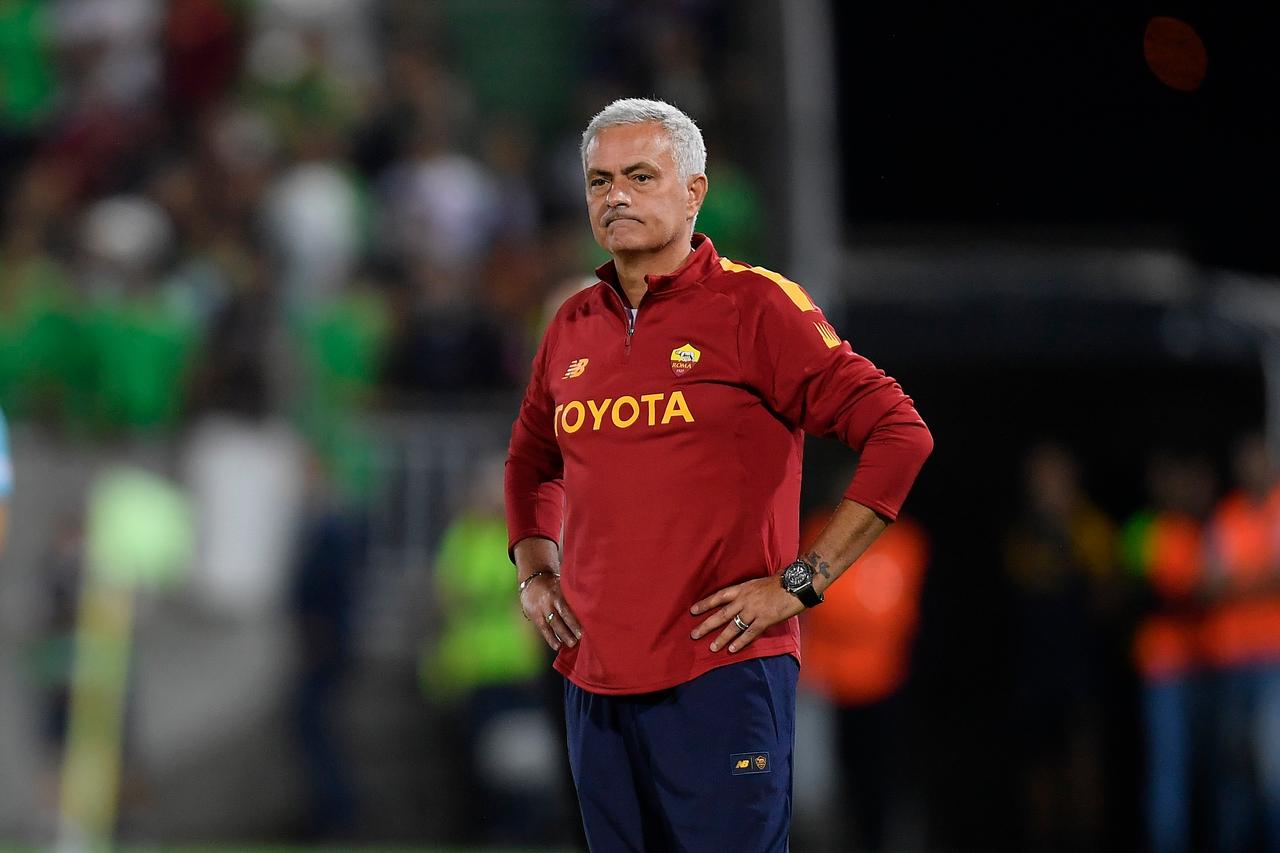
Jose Mourinho during his Roma tenure (AA)
In his first season with Roma (2021–22), Mourinho achieved a historic success: Roma defeated Feyenoord 1–0 in the final of the 2021–22 UEFA Europa Conference League in Tirana, Albania, to win the trophy. With this victory, Mourinho became the first manager to win a major European trophy with four different clubs and the third manager ever to win the UEFA Champions League, UEFA Europa League and UEFA Europa Conference League. He left Roma in January 2024.
In June 2024, Mourinho was appointed manager of Turkish Süper Lig club Fenerbahçe. He managed the club until August 2025, when their Champions League qualifying campaign ended with elimination by Benfica.
After leaving Fenerbahçe, Mourinho became manager of Benfica in September 2025. He completed the 2024–25 season unbeaten, with 23 wins and 11 draws in 34 matches—the first time in his career, despite eight league titles, that he managed an unbeaten season. However, due to the points lost from 11 draws, Benfica failed to win the title and finished third. Mourinho commented: “Being unbeaten is wonderful, but I would have traded two or three losses for the title without hesitation. But this reflects the team’s mentality, unity and empathy.”
Although his contract extended until June 2027, it contained a clause allowing termination at the end of the season. In May 2026, Mourinho confirmed that his agent was in contact with Real Madrid, and on 18 May he was officially appointed manager of Real Madrid.
In 2003 and 2004, Mourinho was named Primeira Liga Manager of the Year and UEFA Club Football Manager of the Year. He was named Manager of the Year by the International Federation of Football History and Statistics (IFFHS) in 2004, 2005, 2010 and 2012. He won the Premier League Manager of the Year award in 2005 and 2006. He received the Onze d’Or award in 2005 and 2010. In the 2009–10 season, he was honored with the AIC Football Oscar and the Panchina d’Oro award. He was the first recipient of the FIFA World Coach of the Year award in 2010. He won the Miguel Muñoz Trophy twice, in 2011 and 2012. In 2012, he received both the Globe Soccer Award for Manager of the Year and Best Media Coverage. In 2015, he was named Portugal’s Manager of the Century by the Portuguese Football Federation. He is also the first manager to have spent over one billion pounds on transfers.
Mourinho adopted the “tactical periodization” methodology developed by Portuguese academic Victor Frade, restructuring training into short, intense, ball-based sessions that integrated physical, technical and tactical elements. This approach was first implemented during his early tenure at Benfica and gained widespread recognition through his success at major clubs like Chelsea.
Mourinho has also emphasized the importance of opponent analysis. He conducts comprehensive research on opposing teams during match preparation, tracking every detail of their players on and off the pitch. Ibrahimovic, in his autobiography, described Mourinho’s knowledge of opponents: “I have never met a manager with as much detailed knowledge of opposing teams as Mourinho. He knew everything—even the third goalkeeper’s shoe size.”
Mourinho’s skill in motivating players has been one of his most defining traits throughout his career. He has shaped the squads he managed, from young players at Benfica onward, around a “us versus them” mentality. He has used external threats—criticism from the media, pressure from fans and interference from club officials—as tools to strengthen group cohesion.
During his time at Inter Milan, after Real Madrid’s heavy 5–0 defeat, Mourinho entered the dressing room to rally his players. Former Real Madrid reserve goalkeeper Jerzy Dudek later commented: “That day, I first truly understood how deeply Mourinho grasped the importance of psychology in sport.”
In his first spell at Chelsea, Mourinho demonstrated tactical flexibility by switching between formations such as 4–diamond–2 and 4–3–3. In his second spell, he favored the 4–2–3–1 system. His defensive approach, exemplified by teams dropping deep and quickly regaining possession after losing the ball—seen in Porto’s victories over Barcelona and Inter’s triumphs—has become emblematic of his philosophy.
At Real Madrid, his decision to play Pepe as a central midfielder in the Copa del Rey final highlighted his creative tactical thinking in assigning unconventional roles. Similarly, his use of Samuel Eto’o as a right winger at Inter during the treble-winning season is another example of his tactical flexibility.
Mourinho summarized his managerial philosophy: “I believe in control, preparation and clarity. My teams are built on solid foundations, tactical intelligence and a winning mentality.”
In 2005, Mourinho supported a peace initiative by organizing a football match in Israel featuring Palestinian and Israeli players on the same team. In 2014, he became a brand ambassador for the United Nations World Food Programme (WFP). In his statement, he said: “My decision to support the World Food Programme is a personal one, deeply important to me and my family, driven by the cause it represents.”
Mourinho shares his knowledge and experience through coaching seminars at the University of Lisbon. He speaks five languages: Portuguese, English, Spanish, Italian and French.
Mourinho’s managerial career statistics can be summarized as follows: at Benfica (2000), 11 matches with a 54.55 percent win rate; at União de Leiria (2001–02), 20 matches with a 45.00 percent win rate; at FC Porto (2002–04), 127 matches with a 71.65 percent win rate; during his first spell at Chelsea (2004–07), 185 matches with a 67.03 percent win rate; at Internazionale (2008–10), 108 matches with a 62.04 percent win rate; at Real Madrid (2010–13), 178 matches with a 71.91 percent win rate; during his second spell at Chelsea (2013–15), 136 matches with a 58.82 percent win rate; at Manchester United (2016–18), 144 matches with a 58.33 percent win rate; at Tottenham Hotspur (2019–21), 86 matches with a 51.16 percent win rate. These statistics are drawn from publicly available sources. Before joining Roma, Mourinho’s career across 999 matches recorded 637 wins, 204 draws and 158 losses.
AS Roma Official Website. "Timeline: Jose Mourinho's Incredible Career So Far." Accessed May 18, 2026. https://www.asroma.com/en/news/61361/timeline-jose-mourinhos-incredible-career-so-far
All American Speakers Bureau. "Jose Mourinho Biography." Accessed May 18, 2026. https://www.allamericanspeakers.com/celebritytalentbios/Jose+Mourinho/455798
BBC Sport. "An Iron Fist Joining a Broken Team: Inside Mourinho's Real Return." Accessed May 18, 2026. https://www.bbc.com/sport/football/articles/clyp4rj9r01o
Chelsea FootballClub Resmi Website. "Jose Mourinho." Accessed May 18, 2026. https://www.chelseafc.com/en/jose-mourinho
Coaches' Voice. "Mourinho: The Full Story." Accessed May 18, 2026. https://learning.coachesvoice.com/mourinho-the-full-story-chelsea-inter-milan-porto-tottenham/
ESPN News Services. "José Mourinho Confirms Real Madrid Links; Will Decide Next Week." Accessed May 18, 2026. https://www.espn.co.uk/football/story/_/id/48790257/jose-mourinho-benfica-unbeaten-season-portugal-champions-league
Elite Soccer. "José Mourinho – Coaching Sessions: Defensive Organisation." Accessed May 18, 2026. https://elitesoccercoaching.net/josemourinho
FotMob. "José Mourinho – Stats and Career." Accessed May 18, 2026. https://www.fotmob.com/players/78719/jose-mourinho
Globe Soccer Awards. "José Mourinho." Accessed May 18, 2026. https://www.globesoccer.com/news/jose-mourinho/
I Am José Mourinho (Official Website). "Biography." Accessed May 18, 2026. https://iamjosemourinho.com/biography/
I Am José Mourinho (Official Website). "Career." Accessed May 18, 2026. https://iamjosemourinho.com/career/
I Am José Mourinho (Official Website). "Honours." Accessed May 18, 2026. https://iamjosemourinho.com/honours/
Sky Sports. "Jose Mourinho at 1,000 Games: How Three Months in Charge of Benfica Set Him on Road to Greatness." Accessed May 18, 2026. https://www.skysports.com/football/news/11095/12401456/jose-mourinho-at-1-000-games-how-three-months-in-charge-of-benfica-set-him-on-road-to-greatness
Sobhani, Kiyan. "The Rise and Fall of Jose Mourinho at Real Madrid." Accessed May 18, 2026. https://kiyan.substack.com/p/the-rise-and-fall-of-jose-mourinho

Jose Mourinho (AA)
Henüz Tartışma Girilmemiştir
"Jose Mourinho" maddesi için tartışma başlatın
Early Life and Education
Early Steps in Management
Youth Team Work (1989–1992)
Working with Sir Bobby Robson (1992–1996)
Barcelona Under Louis van Gaal (1996–2000)
Managerial Career
Benfica (September–December 2000)
União de Leiria (2001–2002)
FC Porto (2002–2004)
Chelsea FC – First Spell (2004–2007)
Internazionale (2008–2010)
Real Madrid (2010–2013)
Chelsea FC – Second Spell (2013–2015)
Manchester United (2016–2018)
Tottenham Hotspur (2019–2021)
AS Roma (2021–2024)
Fenerbahçe (2024–2025)
Benfica (September 2025 – May 2026)
Trophies and Individual Awards
Club Achievements
Individual Awards
Managerial Approach and Philosophy
Training Methods
Player Motivation and Psychological Management
Tactical Approach
Social Responsibility and Public Engagement
Career Statistics