
Bu içerik Türkçe olarak yazılmış olup yapay zeka ile otomatik olarak İngilizceye çevrilmiştir.
+1 Daha
Used Stage Name | Leo The Lion | ||||||||
|---|---|---|---|---|---|---|---|---|---|
Type(s) | Studio logo / live animal and CGI versions | ||||||||
Associated Studio | Metro-Goldwyn-Mayer (MGM) | ||||||||
First Use | 1916 (Goldwyn Pictures design) | ||||||||
First Use at MGM | 1924 | ||||||||
Designer | Howard Dietz (advertising director, Goldwyn Pictures) | ||||||||
Slogan | Ars Gratia Artis (Art for Art's Sake) | ||||||||
Used Lions (Chronological) | Digital/CGI Leo (2021– ) Leo (1957–2021) George (1956–1957) Tanner (1934–1956) Color Test Lions: Bill-Telly-Coffee (1927–1935) Jackie (1928–1956) Slats (1917–1928) | ||||||||
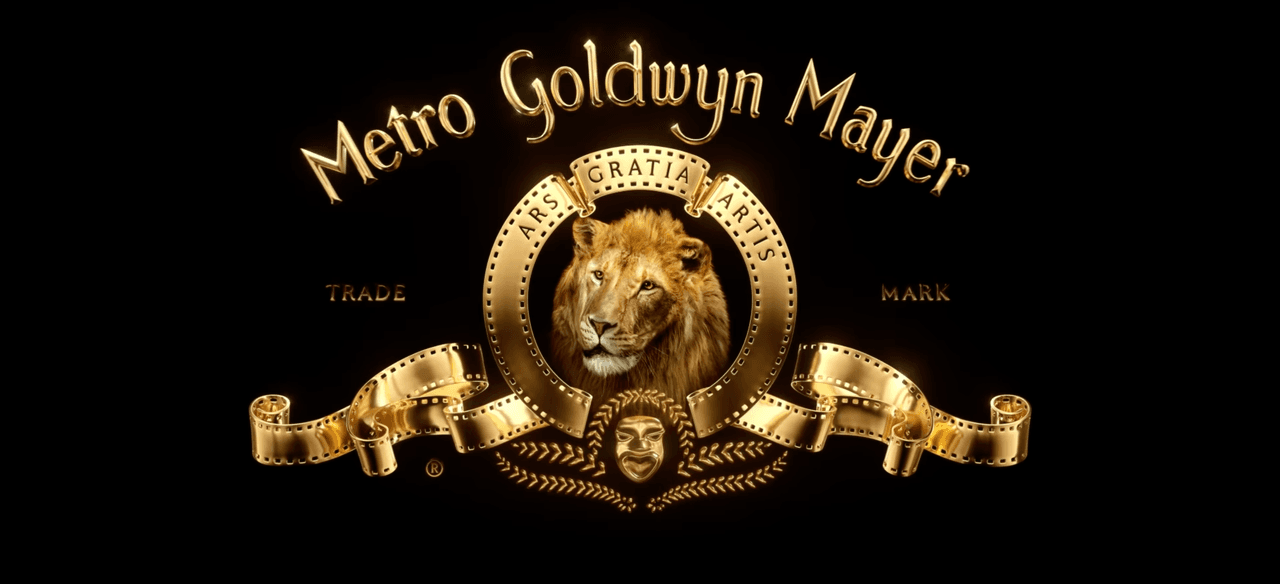
The MGM Lion is the most recognized symbol in cinema history, featured in the film logo of Metro-Goldwyn-Mayer (MGM) since the 1910s and represented over time by the images of several different lions. The logo has included a total of seven to eight real lions across various eras, as well as a computer-generated model in recent years, each becoming an icon representing the studio’s evolving periods.

The MGM Lion (tenor)
The origin of the MGM Lion traces back to a logo designed in 1916 for Goldwyn Pictures Corporation. The development of this design was decisively shaped by the studio’s advertising and publicity director, Howard Dietz. Dietz was inspired by a “laughing lion” figure from a humor magazine called The Jester, which he encountered as a student at Columbia University, and also made a reference to the university’s own lion emblem. The slogan “Ars Gratia Artis” (Art for Art’s Sake), placed around the logo, was also part of this original design.
The design features a lion’s face surrounded by film-strip-like ribbons and a theater mask at its center. This frame and motto continued to be used after the 1924 merger of Goldwyn Pictures with Metro Pictures and Louis B. Mayer Pictures, forming Metro-Goldwyn-Mayer.
Slats, whose real name was Cairbre, was born on 20 March 1919 at Dublin Zoo. He first appeared in the Goldwyn Pictures logo and later became the first lion of the MGM logo. Slats’s image consists only of a silent pose with his head turning slightly left and right, suited to the conditions of silent films. His first appearance in an MGM film was in the studio’s 1924 production He Who Gets Slapped.
Slats, trained by Volney Phifer, toured the United States with him for studio promotions and retired in 1928. After his death in 1935 at Philadelphia Zoo, he was buried by Phifer on his farm in Gillette, New Jersey. His grave remains at that location today.
Jackie, born in 1915 in the Nubian Desert of Sudan, was the first lion whose roar was heard in MGM’s first sound logo. His roar was recorded for the opening of the 1928 film White Shadows in the South Seas using a special recording session captured on a gramophone.
Jackie also appeared on screen in numerous films outside of MGM’s logo, particularly in Tarzan movies. Jackie’s life was marked by extraordinary events. According to documented accounts:
After these remarkable incidents, he earned the nickname “Leo the Lucky.”
In the final years of his career, Jackie lived at Philadelphia Zoo. Although sources vary on the exact date of his death, he is generally reported to have died around 1956.
These three lions were used in MGM’s two-strip color film and short animation experiments.
Their images appeared in only a limited number of productions and were employed during the studio’s development of color film technology.
Tanner served as MGM’s primary logo lion for its three-strip Technicolor films from 1934 to 1956. Although Jackie’s image continued to be preferred for black-and-white films, Tanner became the standard for color productions and is the most widely seen MGM lion of that era. Some sources describe him by his “angry expression” and distinctive triple-roar sequence.
George, introduced in 1956, served as a short-term logo for one year. His most distinctive feature was his thick, voluminous mane. He was replaced in 1957 with the introduction of Leo.
Leo, born in 1956 at Dublin Zoo, is MGM’s longest-used lion. He first appeared in the 1957 film Tip on a Dead Jockey and appeared in all studio films until 2021. Due to being filmed at a younger age, his mane is smaller than those of previous lions. Leo became the most enduring face of MGM’s brand identity; in 2014, during the studio’s 90th anniversary celebrations, he was immortalized with his own paw print on Hollywood’s Walk of Fame.
In 2021, the MGM logo was visually renewed for the first time in over 60 years, adopting a CGI lion created by Baked Studios. However, the overall structure, frame, and roar effect were preserved, only modernized through digital modeling.
The MGM Lion (Amazon MGM Studios)
The lion’s roar has been an inseparable part of the MGM logo since 1928. According to sound designers:
The sound of the logo was updated again in 1995 and 2008 by Mangini in digital formats, but the core effect was preserved.
Slats was trained and cared for over many years by Volney Phifer. Phifer, the child of a circus family, is recognized as one of Hollywood’s first major animal trainers. He worked on numerous film and stage productions featuring famous animals and played a central role in working with MGM’s lions. In the 1920s, Slats toured the United States with Phifer for promotional events; after retirement, he was placed at Philadelphia Zoo and, upon his death in 1935, was buried by Phifer on his farm in Gillette, New Jersey.
Phifer’s farm, known as “Phifer Animal Farm,” was a facility housing a wide variety of animals. The animals were kept there until Phifer’s death in 1974. Slats’s grave remains today under a large pine tree on Morristown Road.
Jackie’s trainer, Melvin Koontz, stood out among Hollywood animal trainers for his work with animals. Koontz adopted Jackie as a four-month-old cub, and their bond was described less as training and more as a partnership. Koontz noted that Jackie’s on-screen performances relied not on coercion but on behaviors that emerged naturally during play. It is documented that Jackie participated in various promotional events and shows with Koontz, even performing a “boxing demonstration” together at the 1939 New York World’s Fair. One factor cited for Jackie’s long life was this close relationship and consistent care.
Many MGM lions lived at Gay’s Lion Farm, a private breeding and shelter facility in California. Active between 1925 and 1942, this facility served as a center for training and feeding lions used in Hollywood productions. Records indicate that both Slats and Jackie resided there.
Gay’s Lion Farm was later reorganized as Goebel’s Lion Farm and transformed into an entertainment and zoo complex known as “Jungleland.” It is reported that some MGM lions spent their retirement years in this area.

MGM Lion Video Recording (Guardian News)
The MGM logo has become one of the most imitated and culturally referenced visuals in cinema history.
The lion’s roar and framed design have been reinterpreted in various productions for humorous or thematic purposes. Documented examples include:
These parodies have enhanced the logo’s recognizability and established the MGM lion as one of the enduring symbols of global popular culture.
In 1965, MGM commissioned the firm Lippincott to design a modernized logo, which became known as the “Stylized Lion.” This new logo was used in only three films (Grand Prix in 1966, 2001: A Space Odyssey in 1968, and The Subject Was Roses in 1968). The studio later returned to the classic frame, but the stylized version continues to be used today by MGM Resorts International.
The history of the MGM lions has occasionally caused confusion due to period press bulletins and museum records.
Some early newspaper reports mistakenly attributed Jackie’s biographical details to Slats. For example, claims that Jackie was “captured in the Sahara” were incorrectly assigned to Slats. Modern research has corrected these errors:
The McPherson Museum in Kansas once claimed that a lion pelt in its possession might belong to the first MGM lion, but subsequent research failed to confirm this. Due to conflicting records regarding Slats’s burial and Jackie’s death locations, it has been impossible to determine which lion the pelt belonged to. The museum curator’s investigation did not verify the claims linking the pelt to either Slats or Jackie.
The logo underwent various technical updates from the 1920s to the 1950s, depending on film technology.
Sound designer Mark Mangini completely renewed the sound of the MGM logo in the early 1980s.
In 2021, the MGM logo was fully renewed with a digital visual for the first time in over sixty years.
The Evolution of the MGM Lions Over Time (Amazon MGM Studios)
The MGM logo is regarded not merely as a studio emblem but as an exemplar of continuity and brand identity in cinema history.
This symbolic status aligns with Louis B. Mayer’s efforts to position the studio as “the king of Hollywood.” Under Mayer’s leadership, MGM developed a major star system and production capacity by the mid-20th century, and the lion logo became the symbol of this empire.
Amazon MGM Studios. “MGM AV Logo.” YouTube Video, Accessed November 19, 2025. https://www.youtube.com/watch?v=MLR9-ymUvjE&t=1s
Amazon MGM Studios. “MGM Brand Evolution.” YouTube Video. Accessed November 19, 2025. https://www.youtube.com/watch?v=escZ4PZX8BE&list=PLwwhtOnMyjuxK5g4zXJCx9Pi1CGgg93lZ
BBC News. “The Lion: A Victim of Its Own Power?” BBC News Magazine. Accessed November 19, 2025. https://www.bbc.com/news/magazine-33315873
Brady, Charley. “Silent Gems #14.” *SilentCinema.ie Blog*. Accessed November 19, 2025. https://www.silentcinema.ie/blog/silent-gems-14
Campbell, Craig. “The Story Behind the MGM Lions That Have Become Cinema Icons.” The Sunday Post. Accessed November 19, 2025. https://www.sundaypost.com/fp/the-story-behind-the-mgm-lions-that-have-become-cinema-icons/
Columbia College Today. "Did You Know?" Accessed November 19, 2025. https://www.college.columbia.edu/cct/issue/spring16/article/did-you-know
Das, Sneha. “The Story of MGM’s Lion: The Roar That Built an Empire.” *Foresight by Sparklin*. Accessed November 19, 2025. https://foresight.sparklin.com/the-story-of-mgm-s-lion-the-roar-that-built-an-empire
Esquire Middle East. “The Story Behind the MGM Lion.” Accessed November 19, 2025. https://www.esquireme.com/culture/features/story-mgm-lion
Guardian News. “Spot the Difference: MGM Replaces Roaring Lion with CGI Double.” YouTube Video. Accessed November 19, 2025. https://www.youtube.com/watch?v=POCQF0vyVZc
Logodesignlove. "The MGM Lions." Logo Design Love. Accessed November 19, 2025. https://www.logodesignlove.com/the-mgm-lions
Mangini, Mark. “The MGM Lion.” *Mark Mangini – Blog*. April 15, 2020. Accessed November 19, 2025. https://www.markmangini.com/Mark_Mangini/Blog/Entries/2020/4/15_The_MGM_Lion.html
Mr. Local History Project. “MGM Lion and New Jersey.” *Mr. Local History*. Accessed November 19, 2025. https://www.mrlocalhistory.org/mgm-lion-new-jersey/
Scott Travers. “Meet Leo the Lucky, the MGM Lion Who Cheated Death 6 Times.” *Forbes*, January 5, 2025. Accessed November 19, 2025. https://www.forbes.com/sites/scotttravers/2025/01/05/meet-leo-the-lucky-the-mgm-lion-who-cheated-death-6-times/
Silver Screenings. “A Brief History of the MGM Lion.” Silver Screenings. Accessed November 19, 2025. https://silverscreenings.org/2022/06/25/a-brief-history-of-the-mgm-lion/
Smithsonian Magazine. “MGM’s First Lion Didn’t Roar.” Accessed November 19, 2025. https://www.smithsonianmag.com/smart-news/mgms-first-lion-didnt-roar-180962852/
Tenor. “Bouli Tout Le Monde Sait MGM.” *Tenor GIF*. Accessed November 19, 2025. https://tenor.com/tr/view/bouli-tout-le-monde-sait-mgm-gif-118553414564052544

Used Stage Name | Leo The Lion | ||||||||
|---|---|---|---|---|---|---|---|---|---|
Type(s) | Studio logo / live animal and CGI versions | ||||||||
Associated Studio | Metro-Goldwyn-Mayer (MGM) | ||||||||
First Use | 1916 (Goldwyn Pictures design) | ||||||||
First Use at MGM | 1924 | ||||||||
Designer | Howard Dietz (advertising director, Goldwyn Pictures) | ||||||||
Slogan | Ars Gratia Artis (Art for Art's Sake) | ||||||||
Used Lions (Chronological) | Digital/CGI Leo (2021– ) Leo (1957–2021) George (1956–1957) Tanner (1934–1956) Color Test Lions: Bill-Telly-Coffee (1927–1935) Jackie (1928–1956) Slats (1917–1928) | ||||||||
Henüz Tartışma Girilmemiştir
"MGM Lion (Leo the Lion)" maddesi için tartışma başlatın
Origin and Design of the Logo
Goldwyn Pictures Era and the First Design (1916–1924)
Chronology of the MGM Lions
Slats (1917–1928) – The Silent Era Lion
Jackie (1928–1956) – The First Sound Era Lion
Bill, Telly and Coffee (1927–1935) – The Lions of Color Film Experiments
Tanner (1934–1956) – The Lion of the Technicolor Era
George (1956–1957)
Leo (1957–2021) – The Longest-Used Lion
Digital Leo (2021–Present)
The Roar of the MGM Lion: History of the Sound Design
Trainers, Care, and Living Conditions of the Lions
Volney Phifer and Slats
Melvin Koontz and Jackie
Gay’s Lion Farm and the Housing of MGM Lions
The MGM Lion in Culture and Parodies
Parodies and Adaptations
Stylized Versions of the Logo
Controversies, Misattributions, and Documentary Confusion
Confusion Between Slats and Jackie
The McPherson Museum Controversy
Evolution of the MGM Logo and the Modern Era
Updates During the 20th Century
Sound Revisions (1981–2008)
The 2021 CGI Transformation
The Significance of the MGM Lion in Cinema History