



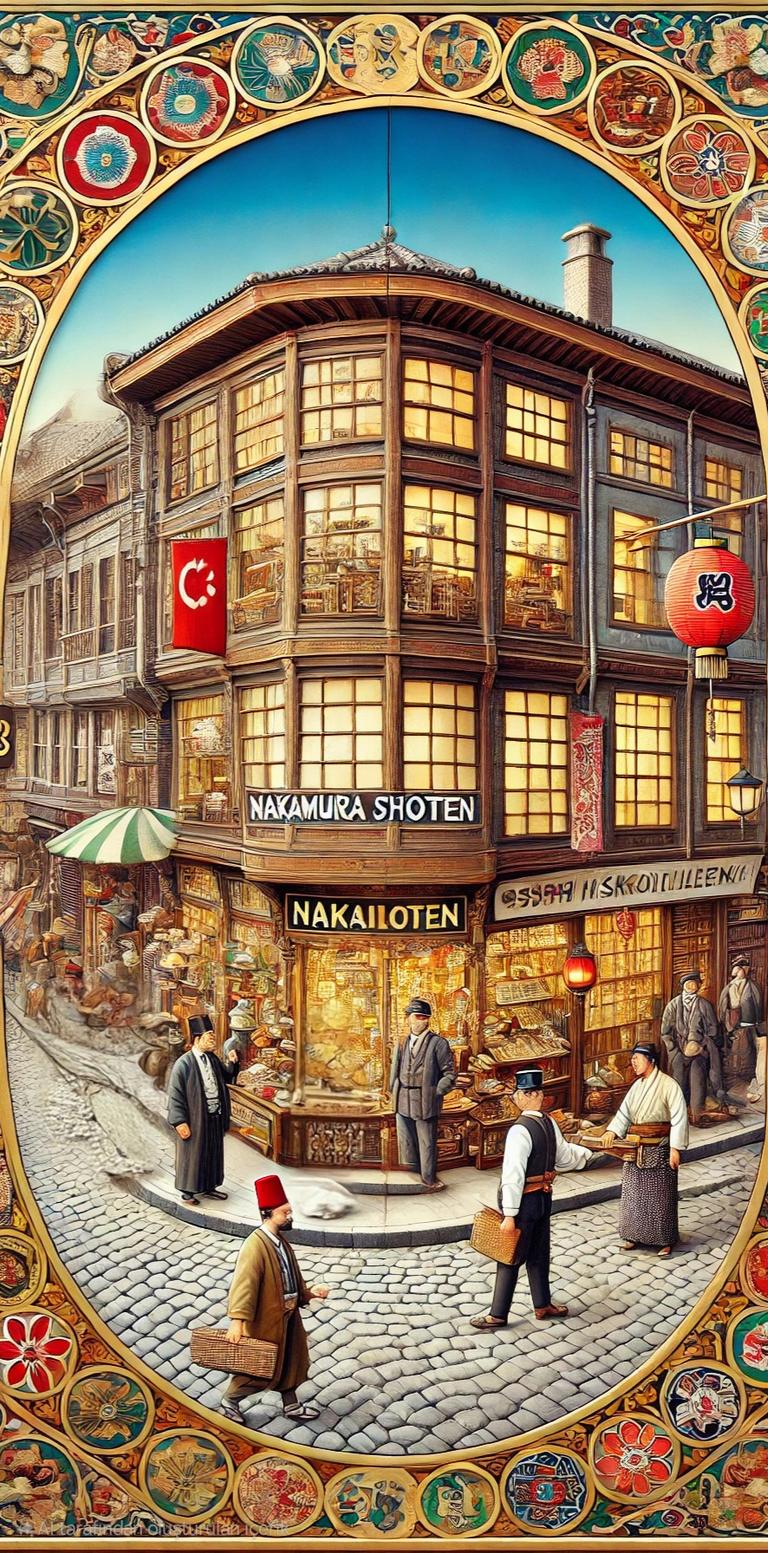
Established in 1893 in Istanbul’s Beyoğlu district, Nakamura Shoten emerged as one of the early examples of commercial and cultural relations between the Ottoman Empire and Japan. Founded by Yamada Torajiro and Nakamura Kenjiro, the store served not only as a commercial enterprise but also as a cultural bridge, introducing Japanese culture to Ottoman society.
Nakamura Shoten was opened during a period when no official trade agreement existed between the Ottoman Empire and Japan. The store was granted special permission to operate, aiming to introduce and sell Japanese goods while functioning as a trade museum. Initially located in the Hazzapulo Passage, the store changed locations several times but remained in the heart of Beyoğlu, Istanbul's central district.
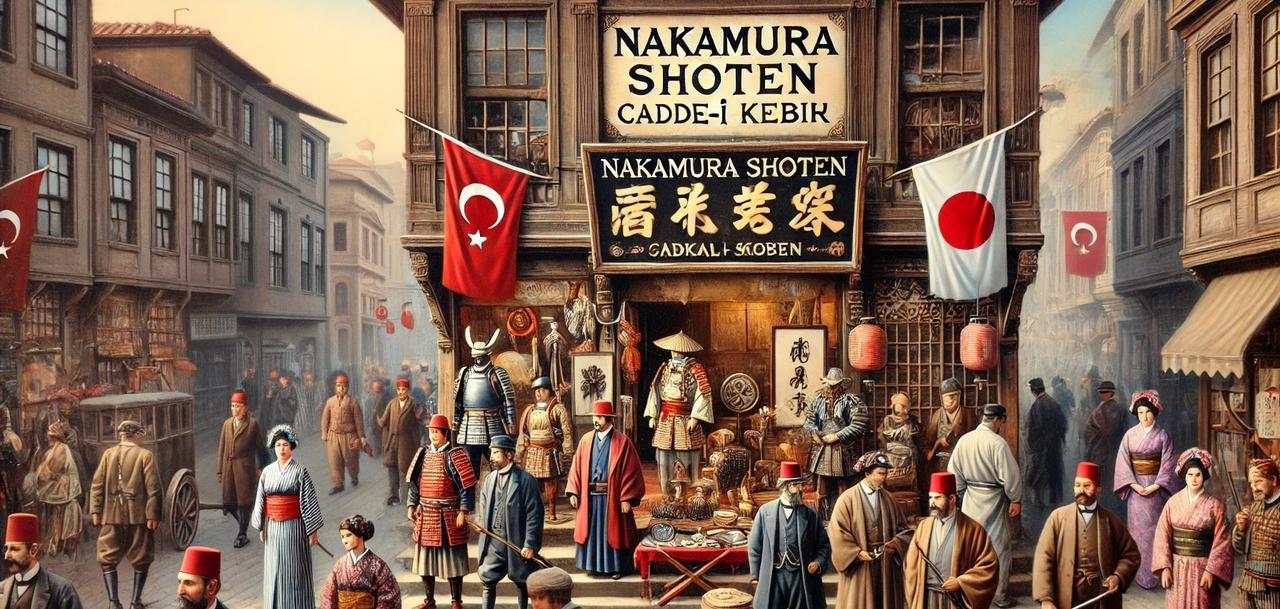
Description of Nakamura Shoten
The store featured not only Japanese products but also cultural artifacts that offered the Ottoman public a glimpse into Japanese life. These efforts were part of Japan's broader cultural diplomacy, showcasing its modernizing image to the world.
Nakamura Shoten became more than a trade outlet—it evolved into a hub for cultural exchange and diplomatic relations. It served as a gathering point for Japanese residents and visitors in Ottoman territories, providing guidance and advisory services, effectively functioning as an unofficial consulate.
The store played a significant role in familiarizing the Ottoman public with Japanese culture and fostering economic ties by promoting Japanese imports. This dual function of trade and cultural exchange strengthened the connection between the two nations.
During the Russo-Japanese War of 1904, Nakamura Shoten supported Japan’s intelligence activities in the Ottoman Empire. Japanese spies and diplomats used the store as a logistical center and facilitated diplomatic efforts between Japan and the Ottoman government. Although Japan sought an alliance with the Ottomans against Russia during this period, these proposals were ultimately declined, and the relations between the two countries were largely characterized as "twilight diplomacy."
Nakamura Shoten stands out as an intriguing example of cultural diplomacy and trade within the context of Ottoman-Japanese relations. The store introduced the modernizing image of Japan to the Ottoman public and contributed to the development of stronger ties between the two nations. It played a significant role in the Ottoman Empire’s perception of Japanese culture.
As both a commercial and cultural center, Nakamura Shoten was a critical tool for Japan in achieving its diplomatic and economic goals in the Ottoman Empire. Its legacy underscores its importance in the history of Ottoman-Japanese relations.

Henüz Tartışma Girilmemiştir
"Nakamura Shoten" maddesi için tartışma başlatın
Foundation and Operations
Commercial and Cultural Roles
Espionage and Diplomatic Activities
Influance of Nakamura Shoten
Bu madde yapay zeka desteği ile üretilmiştir.