


Bu içerik Türkçe olarak yazılmış olup yapay zeka ile otomatik olarak İngilizceye çevrilmiştir.
+1 Daha
Sodium
Periodic Table | 3 | ||||||||
|---|---|---|---|---|---|---|---|---|---|
Chemical Symbol | Na | ||||||||
Atomic Number | 11 | ||||||||
Group | 1 (Alkali Metal) | ||||||||
Electron Configuration | [Ne]3s¹ | ||||||||
Density | 0.97 g/cm³ | ||||||||
Melting Point | 97.794 °C | ||||||||
Boiling Point | 882.940 °C | ||||||||
Atomic Radius | 2.27 Å | ||||||||
Electron Affinity | 52.867 kJ/mol | ||||||||
Electronegativity | 0.93 (Pauling) | ||||||||
Year of Discovery(ies) | 1807 | ||||||||
Discoverer(s) | Sir Humphry Davy | ||||||||
Sodium is a metallic element with atomic number 11 and chemical symbol Na, belonging to the group of alkali metals. It has a silvery-white appearance, is soft and highly reactive. It is located in the third period and first group (1A) of the periodic table and participates in various industrial and biological processes.
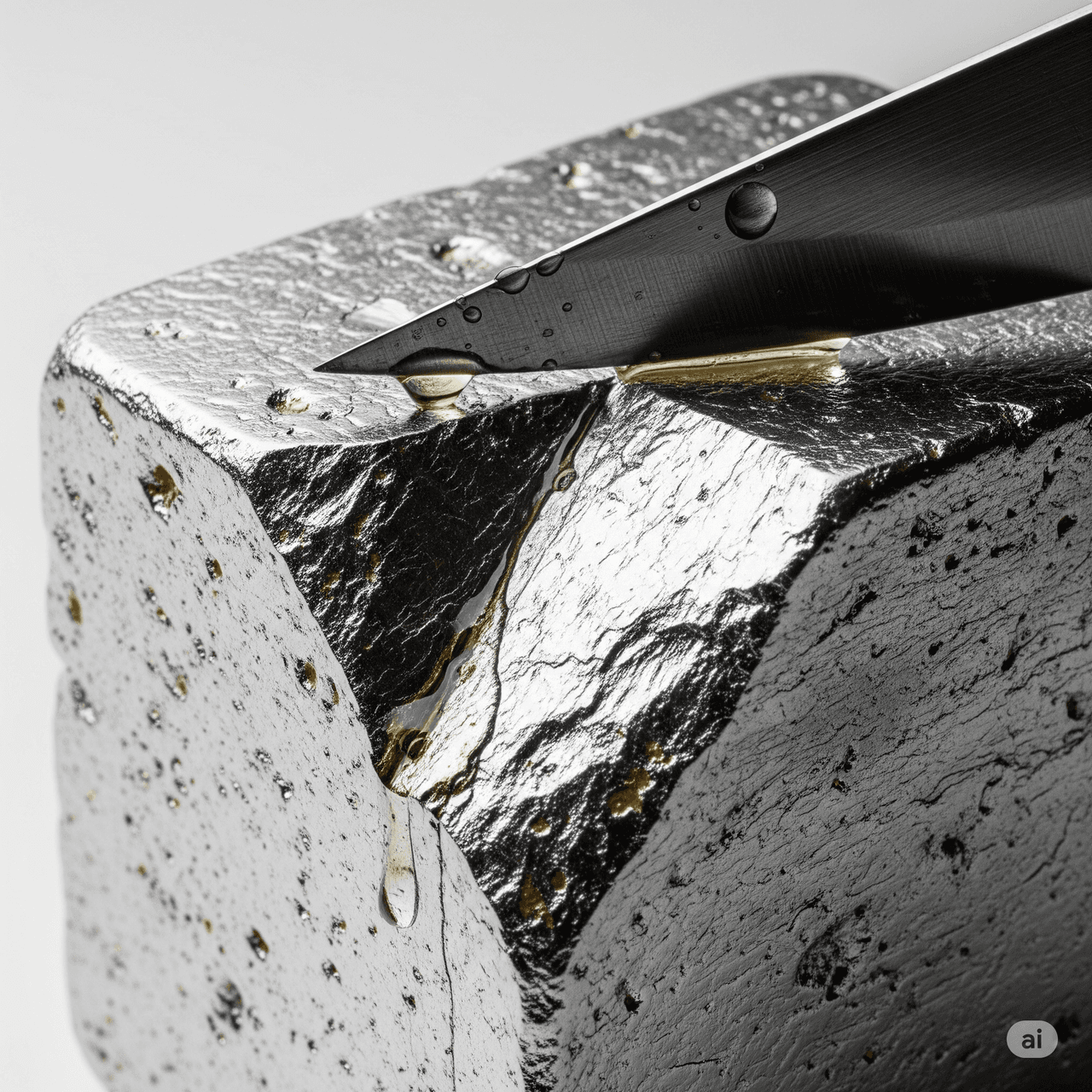
Sodium is a member of the alkali metals family in the periodic table. Its electron configuration is [Ne]3s¹, and the presence of only one valence electron in its outermost shell determines its chemical behavior. Sodium readily loses this single valence electron to form a +1 charged sodium ion (Na⁺), which endows it with high reactivity and strong reducing properties. Due to this reactivity, sodium does not occur naturally in its free (elemental) form and is commonly found in compounds such as sodium chloride (table salt). At room temperature, sodium is a solid and is soft enough to be cut like butter. A freshly cut surface has a bright silvery-white luster but rapidly loses this shine upon exposure to air due to oxidation.
Sodium Element (Generated by Artificial Intelligence.)
The element sodium was first isolated in 1807 by the English chemist Sir Humphry Davy. Davy achieved this important discovery through the electrolysis of molten sodium hydroxide (NaOH, also known as caustic soda). Electrolysis is based on the principle of decomposing a compound into its constituent elements by passing an electric current through its liquid or solution form. Using an electrical source considered powerful for the time, Humphry Davy successfully separated metallic sodium from molten sodium hydroxide. This method was also used to discover other alkali metals such as potassium and some alkaline earth metals, and is regarded as a turning point in chemistry for the identification and isolation of elements.
The name sodium derives from the English word "soda." The term "soda" itself originates from the Medieval Latin word "sodanum," meaning a remedy for headaches. The chemical symbol Na comes from the Latin name "natrium" for sodium carbonate, one of sodium's natural compounds. The origin of the word "natrium" traces back to the ancient Egyptian words "neter" or "nitron," meaning natural salt.
Sodium is a chemically highly active metal. Upon contact with air, it rapidly oxidizes to form sodium oxide (Na₂O) and, in the presence of moisture, sodium hydroxide (NaOH). For this reason, it is typically stored in inert liquids such as mineral oil. Sodium reacts violently and exothermically with water, producing sodium hydroxide and hydrogen gas (H₂). The heat released during this reaction can ignite the hydrogen gas, causing it to burn with a bright yellow flame. Sodium also reacts vigorously with acids and halogens.

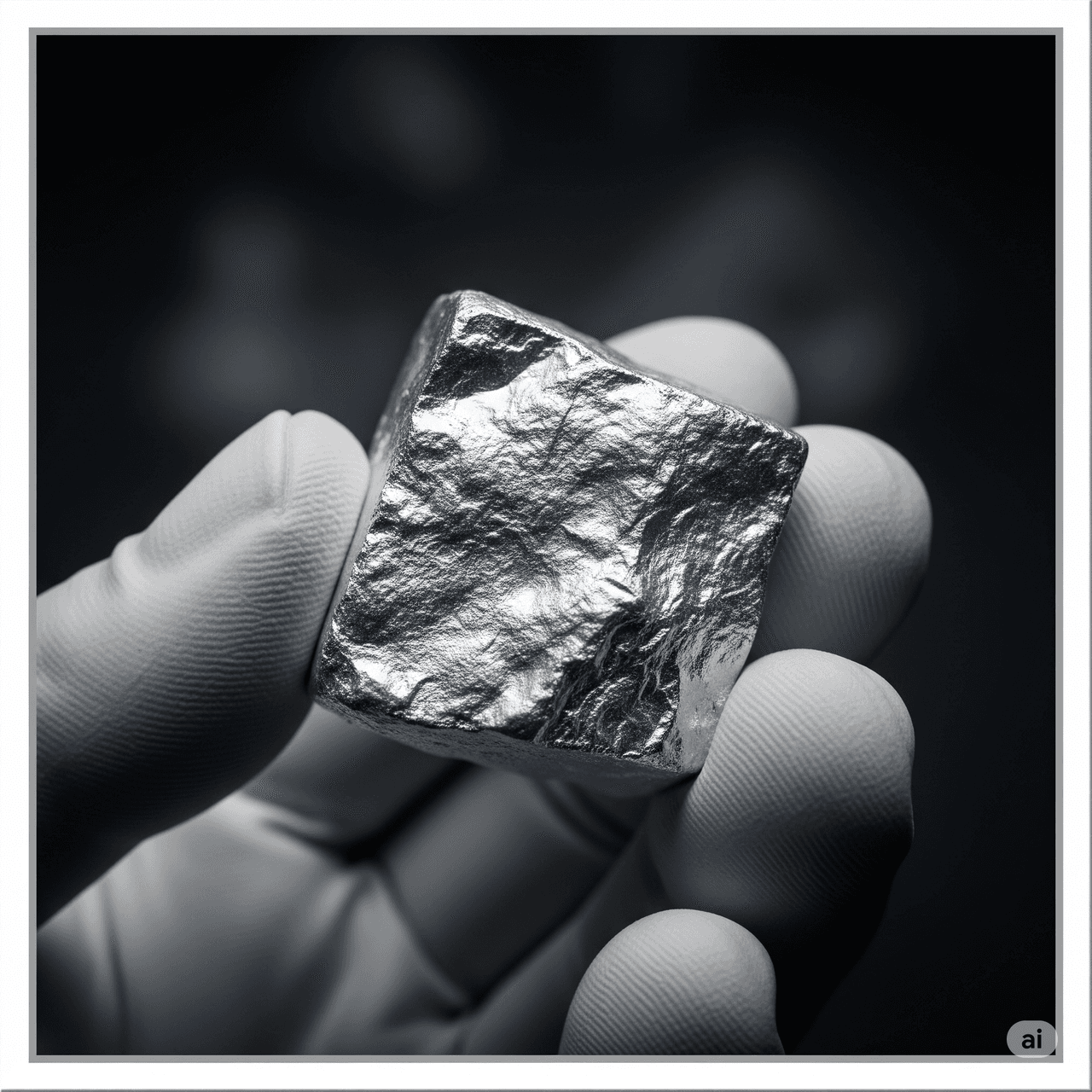
Representative Sodium Sample (Generated by Artificial Intelligence.)
The only stable isotope of sodium found in nature is ²³Na. Therefore, sodium is considered a monoisotopic element. However, many radioactive isotopes have been synthesized artificially.
Although metallic sodium is used as a coolant in some nuclear reactors, the applications of sodium salts are far more extensive than those of the pure metal.
Sodium ions (Na⁺) are a vital electrolyte essential for all animals and some plant species.
Abnormally low (hyponatremia) or high (hypernatremia) levels of sodium in the body can lead to serious health problems. Therefore, balanced sodium intake is essential.
National Center for Biotechnology Information. "Sodium." *PubChem Compound Database*, CID 5360545. Accessed May 29, 2025. https://pubchem.ncbi.nlm.nih.gov/compound/5360545.
TÜBİTAK Bilim Genç. "Sodyum." *Bilim Genç*, January 14, 2021. Accessed May 29, 2025. https://bilimgenc.tubitak.gov.tr/periyodik-tablo/sodyum.

Sodium
Periodic Table | 3 | ||||||||
|---|---|---|---|---|---|---|---|---|---|
Chemical Symbol | Na | ||||||||
Atomic Number | 11 | ||||||||
Group | 1 (Alkali Metal) | ||||||||
Electron Configuration | [Ne]3s¹ | ||||||||
Density | 0.97 g/cm³ | ||||||||
Melting Point | 97.794 °C | ||||||||
Boiling Point | 882.940 °C | ||||||||
Atomic Radius | 2.27 Å | ||||||||
Electron Affinity | 52.867 kJ/mol | ||||||||
Electronegativity | 0.93 (Pauling) | ||||||||
Year of Discovery(ies) | 1807 | ||||||||
Discoverer(s) | Sir Humphry Davy | ||||||||
Henüz Tartışma Girilmemiştir
"Sodium (Na)" maddesi için tartışma başlatın
Classification and Fundamental Properties
Discovery
Etimology
Physical and Chemical Properties
Isotopes
Applications
Biological Importance