
badge icon

Bu içerik Türkçe olarak yazılmış olup yapay zeka ile otomatik olarak İngilizceye çevrilmiştir.

Madde

Tapan Knife

Alıntıla
Type of geographical indication
Mahreç Sign
Application Date
20.11.2017
Registration Number
490
Registration Date
10.03.2020
Product Group
Handicraft products other than carpetskilims and textiles
Applicant/Registrant
Kozan Chamber of Commerce
Place of Production
Kozan and Feke districtsAdanaTürkiye

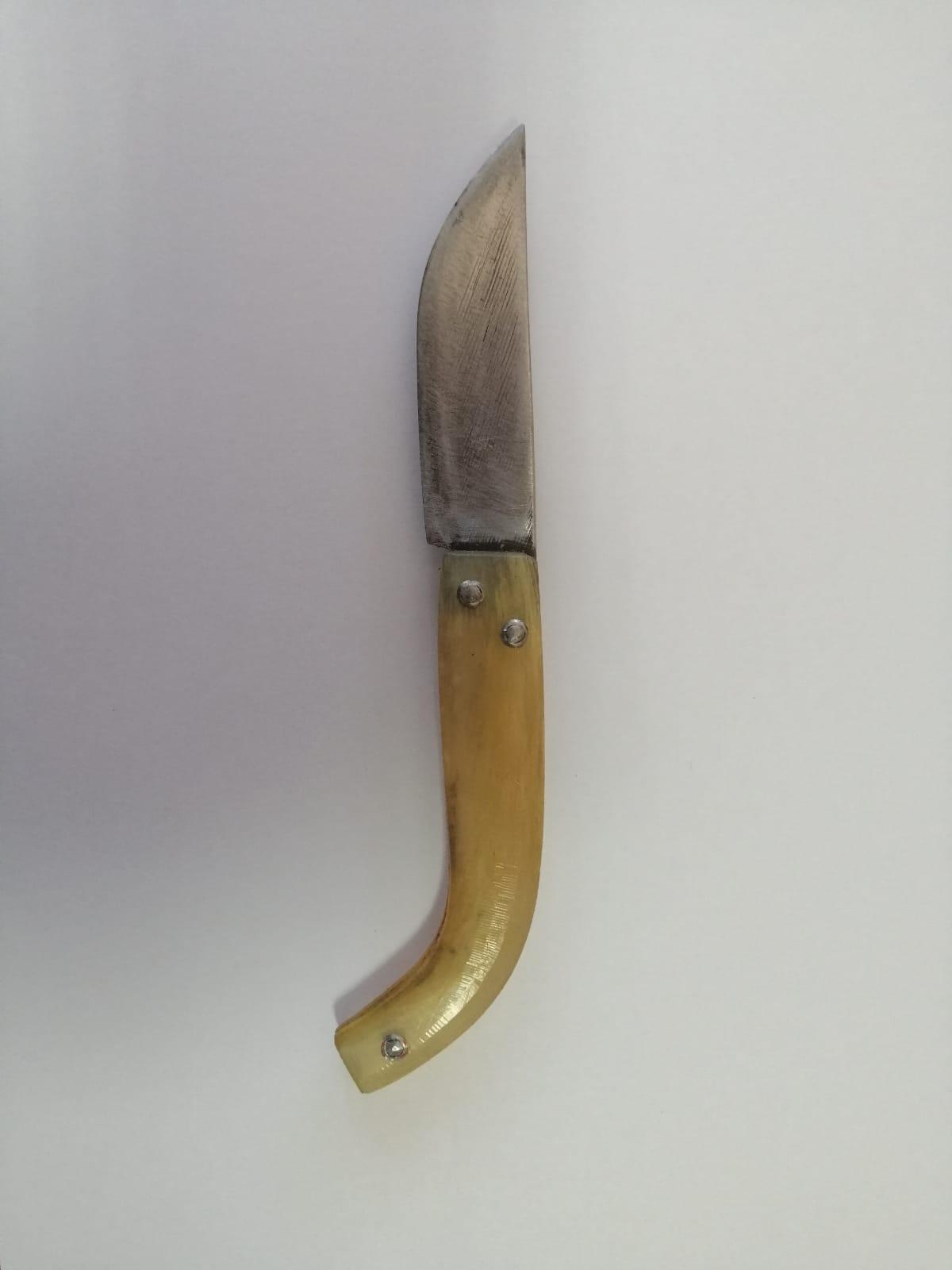
Tapan Knife is a traditional knife type produced by hand in the Kozan and Feke districts of Adana Province, Türkiye, known for its distinctive characteristics. This product was registered as a geographical indication on 10 March 2020 under Law No. 6769 on Industrial Property, effective from 20 November 2017.


Tapan Knives (AA)

Geographical Identity and Production Area

The name Tapan derives from the “tapan” region, a flat and expansive area comprising the villages of Akoluk, İncirci, Kaşaltı, Kırıkuşağı, Kovukçınar, Paşalı, Tenkerli, Tokmanaklı and Uğurlubağ, where production historically concentrated. Today, manufacturing is carried out within the boundaries of the Kozan and Feke districts, which encompass these villages.

Structural Features

  • Blade: Made of steel.
  • Handle: Crafted from goat or ram horn.
  • Types
    • Half-hook shape: Used for pruning and vineyard work.
    • Straight blade: Preferred for cutting meat and fish.
    • Knife shape: Produced for decorative purposes.

Manufacturing Technique

The Tapan knife is shaped using local knowledge and experience without the use of electric tools or chemical substances. The production process follows meticulous steps:

Steel Shaping

  • The forge is fired with pine wood charcoal.
  • The steel is heated for 10 to 15 minutes until it turns a cherry-red color.
  • It is hammered approximately 300 to 350 times by the master craftsman, following a cycle repeated at least three times to achieve the desired form.
  • Sharpness and contour are refined using a file.
  • Hardening is achieved through soap tempering followed by water quenching; no chemicals are used.

Handle Making

  • Goat or ram horns are softened for 3 to 5 minutes in a forge heated with pine charcoal.
  • They are placed in a vise and flattened into shape.
  • A slot for the blade is cut with a saw, then smoothed and shaped with a rasp.
  • The handle and blade are joined together using rivets.
  • In the final touch, sharpness is achieved with a whetstone; olive oil is applied to the handle to impart a glossy finish.

Geographical Indication and Usage

The geographical indication mark and designated logo appear on the product or its packaging. If technically unfeasible, the mark must be visibly displayed within the production facility.

Monitoring System

Monitoring is conducted by a four-member team coordinated by the Kozan Chamber of Commerce. Regular inspections are carried out once a year and may be performed at any time upon request or complaint. The production method, handle material, and proper use of the geographical indication mark are verified. Expert assistance from individuals or institutions may be sought when necessary.

Yazar Bilgileri

Avatar
YazarElif Laçin3 Aralık 2025 09:24

Etiketler

Tartışmalar

Henüz Tartışma Girilmemiştir

"Tapan Knife" maddesi için tartışma başlatın

Tartışmaları Görüntüle

İçindekiler

  • Geographical Identity and Production Area

  • Structural Features

  • Manufacturing Technique

    • Steel Shaping

    • Handle Making

  • Geographical Indication and Usage

  • Monitoring System

KÜRE'ye Sor