


Bu içerik Türkçe olarak yazılmış olup yapay zeka ile otomatik olarak İngilizceye çevrilmiştir.
+1 Daha
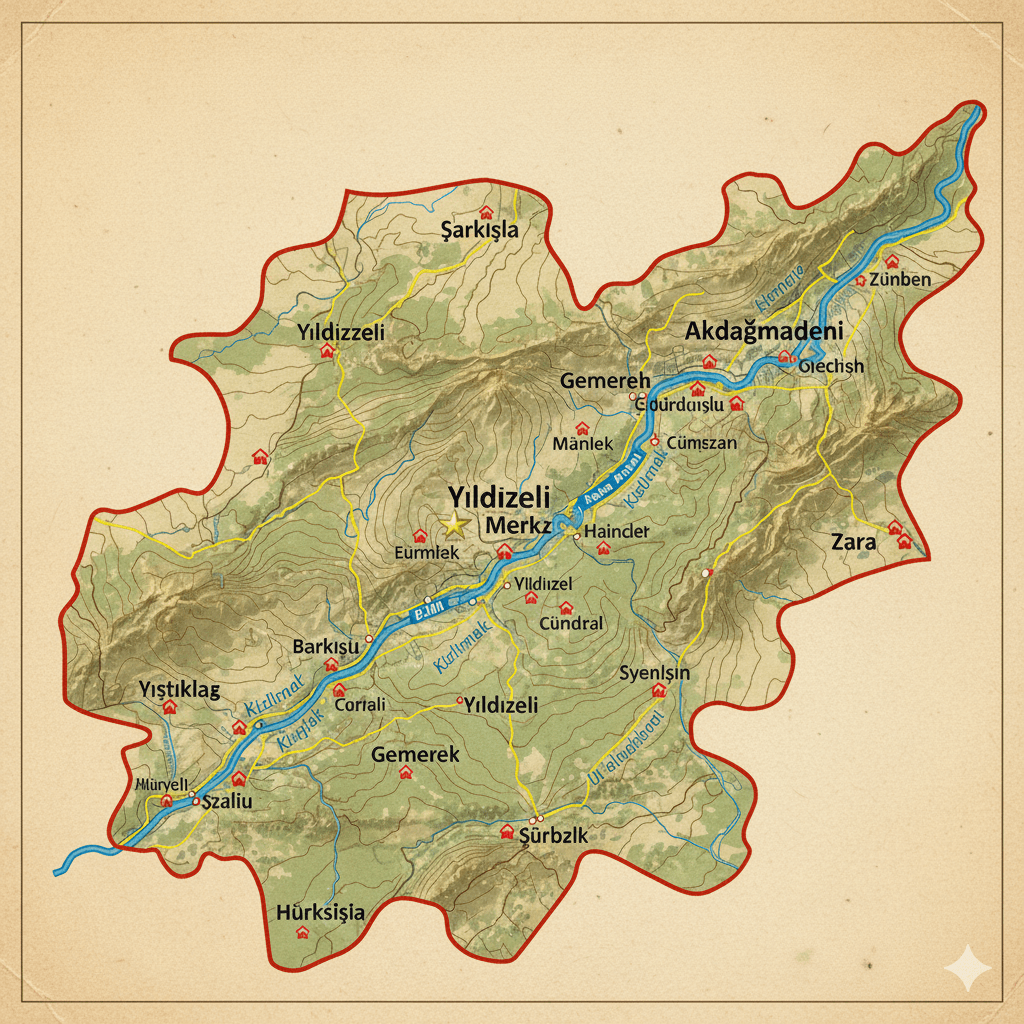
Yıldızeli (generated with artificial intelligence)
Mayor(s) | Yaşar Göktaş | ||||||||
|---|---|---|---|---|---|---|---|---|---|
Climate(s) | Continental | ||||||||
Region(s) | Central Anatolia | ||||||||
Province(s) | Sivas | ||||||||
Population | 28,382 (2024) | ||||||||
District Governor | İsmail Bildirici | ||||||||
Elevation(s) | 369 m 1 | ||||||||
Yıldızeli is a district located in the Central Anatolia Region, west of the provincial center of Sivas. Its distance from the provincial center is reported in sources to be between 45 and 47 kilometers.
The district has an average elevation of 1400 meters above sea level and a total area of 2645 km². Its geographical boundaries are bordered by the Sivas provincial center to the east, Akdağmadeni district of Yozgat to the west, Sulusaray and Yeşilyurt districts of Tokat to the northeast, the Tokat provincial center to the north, Almus district of Tokat to the northwest, and Şarkışla district of Sivas to the south.
The topographical structure of the region is shaped by Çal Dağı to the south and Çamlıbel Dağları to the northwest; the most significant elevation is the extinct volcanic Yıldız Dağı, which rises to 2552 meters and gives its name to the district.
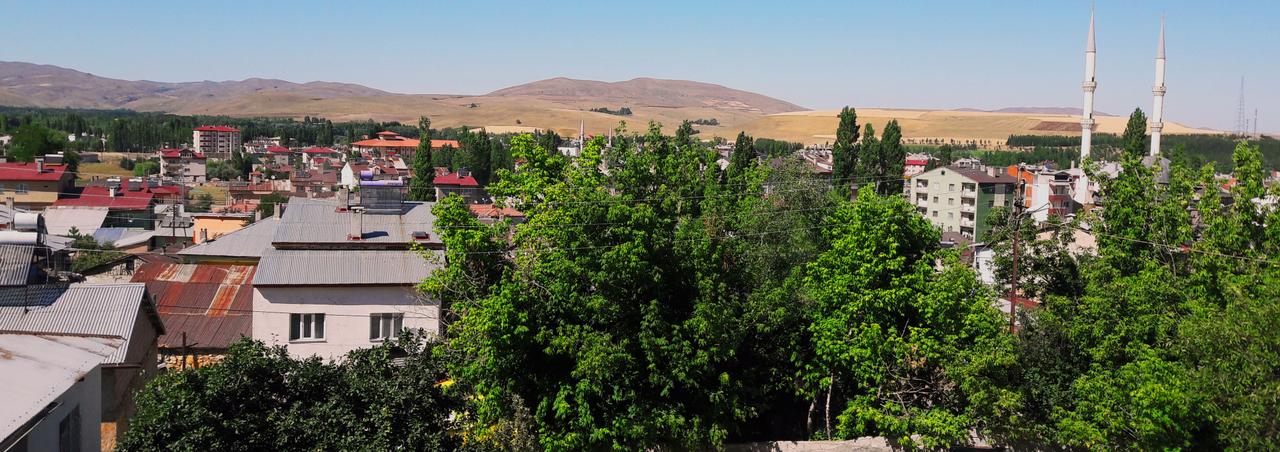
Yıldızeli (Source T.C Sivas Valiliği)
The earliest known historical name of the district center is Yenihan. This name was derived from a large caravanserai built when the settlement was established as a resting point in 1639. The name remained in use throughout the Ottoman period and the early years of the Republic. In 1936, inspired by Yıldız Dağı, the highest point in the region, the name Yenihan was changed to Yıldızeli.
The strategic location of the region between Central and Eastern Anatolia, along with its favorable agricultural lands and water sources, ensured continuous settlement from the Chalcolithic period onward.
During the Bronze Age, the region served as a bridge between the ceramic cultures of Central and Eastern Anatolia. Şeyhhalil and Pulur höyüks are important settlements from this period. Settlement continued during the Hittite, Phrygian, Median, and Persian periods; Menteşe Höyüğü, in particular, provides significant ceramic finds demonstrating Phrygian dominance.
During this period, Yıldızeli functioned as a transitional zone between the satrapies of Pontus and Cappadocia.
Under the Roman Empire, which administered the region through its provincial system, fortified structures such as the castles of Kümbet, Akçakale, and Karalar villages were constructed primarily for defensive purposes.
During the Byzantine Empire, the district retained its military strategic importance and was briefly subjected to Sasanian and subsequently Umayyad raids, before returning to Byzantine control.
Following the Battle of Manzikert in 1071, Yıldızeli and its surroundings came under Turkish control around 1074. The region was initially incorporated into the Danishmend State centered in Sivas, and in 1174 it was brought under the authority of the Anatolian Seljuk State by II. Kılıçarslan.
After the Mongol victory at the Battle of Köse Dağ in 1243, the region was plundered and came under Ilkhanid administration. Subsequently, Yıldızeli fell within the borders of the Eretna Beylik and the State of Kadı Burhaneddin, remaining within the cultural and economic sphere of Sivas, a major center of science and trade during these periods.
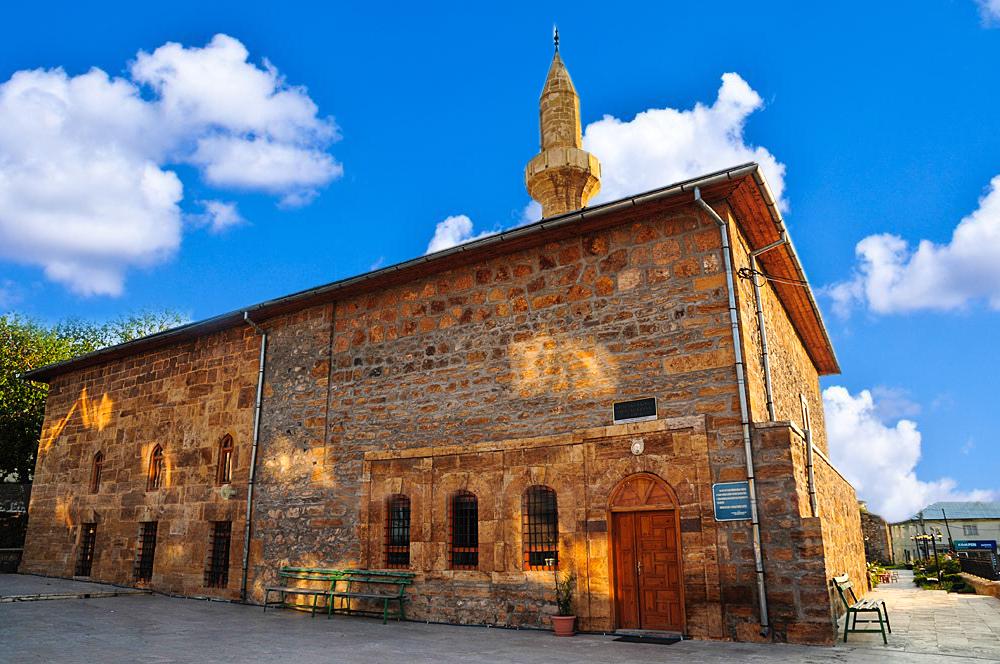
Historic Mosque of Yıldızeli District (Source T.C Yıldızeli Kaymakamlığı)
Yıldızeli was incorporated into Ottoman territory in 1398 during the reign of Yıldırım Bayezid. After the Timurid invasion of 1400, it experienced the Interregnum period and was definitively brought under Ottoman administration by Çelebi Mehmet in 1408. The foundations of the modern district were laid in 1639.
Prior to Sultan IV. Murat’s Baghdad campaign, Grand Vizier Kemankeş Kara Mustafa Paşa was ordered to prepare the region for the army’s accommodation. Swamps and reed beds were drained, and a large caravanserai, a mosque, two mosques, a bathhouse, and a primary school were constructed, establishing a planned settlement named Yenihan.
To make the settlement attractive, the paşa established a waqf (endowment), granting tax and military service exemptions to those who settled there. In 1875, the settlement attained the status of a district subordinate to Sivas, and after the Russo-Turkish War of 1877–1878, it became a settlement site for migrants from Kars.
During the National Struggle, Mustafa Kemal Paşa reached Sivas via Yıldızeli on 27 June 1919. In 1920, an uprising led by Postacı Nazım and Kara Mustafa in the region was suppressed by National Forces in June, restoring public order. During the Republican period, a significant step was taken in education: on 1 January 1942, the Pamukpınar Village Institute was established to support regional development.
Yıldızeli possesses a rich archaeological and architectural heritage with 72 registered cultural assets. Important historical structures in the district include the Kemankeş Kara Mustafa Paşa Mosque and Bathhouse, Şeyh Halil Türbesi, Akçakale Castle, and Kümbet Village Castle.
Archaeologically, the höyüks of Pulur, Kayalıpınar, Menteşe, and Argaz are the primary sites shedding light on the region’s settlement history. Additionally, bridges and station buildings along the Sivas–Samsun railway line, as examples of railway architecture, are among the protected immovable cultural assets.
Ministry of Culture and Tourism, Regional Directorates for the Protection of Cultural Heritage. "Yıldızeli." Accessed February 19, 2026. https://korumakurullari.ktb.gov.tr/TR-294764/yildizeli.html.
Sivas Valiliği. "Yıldızeli." Accessed February 19, 2026. https://www.sivas.gov.tr/yildizeli.
Sivas İl Özel İdaresi. "Yıldızeli İlçe Özel İdare Müdürlüğü." Accessed February 19, 2026. https://www.sivasilozelidaresi.gov.tr/yildizeli-ilce-ozel-idare-mudurlugu.
Yıldızeli Kaymakamlığı Governorship. "İlçemizin Tarihçesi." Accessed February 19, 2026. https://www.yildizeli.gov.tr/ilcemizin-tarihcesi.

Yıldızeli (generated with artificial intelligence)
Mayor(s) | Yaşar Göktaş | ||||||||
|---|---|---|---|---|---|---|---|---|---|
Climate(s) | Continental | ||||||||
Region(s) | Central Anatolia | ||||||||
Province(s) | Sivas | ||||||||
Population | 28,382 (2024) | ||||||||
District Governor | İsmail Bildirici | ||||||||
Elevation(s) | 369 m 1 | ||||||||
Henüz Tartışma Girilmemiştir
"Yıldızeli (District)" maddesi için tartışma başlatın
Geographical Location and Physical Environment Characteristics
Etymological Origin and Administrative Name Change
Ancient Period History
Classical, Roman, and Byzantine Periods
Turkish Rule: Seljuks and Beylik Periods
Ottoman Period and the Foundation of Yenihan
National Struggle and Republican Period
Cultural Heritage and Archaeological Inventory