



Materials That Conduct Electricity: Metals
Why Do Metals Conduct Electricity Well?
Have you ever wondered how the lamp in your room turns on when you press the light switch? Behind this process are very small but crucial particles: electrons! And the excellent carriers that transport them: metals!
Many everyday objects we use — such as phone charging cables, wires inside electrical outlets, or electric stoves — are coated with or contain metal materials. This is because metals conduct electricity very well. But why exactly?

(Generated by Artificial Intelligence.)
Electrons and Their Freedom
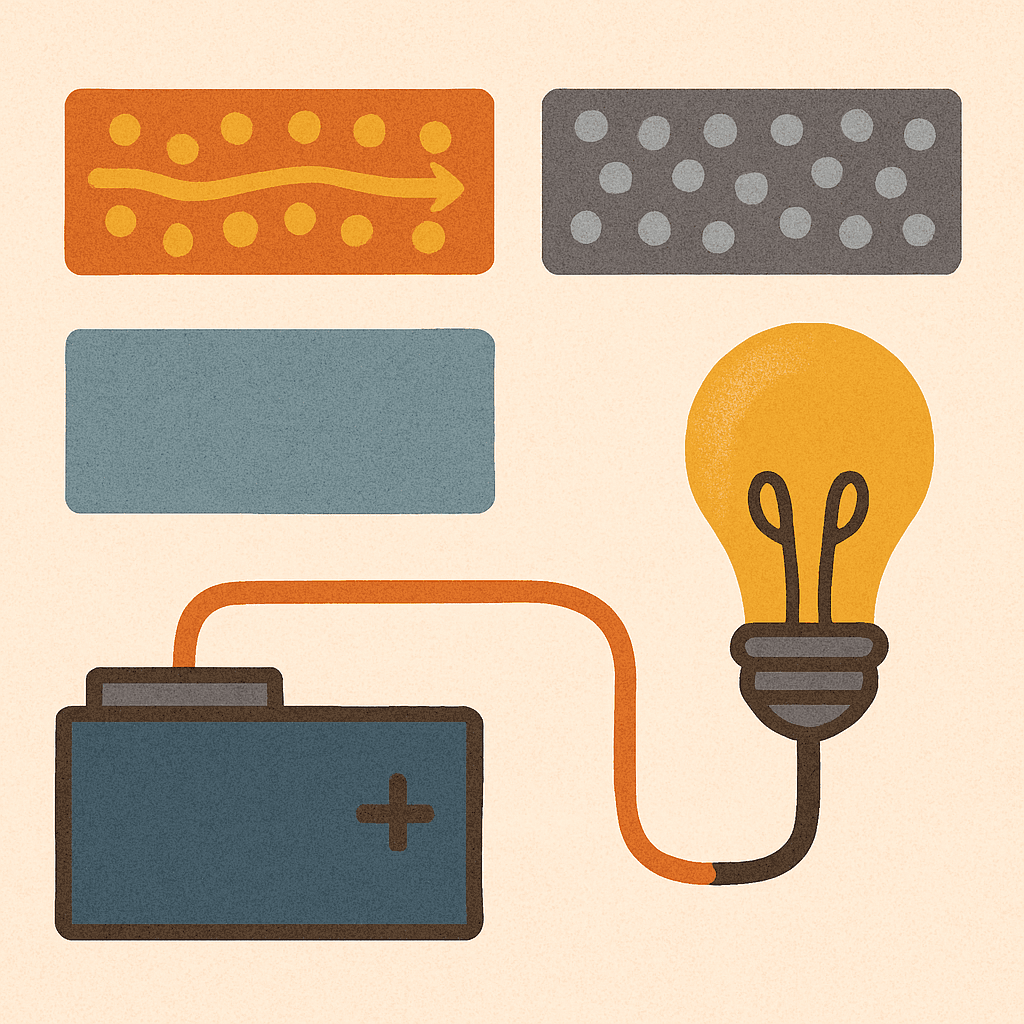
The atoms of metals are arranged in a highly orderly manner. Even more interestingly, some of the electrons in their outer shells are not tightly bound to their parent atoms. These electrons are called “free electrons.” Being free means they can move freely throughout the metal.
When an electrical source — such as a battery or an outlet — is connected to one end of a metal wire, these free electrons begin to move. This movement, or flow of electrons, is precisely what we call electric current. Because there is a large number of free electrons within the metal, this current flows very easily. In other words, electricity passes through metals almost as if sliding!
Why Don’t All Materials Conduct Electricity?
Not all materials are so generous! For example, materials like plastic or wood have no free electrons in their atoms. Therefore, electric current cannot flow through them. This is why the outer covering of electrical wires is typically made of plastic, to protect people from electric shocks.

(Generated by Artificial Intelligence.)
Which Is the Best Electrical Conductor?
Metals such as copper, gold, and silver conduct electricity very well. Although silver is the best conductor, it is expensive, so copper is most commonly used. This is why the wires inside household cables are made of copper.