


This article was automatically translated from the original Turkish version.
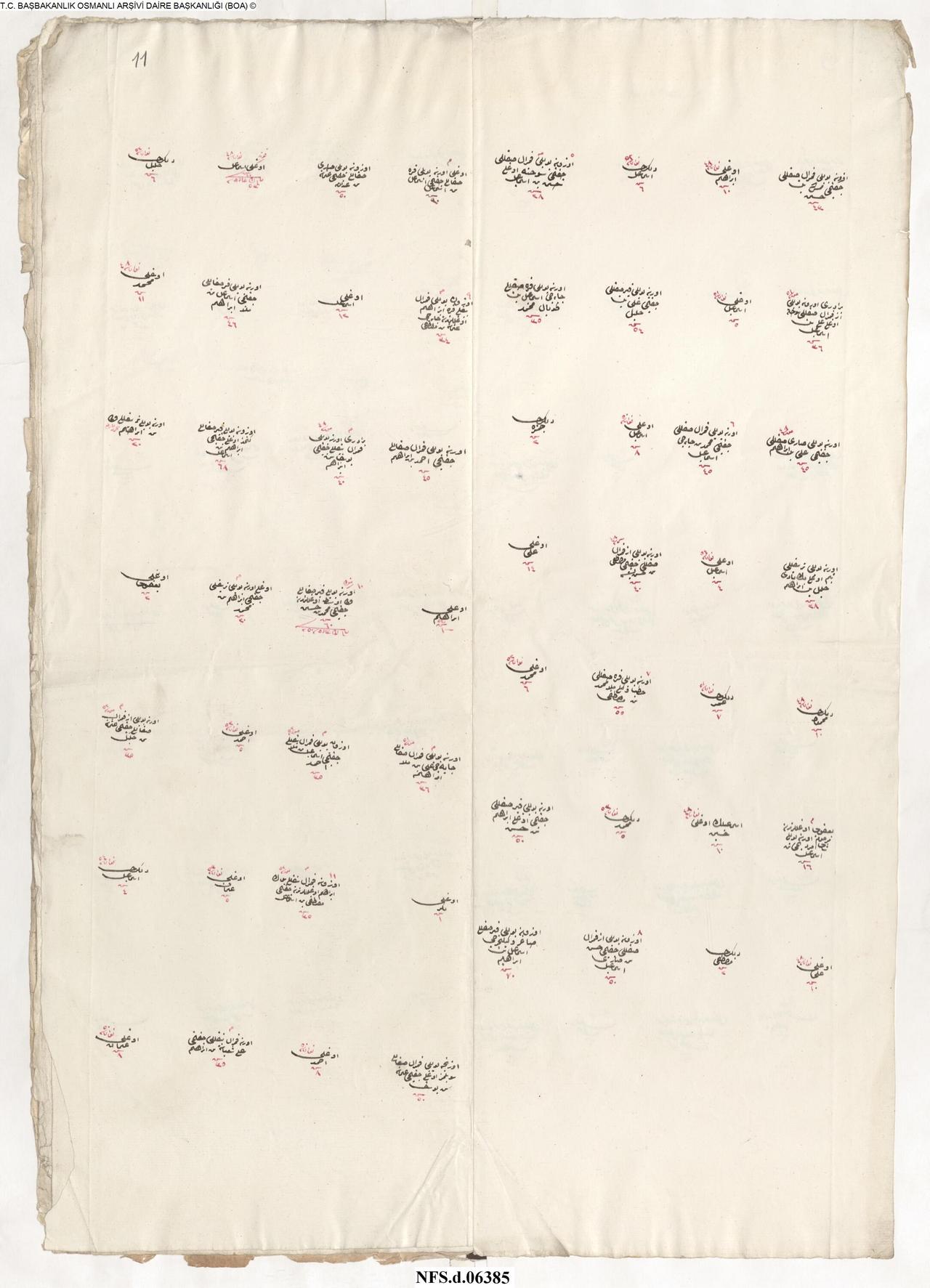
(BOA. NFS.d. 6385)
1831 Ottoman State Census
Importance | The First Census in the Ottoman State | ||||||||
|---|---|---|---|---|---|---|---|---|---|
Year(s) | Gregorian: 1831 / Hijri: 1246-1247 | ||||||||
Result(s) | 3 101 (Male Population) 641 | ||||||||
The 1831 Census was the first comprehensive and systematic population survey conducted by the central administration of the Ottoman State. The census was implemented during the reign of Mahmud II to organize military conscription taxation and provincial administration; it classified individuals solely based on male population, categorizing them by age religion and tax status. Registers prepared at the provincial district subdistrict and village levels contain detailed records of household heads and male populations. This census is regarded as the beginning of modern demographic data collection efforts and constitutes one of the foundational pillars of Ottoman administrative reforms.
Following the Ottoman-Russian War of 1828–1829 population reorganization accelerated due to the inadequacy of scattered records from previous centuries in meeting growing administrative financial and military needs. Within this framework the 1831 census represented the first centralized effort to classify the male population of the “memâlik-i mahrûsa-i şâhâne” by age religion tax status and military suitability; registers were organized according to the administrative hierarchy of provinces districts subdistricts and villages.
One of the most important objectives of the census was to determine the male population by age groups to reorganize the military system. After the abolition of The Janissary Corps' the newly established army required knowledge of military potential in different regions; accordingly men were recorded in detailed age categories: “asgar” “sağir” “şabb-ı emred” “sinn-i vustâ” and “pir”. These categories constituted technical classifications designed to enable state planning for military recruitment.
Another objective of the census was to update the taxation system. To ensure the accurate collection of the jizya tax imposed on non-Muslim populations detailed records of non-Muslim male populations in each district were targeted. Registers specified non-Muslims’ jizya classes clearly distinguishing taxable groups from exempt ones. Such detail was deemed essential for updating tax obligations and estimating state revenues.
A significant aim of the 1831 census was to strengthen central control over the provinces. Within the newly established administrative structure the population size and demographic composition of each province district and subdistrict were to be known to the center; this enabled the allocation of administrative duties the appointment of officials the organization of postal and transportation networks and the planning of local security needs.
In this context census registers were organized according to the hierarchy of province–liva/district–subdistrict–village and processed at the center by Ministry of Publications. The census also aimed to establish a systematic record of social and economic structures. Household economic status occupational groups exemptions nomadic and seasonal labor populations guilds and individuals belonging to the military class were recorded in separate categories. Thus the state could track key elements such as production capacity labor conditions tax distribution and population mobility.
The implementation of the 1831 Census relied on a large-scale field operation conducted according to rules established by the Ottoman central administration. Census activities were initiated through directives sent to every province and district ensuring that officials on the ground operated within a defined hierarchy. These officials were mostly selected from among locally known individuals who had direct contact with the local population and intimate knowledge of the social structure and demographic composition thereby reducing the likelihood of concealment of information related to military and tax obligations. Census officers visited households one by one recording the male population and compiling these records into official registers according to administrative units.
The basic unit of registration was the household and the male individual. Each household head’s identity age religion and tax status were recorded; male members within the household were classified into age categories. Detailed age groups such as “asgar” (0–7 years) “sağir” (8–15 years) “şabb-ı emred” (15–40 years) “sinn-i vustâ” (40–60 years) and “pir” (60 years and over) were employed. This classification provided the necessary technical framework for determining regional military potential regulating tax obligations and understanding the demographic structure. Non-Muslim male populations were additionally recorded under jizya classes as required by the tax system; high medium and low income categories were clearly indicated in the registers. Military personnel including timariot sipahis members of the kapıkulu corps and groups granted tax exemptions in return for service were separately processed.
Upon completion of the registration process registers collected at the subdistrict level were sent to district centers. After consolidation at the district level documents were forwarded to provincial administrations. In the final stage all provincial registers were sent to Istanbul where they were classified by the Ceride Nezareti. The Nezareti compared records from each region identified omissions and compiled them into a single imperial population inventory. Thus the census was completed within a two-way mechanism that transformed local data collection in the provinces into a standardized and comparable structure at the center.

Tırnova Subdistrict Tuzluk Neighborhood Muslim Register (Republic of Türkiye Presidency State Archives)
The population registers produced as a result of the 1831 Census constituted the first comprehensive dataset recording the male population of the Ottoman State according to administrative units. However no complete standardization existed in these registers. The format categories used and level of detail recorded varied depending on the official responsible; some registers included detailed information on individuals’ physical characteristics alongside age occupation and religion while others contained only basic identification data. Even within the same register differences in methodology and handwriting between pages were common often reflecting changes in the responsible official.
The 1831 Census was the first centralized demographic survey to classify the male population of the Ottoman Empire’s European (Rumeli) and Anatolian provinces by religious and social categories. Muslims reaya (non-Muslims) Roma Jews and Armenians were recorded under separate headings and total male population figures were calculated for each province. The results produced a comprehensive picture of regional population densities and religious distribution across the empire.
Male Population According to the 1831 Census
Since the 1831 Census recorded only the male population total population was estimated according to contemporary administrative practice by doubling the male figure. The total male population recorded in the census was 3.641.101; when doubled to account for women the estimated total population of the Ottoman Empire was approximately 7.2 million. This provisional figure reflects the official calculation method of the period which assumed an equal number of women despite the census covering only males. Moreover given the likelihood of undercounting the actual population was certainly significantly higher.
Although the 1831 Census was the first centralized population survey in the Ottoman State it encountered various problems and shortcomings during its implementation. One of its primary limitations was its exclusive focus on the male population which resulted in the absence of direct data on women. This necessitated the indirect estimation of total population by doubling the male figure thereby limiting the accuracy of demographic size assessments.
Significant difficulties were also observed in rural applications. In some regions, the dispersed settlement pattern of the population, limited transportation conditions, and the inability of census officers to reach every settlement resulted in incomplete records. It is evident that nomadic communities and groups with high seasonal mobility were not fully recorded. The partial reflection of these communities in the population registers made it difficult for provincial and district totals to accurately reflect reality. Clear disparities also emerged among local officials responsible for conducting the census in terms of their record-keeping skills and practical experience.
In some cases, detailed age groups, jizya categories, and tax exemptions were systematically recorded, while in other regions only household heads or total male populations were listed. Similarly, inconsistencies prevailed in the recording of military-class populations: some registers provided detailed listings of timariot sipahis, kapıkulu members, or exempt groups, while others used only general categories.
Deficiencies were also evident during the central compilation phase. Some of the registers sent to the Ceride Nezareti contained incomplete information, and discrepancies among provincial records created inconsistencies in comparative arrangements, leading in some cases to the merging or summarization of settlement units. The lack of full standardization of the classification system used in the registers across provinces made it difficult to achieve a homogeneous structure for the data across the entire empire.
These problems and shortcomings demonstrate that, despite being an ambitious attempt at comprehensive enumeration, the 1831 Census encountered regional variations and technical limitations in practice. Nevertheless, the census marked a fundamental step in the development of the Ottoman state’s demographic recording system and established the foundational methods for subsequent population surveys.
Findley, Carter V. Modern Türkiye Tarihi: İslam, Milliyetçilik ve Modernlik, 1789–2007. Trans. Güneş Ayas. Ed. Adem Koçal. İstanbul: Timaş Yayınları, 2012.
Karpat, Kemal H. Osmanlı Nüfusu 1830–1914: Demografik ve Sosyal Özellikleri. İstanbul: Tarih Vakfı Yurt Yayınları, 2003.
Ortaylı, İlber. Tanzimat Devrinde Osmanlı Mahalli İdareleri (1840–1880). Ankara: Türk Tarih Kurumu Yayınları, 2020.
T.C. Cumhurbaşkanlığı Devlet Arşivleri. Başbakanlık Osmanlı Arşivi (BOA), Nüfus Defterleri, 1831 (h. 1246-1247).
T.C. Cumhurbaşkanlığı Devlet Arşivleri. Başbakanlık Osmanlı Arşivi (BOA), Nüfus Defterleri, NFS.d. 6385, s. 6.

(BOA. NFS.d. 6385)
1831 Ottoman State Census
Importance | The First Census in the Ottoman State | ||||||||
|---|---|---|---|---|---|---|---|---|---|
Year(s) | Gregorian: 1831 / Hijri: 1246-1247 | ||||||||
Result(s) | 3 101 (Male Population) 641 | ||||||||
No Discussion Added Yet
Start discussion for "1831 Ottoman State Census" article
Objectives of the 1831 Census
Implementation of the 1831 Census
Structure of the 1831 Census Registers
Results of the 1831 Census
Problems and Limitations of the 1831 Census