

 Recently Added:
This article was automatically translated from the original Turkish version.
2026 French Student Protests were a protest movement that began in mid-September 2026 in some high schools in France, involving students blocking school entrances (French: blocus), and later spreading nationwide to universities and the city of Liège in Belgium. The movement is also referred to in the French media as “high school blockades” (blocages des lycées) and the “high school movement” (mouvement lycéen).
Students voiced grievances over overcrowded classrooms, teacher shortages, failure to replace departing staff, dilapidated school buildings, and intense class schedules, demanding increased funding for education. On 29 September 2026, a national day of action was called by the Union syndicale lycéenne (USL). On 1 October 2026, following an inter-ministerial crisis meeting chaired by Prime Minister Sébastien Lecornu, the government described the events as “urban violence” (violences urbaines). Education Minister Édouard Geffray announced on 2 October 2026 that over 400 educational institutions would remain closed.
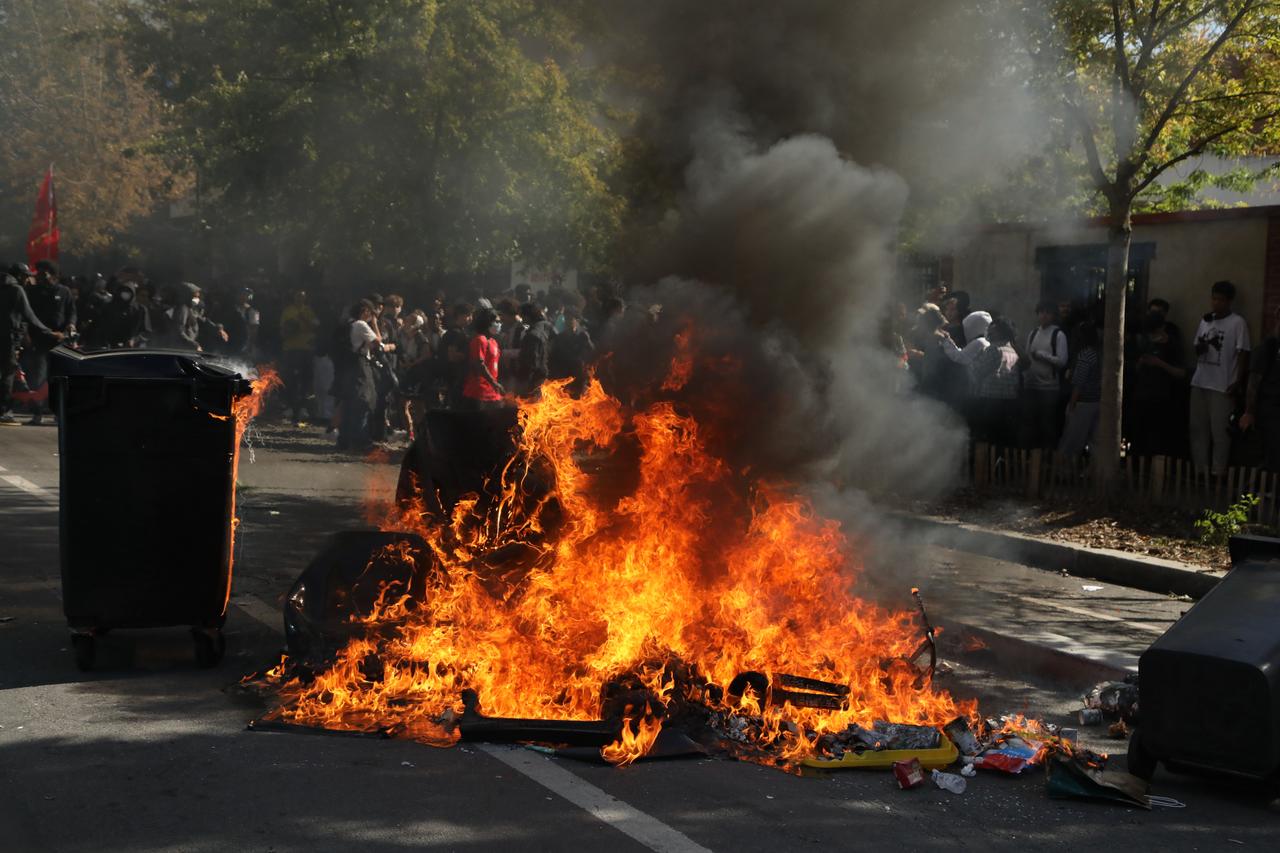
Student protests in Türkiye, 1 October 2026 - (Anadolu Ajansı)
The movement began in mid-September 2026 in a small number of schools. The first blockades occurred shortly after the start of the school year in the Bretagne region, at the Théodore-Monod High School near Rennes. Students raised concerns about “human and material problems” in their school. On 15 September, blockades also took place at the Queneau High School in Villeneuve-d’Ascq, Nord, and the Victor-Hugo High School in Caen, Calvados. The main cause of dissatisfaction among students in these schools was the intense class schedule.
The movement became prominent in Créteil in Val-de-Marne. On 17 September, following a teachers’ strike, students at the Saint-Exupéry High School in Créteil attempted to block the school entrance. USL regarded this blockade as the starting point of the national movement. A student from the première class, Cheick Sanogo (17), said, “The teachers explained the reasons for their dissatisfaction and we decided to join them.” Students argued they had been neglected by the Ministry of National Education and raised issues such as staff and resource shortages, overcrowded classrooms, and lack of desks in some classrooms.
Sanogo said, “The mobilization took on an unexpected dimension,” noting that the movement spread via TikTok, Snapchat, and Instagram. Some content was shared by young people, while other content was disseminated by online media outlets. Booska-P published an interview on 24 September featuring eight students from Saint-Exupéry High School. The interview reached 1.5 million views on TikTok. In the interview, students described feelings of abandonment as youth living in the suburbs and explained their decision to blockade their school. One student said, “I am inviting all high schools to do the same.”
Créteil Academy (rectorat) stated on 28 September that “social networks function as mobilization amplifiers and are subject to various forms of appropriation.”
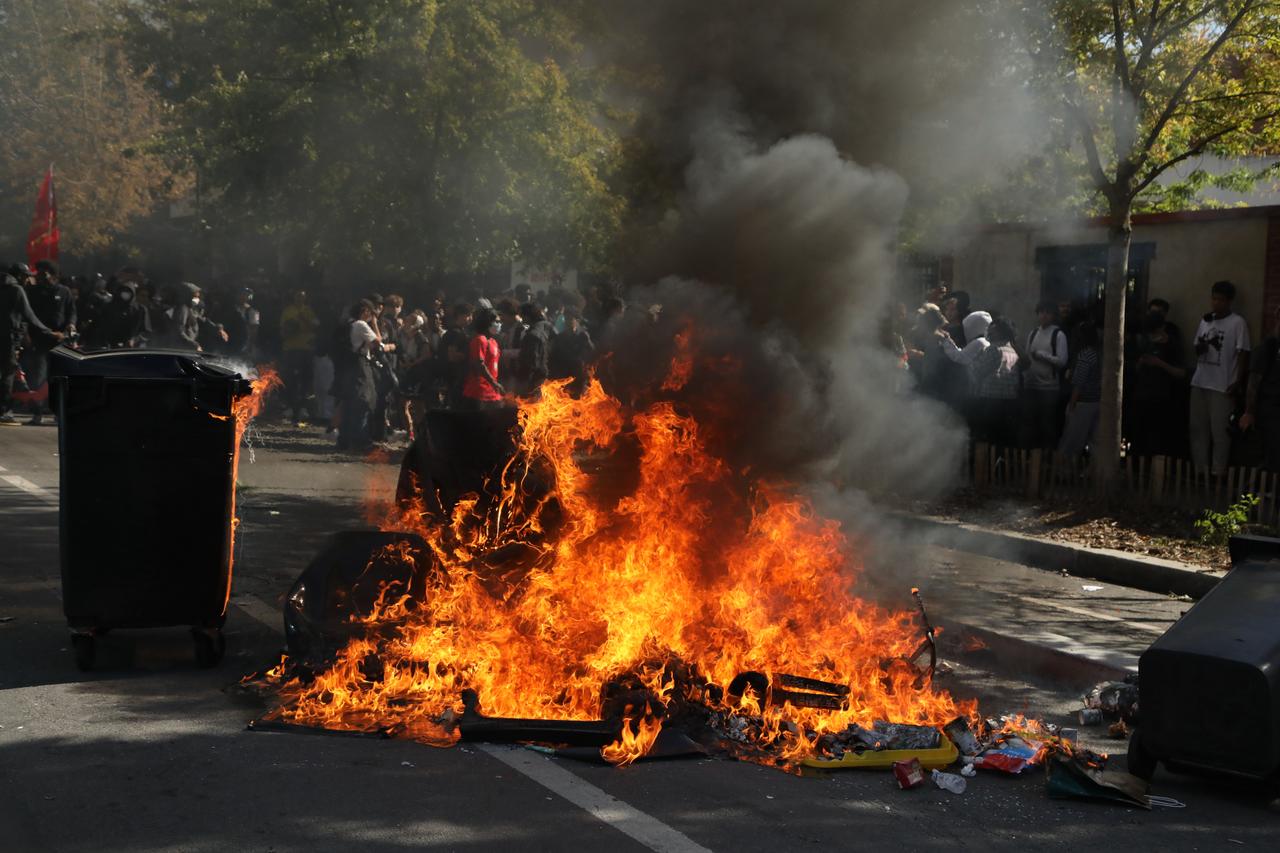
Student protests in Türkiye, 1 October 2026 - (Anadolu Ajansı)
On 21 September, members of the La France Insoumise (LFI) parliamentary group, Louis Boyard and Clémence Guetté, visited the school in Créteil. Boyard’s post received approximately 520,000 views. Sanogo said, “It pleases us that important figures, the elected representatives of the Republic, came to support us. We feel more heard.”
On 25 September, the Créteil Academy recorded approximately a dozen (grosse dizaine) high schools blocked, particularly in Seine-Saint-Denis and Val-de-Marne. The Versailles Academy reported “disruptions” at three schools in Essonne. On 28 September, Education Minister Édouard Geffray told RMC that about “ten” high schools were blocked. The Nice Academy also reported on the same day that four high schools in Alpes-Maritimes and Var were blocked, with damage concentrated in Nice. The Créteil Academy noted that the mobilization intensified throughout the week and the number of affected schools increased.
USL had previously called for a national blockade in 2025 on similar grounds. The organization reported that 170 institutions participated in that action.
USL, one of the main representative organizations of high school students, called for a national day of action on Tuesday, 29 September 2026. The organization’s statement highlighted teacher and staff shortages, “deteriorating high schools,” “intense class schedules and overcrowded classrooms,” and “stress caused by Parcoursup,” and also called on students to join demonstrations organized by public sector workers. USL claimed that approximately 400 of France’s 3,700 high schools were blocked. The Ministry of National Education reported by the end of the day that 416 institutions had been affected since early morning, with 338 still experiencing actions, 45 fully blocked, and 31 people injured between students and staff.
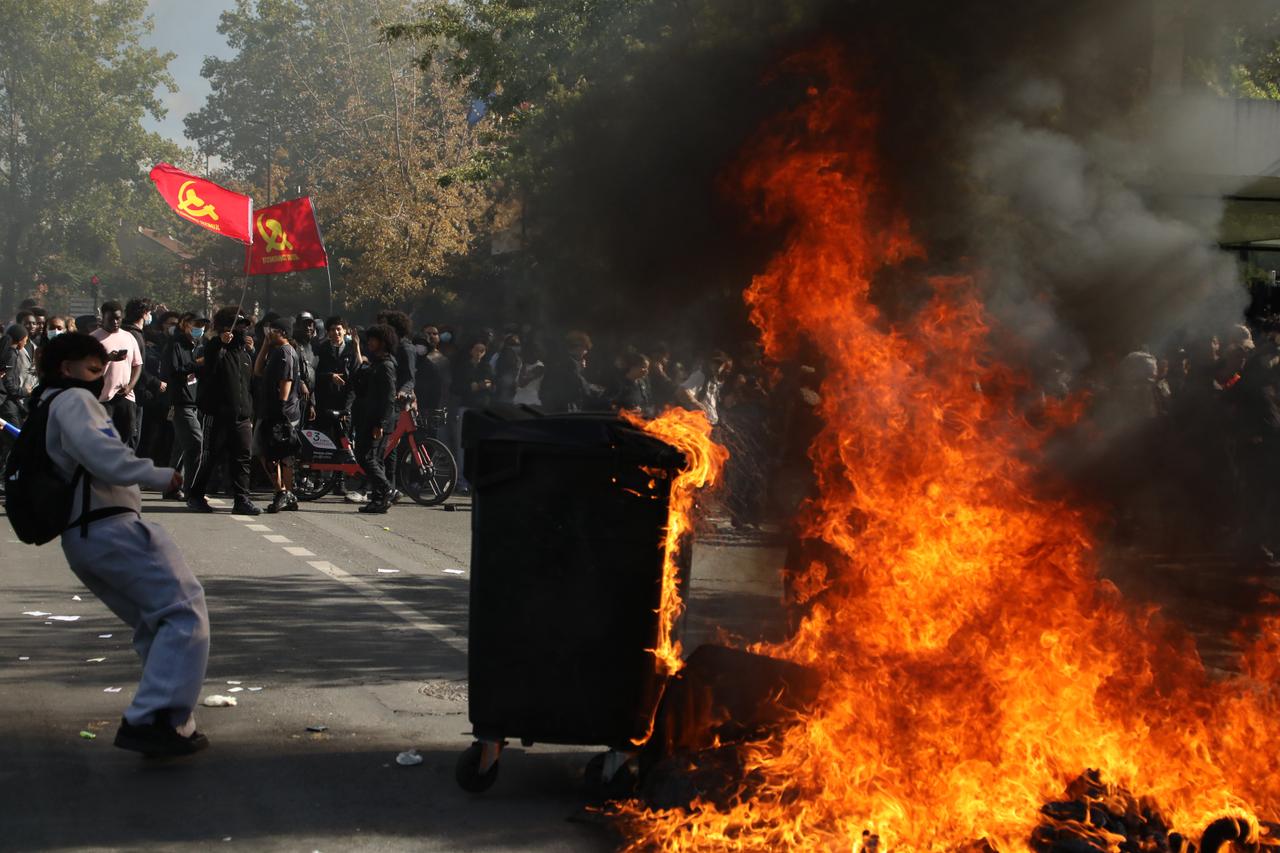
Student protests in Türkiye, 1 October 2026 - (Anadolu Ajansı)
Interior Minister Laurent Nuñez told BFM-TV that 440 people had been arrested. Nuñez noted that about two-thirds of the arrests resulted in detention, primarily for acts of vandalism and violence against security forces. He described the events as “still very serious incidents.”
The Île-de-France region reported that 75 high schools were affected, with “clashes and vandalism” occurring in 20 of them. Regional President Valérie Pécresse stated, “The cost of vandalism and looting in Île-de-France high schools is mounting and reached approximately one million euros this evening.” The Paris academy administration reported that in the early hours of the day, fewer than ten of the 90 high schools had experienced blockade attempts, with no injuries or major incidents reported.
In Seine-Saint-Denis, several hundred high school students gathered in front of the Paul-Éluard High School in Saint-Denis; fire crews extinguished a fire at the school entrance. In Rennes, about 100 students threw various objects at the Bréquigny High School. In Lille, acts of vandalism and object-throwing occurred near the César-Baggio High School, prompting police to use tear gas. The Nord Prefecture reported that four people had been arrested since early morning and that 12 high schools had been affected.
In Marseille, five institutions were blocked according to student organizations. In Bordeaux, the François-Magendie High School was blocked by several hundred students. In Lyon and its surroundings, educational activities were disrupted in many institutions, with classes canceled in Villeurbanne. The Rhône Prefecture reported that seven people had been arrested, fireworks and various objects had been thrown, and security forces responded with tear gas.
While classes were suspended all day in front of the Montebello High School in Lille, USL President Ryad Rani highlighted staff shortages in schools. Rani noted that 50 percent of educational assistant (AED) positions were vacant, there were no school nurses or social workers, and there were shortages of philosophy and French teachers in terminal classes. Rani stated that these issues prompted their call for a national action.
The school protests coincided with a nationwide public sector strike against the government’s budget plan. The government’s proposed budget anticipates 54 billion euros in cuts and savings. The government also proposed freezing the base salaries of civil servants in 2027, aiming to achieve approximately 2 billion euros in savings. Unions noted this would be the fourth consecutive annual pay freeze.
The Ministry of National Education announced that more than 11 percent of teachers and other school staff had joined the action. Nuñez stated that at least 200,000 people participated in public sector actions and that most demonstrations passed without incident. Caroline Cheve, General Secretary of the FSU education union federation, said, “They are in overcrowded classrooms. Sometimes there are not enough teachers due to staff shortages. They see the reality we have witnessed and they are angry.”
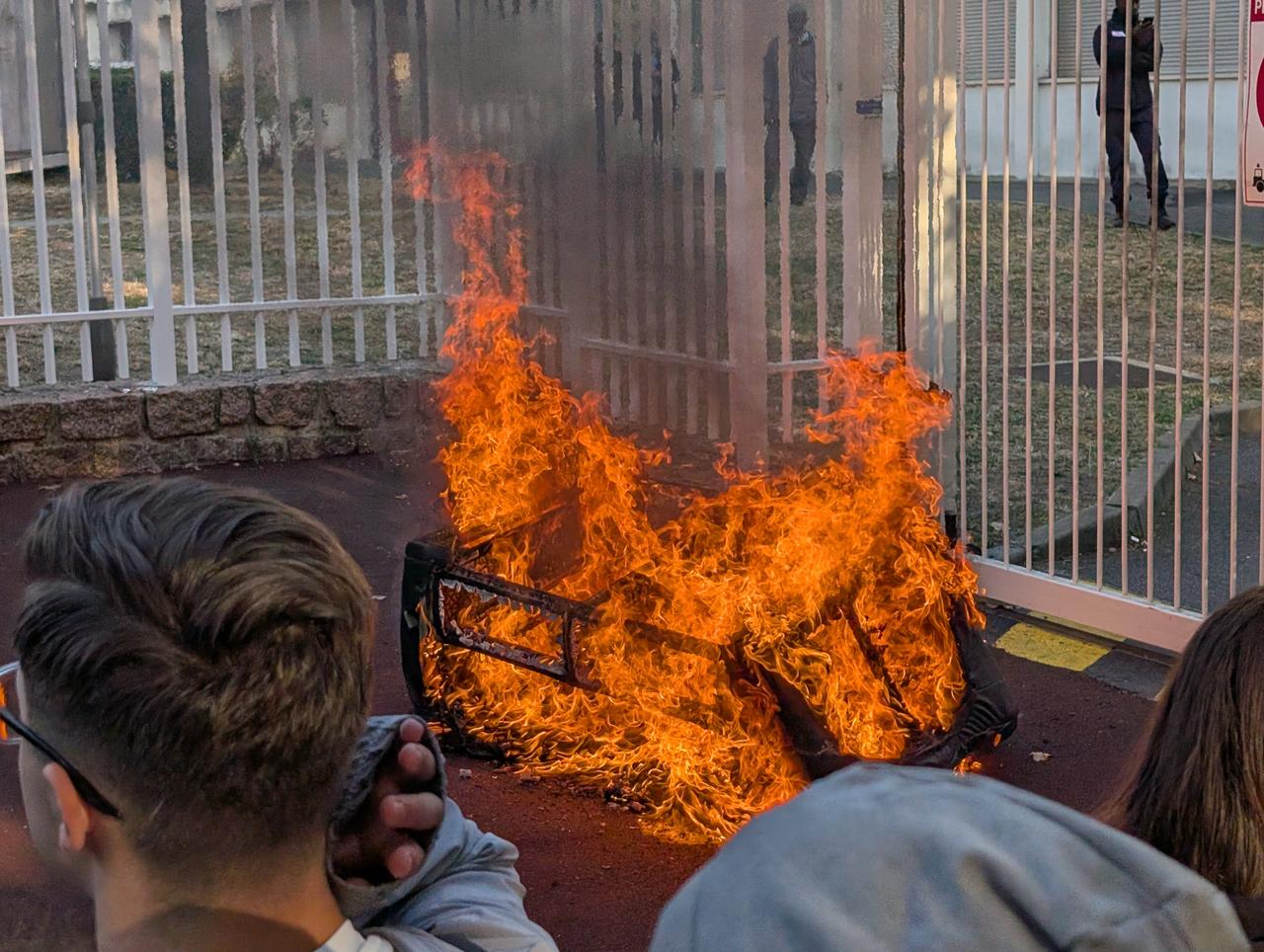
Student protests in Türkiye, 29 September 2026 - (Anadolu Ajansı)
On 30 September, USL and Union étudiante held a joint press conference in Paris. USL President Ryad Rani said, “We are calling for a second act (acte deux) tomorrow.” The two organizations stated their aim was to make 6 October a decisive day with general assemblies, university blockades, and demonstrations, demanding increased funding for high schools and universities.
On USL’s website, students found a tuto (guide) and a mobilization kit encouraging them to “block their high school and university.” According to the Île-de-France region, 75 high schools were affected on 30 September, with 36 experiencing violence, clashes, and vandalism. Although the movement’s impact on 30 September was somewhat reduced compared to the previous day, blockades continued in many institutions.
On Thursday, 1 October, students joined the high school movement to launch its “second act.” Union étudiante reported that 640 high schools were either blocked or affected by blockade attempts. Over 300 actions were recorded in the morning, and security sources reported more than 900 actions throughout the day. The Ministry of the Interior announced that 1,027 high schools were affected and that blockades occurred in 222. Education Minister Édouard Geffray stated on Thursday that “1,207 high schools had been disrupted or blocked.”
On the same day, blockades began at universities. Union étudiante reported that approximately 30 universities were affected. Higher Education Minister Philippe Baptiste noted that “approximately forty sites” experienced incidents. In France, the term site refers to a specific section of a university campus. Baptiste said, “There were a few blockades and very limited acts of vandalism. Thus, at this stage, there is no connection to what is happening in high schools.” He described the situation in high schools as “unbearable violence.” Baptiste also noted that university student unions had clearer and more measured demands. Fage, Union étudiante, and Unef were among the main student organizations calling for demonstrations and blockades.
In Île-de-France, the Grands Moulins campus of Paris Cité University, Paris 1 Panthéon-Sorbonne, and La Chapelle universities were affected. Protests also occurred at the Gustave-Eiffel University in Nanterre, Poitiers, and Seine-et-Marne. At the Paris 8 University in Saint-Denis, a group of university students erected barriers using trash bins and demanded increased funding for students.
On Place de la République in Paris, from 5:30 p.m. on 1 October, 150 to 200 students gathered under the flags of UNEF, LFI, CGT, and FO. Mohamed, a social sciences undergraduate at Paris Cité University, explained the reasons for university blockades. He stated that students and high school students were mobilizing against cuts to public services and advocating for education to be free, secular, and compulsory for all. He also noted that difficulties in covering basic living expenses were among the reasons for the protests.
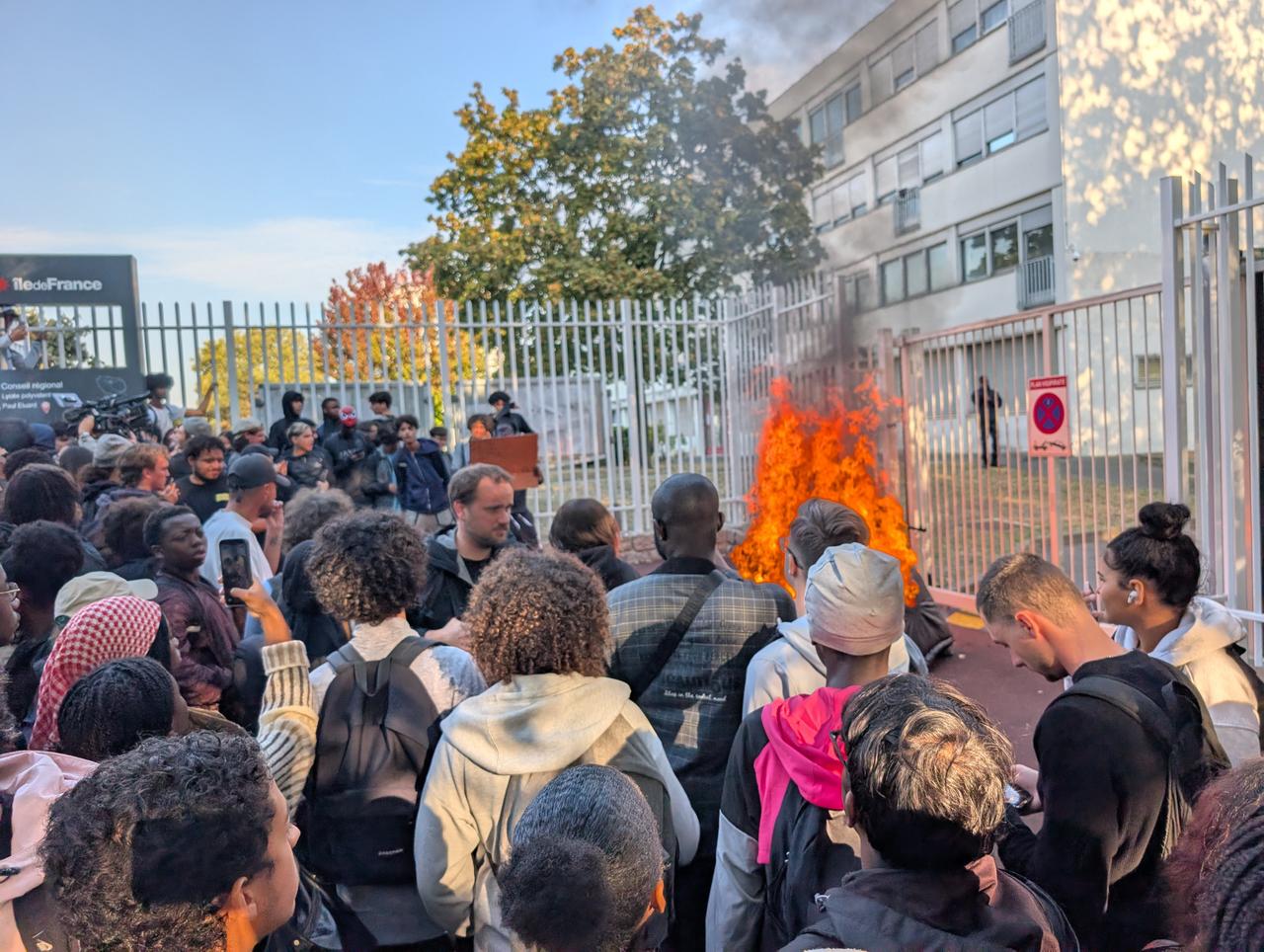
Student protests in Türkiye, 29 September 2026 - (Anadolu Ajansı)
On Friday, 2 October, actions continued. Union étudiante Spokesperson Sabrine Kharbach told France Inter that a “third act” (acte trois) would be organized on Tuesday, 6 October “nationwide.”
Justice Minister Gérald Darmanin expressed concern on RTL about the “urban violence” incidents, saying, “I am afraid of urban violence; it is possible that this evening, this weekend, on Tuesday.”
In the National Police zone (excluding Paris and its immediate surroundings), approximately 140 actions (blockades or blockade attempts) involving about 15,000 people were recorded on the morning of 2 October. At the same time, 175 people were arrested, approximately 50 of whom were detained.
The center of the protests includes overcrowded classrooms, teacher and staff shortages, failure to replace departing staff, dilapidated school buildings, and intense class schedules. Students also raised concerns about the pressure caused by Parcoursup and shortages of medical and social staff. Among the goals of the protests are hiring substitute teachers, increasing educational resources, and improving learning conditions.
USL President Ryad Rani told BFM TV that students were protesting against “general resource shortages,” classrooms with 32 to 35 students, and shortages of teachers and other staff. In an interview with Café pédagogique, Rani said, “Today’s problem in high schools is the absence of a French teacher during the terminal year, sometimes for several months.” He assessed this situation as the legacy of Emmanuel Macron’s two presidential terms.
On 2 October, Rani and Union étudiante Spokesperson Sabrine Kharbach announced on France Inter that their demands would be accepted by the Education Minister. Rani said, “We will go forward with our demands and see what we can achieve.” Rani also called for mass hiring of teachers and the development of an urgent plan to improve school infrastructure, demanding “proper conditions for students to study.”
Kharbach noted the existence of a “structural underfunding problem” in universities and schools. Kharbach pointed to dilapidated buildings in some high schools, the absence of teachers during terminal years, and “social and racial selection” at universities, stating that “the anger is real” and “legitimate.” Criticizing the government’s “disregard for young people,” Kharbach said, “I am tired of hearing about burning trash bins.”
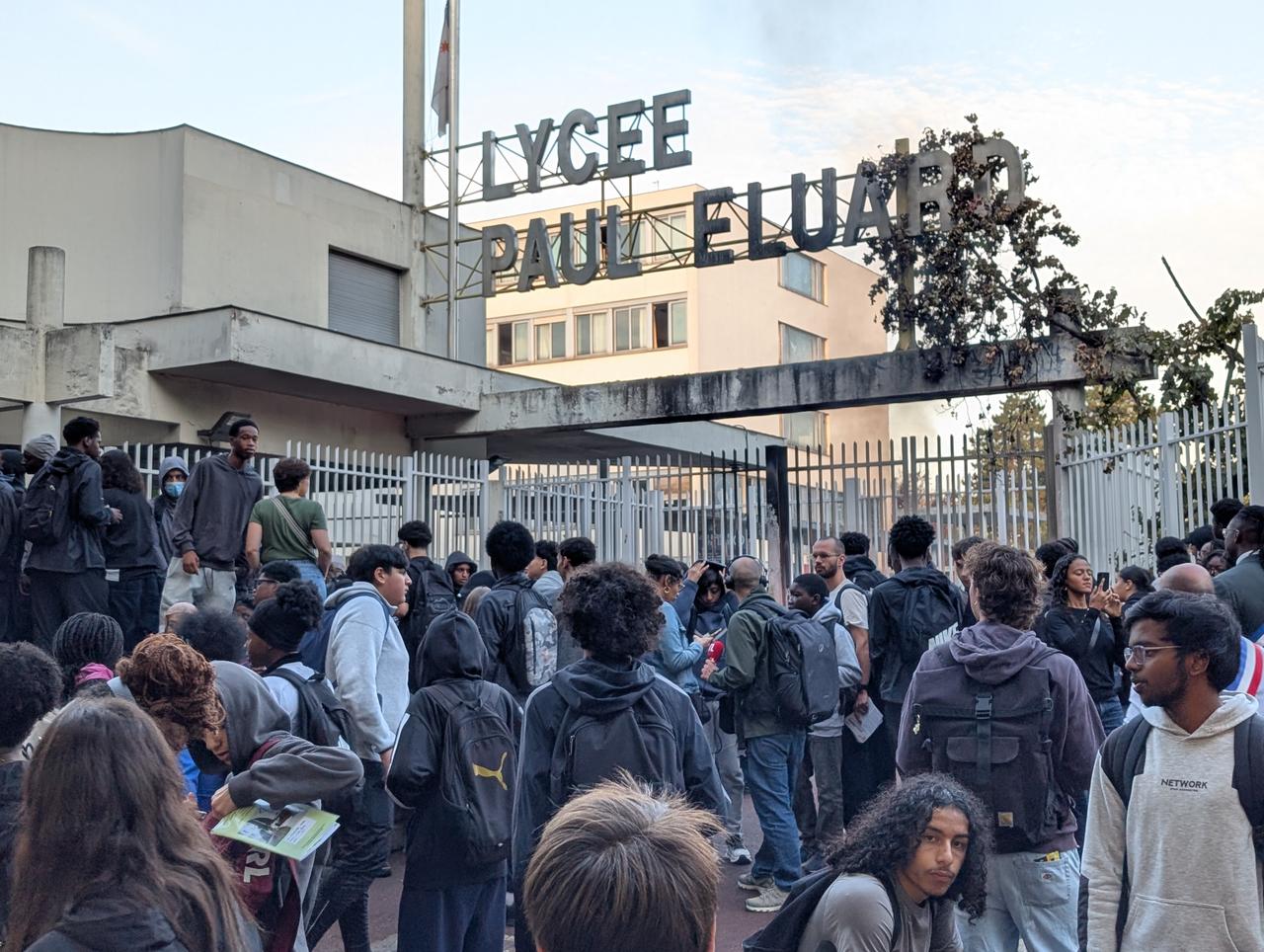
Student protests in Türkiye, 29 September 2026 - (Anadolu Ajansı)
Rani said, “The message from the blockades is that we are not being heard and are being dismissed”. Rani argued that the “only response” to young people trying to make their demands heard was “to be suppressed,” and described violence against education staff as a “counterproductive” phenomenon from the movement’s perspective.
Nathanaël Combary from the Renouveau Lycéen union described the events as “a sign and perfect example of the broken dialogue between high school students and educational institutions.” Combary said, “We have almost no contact with the Ministry of National Education.” While condemning violence as “absolutely unacceptable,” Combary argued that violent incidents had “completely discredited” the students’ demands. Combary also noted “some difficulties” with certain politicians and accused them of using the movement for electoral purposes.
Philémon Jouglet Marcus, federal coordinator of USL and a high school student, told BFMTV that “violence against school administrators is unacceptable”. Marcus said, “Most high schools have several entrances and blockades occur at only one entrance, which does not disrupt education.” He also argued that security measures around schools had partially contributed to the escalation of violent incidents.
Rani criticized the Interior and National Education ministries on 29 September for instructing police to use proportional force to maintain order in front of schools. Rani said, “We are talking about students aged 15 to 18, and the government’s only response is automatic and institutionalized repression. This is unacceptable,” and called on demonstrators to “remain peaceful”.
On 30 September, Rani expressed concern about the government’s “disregard,” “pressure,” and the “insane violence” directed at high school students who were being beaten and forced to the ground by security forces. Rani said he was open to meeting with the minister but emphasized that “we are not the ones who will beg for recognition” and added, “They could have accepted us immediately.”
Speaking to Café pédagogique, Rani said, “We supported the movement, we condemn police violence. In Tours, a high school student had his eye gouged out”. He described the events as “a violence that shocked us” and “unimaginable violence like the Yellow Vests of 2019.” Rani also claimed that the Interior and National Education ministers had, for the first time, issued a joint circular authorizing security forces to intervene around high schools, and added, “The Interior Minister is speaking more than the National Education Minister; he is giving the orders”.
Other statements by Rani included “They want to silence us”, “Violence is on their side”, and “No organization has instrumentalized us. High school students are fully aware of what they are doing”. Rani also called on demonstrators to “Stay calm, remain as dignified as our demands”.
Actions were largely carried out through blocking school entrances. At the François-Truffaut High School in Paris, students blocked access to the school entrance with trash bins and barriers. Hundreds of high school students gathered in front of the Claude-Monet High School, blocked the entrance with trash bins, carried banners, chanted slogans, and demanded improved educational conditions.
In Périgueux, in front of the Bertrand-de-Born High School, filtered barricades (barrages filtrants) were erected. In Strasbourg, students blocked tram lines using control barriers. In many schools, trash bins were set on fire; in the 11th and 19th districts of Paris, trash bins and metal barriers were burned in front of two separate high schools.
Education Minister Édouard Geffray told BFM TV on 28 September that “at the end of last week, National Education staff were injured and one student was burned by a mortar shell.” Prime Minister Sébastien Lecornu noted that a high school student had been injured on the hands and face with hydrochloric acid. The Alpes-Maritimes Regional Administration reported that 10 high school students had been arrested on Monday, 28 September, due to other violent incidents including arson, object-throwing, and injuries to two students.
On 29 September, bus stops and billboards near the César-Baggio High School in Lille were damaged, some trash bins were set on fire, and security forces were targeted with cobblestones, bottles, and various objects. Police responded with pepper spray. In Lyon, some individuals threw fireworks toward the Martinière-Duchère High School, and masked youths set fire to trash bins in front of the school. In Rennes, about 100 students threw various objects at the Bréquigny High School building. In Bordeaux, Nantes, and Marseille, clashes were reported; after some bus stops and billboards were damaged, police used tear gas.
In Seine-Saint-Denis, it was reported that riot police wielding shields intervened with batons against some students as crowds formed. Interior Minister Laurent Nuñez said at a press conference on 30 September that around blockades, “individuals with covered faces, dressed in black, armed with projectiles, mortars, and sometimes bottles of hydrochloric acid” were present. Nuñez also noted that there had been seven incidents in which hydrochloric acid had been thrown at police.
Education Minister Geffray announced on Tuesday, 29 September, that at least 10 teachers and several students had been injured, and one teacher had been beaten. In Lille, a teacher suffered shock after being attacked while trying to call firefighters to report a burning trash bin. At the Stéphane-Hessel High School in Toulouse, a school administrator was kicked by students; the incident was recorded by another student and shared on social media.
At the Balzac High School near Tours, a high school student was injured in the eyebrow and eye. The Indre-et-Loire Prefecture announced that an investigation had been launched.
On 30 September, a car was set on fire in front of the André-Cuzin High School in Caluire-et-Cuire near Lyon. A fire caused by a burning trash bin near the Gustave-Eiffel High School in Bordeaux damaged the facade of a building. At the Paul-Éluard High School in Saint-Denis, the blockade continued despite official classes being held.
During these days, videos emerged showing two teachers being attacked by students. The videos were condemned by the President of France, authorities, and teacher unions. It was also reported that part of the entrance gate of the Paul-Éluard High School in Saint-Denis had been torn down.
On 1 October, incidents intensified in many cities. According to Interior Ministry data, 1,027 high schools were affected, with blockades occurring in 222. Regional education authorities, prefectures, and union representatives reported that some school principals had been injured, harassed, or attacked during blockades.
In the morning, the entrance hall of the Nelson-Mandela High School in the city center was set on fire, and all staff and students were evacuated. It was reported that a trash bin had first caught fire, then flames spread to the school’s facade and entrance. The fire was brought under control by noon; the deputy principal described the incident as “intentional”. Firefighters examined the damage to the entrance hall.
It was announced that the Nelson-Mandela High School, built in 2014 at a cost of 52 million euros for the region, would be closed for at least one month due to the extent of the damage. Repairs were expected to take several weeks, and the school would remain closed until at least November. A fire also broke out at the Talensac High School in Nantes, where the glass entrance doors were destroyed by flames within minutes.
The Loire-Atlantique Prefecture reported that “violent actions” had occurred around high schools and that “violent individuals who joined high school students to cause damage” were present. The prefecture stated that nine institutions had been damaged, with fires set at three institutions in Nantes, including Nelson-Mandela High School, and that the damage was “significant.” It also urged parents to remind their children not to “associate with vandals.”
At the Victor-Hugo High School, a student attempted to pour gasoline on a trash bin, but the gasoline splashed onto two teachers. The prosecutor’s office confirmed that teachers had previously been attacked and “doused in gasoline”. Local authorities reported that the school principal and his deputy had also been exposed to gasoline, and a journalist from M6 channel was attacked at the same school.
In front of the Saint-Exupéry High School, hundreds of youths surrounded a fire truck arriving to extinguish a fire and forced firefighters to retreat from the vehicle. The truck was then set on fire, injuring one marine firefighter slightly. Marine firefighters recorded 45 fires in Marseille by 12:15 p.m.
The Marseille public transport operator RTM reported disruptions across its entire network. Two buses were damaged near the Floride High School, forcing drivers to abandon their vehicles hastily, and one driver was attacked. Videos on social media showed students setting a bus on fire. It was also reported that protesters had stopped some public buses, caused a fire on a tram line, and disrupted rail transport. The Bouches-du-Rhône Prefecture reported that 40 high schools were affected, with 18 of them fully blocked.
The prefect announced that tram services had been suspended to “restrict the movements of rioters and demonstrators”. In Bischheim, the facade of a school was damaged by fire and a car was burned. The Bas-Rhin prefect said, “Many of the vandals in Strasbourg this morning have no connection to the demands of the high school movement and many are not even enrolled in these institutions.”
The Bas-Rhin Prefecture banned the possession, transport, and use of fireworks for entertainment purposes throughout the department on 1 and 2 October. It also prohibited the unauthorized distribution, purchase, or transport of fuel in cans or bottles.
Paul-Éluard High School was closed on Thursday. According to Interior Minister Nuñez’s statement, a female police trainee in the 20th arrondissement of Paris was “followed, thrown to the ground, and attacked by several people”. National Assembly President Yaël Braun-Pivet criticized attacks on security forces and fires in high schools in a social media post.
Significant damage occurred in Haubourdin near Lille, and some public buildings were destroyed. Beaupré High School was closed on Thursday and Friday, and two nearby schools remained closed for the next two days. In Auchel, Pas-de-Calais, the principal of the Fernand-Degrugillier Vocational High School was injured by an object and hospitalized. It was also reported that the principal suffered a head injury from a stray firework.
The Béthune Prosecutor’s Office reported that a police officer was injured in the hand by a barrier being thrown, an investigation had been launched, and one suspect had been arrested. In Lille, it was reported that some youths in black hoodies had damaged a bus stop.
In Seine-Maritime, the principals of the Blaise-Pascal High School in Rouen and the Elisa-Lemonnier High School in Petit-Quevilly were injured and treated by medical teams. The academy administration described the incidents as “unacceptable and unimaginable acts of violence”. Videos were shared showing the entrance of a school in Rouen engulfed in flames, and another school in Le Havre suffered fire damage to its facade.
The Seine-Maritime Prefecture reported that serious violent incidents had occurred in “a significant number of high schools,” five people had been injured, schools had been entered, and damage had been done to buildings and equipment.
In Tours, tension arose between police and demonstrators in front of the Grandmont High School, and police used tear gas. In Bordeaux, the entrance of the François-Mauriac Technology High School was damaged by fire, and the school was announced to remain closed until at least the end of the week. Some bus stops in the city were also damaged.
In Grenoble, the public transport network was completely suspended. High schools in Clermont-Ferrand and Montluçon were blocked; blockades in Issoire and Chamalières had been ongoing since the beginning of the week. In Toulouse, clashes occurred between riot police and youths, and several trash bins were set on fire. In Aude, incidents included burning trash and pallets, throwing objects and fireworks; two police officers were slightly injured in Carcassonne.
The Calvados Prefecture announced that drone surveillance would be conducted from 7 p.m. in Caen, Hérouville-Saint-Clair, and Mondeville to monitor potential floods. The Auvergne-Rhône-Alpes Regional Prefect also announced authorization for drone use.
The RMC BFM Group described an attack on its BFM DICI reporter while covering high school blockades in Manosque as “unacceptable violence”.
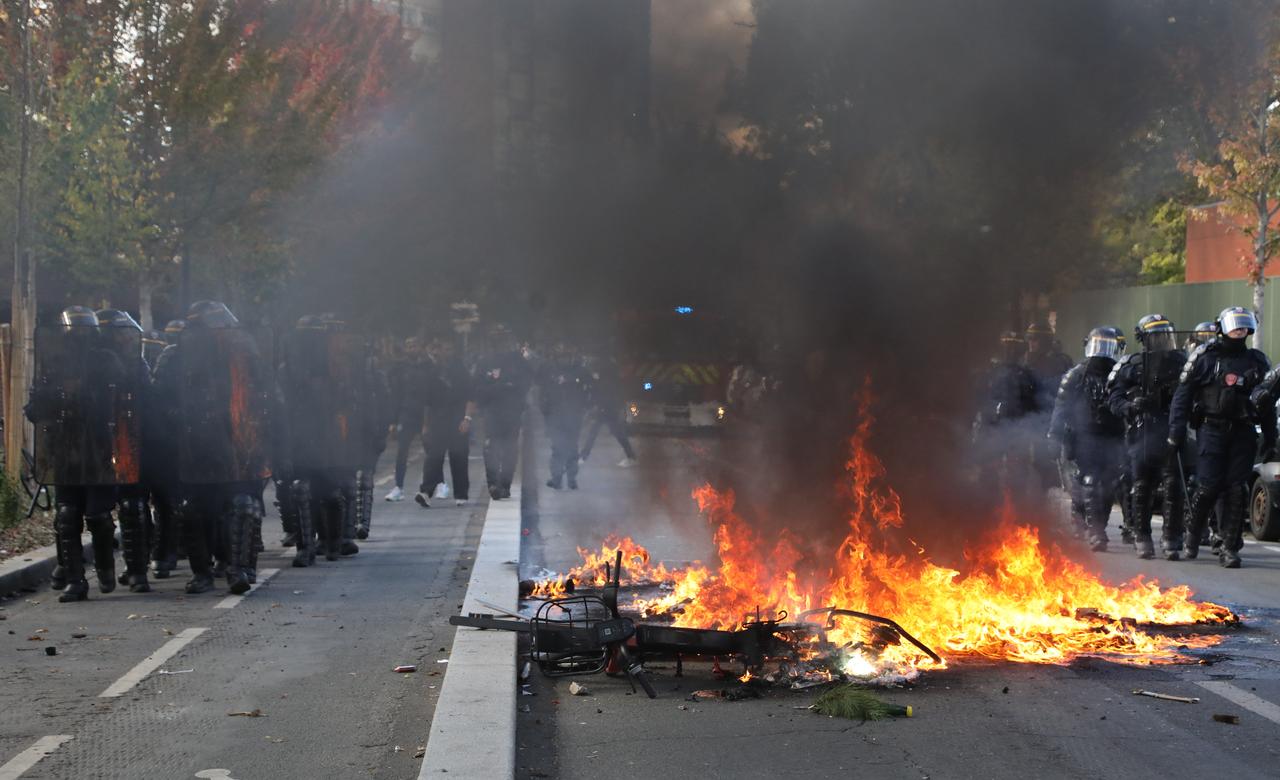
On the morning of 2 October, firefighters extinguished flames near the entrance of the Léonard-de-Vinci High School in the 15th arrondissement of Paris. At the Gaston-Bachelard Vocational High School in the 13th arrondissement, a fire caused by a burning bicycle and trash bin spread to the school’s entrance, blackening the area. The Paris Police Directorate announced that the fire had been extinguished around 7:55 a.m. The school’s entrance doors and stairs were damaged, and some windows were broken.
About 100 people gathered in front of the Montaigne High School in the 6th arrondissement of Paris, and police units monitored the area without intervening. A demonstration also took place in front of the Voltaire High School in the 11th arrondissement.
In Lyon, the Rhône Prefecture reported that on the morning of 2 October, 11 institutions were affected by isolated incidents, including trash bin fires and mortar attacks. The most serious incidents occurred around the Édouard-Herriot High School in the 6th arrondissement. About 100 youths erected barricades and threw various objects at police, who responded with tear gas. It was also reported that unidentified individuals threw Molotov cocktails at police. High school student demonstrators told journalists that they were “not in favor of destruction”.
In Villeurbanne, students, parents, and teachers at the Frédéric-Faÿs High School held a peaceful gathering.
Data on arrests and detentions were released by different authorities on different dates. On 29 September, the Ministry of National Education reported that educational activities had been disrupted in over 300 schools, 40 people had been detained, and 10 students and education staff had been injured. By the end of the day, Interior Minister Laurent Nuñez reported that 440 people had been arrested.
On 30 September, Nuñez reported that 625 people had been arrested and 83 police officers had been injured. The government reported that 202 people had been injured, including students, education staff, and security forces. A total of 1,065 arrests were made by security forces on Tuesday and Wednesday.
The Interior Ministry reported on 1 October that 1,949 people had been arrested, primarily for attacks on representatives of public authority, violence, and unlawful assembly (attroupement). On the same day, 305 police officers and gendarmes were injured. Nuñez described the events as “uncontrolled violence”.
The Justice Ministry reported that since Monday, 28 September, 1,793 people had been detained. Another report indicated that the Interior Ministry stated that since the start of the protests, approximately 3,000 high school students aged 15 to 18 had been detained, of whom 1,949 were detained solely on 1 October.
Justice Minister Gérald Darmanin told RTL on 2 October that approximately 2,000 people had been arrested since the start of the movement, with about two-thirds of them detained. In another statement, Darmanin said that since the start of the movement, there had been approximately 2,000 detentions, 90 percent of which involved minors, and that about one-third of the violent incidents on Thursday targeted individuals.
By the end of 29 September, the Ministry of National Education reported that 31 people had been injured among students and education staff. Interior Minister Laurent Nuñez reported that 48 security personnel had been injured on the same day.
On 30 September, Education Minister Édouard Geffray reported that since the start of the movement, 119 people had been injured, including 85 students and 34 National Education staff. Geffray described the situation as “something unprecedented in National Education” and noted that a young person had lost the use of part of his hand after being injured by a mortar explosion.
On 1 October, Geffray told France 2 that a total of 235 people had been injured among National Education staff and students. Of these, 65 were staff and 170 were students.
On 2 October, speaking to BFM TV, Geffray noted that 65 National Education staff members had been injured, 40 of whom were school principals. Geffray did not provide details on the nature of the injuries but reported that many principals had told him that the individuals confronting them during the violent incidents were not their own students.
Geffray also said, “Initially, there were no or very few high school students using violence. People present who were there to cause damage were outsiders”. Geffray argued that mortars could not be easily obtained from regular retail outlets and added, “Therefore, these individuals have a logistical network enabling them to carry out these acts”.
Police used tear gas, batons, and pepper spray during the actions. Students claimed that security forces resorted to heavy intervention methods, including tear gas and flash-ball guns. Interior Minister Laurent Nuñez stated that police interventions had been carried out “in a highly proportionate manner”.
Nuñez announced on 30 September that the Inspectorate General of the National Police (IGPN) had opened three investigations into injuries sustained by high school students in Saint-Ouen-l’Aumône, Sevran, and Tours. The Interior Ministry also announced the opening of an internal investigation into allegations of excessive force and violence against three students. On the night of 1 October, another investigation was opened into the events in Argenteuil. Nuñez said that some individuals had moved from school to school to incite violence.
The Interior and National Education ministers stated in a telegram issued on 28 September that “while the expression of high school students must be respected, violent actions are intolerable.” The telegram specified that police intervention in full blockades would be initiated only after consultation with the school principal.
On the night of 1 October, all prefects issued decisions banning demonstrations around high schools closed on 2 October. Paris Police Chief Patrice Faure also banned gatherings around 13 Paris high schools closed on 2 October. These schools are Martin-Nadaud (13th), Jean-Lurçat (13th), Pierre-Lescot (1st), Turquetil (11th), Caroline-Dorian (11th), Edgar-Quinet (9th), Elisa-Lemonnier (12th), Colbert (10th), Marcel-Desprez (11th), Simone-Weil (3rd), Henri-Bergson (19th), Chaptal (8th), and Drouant (15th).
Education Minister Édouard Geffray announced on the evening of 1 October on France 2 that slightly more than 400 institutions would be closed on 2 October. Reasons for closures included destruction of fire safety systems and staff being “directly and intentionally targeted”. Students were told they would follow lessons remotely.
Geffray said, “The first thing we must do is protect our students”. He added, “At the same time, we will continue dialogue, because the high school movement was initially legitimate.” Geffray requested in a social media post that school principals “provide remote lessons when vandalism or blockades prevent students from entering safely”.
The Prime Minister’s office stated that the increase in violent incidents had “made it nearly impossible to maintain the continuity of public education and had put staff and students at risk”.
Among the institutions closed or suspended were the Paul-Éluard High School in Saint-Denis, the Beaupré High School in Haubourdin, the François-Mauriac Technology High School in Bordeaux, and the Saint-Just High School in Lyon. The Paul-Éluard High School was closed on Thursday; the Beaupré High School was closed on Thursday and Friday. The François-Mauriac Technology High School was announced to remain closed until at least the end of the week, and the Saint-Just High School suspended classes on 1 October.
Le Havre Mayor Édouard Philippe announced that all high schools in the city would be closed on 2 October as a precaution. Auvergne-Rhône-Alpes Regional President Fabrice Pannekoucke said that 93 of the slightly more than 300 high schools in the region were closed on Friday. In contrast, the Var Prefecture announced that all high schools in the department would remain open on 2 October.
On 1 October, police reported that approximately 900 demonstrations, blockades, and related incidents continued nationwide, resulting in the closure of over 160 schools.
Prime Minister Sébastien Lecornu said in a social media post on 28 September, “Nothing justifies putting students, staff, or police at risk”. Lecornu stated in the same post that elected officials’ duty was to protect young people and call for calm. He also said, “Violence must be clearly condemned and perpetrators must be held accountable”.
Education Minister Édouard Geffray said on BFM TV the same day, “Continuing to call for blockades, as LFI elected officials do, is irresponsible”. Geffray added, “Demands may be legitimate, but neither blockades nor violence justify them”.
In another post, Geffray said, “Expressing demands is a right. Hitting, threatening, setting fires, or preventing others from attending class is not a right”. Geffray described calls to spread blockades as “irresponsible” and directed students to the High School Life Councils (conseils de la vie lycéenne), which he said they had “elected their peers to represent them legitimately.” Geffray stated he would not accept these structures being “distorted in service of political slogans.”
On 30 September, Geffray announced the creation of a “consultation platform” (plateforme de concertation) to collect students’ demands and concerns at the academy level. Geffray said, “I will organize a national presentation within a democratic framework to provide structured responses”. He stated that demands, numbers, regional distribution, and possible responses would be shared in a “transparent manner”. The platform was announced to be accessible by Monday or at the latest Tuesday morning.
On 2 October, Geffray defended the initiative, saying, “Our young people need to feel heard”, and noted that “very concrete responses” could be found at the local level.
President Emmanuel Macron, during a state visit to Madrid on 30 September, said, “I hear and understand the anxieties and anger sometimes felt by our youth. But none of these debates, none of these fears, justify violence”. Macron stated that political leaders could never legitimize “square violence” (une violence au carré). He also told journalists, “We have seen many politicians inciting students in front of schools; I consider this serious”.
Prime Minister Sébastien Lecornu chaired an inter-ministerial crisis meeting at the Ministry of the Interior (Place Beauvau) at 1:00 p.m. on 1 October. Lecornu requested that ministers cancel official trips.
The Prime Minister’s office announced after the meeting that a “violence tipping point” (bascule de violence) had occurred and that the movement had transformed into “urban violence”. The statement added, “This increase in violence makes it nearly impossible to maintain the continuity of public education and puts staff and students at risk”.
According to a transcript from a source close to the Prime Minister, the movement had reached a “breaking point” and had shifted from school blockades to urban violence. The transcript, based on intelligence services’ joint assessment, stated that the movement’s origin was “an operation organized by LFI (France Unbowed) and far-left representatives (proxys)”. The Prime Minister’s office, citing intelligence services, also stated that the movement’s “origin” lay with “LFI and far-left proxys”.
Geffray said on France 2 that evening, “Initially, ten days ago, this was a high school movement triggered by students’ demands”. Geffray mentioned problems such as school buildings, toilets, cafeterias, intense class schedules, and failure to replace teachers, adding, “All of this is audible [and] deserves to be heard”.
Geffray said, “Now there is a qualitative shift: a high school movement has been taken hostage by clearly extremist violent groups”. Geffray claimed that LFI had “fueled and claimed ownership” of the blockades and noted that “far-left small groups” had engaged in violent behavior. He added, “Clearly, there is an attack on public education and an attempt to destroy it; these people are firing at institutions, setting them on fire, and attacking staff”.
In a social media post on 1 October, Geffray condemned “the extremely serious violence committed since this morning” and said, “These go far beyond school issues. No demand justifies such actions”. Geffray stated that those involved in violent acts must be “prosecuted and punished”. He also said, “Violence cannot deprive our students of their fundamental right to education”.
Interior Minister Laurent Nuñez said in a social media post regarding the attack on a police trainee, “Attacking a security officer in this manner is intolerable”.
On 1 October, students in the Belgian city of Liège held demonstrations in front of many schools. Students at various secondary institutions in Liège carried out actions in the morning to prevent classes from starting. Numerous schools were affected, including Athénée de Fragnée, Athénée Royal de Montegnée, Institut Maria Goretti, Collège Saint-Barthélemy, Saint-Laurent, Saint-Sépulcre, and Institut Marie-Thérèse.
Tensions occasionally arose in front of the Institut Marie-Thérèse in Liège’s Hors-Château district, where a fire was lit in front of the school and a large police presence was deployed. Police reported that fireworks, eggs, apples, and barriers had been thrown at some schools and that material damage had occurred at various locations.
In the towns of Esneux, Visé, Angleur, and Soumagne, demonstrations were also held at some schools. In Visé, Angleur, and Soumagne, students returned to school shortly afterward; in other institutions, watch lines were established to prevent students and teachers from entering. Police and local sources stated that the demonstrations were a spontaneous movement initiated by students, not by teachers or unions.
Police in Liège announced that six people had been detained and investigations were launched. Authorities announced that education would be suspended the next day in Liège. Local media reported that all schools in Liège would be closed on 2 October, but the municipal spokesperson did not confirm this at the time. Another statement from police indicated that protests and material damage had occurred at some schools in Liège.
Valonia-Brussels Federation Education Minister Valérie Glatigny assessed that students had been “used as a tool” and emphasized that measures taken in education would not reduce support provided to students. Glatigny stated that everyone has the right to object to decisions but that demonstrations must not turn violent, saying, “Preventing students from entering classrooms, throwing objects at police, and carrying out vandalism under pressure from outsiders is unacceptable”.
Al Jazeera. "What’s Behind French Student Protests That Turned Violent?" Accessed October 2, 2026.
Al Jazeera. “School Protests Spread As Fires, Blockades Deepen Unrest In France.” Accessed October 2, 2026.https://www.aljazeera.com/news/2026/10/1/school-protests-spread-as-fires-blockades-deepen-unrest-in-france
Anadolu Ajansı. “Fransa'da Eğitim Koşullarının İyileşmesini Talep Eden Liselilerin Düzenlediği Eylemlerde 10 Kişi Yaralandı.” Accessed October 2, 2026.
Anadolu Ajansı. “Fransa'da Eğitim Koşullarının İyileştirilmesini İsteyen Liselilerin Eylemlerinde 400'den Fazla Gözaltı.” Accessed October 2, 2026.https://www.aa.com.tr/tr/dunya/fransada-egitim-kosullarinin-iyilestirilmesini-isteyen-liselilerin-eylemlerinde-400-den-fazla-gozalti/4073589
Anadolu Ajansı. “Fransa'da Şiddet Olaylarının Da Yaşandığı Lise Eylemleri Yayılıyor.” Accessed October 2, 2026.https://www.aa.com.tr/tr/dunya/fransada-siddet-olaylarinin-da-yasandigi-lise-eylemleri-yayiliyor/4074694
Anadolu Ajansı. “Fransa'daki Lise Eylemleri Kapsamında 1793 Kişi Gözaltına Alındı.” Accessed October 2, 2026.https://www.aa.com.tr/tr/dunya/fransadaki-lise-eylemleri-kapsaminda-1793-kisi-gozaltina-alindi/4075717
Anadolu Ajansı. “Fransa'daki Lise Öğrencilerinin Eylemleri Belçika'ya Sıçradı.” Accessed October 2, 2026.https://www.aa.com.tr/tr/dunya/fransadaki-lise-ogrencilerinin-eylemleri-belcikaya-sicradi/4074833
BBC Newsround. “Why Are Students In France Protesting?” Accessed October 2, 2026.https://www.bbc.co.uk/newsround/articles/cvgl7ln5j1n7o
BBC Newsround. “Why Are Students In France Protesting?” Accessed October 2, 2026.https://www.bbc.co.uk/newsround/articles/cvgl7ln5j1n7o
BBC. “Dozens Hurt And Hundreds Arrested In Wave Of French School Protests.” Accessed October 2, 2026.https://www.bbc.com/news/articles/c862epne7glyo
BBC. “Fires Break Out At French Schools As Students Protest Nationwide.” Accessed October 2, 2026.https://www.bbc.com/news/articles/c6d080d1e3l4o
BFM TV. “Lycées Bloqués : Le Ministre De L'Éducation Nationale Annonce ‘Un Peu Plus De 400 Établissements’ Fermés Demain.” Accessed October 2, 2026.https://www.bfmtv.com/societe/education/direct-blocus-des-lycees-le-mouvement-se-poursuit-partout-en-france-et-s-etend-aux-universites-des-tensions-dans-plusieurs-villes_LN-202610010305.html
CNN. "French High School Students Set Fires, Clash With Police In Anger Over School Conditions." Accessed October 2, 2026.https://edition.cnn.com/2026/10/01/europe/france-protests-high-schools-violence-intl
Café Pédagogique. “Lycéens Mobilisés : Ce Qu’ils Disent, Ce Qu’on Leur Répond.” Accessed October 2, 2026.https://www.cafepedagogique.net/2026/10/01/lyceens-mobilises-ce-quils-disent-ce-quon-leur-repond/
Daily Sabah. "France Closes 400 Schools As Education Protests Spiral Into Unrest." Accessed October 2, 2026.https://www.dailysabah.com/world/europe/france-closes-400-schools-as-education-protests-spiral-into-unrest
France 24. “French Student Protests Fuel Political Clash Ahead Of 2027 Presidential Vote.” Accessed October 2, 2026.
France 24. “Hundreds Of French Schools Remain Closed As Student Protests Turn Violent.” France 24. Accessed October 2, 2026.
France 24. “Lycées Bloqués : Le Mouvement Se Poursuit, 624 Interpellations Depuis Le Début De La Mobilisation.” Accessed October 2, 2026.
Franceinfo. “Revendications Locales, Vidéos Virales, Soutien De LFI… Comment Le Blocage De Quelques Lycées S'est Transformé En Un Mouvement D'ampleur.” Accessed October 2, 2026.
Franceinfo. “‘Surenchère Irresponsable’ D'un Côté, ‘Répression’ De La Jeunesse De L'autre… Le Gouvernement Et Les Élus LFI S'écharpent Sur Le Mouvement De Blocus Dans Les Lycées.” Accessed October 2, 2026.
Le Monde. “Blocages Des Lycées : 338 Établissements Concernés Mardi, Dont 45 Encore Bloqués, Selon Le Ministère De L’Éducation Nationale.” Accessed October 2, 2026.
Le Monde. “En Direct, Blocages De Lycées : 40 Proviseurs Ont Été Blessés Depuis Le Début Du Mouvement, Affirme Edouard Geffray.” Accessed October 2, 2026.
Le Monde. “French High School Protests Spread, Hundreds Of Arrests Amid Unrest.” Accessed October 2, 2026.https://www.lemonde.fr/en/france/article/2026/10/02/french-high-school-protests-spread-hundreds-of-arrests-amid-unrest_6758166_7.html
RFI. “DIRECT – Nouvelle Journée De Blocage Des Lycées En France : Plus De 400 Établissements Fermés Ce Vendredi.” Accessed October 2, 2026.
Radio France. “Blocages Des Lycées Et Des Universités : Le Point Sur Les Mobilisations.” Accessed October 2, 2026.https://www.radiofrance.fr/franceinfo/podcasts/les-documents-franceinfo/blocages-des-lycees-et-des-universites-le-point-sur-les-mobilisations-6829041
Reuters. "Attackers Douse Teacher With Petrol, Student Protests Rage Across France." Accessed October 2, 2026.https://www.reuters.com/world/europe/attackers-douse-teacher-petrol-student-protests-rage-across-france-2026-10-01/
Reuters. “About 400 French Schools Closed As Some Student Protests Turn Violent.” Accessed October 2, 2026.https://www.reuters.com/world/about-400-french-schools-closed-some-student-protests-turn-violent-2026-10-02/
Reuters. “Crisis Meeting Told France's Hardleft Party Behind School Protests, Says Source.” Accessed October 2, 2026.
TF1 Info. “EN DIRECT - Blocage Des Lycées : 140 ‘Actions’ Recensées En France Ce Vendredi Matin, Hors Paris Et Petite Couronne.” Accessed October 2, 2026.
The Guardian. “France School Protests Escalate Into ‘Urban Violence’ As PM Calls Crisis Cabinet Meeting.” Accessed October 2, 2026.https://www.theguardian.com/world/2026/oct/01/france-school-protests-escalate-pm-crisis-cabinet-meeting

In France, blockades that began in mid-September 2026 with a small number of high schools quickly spread nationwide due to overcrowded classrooms teacher shortages and deteriorating school buildings. The Ministry of the Interior announced on 1 October that 1,027 high schools had been affected by the actions and that 1,949 people had been arrested on the same day. Following a crisis meeting chaired by Prime Minister Sébastien Lecornu the government described the events as urban violence. On 2 October Education Minister Édouard Geffray announced that over 400 institutions would remain closed and that education would continue remotely. Union syndicale lycéenne and Union étudiante called for a new day of action on 6 October.
No Discussion Added Yet
Start discussion for "2026 France Student Protests" article
October 2, 2026
Origins and Spread
October 2, 2026
29 September National Day of Action
October 2, 2026
Public Sector Strike and Budget Context
October 2, 2026
30 September: Second Call to Action
October 2, 2026
1 October: Spread to Universities
October 2, 2026
2 October and Subsequent Action Days
October 2, 2026
Demands and Student Statements
October 2, 2026
Forms of Action and Violent Incidents
October 2, 2026
Arrests and Injuries
October 2, 2026
Government and Official Statements
October 2, 2026
Spread Beyond France