
 Recently Added:
This article was automatically translated from the original Turkish version.
51st G7 Summit (2025)
History | 16–17 June 2025 | ||||||||
|---|---|---|---|---|---|---|---|---|---|
Meeting Place | Alberta, Canada | ||||||||
Host Country | Canada | ||||||||
G7 Member Countries | United States United Kingdom Japan Italy Germany France Canada | ||||||||
The 51st G7 Summit was an international leaders’ meeting held in Kananaskis, Alberta, Canada, on 16–17 June 2025. The summit brought together representatives from Canada, France, Germany, Italy, Japan, the United Kingdom, the United States and the European Union to discuss economic coordination, security policies and diplomatic cooperation.
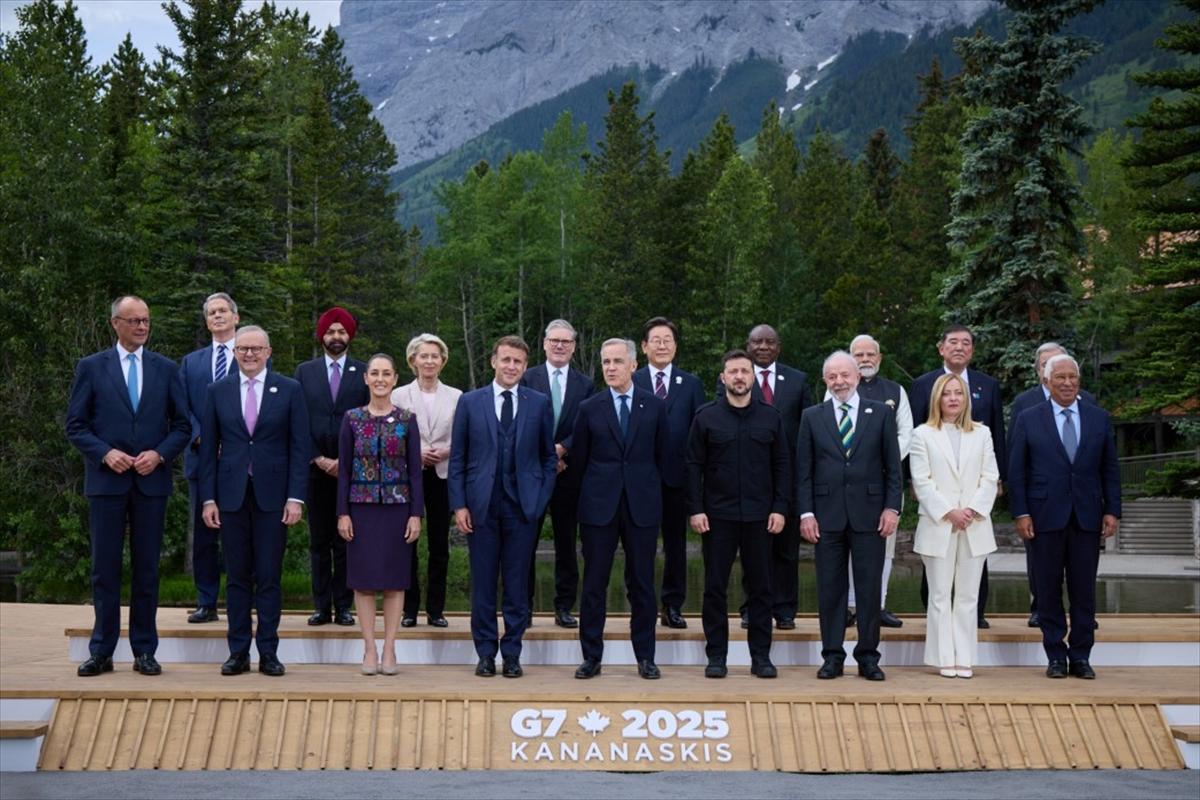
Leaders of participating states at the 51st G7 Summit, 17 June 2025 – (Anadolu Agency)
Leaders from Australia, Brazil, Indonesia, South Africa, South Korea, India, Mexico, Saudi Arabia and Ukraine also attended as invited guests. The summit was chaired by Canadian Prime Minister Mark Carney during Canada’s presidency.
The first working session of the summit focused on the overall state of the global economy. Discussions covered growth rates, inflation, trade flows and financial stability. The meeting emphasized the need for international economic coordination based on current projections from the World Bank and the International Monetary Fund. Issues relating to exchange rate stability and the impact of interest rate policies were raised in connection with the United States’ role as the global reserve currency issuer.
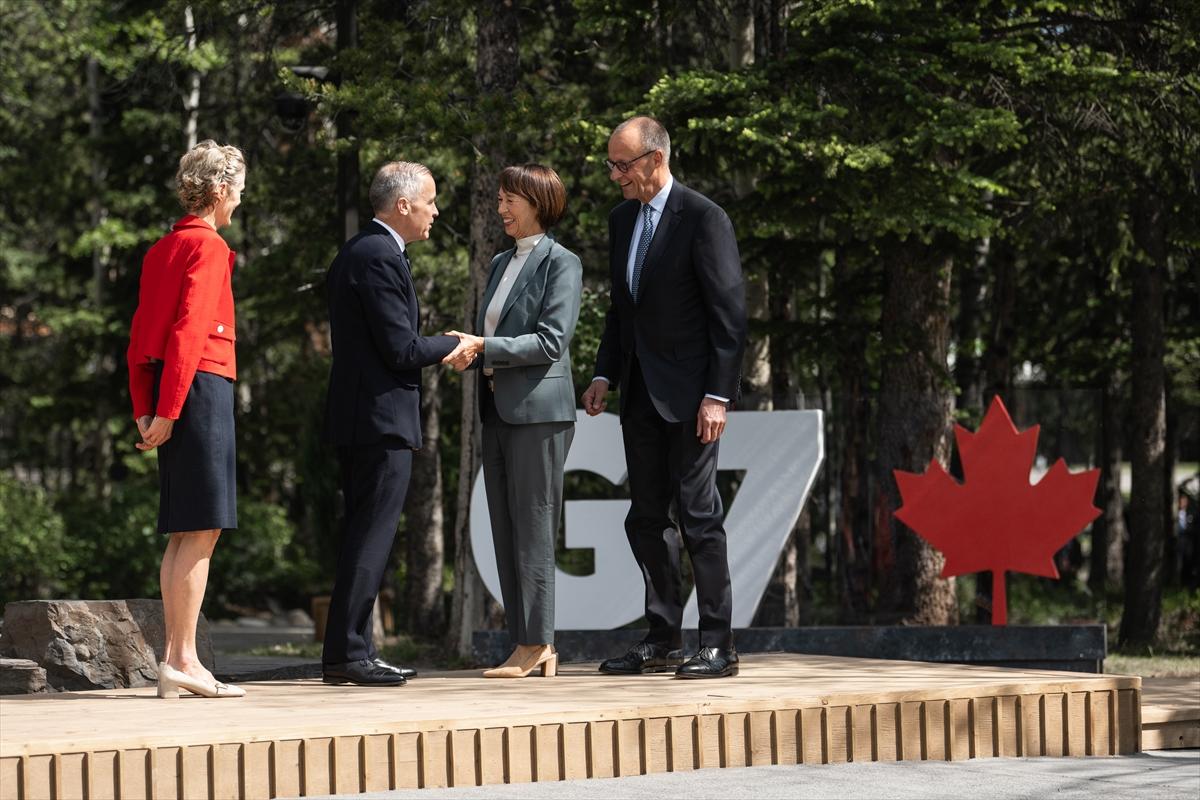
World leaders gathered for the G7 Summit in Canada, 16 June 2025 – (Anadolu Agency)
The second thematic focus was on the security of strategic resources. Particular attention was given to diversifying supply chains for critical minerals, ensuring supply security and developing joint investment strategies. The secure expansion of digital infrastructure, principles governing the use of artificial intelligence technologies, cooperation in quantum computing and the establishment of international standards were also discussed. Canada organized dedicated sessions under this theme to lay the groundwork for collaborative initiatives.
A dedicated working group on artificial intelligence was established to examine technological investments, data governance and regulatory processes. According to statistics released prior to the summit, G7 countries account for over 80 percent of global private investment in artificial intelligence. Models for cooperation were proposed to bridge the United States’ emphasis on commercial innovation and Europe’s regulatory-focused approach.
The G7 summit began amid escalating tensions between Israel and Iran. Leaders assessed the impact of military developments in the region on global energy markets and political stability. European leaders called for the revival of diplomatic efforts, while discussions were held on the United States’ policy toward Iran and its stance toward Israel. The joint statement underscored the necessity of preventing Iran from acquiring nuclear weapons.
The war in Ukraine was addressed in the context of energy security, reconstruction efforts and international sanctions. Canada and several EU countries advocated for increased pressure on Russia, while the United States called for renewed diplomatic engagement. No joint statement specifically on Ukraine was issued at the conclusion of the summit; assessments were conveyed through the presidency summary and bilateral meetings.
G7 members discussed common frameworks for managing migration and combating international human trafficking networks. Dynamics along the Canada-Mexico-United States border and illegal migration routes in Europe were central to the debate. The summit emphasized the need to support global development policies addressing the root causes of migration.
Energy supply and price stability were discussed under the theme of energy security. Investments in renewable energy, LNG infrastructure, hydrogen technologies and nuclear options were evaluated. Canada’s severe forest fires in 2023 and the heightened fire risk during the summer of 2025 highlighted the importance of environmental cooperation. In this context, it was proposed that climate risks be integrated into disaster response policies.
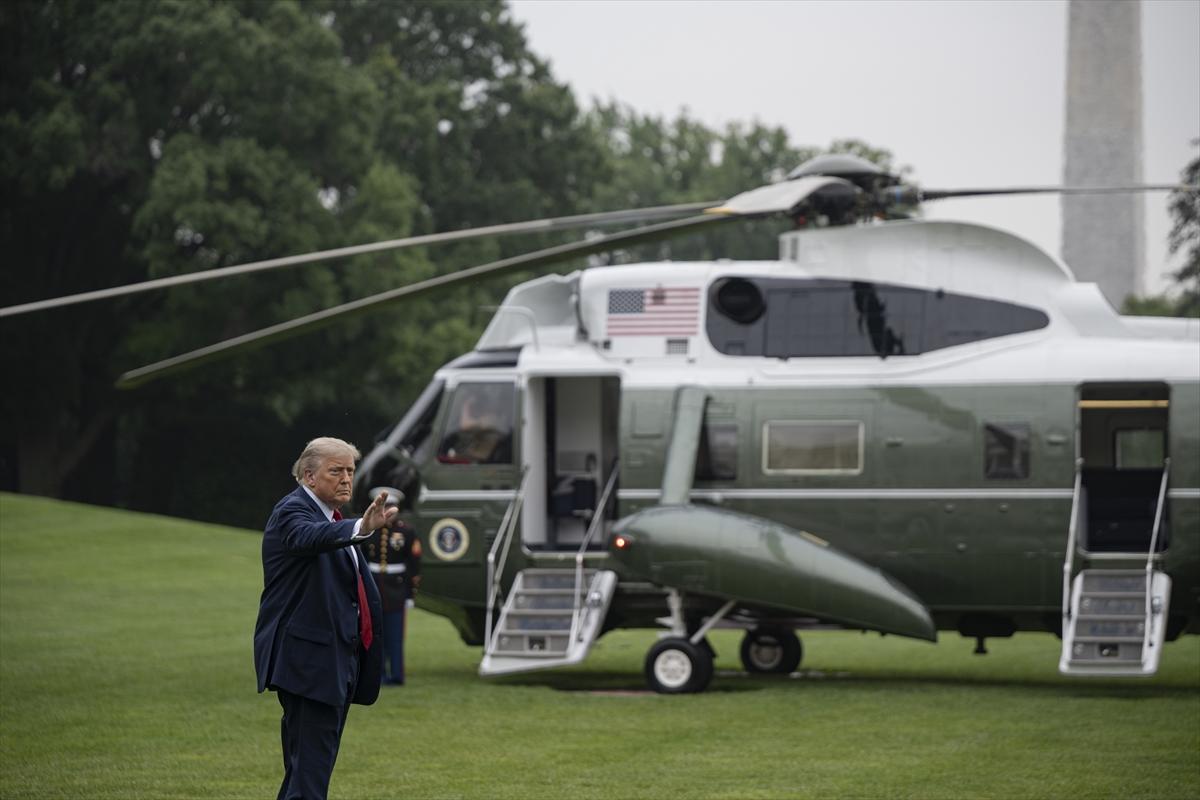
U.S. President Donald Trump departs from the White House in Washington DC for Calgary, Canada – 16 June 2025 – (Anadolu Agency)
Leaders from Canada, the United States, the United Kingdom, France, Germany, Italy and Japan attended the summit. Canada was represented by Prime Minister Mark Carney, the United States by President Donald Trump, the United Kingdom by Prime Minister Keir Starmer, France by President Emmanuel Macron, Germany by Chancellor Friedrich Merz, Italy by Prime Minister Giorgia Meloni and Japan by Prime Minister Shigeru Ishiba. The summit was chaired by Mark Carney.
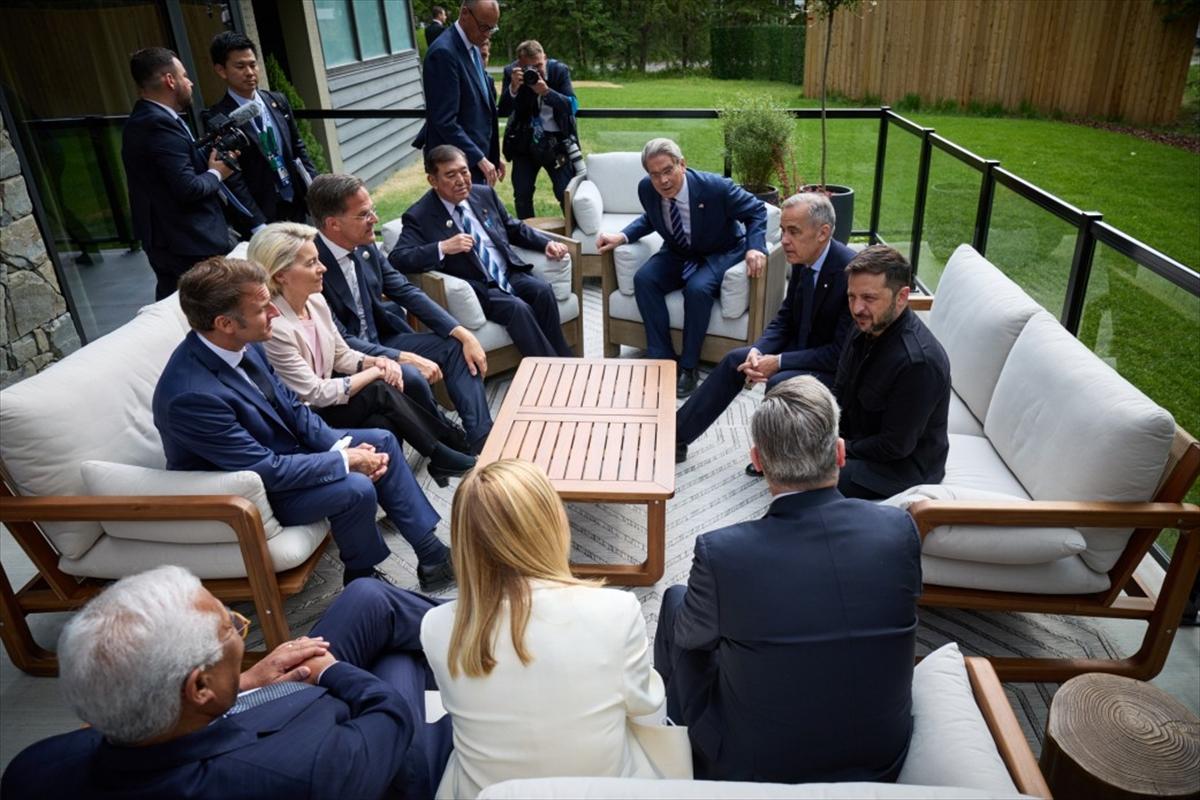
G7 Leaders Meeting, 17 June 2025 – (Anadolu Agency)
The European Union participated as a political partner in the G7 summit. It was represented by European Council President António Costa and European Commission President Ursula von der Leyen. EU representatives took full part in all working sessions and endorsed joint statements.
Invited countries outside the G7 included India, Mexico, Brazil, South Africa, South Korea, Australia, Indonesia, Saudi Arabia and Ukraine. Participating leaders included Indian Prime Minister Narendra Modi, Brazilian President Luiz Inácio Lula da Silva, Mexican President Claudia Sheinbaum, South African President Cyril Ramaphosa, South Korean President Yoon Suk-yeol, Indonesian President Joko Widodo, Saudi Crown Prince Mohammed bin Salman and Ukrainian President Volodymyr Zelensky.
The G7+ sessions, which included the invited countries, facilitated multilateral discussions on energy security, Ukraine, migration and global development. These sessions also provided opportunities for informal contacts and bilateral meetings outside the formal summit format.
Al Jazeera. “G7 Summit: Who Is Attending and What’s on the Agenda?” Al Jazeera. Accessed June 16, 2025. https://www.aljazeera.com/news/2025/6/15/g7-summit-who-is-attending-and-whats-on-the-agenda
Anadolu Ajansı. "Almanya: G7’de İran-İsrail İhtilafında Diplomatik Çözüm İçin Atılabilecek Adımları Görüşeceğiz." Accessed June 17, 2025. https://www.aa.com.tr/tr/dunya/almanya-g7-de-iran-israil-ihtilafinda-diplomatik-cozum-icin-atilabilecek-adimlari-gorusecegiz/3600769
Anadolu Ajansı. "Carney: Trump Use G7 Summit to Discuss Trade Pressures." Anadolu Ajansı (English). Accessed June 17, 2025. https://www.aa.com.tr/en/americas/carney-trump-use-g7-summit-to-discuss-trade-pressures/3601126
Anadolu Ajansı. "Trump, İsrail-İran Gerilimi Nedeniyle Kanada’daki G7 Zirvesinden Erken Dönüyor." Accessed June 17, 2025. https://www.aa.com.tr/tr/dunya/trump-israil-iran-gerilimi-nedeniyle-kanadadaki-g7-zirvesinden-erken-donuyor/3601131
Atlantic Council. "Seven Charts That Will Define Canada’s G7 Summit." Atlantic Council. Accessed June 16, 2025. https://www.atlanticcouncil.org/blogs/new-atlanticist/seven-charts-that-will-define-canadas-g7-summit/
BBC Pidgin. “G7 summit: Who dey attend and wetin to expect dis year.” BBC Pidgin. Accessed June 17, 2025. https://www.bbc.com/pidgin/articles/cwygwv3zn8xo
BBC. "G7 is a big moment for Carney. Here are five things to watch." BBC News. Accessed June 16, 2025. https://www.bbc.com/news/articles/clyg07jj17eo
Council of the European Union. “G7 Summit, 16–17 June 2025.” European Council - Council of the European Union. Accessed June 17, 2025. https://www.consilium.europa.eu/en/meetings/international-summit/2025/06/16-17/
Council of the European Union. “G7 summit, Kananaskis, Alberta, Canada, 16-17 June 2025.” Consilium.europa.eu. Accessed June 16, 2025. https://www.consilium.europa.eu/en/meetings/international-summit/2025/06/16-17/
Reuters. "G7 Leaders Meet in Canada, Hoping to Avoid Trump Clash." Accessed June 16, 2025. https://www.reuters.com/world/china/g7-leaders-meet-canada-hoping-avoid-trump-clash-2025-06-15/
Reuters. “Trump leaves G7 summit early due to Middle East situation.” Accessed June 17, 2025. https://www.reuters.com/world/china/seeking-unity-g7-meets-amid-escalating-ukraine-middle-east-conflicts-2025-06-16/
TRT Haber. “Trump ile Macron Arasında G7 Gerilimi: ‘Emmanuel Her Zaman Yanılıyor.’” Accessed June 17, 2025. https://www.trthaber.com/haber/dunya/trump-ile-macron-arasinda-g7-gerilimi-emmanuel-her-zaman-yaniliyor-910813.html
The Guardian. “European leaders to press Trump on Israel-Iran strategy at G7 meeting.” Accessed June 16, 2025. https://www.theguardian.com/world/2025/jun/15/european-leaders-plan-to-ask-donald-trump-to-justify-his-confidence-of-israel-iran-ceasefire
U.S. President Donald Trump left Canada without participating in some of the scheduled sessions on the second day of the summit. White House sources cited the need to directly monitor developments in the Middle East as the reason for his early departure. Among those remaining in the U.S. delegation, Treasury Secretary Scott Bessent continued to participate in the summit and represented the United States in several meetings. As a result of the early departure, Trump’s planned bilateral meetings with the leaders of Ukraine, Mexico, and Australia were canceled.
Although G7 members had initially planned to issue a comprehensive joint statement prior to the summit, diplomatic tensions led to the abandonment of this approach. The host country, Canada, opted instead to release six brief and technical statements at the conclusion of the summit, each focusing on a distinct thematic area: artificial intelligence, quantum technology, human trafficking, combating forest fires, transnational repression, and critical mineral supply chains.
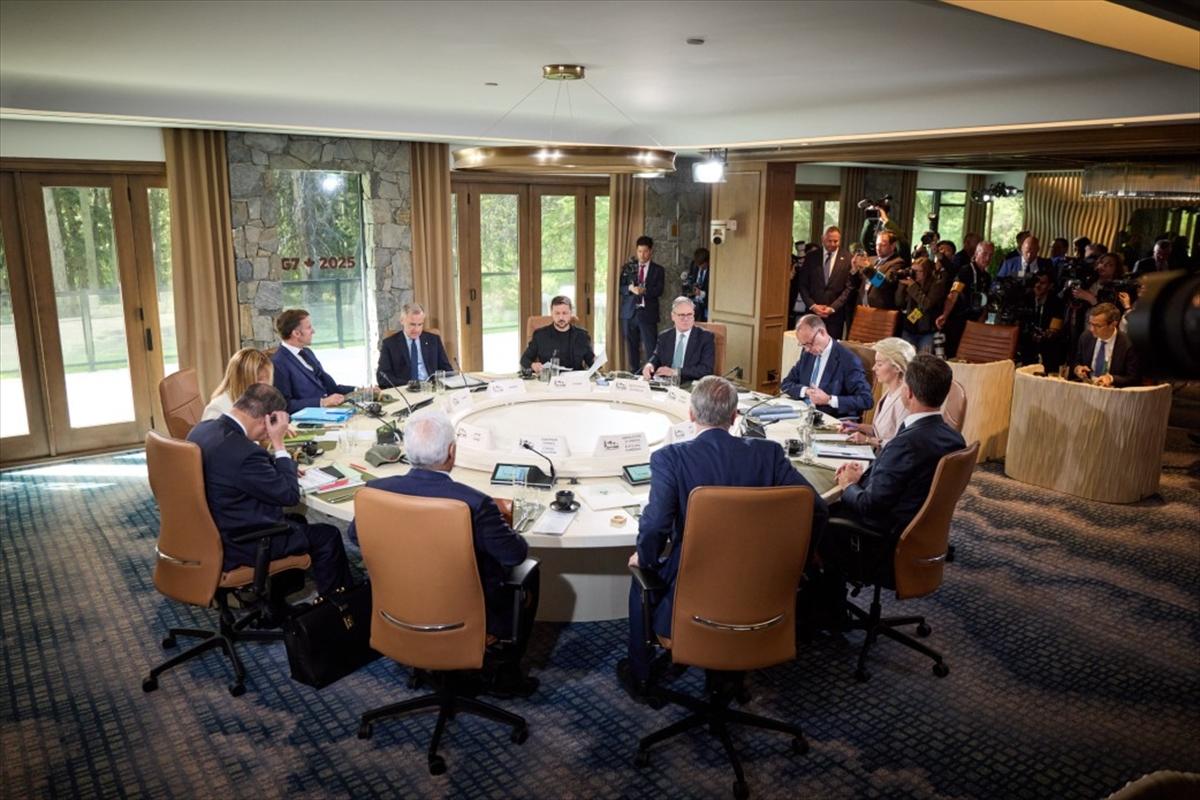
G7 Leaders Meeting, 17 June 2025 – (Anadolu Ajansı)
Preparations had been underway for the G7 leaders to issue a joint statement on Ukraine; however, this plan was canceled after the United States objected to certain formulations in the draft. In its official statement, Canada indicated that specific diplomatic phrases in the text were rejected by the U.S. on the grounds that they could jeopardize efforts to end the war. Ukrainian President Zelensky attended the summit and held bilateral meetings, during which Canada announced a new bilateral aid package for Ukraine.
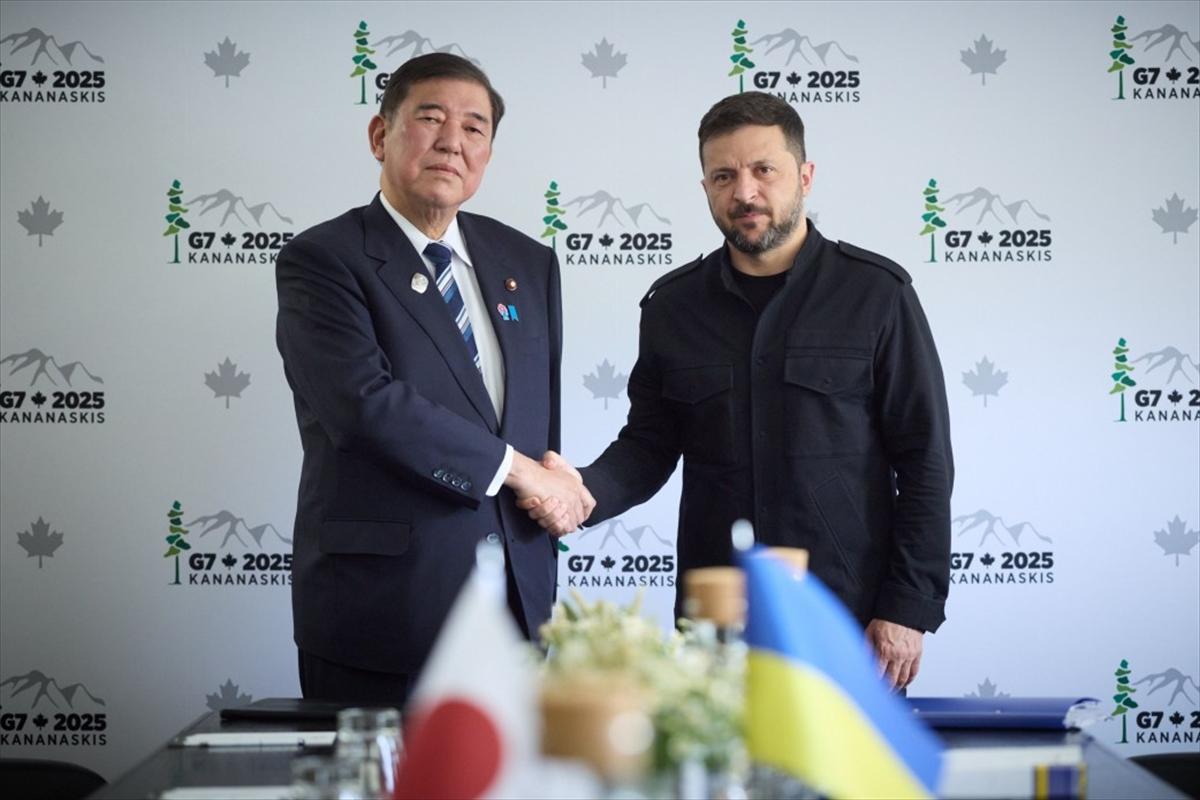
Ukrainian President Volodymyr Zelensky and Japanese Prime Minister Shigeru Ishiba at the G7 Summit in Alberta, Canada, 17 June 2025 – (Anadolu Ajansı)
Conflict between Israel and Iran influenced the summit’s agenda. In the statements issued during the summit, G7 countries reiterated their calls for de-escalation in the Middle East and particularly for a ceasefire in Gaza. However, no text explicitly calling for a direct ceasefire between Israel and Iran was issued. The G7 members stated in their joint communication that Iran must not acquire nuclear weapons.
Italian Prime Minister Giorgia Meloni informed U.S. President Trump that a window of opportunity exists to achieve a ceasefire in Gaza and urged increased diplomatic efforts in this direction. She also emphasized the need to restart international negotiations to prevent Iran from developing nuclear weapons, noting that there was consensus among G7 members on this issue. French President Emmanuel Macron, meanwhile, argued that military approaches aimed at regime change in Iran pose strategic risks.
The invitation extended to Indian Prime Minister Narendra Modi to attend the summit sparked criticism within Canada’s Sikh diaspora. Diplomatic tensions between the two countries emerged following allegations connected to the 2023 killing of a Sikh separatist leader on Canadian soil. In this context, organizations such as the World Sikh Organization and the Sikh Federation publicly voiced their objections to Canadian Prime Minister Carney’s invitation.
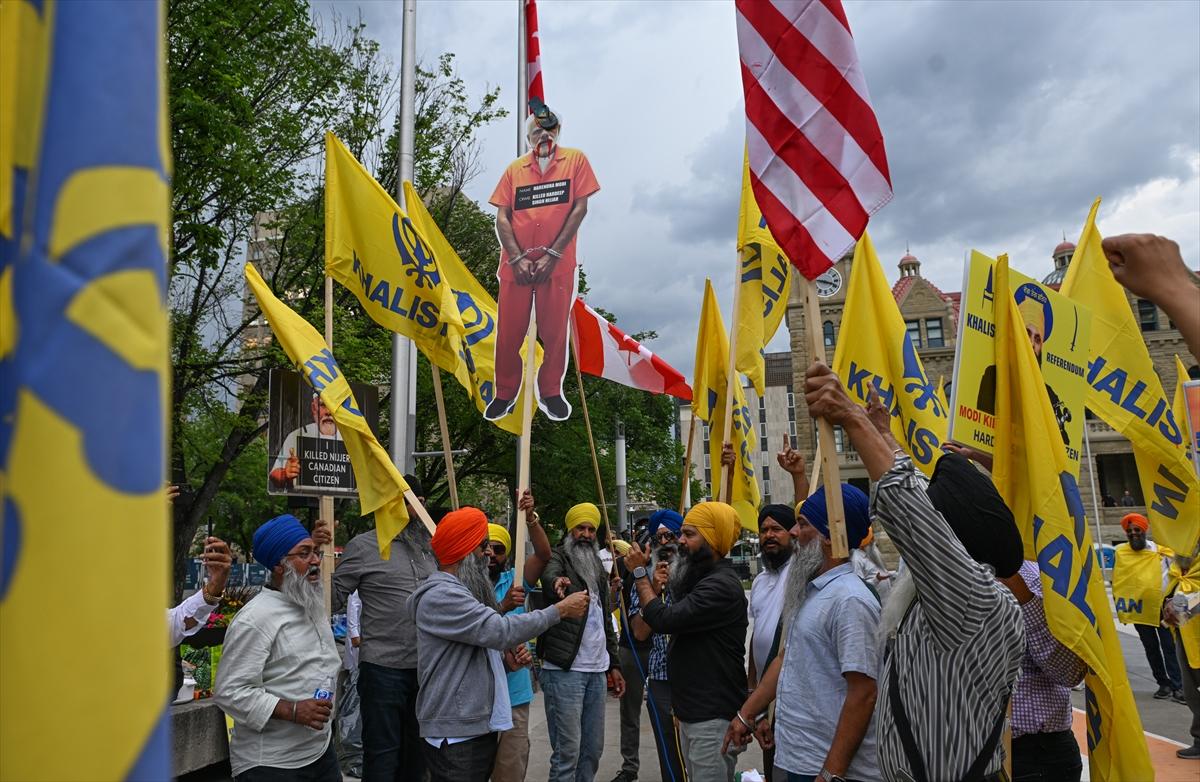
Protests against Indian Prime Minister Narendra Modi by the Punjabi community, 17 June 2025 – (Anadolu Ajansı)
A portion of the planned bilateral talks between Canadian Prime Minister Mark Carney and U.S. President Donald Trump took place, with the agenda focusing on trade policies and defense cooperation. Discussions addressed mutual positions on steel and aluminum tariffs. Following the talks, Carney announced that both countries had agreed to continue negotiations aimed at finalizing a trade and security agreement within 30 days.
During a meeting between European Commission President Ursula von der Leyen and President Trump, technical-level negotiations on reciprocal customs duties were discussed. The parties aimed to resolve existing disagreements before the expiration of the current mutual tariff exemption period at the beginning of July.
In talks between Japanese Prime Minister Shigeru Ishiba and U.S. President Trump, existing trade disputes were reviewed, with a focus on customs tariffs affecting the automotive sector. In a press statement following the meeting, Ishiba noted that no agreement had been reached on a mutually beneficial package deal that Japan had long sought.
During the meeting between Italian Prime Minister Giorgia Meloni and U.S. President Trump, achieving a ceasefire in Gaza and preventing Iran’s nuclear activities were prioritized on the agenda. Meloni also conveyed Italy’s expectations regarding the ongoing negotiations on customs duties between the U.S. and the European Union.
The meeting between Canadian Prime Minister Carney and Indian Prime Minister Narendra Modi marked the first high-level contact between the two countries since the diplomatic crisis of 2023. The two sides reached agreement on restarting diplomatic representation services and continuing bilateral dialogue on security cooperation. The meeting took place within the framework of the expanded G7+ format.
During talks with European Council President António Costa and European Commission President Ursula von der Leyen, Australian Prime Minister Anthony Albanese announced the decision to initiate negotiations for an Australia-EU Security and Defense Partnership. It was also agreed to restart negotiations on the frozen free trade agreement.
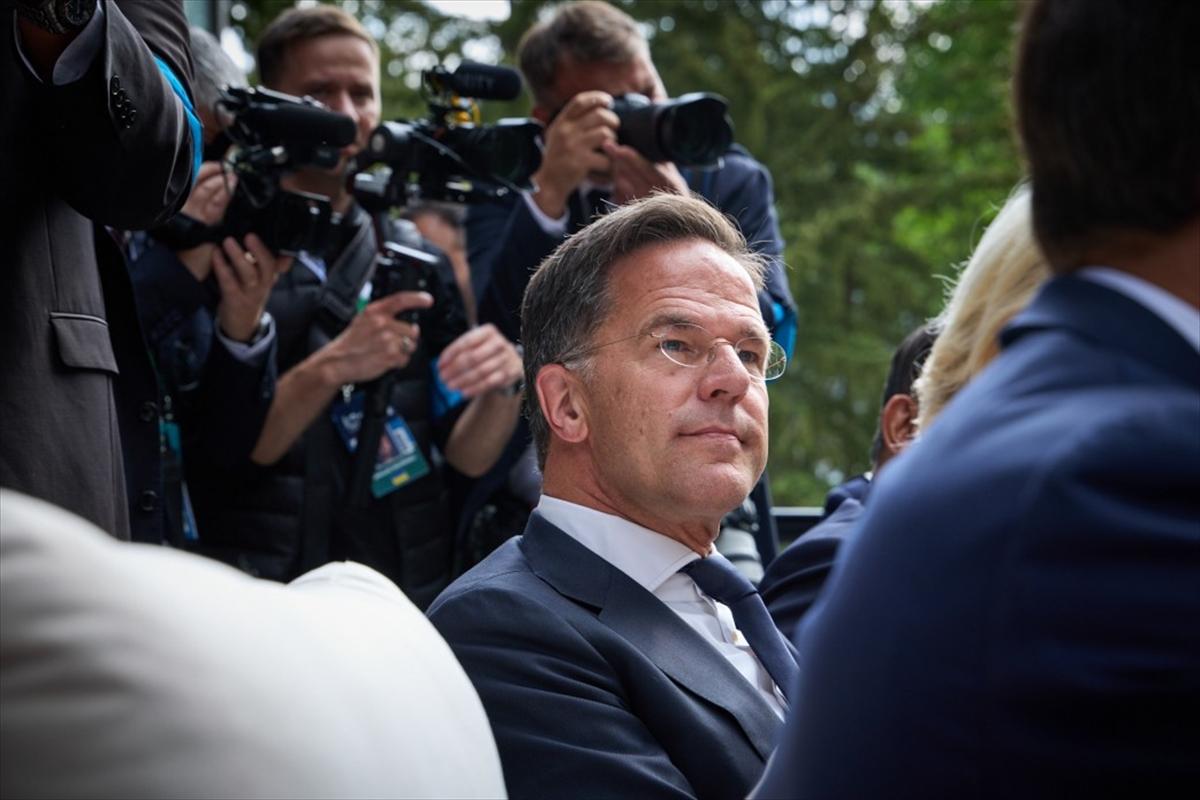
NATO Secretary General Mark Rutte at the G7 Summit in Alberta, Canada, 17 June 2025 – (Anadolu Ajansı)
No comprehensive, jointly signed summit declaration was issued at the conclusion of the 2025 G7 Summit. Instead, under Canada’s presidency, six brief thematic statements were released in the format of a presidential summary. These documents focused on technical issues including artificial intelligence, quantum technology, human trafficking, transnational repression, combating forest fires, and critical mineral supply chains. Regarding the Middle East agenda, a joint statement was issued affirming that Iran must not acquire nuclear weapons; however, no statement explicitly called for a ceasefire between Israel and Iran.
The planned joint statement on Ukraine was canceled after the United States objected to certain formulations in the draft. Canada stated that these phrases were removed from the document because they risked undermining ongoing diplomatic efforts. Additionally, documents issued on technology and energy security, on which leaders reached consensus, declared principles on regulating artificial intelligence, developing quantum infrastructure, and enhancing international cooperation in combating forest fires. These documents provide a general framework aimed at advancing technical-level cooperation.
Anadolu Ajansı. "Avustralya ve AB Güvenlik ve Savunma İlişkilerini Geliştirecek." Accessed June 18, 2025. https://www.aa.com.tr/tr/dunya/avustralya-ve-ab-guvenlik-ve-savunma-iliskilerini-gelistirecek/3602555#
Anadolu Ajansı. "Fransa Cumhurbaşkanı Macron: İran’da Rejim Değişikliğini Askeri Müdahaleyle Yapmak Bugün En Büyük Hata Olur." Accessed June 18, 2025. https://www.aa.com.tr/tr/dunya/fransa-cumhurbaskani-macron-iranda-rejim-degisikligini-askeri-mudahaleyle-yapmak-bugun-en-buyuk-hata-olur/3602232
Anadolu Ajansı. "Macron: İran’da Güç Kullanarak Rejim Değişikliğinin Stratejik Hata Olacağını Söyledi." Accessed June 18, 2025. https://www.aa.com.tr/tr/dunya/macron-iran-da-guc-kullanarak-rejim-degisikliginin-stratejik-hata-olacagini-soyledi/3601453
Anadolu Ajansı. "Meloni, Trump’a Gazze’de Ateşkes İçin Çalışılması Gerektiğini Yineledi." Accessed June 18, 2025. https://www.aa.com.tr/tr/dunya/meloni-trumpa-gazzede-ateskes-icin-calisilmasi-gerektigini-yineledi/3601343#
Anadolu Ajansı. “Japonya ile ABD Arasında Tarifeler Konusunda Anlaşma Sağlanamadı.” Accessed June 18, 2025. https://www.aa.com.tr/tr/ekonomi/japonya-ile-abd-arasinda-tarifeler-konusunda-anlasma-saglanamadi/3602605#
Anadolu Ajansı. “İtalya Başbakanı Meloni: Amacımız İran’ın Nükleer Bir Güç Olmasının Önüne Geçecek Müzakerelere Ulaşmak.” Accessed June 18, 2025. https://www.aa.com.tr/tr/dunya/italya-basbakani-meloni-amacimiz-iranin-nukleer-bir-guc-olmasinin-onune-gececek-muzakerelere-ulasmak/3602604#
Associated Press. “G7 Summit: Trump’s Early Departure Highlights Rifts over Ukraine and Iran.” AP News. Accessed June 18, 2025. https://apnews.com/article/g7-summit-canada-trump-departure-ukraine-6c86a0a8463603c9b1a3e950382af0a2
BBC. “G7 Summit: Macron Says Military Regime Change in Iran Would Be a Mistake.” BBC News. Accessed June 18, 2025. https://www.bbc.com/news/articles/cpqnjx1qw9po

51st G7 Summit (2025)
History | 16–17 June 2025 | ||||||||
|---|---|---|---|---|---|---|---|---|---|
Meeting Place | Alberta, Canada | ||||||||
Host Country | Canada | ||||||||
G7 Member Countries | United States United Kingdom Japan Italy Germany France Canada | ||||||||
The 51st G7 Summit was held in Kananaskis, Canada, on 16–17 June 2025. Topics discussed at the summit included the global economy, the Iran-Israel conflict, the war in Ukraine, artificial intelligence, and energy security. United States President Donald Trump left the summit early, and several joint statements were not issued. At the conclusion of the summit, Canada released a statement outlining six key themes in the format of a presidential summary.
No Discussion Added Yet
Start discussion for "51st G7 Summit (2025)" article
June 16, 2025
Agenda Items and Themes of the Summit
June 16, 2025
Participating Countries and the Expanded G7+ Format
June 18, 2025
Developments During the Summit Process
June 18, 2025
Bilateral Meetings and Diplomacy Among Leaders
June 18, 2025
Statements, Agreements, and Summit Documents