This article was automatically translated from the original Turkish version.
Type(s) | Nuclear-powered cruise missile | ||||||||
|---|---|---|---|---|---|---|---|---|---|
Origin(s) | Russian Federation | ||||||||
Length(s) | 12 m (launch) 9 m (flight) | ||||||||
External Effect | Solid-fuel launch rocket | ||||||||
Primary Trigger | Nuclear thermal or turbojet-like engine | ||||||||
Flight Profile | Low altitude (50–100 m) | ||||||||
Range(s) | 10 000 km (effectively unlimited) 000–20 | ||||||||
Harbor Type | Thermonuclear | ||||||||
Current Status | In development (as of 2025) | ||||||||
9M730 Burevestnik (Russian: Буревестник, meaning “storm petrel”, NATO reporting name: SSC-X-9 Skyfall) is a cruise missile developed by the Federation with nuclear propulsion and capable of carrying a nuclear warhead. Due to its unlimited range enabled by its fuel capacity, it is described as “effectively having unlimited range.” The project is being developed for the Federation and remains in the testing phase.
The missile’s development began in the early 2000s. The NPO Novator design bureau based in Yekaterinburg joined the project in December 2001, but it was first publicly revealed in March 2018. The Russian Experimental Physics Research Institute (Sarov) is listed as the developer, and NPO Novator as the manufacturer. According to unofficial sources, Russia does not plan to deploy this missile into service before 2027. Funding for the project is largely channeled through the state nuclear agency Rosatom, which is responsible for developing the missile’s miniature nuclear power unit and fuel technologies.
The test history of the Burevestnik has been fraught with difficulties. According to Western intelligence sources, the project was first detected in 2016 at Kapustin Yar (KZ-30), and at least 13 test launches were conducted between 2016 and 2019. Most of these tests ended in failure. According to a report by the U.S.-based Nuclear Threat Initiative (NTI), only two of the 13 flights achieved partial success; the remaining 11 ended in explosions or loss of control shortly after launch. For example, a test conducted in November 2017 at the Pan’kovo test site on Novaya Zemlya ended after a flight of less than two minutes when the missile crashed into the Barents Sea, 35 kilometers from shore.
On 8 August 2019, an explosion during a test of an “isotope power source” at the Nyonoksa maritime test range near Severodvinsk killed five scientists and caused a brief radioactive release. Rosatom confirmed that this accident was linked to a test of the Burevestnik’s nuclear power unit. U.S. researchers also stated that the testing process involved “dozens of attempts,” but only one or two flights could be considered successful.
The most recent tests were announced in October 2025. Chief of the General Staff Gerasimov stated that during a test on 21 October 2025, the Burevestnik remained airborne for approximately 15 hours and traveled 14,000 kilometers. The Federation declared this test a “final successful test” and ordered preparations for deployment. However, these figures have not yet been independently verified. Western experts have questioned the strategic value of the Burevestnik, emphasizing that claims regarding its range may be exaggerated.

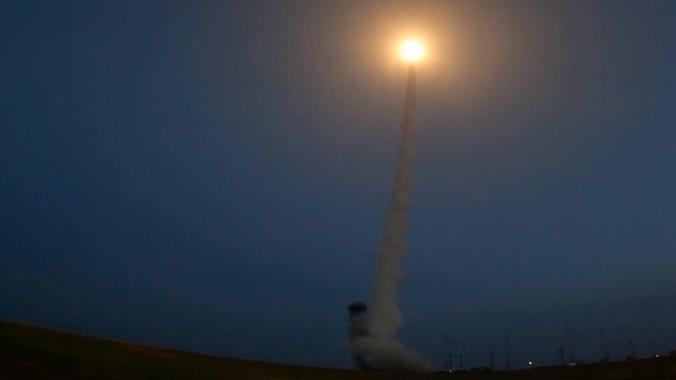
Image of the 9M730 Burevestnik missile during a test launch in 2018 (YouTube)
The designer of the Burevestnik is NPO Novator (Yekaterinburg, a subsidiary of the Almaz-Antey corporate group). Novator is a bureau specializing in the development of long-range missile systems and defense technologies. The state nuclear agency Rosatom is the primary actor in developing the missile’s nuclear propulsion system. Rosatom is responsible for designing the missile’s miniature nuclear reactor and power unit, which operates as an open-cycle reactor capable of emitting radioactive gases from the cockpit during operation.
According to some Russian sources, engineers at NPO Novator warned that the project was “not ready” and opposed the order to conduct tests prematurely. Nevertheless, political decisions led to continued testing, and a series of experimental prototypes—some under the code name Petrel—were produced and tested. Currently, the missile has not entered active service, and the prevailing view is that it will not be deployed by the Russian military before 2027.
Unlike conventional cruise missiles, the Burevestnik is equipped with a motor powered by a nuclear reactor. Launch is initiated by a solid-fuel rocket booster from an inclined ramp, after which a small-scale nuclear power unit takes over. The missile flies at subsonic speeds and theoretically has a range of thousands of kilometers.
The missile’s length is approximately 12 meters during launch and around 9 meters in flight. The fuselage’s front section is elliptical, measuring 1 by 1.5 meters. The wings are mounted on the upper part of the fuselage. Its mass is several times greater than that of similar-class Kh-101 cruise missiles, making it unsuitable for carriage by strategic bombers. Range estimates vary between 10,000 and 20,000 kilometers. Its ability to fly at low altitudes (approximately 50–100 meters) complicates radar detection.
There are differing assessments regarding the engine design. Some sources describe it as a ramjet powered by nuclear thermal propulsion, while others suggest a system similar to a turbojet. The nuclear reactor heats atmospheric air directly to generate thrust, which carries a risk of radiological contamination.
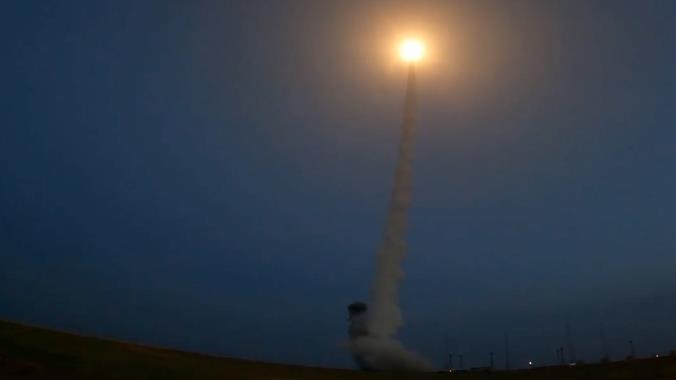
Launch image of the 9M730 Burevestnik missile (Anadolu Agency)
Satellite imagery provides significant clues regarding the test and potential deployment sites of the Burevestnik. The most prominent of these is the Vologda-20 (Chyobsara) facility. Located approximately 475 kilometers north of Moscow, the site features a large infrastructure including five nuclear warhead storage facilities and nine horizontal missile launch ramps. Two independent experts identified nine new launch ramp constructions around Vologda-20 in July 2025 satellite images from Planet Labs, suggesting the site could serve as a deployment base for the 9M730.
Turkish media, citing Reuters, have also suggested the Vologda facility could be a launch site for the Burevestnik. For test launches, the Pan’kovo site (Novaya Zemlya, Russia) and the Nyonoksa region (near Severodvinsk) have been highlighted. The existence of a rail-mounted launch bunker at Pan’kovo has been confirmed by satellite imagery. This location was also used in the first test in November 2017.
At the Nyonoksa maritime test range, similar rail-mounted bunkers were identified in Airbus satellite images from May 2019. The 8 August 2019 accident also occurred at this site. Rosatom confirmed the radioactive release associated with the incident and announced that five engineers lost their lives in the evening accident on 8 August.
The resurgence of interest in the 9M730 Burevestnik missile stems from Russia’s announcement in October 2025 of a long-range, nuclear-powered test flight. The claim that the missile flew uninterrupted for 15 hours over a distance of 14,000 kilometers has been interpreted as part of Moscow’s efforts to strengthen its strategic deterrence.
The timing of the test coincided with the ongoing war in Ukraine, NATO’s concurrent nuclear deterrence exercise “Steadfast Noon,” and the United States’ announcement of new sanctions, collectively triggering a new crisis in Europe that has shaken regional security balances. Countries such as Germany and Norway have explicitly stated that such a weapon poses a direct threat to the nuclear non-proliferation regime. The European Union has declared that Russia’s missile tests seriously undermine regional stability.
Abay, Emre Gürkan. “Rusya: Burevestnik Füzesi ABD ile İlişkilere Zarar Vermez.” Anadolu Ajansı. Accessed October 28, 2025. https://www.aa.com.tr/tr/dunya/rusya-burevestnik-fuzesi-abd-ile-iliskilere-zarar-vermez/3727668.
Eruygur, Burç. “Russia Says It Tested New Burevestnik Nuclear-Powered Cruise Missile.” Anadolu Ajansı. Accessed October 28, 2025. https://www.aa.com.tr/en/russia-ukraine-war/russia-says-it-tested-new-burevestnik-nuclear-powered-cruise-missile/3727115.
Faulconbridge, Guy, and Lidia Kelly. “Russia Tested New Nuclear-Powered Burevestnik Cruise Missile.” Reuters. Accessed October 28, 2025. https://www.reuters.com/world/china/russia-tested-new-nuclear-powered-cruise-missile-top-general-says-2025-10-26/.
Hopkins, Valerie. “Burevestnik Nuclear Missile Tests Successful, Russia Says.” The New York Times. Accessed October 28, 2025. https://www.nytimes.com/2025/10/26/world/europe/russia-burevestnik-missile.html.
Ivanyshyn, Volodymyr. “Russia Says It Tested Nuclear-Powered Burevestnik Cruise Missile.” *The Kyiv Independent*. Accessed October 28, 2025. https://kyivindependent.com/russia-tests-nuclear-powered-burevestnik-cruise-missile-moscow-claims.
Landay, Jonathan. “Exclusive: U.S. Researchers Find Probable Launch Site of Russia’s New Nuclear-Powered Missile.” *Reuters*. Accessed October 28, 2025. https://www.reuters.com/world/europe/us-researchers-find-probable-launch-site-russias-new-nuclear-powered-missile-2024-09-02/.
Lapham, Jake. “Russia Tests Nuclear-Powered Burevestnik Missile, Military Says.” *BBC News*. Accessed October 28, 2025. https://www.bbc.com/news/articles/c0qp8ed877jo.
Newdick, Thomas. “Skyfall Nuclear-Powered Cruise Missile Long-Range Test Claimed by Russia.” The War Zone. Accessed October 28, 2025. https://www.twz.com/nuclear/skyfall-nuclear-powered-cruise-missile-long-range-test-claimed-by-russia.
Nilsen, Thomas. “Welcome to Zscaler Directory Authentication.” *The Barent Observer*. Accessed October 28, 2025. https://www.thebarentsobserver.com/security/new-satellite-images-reveal-scale-of-putins-flying-chornobyl-test-complexnbsp/438245.
Piotrowski, Marcin Andrzej. “Military Application of Nuclear Propulsion: Russian 9M730/SSC-X-9 Cruise Missile Project.” Polish Institute of International Affairs (PISM), Accessed October 28, 2025. https://www.pism.pl/publications/Military_Application_of_Nuclear_Propulsion_Russian_9M730SSCX9_Cruise_Missile_Project.
RBC-Ukraine. “Inside Russia’s Burevestnik Nuclear Missile: Why US Calls It ‘Flying Chornobyl.’” RBC-Ukraine. Accessed October 28, 2025. https://newsukraine.rbc.ua/news/inside-russia-s-burevestnik-nuclear-missile-1761491672.html.
Reuters. "What Is Russia’s Burevestnik Missile?" Accessed October 28, 2025. https://www.reuters.com/business/aerospace-defense/what-is-russias-burevestnik-missile-2025-10-26/.
Russian Ministry of Defense. “Крылатая ракета неограниченной дальности с ЯЭУ [Nükleer santralli sınırsız menzilli seyir füzesi].” YouTube. Accessed October 28, 2025. https://www.youtube.com/watch?v=Xr7alYwCznQ.
Shuster, Simon. “Europe Shrugs off Russia’s Latest Nuclear Threats.” *TIME*. Accessed October 28, 2025. https://time.com/7027988/russia-nuclear-blackmail-europe-response.
Tenisheva, Anastasia. “What We Know about Russia’s Latest Test of the Nuclear-Powered Burevestnik Missile.” *The Moscow Times*. Accessed October 28, 2025. https://www.themoscowtimes.com/2025/10/27/what-we-know-about-russias-latest-test-of-the-nuclear-powered-burevestnik-missile-a90939.
Üren, Cağla. “Rusya, Nükleer Enerjili Burevestnik Seyir Füzesini Test Etti.” Euronews. Accessed October 28, 2025. https://tr.euronews.com/2025/10/26/rusya-nukleer-enerjili-burevestnik-seyir-fuzesini-test-etti.

Type(s) | Nuclear-powered cruise missile | ||||||||
|---|---|---|---|---|---|---|---|---|---|
Origin(s) | Russian Federation | ||||||||
Length(s) | 12 m (launch) 9 m (flight) | ||||||||
External Effect | Solid-fuel launch rocket | ||||||||
Primary Trigger | Nuclear thermal or turbojet-like engine | ||||||||
Flight Profile | Low altitude (50–100 m) | ||||||||
Range(s) | 10 000 km (effectively unlimited) 000–20 | ||||||||
Harbor Type | Thermonuclear | ||||||||
Current Status | In development (as of 2025) | ||||||||
Test Records and Operational Status
Manufacturers and Development Process
Design and Technical Characteristics
Facility Locations Confirmed by Satellite Imagery
International Reaction