

This article was automatically translated from the original Turkish version.
+2 More
Location | Tokat provincial center | ||||||||
|---|---|---|---|---|---|---|---|---|---|
Building Type | Zaviye, türbe and mescit together | ||||||||
Number of Floors | Single-story | ||||||||
Plan Schema | Rectangular plan | ||||||||
Material(s) | Stone wall | ||||||||
Roof | Wooden half-timbered roof | ||||||||
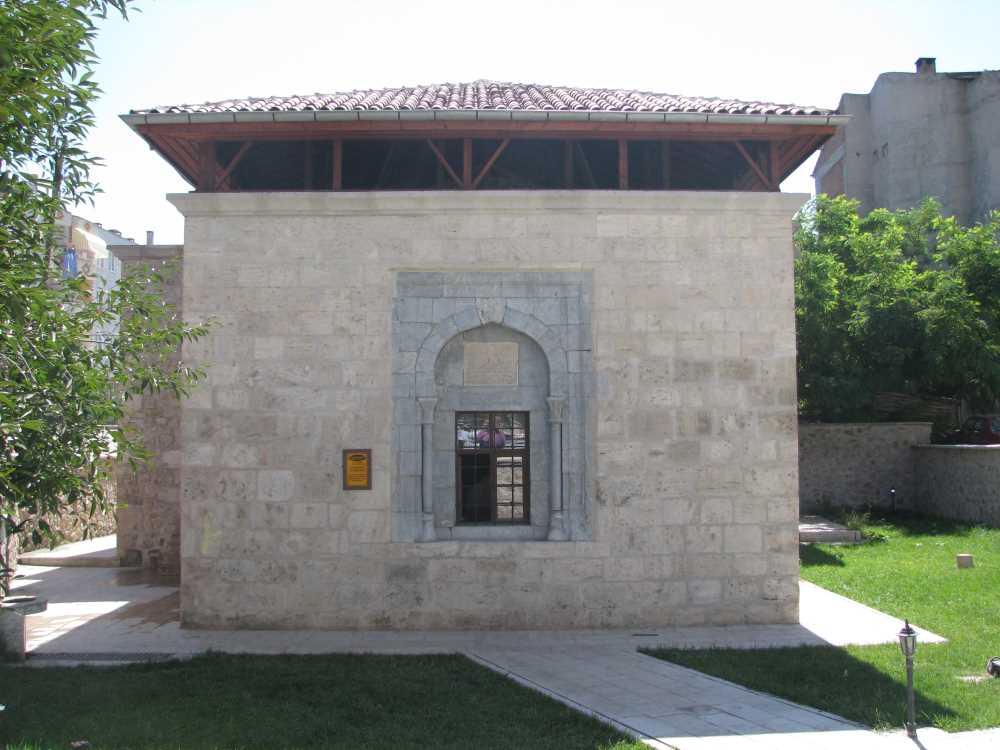
Abdulmuttalip Zaviyesi is a religious structure located in the city center of Tokat, in Türkiye’s Black Sea Region, dated to the early 14th century. The founder of the zaviye is identified as Abdullah bin Muhyi. According to inscriptions on the entrance portal on the northern façade and within the tomb section, the zaviye was constructed in 1317 (Hijri 717). It is known that Abdullah bin Muhyi, recognized as the patron of the structure, died in 1318 and was buried in the adjacent tomb section.
Abdulmuttalip Zaviyesi presents a multifunctional architectural example that unites the functions of tomb, zaviye, and mescit within a single structure. This zaviye, part of the group of historical religious buildings in Tokat, attracts attention for both its architectural integrity and its early documented construction date. Additionally, the structure is officially registered within the cultural heritage inventory and, together with its mescit section used for worship, served both individual and communal religious life as a multifunctional building.
The structure was built as a single-story building with a rectangular plan. Stone masonry was used in its construction, and its roof is covered with a wooden pitched roof. The façades feature regularly cut stone, and the entrance section includes a round arch. Within the adjacent tomb section, a single sarcophagus is present. It is noted that decorative elements throughout the building are limited.

Abdulmuttalip Zaviyesi (Culture Portal)
The zaviye consists of three units: tomb, zaviye, and mescit. The tomb section is defined as a distinct part within the building’s structure and is notable for containing the sarcophagus. The mescit section serves as the place of worship. The structure as a whole presents a multifunctional architectural unity.
The structure is situated within the cluster of historical-religious buildings in the city center of Tokat. It is included among the city’s groups of mosques, mescits, tombs, and zaviyes. The zaviye is recorded within the city’s cultural and historical building inventory.
During the Ottoman period, zaviyes were not only places of religious worship but also functioned as institutions providing social assistance, hospitality, and education. In Tokat, such structures played a significant role in the urban fabric, with neighborhood formations developing around these religious centers.
No original historical documents regarding the exact construction date, founder, affiliated Sufi order, or operational history of the structure are available in publicly accessible sources. Additionally, no waqfiyya (endowment deed) related to the building has been located. The structure is currently known solely through architectural descriptions and cultural inventory records.
The zaviye is referenced in publications by various public institutions and is listed among Tokat’s cultural heritage sites. It is noted that the building has been documented within the cultural inventory, with its architectural features and current physical condition recorded. Furthermore, it has been included in the group of protected religious structures, evaluated alongside other zaviyes and tombs in the city.
Akyüz, Hatice Ö. Ceylan, Mehmet Akif. “Osmanlı Döneminde Tokat Şehrinin Fonksiyon Özellikleri.” Academia.edu. Accessed July 21, 2025. https://www.academia.edu/43506430/Osmanl%C4%B1_D%C3%B6neminde_Tokat_%C5%9Eehrinin_Fonksiyon_%C3%96zellikleri_Functional_Properties_Of_Tokat_City_In_Ottoman_Period
Erdem, Büşra. “Osmanlı Şehir Hayatında Tekke ve Zaviyelerin Yeri: Tokat Örneği.” Dergipark. Accessed July 21, 2025. https://dergipark.org.tr/tr/download/article-file/368430
Ministry of Culture and Tourism. "Abdulmuttalip Türbe ve Zaviyesi." *Kültür Envanteri*. Accessed July 21, 2025. https://www.kulturportali.gov.tr/turkiye/tokat/kulturenvanteri/abdulmuttalip-turbe-ve-zaviyesi
Ministry of Culture and Tourism. "Abdulmuttalp Zaviyesi." *Kültür Portalı*. Accessed July 21, 2025. https://kulturportali.gov.tr/turkiye/tokat/gezilecekyer/abdulmuttalp-zavyes
Tokat İl Directorate of Culture and Tourism. "Camiler, Mescitler, Türbeler ve Zaviyeler." Accessed July 21, 2025. https://tokat.ktb.gov.tr/TR-142140/camiler-mescitler-turbeler-ve-zaviyeler.html
Tokat İl Directorate of Culture and Tourism. "Tekke, Zaviye ve Türbeler." Accessed July 21, 2025. https://tokat.ktb.gov.tr/TR-231637/tekke-zaviye-ve-turbeler.html
Vakıflar Genel Müdürlüğü. "Vakıflar Dergisi Sayı 51." Vakıflar Genel Müdürlüğü Yayınları. Accessed July 21, 2025. https://cdn.vgm.gov.tr/yayin/dergi/vakiflardergisi/51.pdf
İstanbul Üniversitesi. “Osmanlı Dönemi Dini Hayatında Tekke ve Zaviyeler.” Istanbul ÜniversitesiAçık Erişim Kitaplığı. Accessed July 21, 2025. https://nek.istanbul.edu.tr/ekos/KITAP/ekt0000180.pdf

Location | Tokat provincial center | ||||||||
|---|---|---|---|---|---|---|---|---|---|
Building Type | Zaviye, türbe and mescit together | ||||||||
Number of Floors | Single-story | ||||||||
Plan Schema | Rectangular plan | ||||||||
Material(s) | Stone wall | ||||||||
Roof | Wooden half-timbered roof | ||||||||
No Discussion Added Yet
Start discussion for "Abdulmuttalip Zaviyesi" article
Architectural Features
Structural Components
Urban and Cultural Context
The Role of Zaviyes in the Ottoman Period
Documentation Status of Abdulmuttalip Zaviyesi
Protection and Documentation