


This article was automatically translated from the original Turkish version.
+1 More
History | ~3,000-year history | ||||||||
|---|---|---|---|---|---|---|---|---|---|
Material(s) | Walnut tree sheep/goat/bull horn | ||||||||
Decoration | Emerald, ruby, mother-of-pearl, ebru art | ||||||||
Modifiers | Ottoman tughra, crescent and star, Seljuk patterns | ||||||||
Master | Cumali Birol – third-generation cane master, State Artist | ||||||||
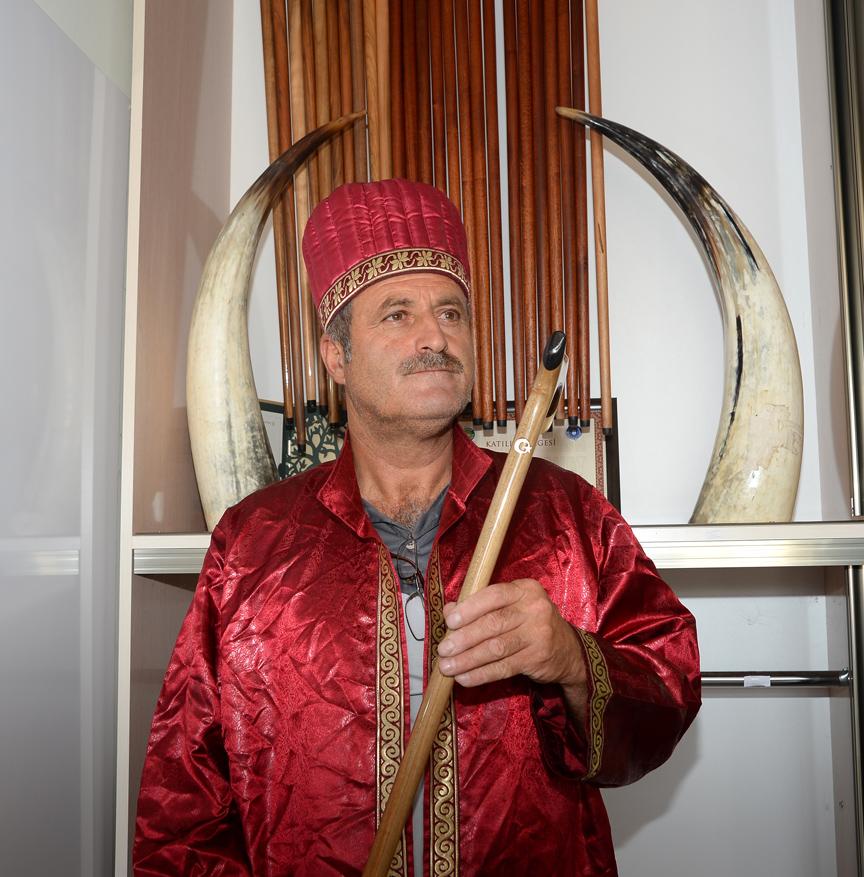
Adilcevaz Cane is a traditional craft product made in the Adilcevaz district of Bitlis, crafted from walnut tree trunks and horns of buffalo, cattle, and ram, decorated with Ottoman and Seljuk motifs. The canes are embellished with emerald, ruby, mother-of-pearl, and ebru art and are described as “symbols of power and nobility.”

Adilcevaz Cane (Anadolu Agency)
The art of cane-making in Adilcevaz is believed to have a history of approximately 3,000 years. Designs inspired by Urartian, Seljuk, and Ottoman motifs have been transferred from tombstones and historical artifacts to these canes. The canes are produced from straight, long shoots of walnut trees native to the region. In 2019, the “Adilcevaz Cane” was officially registered as a geographical indication under Law No. 6769 on Industrial Property.
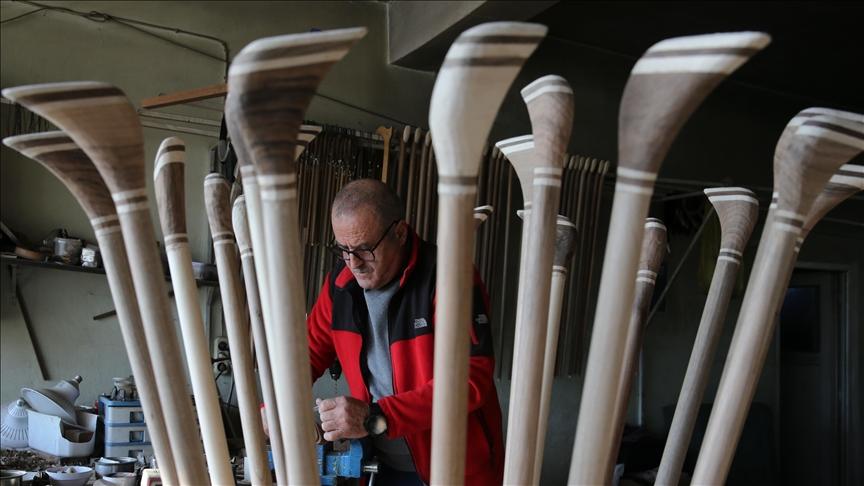
Cumali Birol (Anadolu Agency)
Cumali Birol (b. 1964), one of the leading representatives of Adilcevaz cane-making, learned the trade from his ancestors and is a third-generation cane master in his family. Working in his 70-square-meter workshop, Birol produces all his canes entirely by hand. He decorates the canes, made from walnut wood combined with buffalo, cattle, and ram horns, with stone inlay, mother-of-pearl, and ebru art. He engraves Ottoman tughra, crescent and star, and Seljuk patterns onto the canes.
Birol began e-exporting via the internet in the 2000s and sent canes to Belgium, the Netherlands, Canada, and Norway in 2003. In 2004 he received the Turkey Second Place E-Export Award, in 2005 the Ministry of Culture and Tourism granted him the title of “Master Artisan”, and in 2010, at age 41, he was awarded the title of Türkiye’s youngest ahî. In 2013, his brand was officially registered, and his canes have been featured in films and television series. For example, one of his canes appeared in Ata Demirer’s film “Osmanlı Cumhuriyeti” and another in the series “Payitaht Abdülhamid”.
Adilcevaz canes are regarded not merely as walking aids but as symbols of power, nobility, and longevity. The walnut wood used in their production is dried for at least two years, then shaped using files, sandpaper, and planes. The shafts are decorated using carving, burning, and painting techniques. Among Birol’s original designs, the ebru cane stands out; in 2007 he was the first in the world to combine ebru art with a cane. To date, approximately 80 different cane types have been produced, including models featuring Ottoman tughra, crescent and star, stone inlay, and the “Payitaht Abdülhamid” design.
To date, Cumali Birol has trained 75 masters and has presented his canes at fairs and festivals both within Türkiye and abroad. In 2024 he was invited to the Kazel Expo fair in Düsseldorf, Germany (20–22 December) and Gorinchem, the Netherlands (27–29 December), where he represented Türkiye and the Adilcevaz cane. At these events, Birol also demonstrated cane production live.
Anadolu Ajansı – Geleneksel Sanatlarda Ustalar. “‘Gücün ve asaletin sembolü’ bastonları taş işçiliğiyle süslüyorlar.” Updated August 17, 2018. Accessed August 16, 2025. https://www.aa.com.tr/tr/geleneksel-sanatlarda-ustalar/gucun-ve-asaletin-sembolu-bastonlari-tas-isciligiyle-susluyorlar/1232929
TRT Türk – Yaşam. "Adilcevaz bastonu Almanya ve Hollanda’da sergilenecek." Accessed August 16, 2025. https://www.trtturk.com.tr/yasam/adilcevaz-bastonu-almanya-ve-hollandada-sergilenecek_859
Turkish Patent and Trademark Office – Geographical Indications Portal. "Adilcevaz Bastonu – Geographical Indication (Appellation of Origin)." Accessed August 16, 2025. https://ci.turkpatent.gov.tr/cografi-isaretler/detay/38567

History | ~3,000-year history | ||||||||
|---|---|---|---|---|---|---|---|---|---|
Material(s) | Walnut tree sheep/goat/bull horn | ||||||||
Decoration | Emerald, ruby, mother-of-pearl, ebru art | ||||||||
Modifiers | Ottoman tughra, crescent and star, Seljuk patterns | ||||||||
Master | Cumali Birol – third-generation cane master, State Artist | ||||||||
History and Geographical Indication
Cumali Birol
Artistic Features
National and International Promotion
Awards