


This article was automatically translated from the original Turkish version.
Adlerian Therapy is a psychotherapeutic approach developed by the founder of individual psychology, Alfred Adler, which emphasizes understanding the individual within their social context. This therapy method seeks to understand and resolve psychological issues by analyzing the individual’s lifestyle, early childhood experiences, and relationships within their social environment. According to Adler, individual the drive to overcome an innate feeling of inferiority and to achieve self-realization is central to human motivation, effort.

AI-generated image representing Alfred Adler.
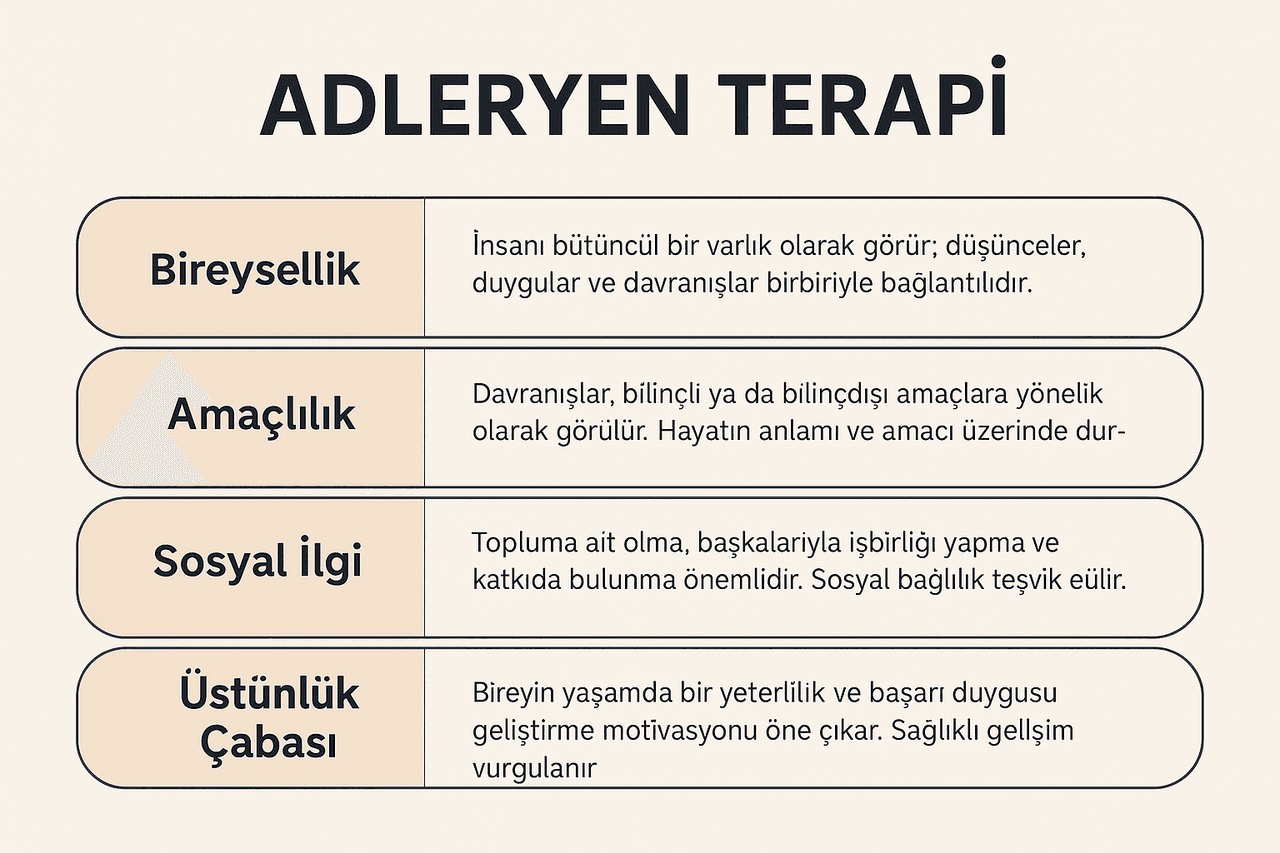
Adlerian Therapy asserts that individuals are responsible agents who engage in purposeful behavior and possess a unique subjective worldview. It adopts a phenomenological and holistic perspective. Social interest is regarded as a key factor in psychological well-being, spirit important.
1. Holistic Assessment of the Individual: Adlerian therapy evaluates the individual not solely through internal thoughts but within the context of their social environment and life circumstances.
2. Social Interest (Social Connectedness): Emphasis is placed on the necessity for individuals to adapt to society and strengthen their social relationships for healthy psychological development.
3. Lifestyle: According to Adler, every individual develops a lifestyle during childhood that determines how they perceive the world, style.
4. Purposeful Behavior: Human behavior is not random but shaped by specific goals and intentions.
5. Inferiority and Superiority Complexes: Adler proposed that individuals strive to overcome an innate feeling of inferiority through efforts to gain superiority.
6. Natural Creativity: The individual’s inner strength and creative abilities hold a vital place in the therapeutic process.
Adlerian Therapy aims to increase the client’s awareness by establishing an egalitarian relationship between client and therapist. Process It consists of four stages:
1. Relationship Building: A relationship based on Trust is established.
2. Exploration of Dynamics: The client’s early experiences and lifestyle are analyzed.
3. Insight: The client’s unconscious patterns and thought are difference.
4. Reorientation: The client’s strengths are reinforced to enhance their social interest.
At the beginning of therapy, building a trust-based relationship between advisor and the client is critical. The therapeutic relationship serves as the fundamental building that enables the client to trust the therapist and express themselves comfortably. This relationship allows the client to feel emotionally secure and share their thoughts openly and honestly. The therapist listens to the client with empathy, respect, trust, and professionalism. The successful establishment of this relationship is of paramount importance for the client’s subsequent exploration of their inner world and understanding of personal issues. It forms the foundation of the therapeutic process’s success.
The investigation of individual dynamics is a therapeutic stage aimed at deeply understanding the client’s problems. This stage typically consists of four key phases: subjective counseling, objective counseling, the client’s self-understanding and insight, and reorientation, subjective.
1. Subjective Counseling: This stage focuses on exploring the client’s inner world. It is a free-flowing conversation designed to uncover the client’s perceptions, thoughts, emotions, and beliefs. The client speaks generally about their problems without focusing on specific topics. During this phase, the counselor listens attentively to the client’s life story with empathy and active listening, active. Techniques such as encouragement, questioning, and guidance are used to facilitate the client’s self-expression.
2. Objective Counseling: This stage aims to help the client gain more precise, detailed, and objective understanding of specific issues. The counselor gathers more detailed information about the client’s lifestyle, family dynamics (mother, father, brother relationships), early memories, and perceptions of their environment. Questioning and interpretation techniques are used intensively. The client’s lifestyle, self-perception, and relationship with environmental factors are analyzed in detail, such as.
This stage is designed to foster deep awareness of the client’s emotional and psychological processes. The counselor uses interpretation techniques to provide new perspectives on the client’s inner world and problems. During this process, the client becomes more clearly aware of their behaviors, thoughts, and emotional states, which constitutes a vital step for personal growth.
This stage involves the counselor adopting a goal-oriented approach and actively engaging the client in the process of change, solution. The counselor encourages the client to take responsibility for their own responsibility, helps them explore new possibilities for solutions, and supports them in evaluating various options and taking action. This stage is implemented with the goal of creating meaningful creation and change in the client’s life.
1. To increase the client’s awareness.
2. To assist clients in coping with feelings of inferiority, head.
3. To help strengthen their social interest.
4. To facilitate positive changes in the client’s perceptions, goals, and lifestyle.
5. To not view the client as a patient but as a person whose courage has been diminished. Therefore, the therapist encourages the client to make changes in their life.
6. To help the client contribute to society and fulfill their professional responsibilities.
1. Spitting in the Soup: This technique helps the individual become aware of automatic behaviors by encouraging them to stop or reduce behaviors that cause them distress.
2. What If I Could: This encourages the client to experience alternative behaviors. The client is asked to act as if they have already performed a behavior they previously avoided. For example, a client who cannot control anger might be asked to come to the next session pretending they have controlled their anger.
3. Turning the Dial: This creates emotional awareness by guiding clients to shift between positive and negative emotions. It is applied when clients feel unable to control their emotions. Through this technique, clients learn to generate desired emotions by focusing their thoughts. Clients come to understand that they have control over their thoughts and feelings.
4. Reverse Suggestion: It recommends acting in the opposite direction to manage Fear and concern, movement.
5. Paradoxical Intention: The client is encouraged to consciously engage in the behavior they avoid or fear, thereby becoming aware of their control over it. The technique suggests that clients confront their fears directly, as the fear of doing something often intensifies more than the thing itself.
6. Encouragement: Adlerian Therapy places great importance on the technique of encouragement. It helps clients identify their strengths, build self-confidence, set realistic expectations for themselves, cultivate hope, and develop healthier behaviors. This technique also focuses on the client’s positive qualities. Every a needed by the client is utilized.
Adlerian Therapy emerged as a social and humanistic alternative to Freud’s approach, which explained the individual solely through internal drives, to develop. It advocates a preventive approach based on Society and has made significant contributions to modern psychology, modern.
Although Adlerian Therapy is viewed positively for its consideration of the individual’s social context, it has faced criticism. Like psychodynamic theories, it has been challenged regarding scientific testability. Nevertheless, Adler’s understanding of social context and individual motivation continues to hold considerable importance in modern psychotherapies, together.

Core Philosophy
Principles
Therapeutic Process and Stages
Psychological Counseling Process
Establishing the Therapeutic Relationship
Stages of Investigating Individual Dynamics
Client’s Self-Understanding and Insight
Reorientation Stage
Goal of Psychological Counseling
Techniques
Origins and Impact
Criticisms and Limitations