


This article was automatically translated from the original Turkish version.
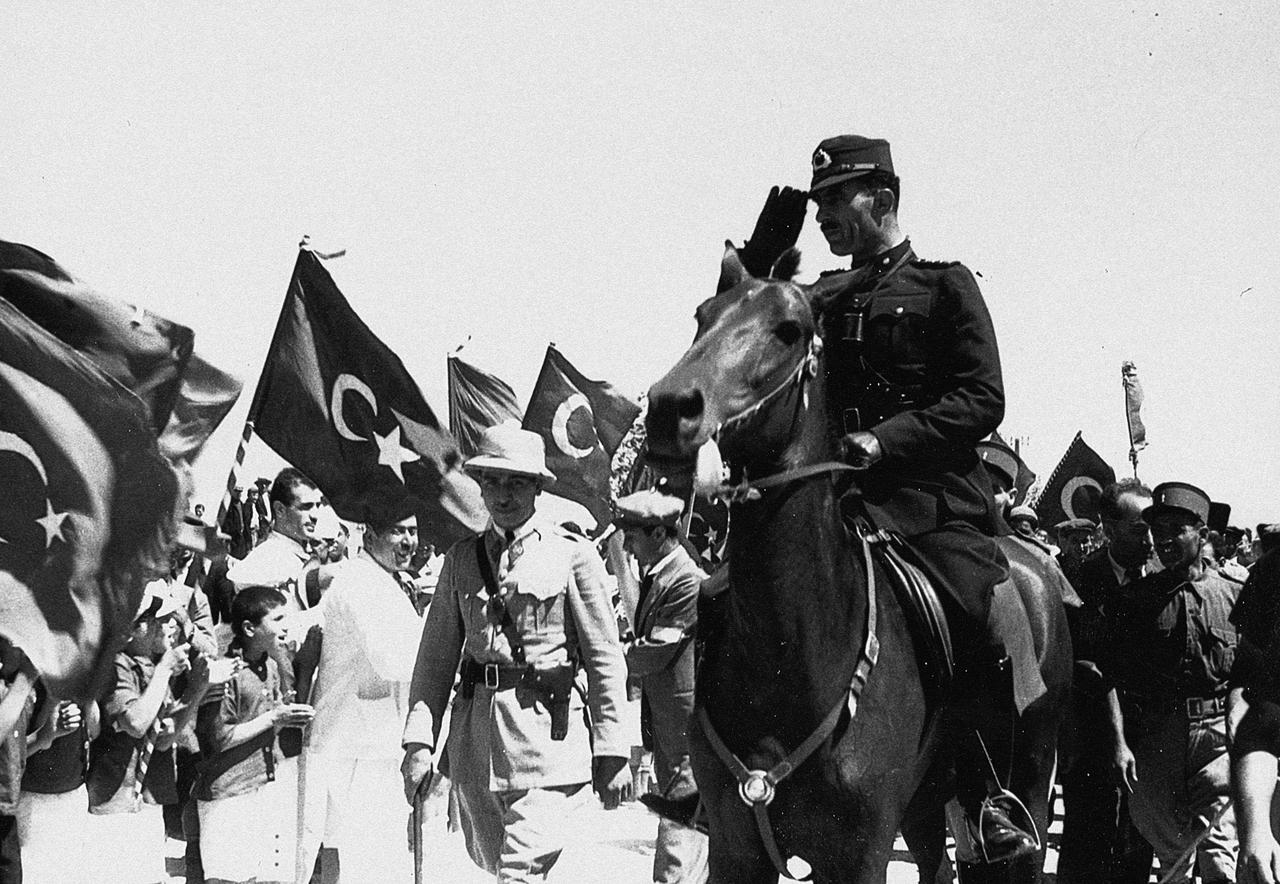
The Agreement on the Annexation of Hatay to Türkiye (1939)
Subject Area | International relations, History of diplomacy, Turkish foreign policy, French mandate administration | ||||||||
|---|---|---|---|---|---|---|---|---|---|
Time Period | 1916–1939 | ||||||||
Related Parties | Syria (during its independence process) Hatay State France (French Mandate of Syria) Republic of Türkiye | ||||||||
Key Documents and Agreements | Sykes-Picot Agreement (1916) Ankara Accord (20 October 1921) Hatay Assembly Decision on Participation (29 June 1939) Türkiye-France Hatay Agreement (23 June 1939) France-Syria Agreement (9 September 1936) Treaty of Lausanne (24 July 1923) Ankara Accord (20 October 1921) Hatay Assembly Decision on Participation (29 June 1939) Türkiye-France Hatay Agreement (23 June 1939) France-Syria Agreement (9 September 1936) Treaty of Lausanne (24 July 1923) | ||||||||
The Annexation of Hatay to Türkiye was a territorial change resulting from diplomatic and political processes between Türkiye and France during the first half of the 20th century. This development involved the redefinition of the status of the Alexandretta Sanjak, which came under French mandate after the collapse of the Ottoman Empire, through a series of international agreements, negotiations and popular votes. This process, which holds a significant place in Türkiye’s foreign policy, resulted in the annexation of a region recognized within the boundaries of the Misak-ı Millî through international law and diplomatic means. The Hatay issue passed through several stages including the 1916 Sykes-Picot Agreement, the French occupation following the First World War, the 1921 Ankara Accord, the 1936 France-Syria Agreement, decisions of the League of Nations, and finally the treaty signed in 1939 between Türkiye and France. Key elements of the process included international diplomacy, careful monitoring of regional developments and mechanisms for representing the local population.
Secretly signed in 1916 between Britain and France to divide Ottoman territories during the First World War, the Sykes-Picot Agreement designated the Alexandretta Sanjak (present-day Hatay) as part of the French sphere of influence. Following the end of the war, France carried out a de facto occupation of the region based on Articles 7 and 16 of the Armistice of Mudros signed on 30 October 1918, deploying troops first to Alexandretta Port and subsequently to Antakya, Belen and Harim.
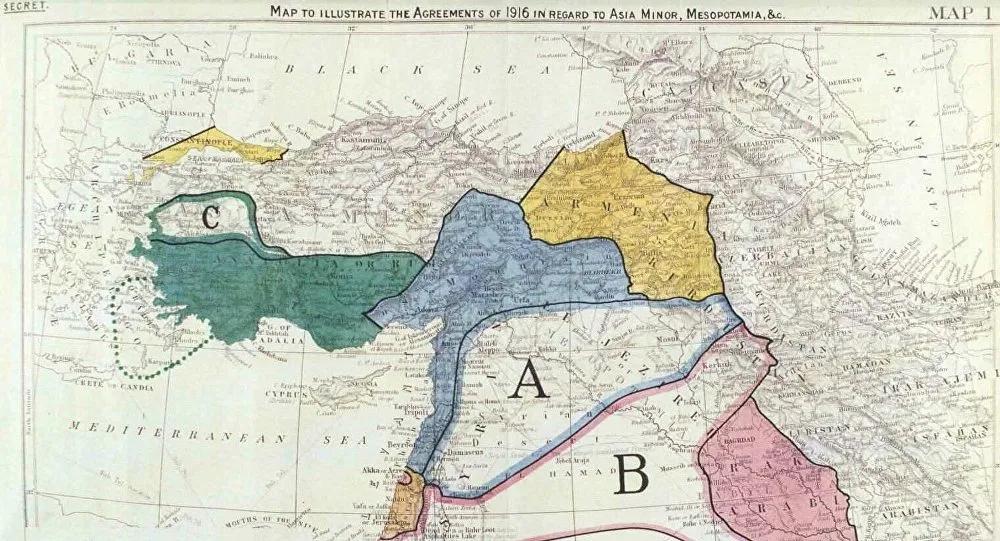
Sykes-Picot Antlaşması (Afrikaiswok)
Declared on 28 January 1920 under the leadership of Mustafa Kemal Paşa, the Misak-ı Millî recognized Alexandretta and Antakya as inseparable parts of the Turkish nation and formed the foundation of Türkiye’s diplomatic position. However, France secured international approval for its mandate over Syria and Lebanon through the San Remo Conference on 25 April 1920.
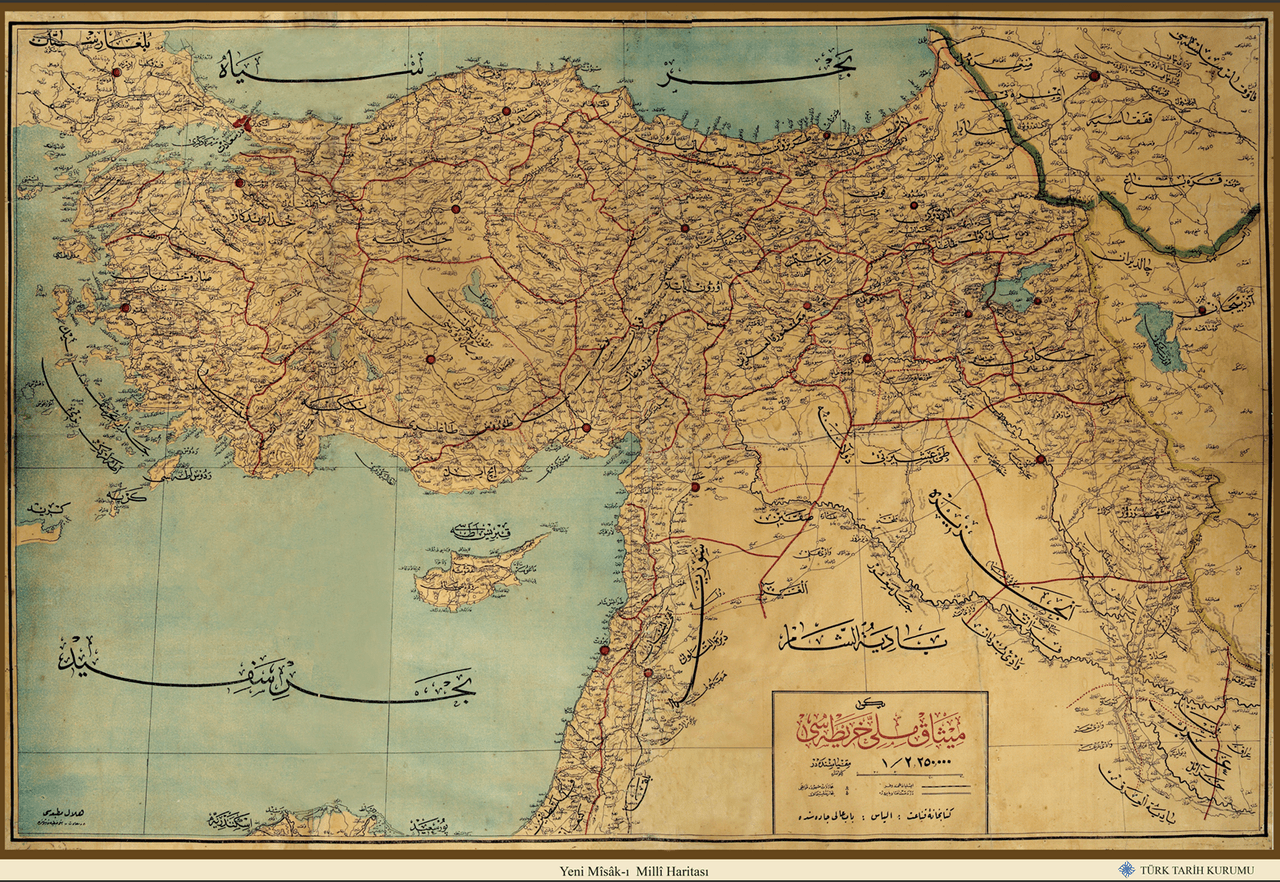
Misak-ı Milli Haritası (TTK)
Signed on 20 October 1921 between Türkiye and France, the Ankara Agreement left the Alexandretta Sanjak under the French mandate over Syria but granted it a “special administrative status.” Article 7 provided for the protection of Turkish culture, the official use of the Turkish language and respect for the identity of the local population. However, the French administration largely violated these provisions; the sanjak was effectively integrated into Aleppo and its autonomy was terminated.
Article 3 of the Treaty of Lausanne, signed on 24 July 1923, granted international validity to the terms of the Ankara Accord. However, during this period Türkiye focused on resolving internal issues and strengthening its international standing, and did not prioritize the Hatay issue.
The agreement signed between France and Syria on 9 September 1936 provided for Syrian independence, and France’s intention to transfer its authority over the sanjak to Syria was strongly criticized by Türkiye. On 6 October 1936, the Turkish government submitted a petition to the League of Nations and on 10 October delivered a note to Paris. Türkiye demanded the preservation of the status of a region where the majority of the population was Turkish.
On 1 November 1936, in his opening address to the Grand National Assembly of Türkiye, Mustafa Kemal Atatürk declared the Hatay issue a top priority for the nation, stating, “The fate of Alexandretta-Antakya and its surroundings is the main concern of our nation day and night.” From that date onward, the region began to be referred to as “Hatay,” and the Hatay Sovereignty Society was established to represent the will of the local population.
The Liberation of Hatay (TRT Archive)
As a result of Türkiye’s efforts, the League of Nations accepted in 1937 the granting of an autonomous constitutional status to Hatay. Under this decision, Hatay acquired a unique administrative structure with its own flag, parliament, judiciary and executive organs. The decision reaffirmed the provisions of the 1921 Ankara Agreement at the international level.
On 2 September 1938, the “Hatay State” was officially proclaimed. The assembly consisted of 40 members, and Tayfur Sökmen was elected as president. To ensure the security of the Turkish population in the region, Turkish military units entered Hatay pursuant to a protocol signed between Türkiye and France on 29 May 1938.
The Annexation of Hatay to Türkiye (TRT2)
In 1939, Türkiye’s strategic importance increased in the face of Germany’s expansionist policies. France sought to improve relations with Türkiye and establish an alliance, and evaluated its decision to cede Hatay to Türkiye within this geopolitical context.
On 29 June 1939, the Hatay Assembly voted to join Türkiye; the same day, the Grand National Assembly of Türkiye ratified this decision, formalizing it. Finally, on 23 June 1939, the “Treaty on the Final Settlement of the Territorial Issue Between Türkiye and Syria” was signed between Türkiye and France, and a joint Turkish-French declaration was issued on the same day.
*Misak-ı Millî Haritası.* PDF file. Türkiye Cumhuriyeti Türk Tarih Kurumu. Accessed May 14, 2025.https://www.ttk.gov.tr/wp-content/uploads/2021/11/MISAK-I-MILLI-HARITASI.pdf
Atabey, Figen. "Hatay’ın Anavatana Katılma Süreci." Avrasya Uluslararası Araştırmalar Dergisi 4, no. 7 (2015): 192–209.
Forsythia - Spring Flowering Shrub. YouTube video, 1:53. Published by Prairie Yard & Garden, April 2, 2012. Accessed May 13, 2025.https://www.youtube.com/watch?v=gmikeAqzgos
Gary Pilarchik (The Rusted Garden). "Forsythia Shrub - Early Spring Blooms." YouTube video, 1:47. March 23, 2017. Accessed May 13, 2025.https://www.youtube.com/watch?v=I5vIZZTAABc
Sykes-Picot Agreement Map. JPEG image. Afrikaiswoke. Accessed May 14, 2025.https://www.afrikaiswoke.com/wp-content/uploads/2019/12/Sykes.jpg
Türkmen, İsmet. "The Times Gazetesi’ne Göre Hatay’ın Anavatana Katılması (1938–1939)." Stratejik ve Sosyal Araştırmalar Dergisi 3, no. 3 (2019): 351–359.
Şener, Bülent. "Atatürk Dönemi Türk Dış Politikasında Çok Yönlü Bir İnce Diplomasi Uygulaması: Siyasal, Hukuksal ve Askerî Boyutlarıyla Hatay’ın Türkiye’ye Katılması Süreci (1921–1939)." Atatürk Araştırma Merkezi Dergisi 34, no. 1 (2018): 139–178.
The Agreement on the Annexation of Hatay to Türkiye (1939)
Subject Area | International relations, History of diplomacy, Turkish foreign policy, French mandate administration | ||||||||
|---|---|---|---|---|---|---|---|---|---|
Time Period | 1916–1939 | ||||||||
Related Parties | Syria (during its independence process) Hatay State France (French Mandate of Syria) Republic of Türkiye | ||||||||
Key Documents and Agreements | Sykes-Picot Agreement (1916) Ankara Accord (20 October 1921) Hatay Assembly Decision on Participation (29 June 1939) Türkiye-France Hatay Agreement (23 June 1939) France-Syria Agreement (9 September 1936) Treaty of Lausanne (24 July 1923) Ankara Accord (20 October 1921) Hatay Assembly Decision on Participation (29 June 1939) Türkiye-France Hatay Agreement (23 June 1939) France-Syria Agreement (9 September 1936) Treaty of Lausanne (24 July 1923) | ||||||||
No Discussion Added Yet
Start discussion for "Agreement on the Annexation of Hatay to Türkiye (1939)" article
Historical Background: From Sykes-Picot to the Ankara Accord
The Sykes-Picot Agreement and the Armistice of Mudros Period (1916–1918)
The Misak-ı Millî and Turkish Resistance
The Ankara Accord (1921) and the Status After Lausanne
Articles of the Ankara Accord and Implementation Issues
Confirmation of Status at Lausanne
Changing International Context After 1936 and Türkiye’s Strategy
Syria’s Path to Independence and Türkiye’s Note
Atatürk’s Intervention and the Name “Hatay”
League of Nations Process and the Establishment of the Hatay State (1937–1938)
Discussions in the League of Nations
Proclamation of the Hatay State and Turkish Military Presence
The Annexation of Hatay to Türkiye (1939)
International Context and France’s Policy Shift
Assembly Decision and Treaty Process