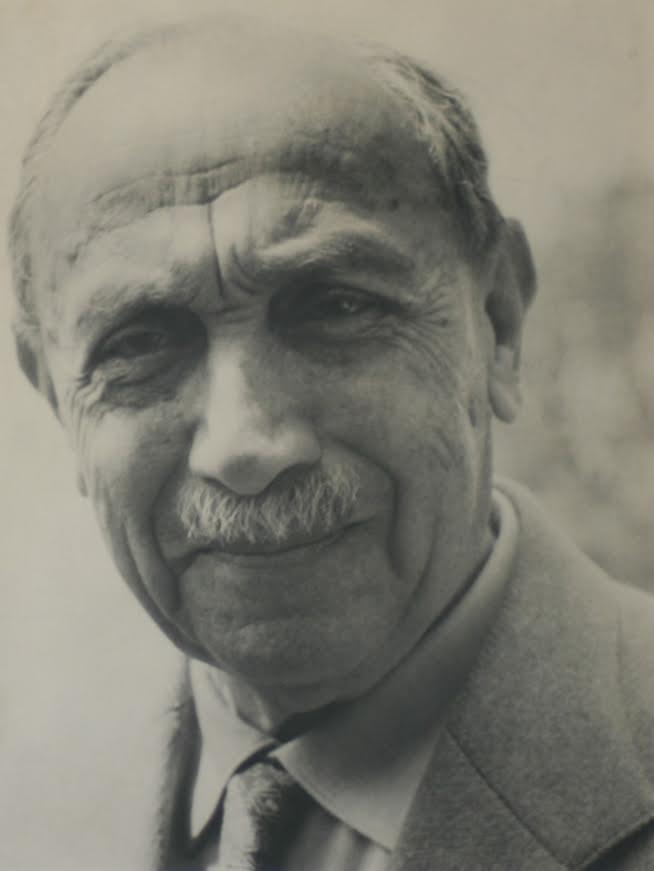



Ahmet Ferit Tek was a statesman who held various political, diplomatic, and literary posts spanning the late Ottoman period to the early Republic. Following the Second Constitutional Era, he shifted from Ottomanism to Turkish nationalism, became one of the founders of the Turkish Hearth, and served as its first president. During the National Struggle, he engaged in political activities and later held ministerial positions in the Ministry of Finance and the Ministry of Internal Affairs after the proclamation of the Republic. He also represented Türkiye in the embassies of London, Warsaw, and Tokyo.
Ahmet Ferit Tek was born on 7 March 1878 in Bursa. His father, Mustafa Reşit Bey, was a finance accountant, and his mother was Hanife Leyla Hanım. He completed his primary education at Darülfeyz Primary School and Gülhane Rüştiyesi. He pursued secondary education at Kuleli Military Preparatory School and higher education at the Military Academy and subsequently the War College. He graduated first in his class from the Military Academy in 1896.
In 1897, he was arrested on grounds of association with the Committee of Union and Progress and exiled to Tripolitania. There he met Yusuf Akçura. In 1900, he escaped by boat via Tunis to Paris. In Paris, he enrolled at the École des Sciences Politiques and graduated in 1903. During this period, he engaged in political activities in Cairo and Kazan and wrote articles for the newspapers Türk and Şûra-yı Ümmet.
After the proclamation of the Constitution in 1908, he returned to Istanbul and served as a deputy for Kütahya in the Chamber of Deputies. He was expelled from the Committee of Union and Progress due to his criticisms of its policies. In 1912, he became one of the founders of the Turkish Hearth and served as its first president. In the same year, he founded the National Constitutional Party.
Through the newspaper İfhâm, which he published between 1912 and 1919, he shared various ideas with the public. The newspaper was occasionally censored, and he himself was exiled.
In 1918, he was appointed to the Consulate General in Kiev. He returned to Istanbul in 1919 and briefly served as Minister of Public Works in the cabinet of Damat Ferit Paşa. He resigned from this position due to disagreements with the government.
In 1920, he moved to Ankara and joined the Grand National Assembly as a deputy from Istanbul. He served as Minister of Finance from 17 July 1920 to 16 May 1921. After the Battle of Sakarya, he was appointed as Türkiye’s representative in Paris under the terms of the Ankara Agreement with France.
He contributed to the economic discussions during the Lausanne negotiations. In 1923, he was elected deputy for Kütahya and served as Minister of Internal Affairs. During this period, he contributed to the drafting of the Village Law and participated in efforts to combat banditry. He left office in 1924.
Between 1925 and 1943, he served in Türkiye’s diplomatic missions abroad. He held ambassadorial posts successively in London (1925–1932), Warsaw (1932–1939), and Tokyo (1939–1943). During these assignments, he contributed to the conduct of Türkiye’s foreign relations.
Ahmet Ferit Tek was part of the Turkish nationalism movement. He maintained a distance from Pan-Turkism and instead embraced a more Anatolia-centered conception of nationalism. He wrote articles for the newspapers Şûra-yı Ümmet, Türk, and İfhâm, as well as for the journal Türk Yurdu. His work Turan, written during his years in Paris, gained recognition in the intellectual life of the period.
He died on 25 November 1971 in the Moda district of Istanbul. He is remembered in history as a figure who held various political, diplomatic, and intellectual roles during the late Ottoman and early Republican periods.
Atatürk Ansiklopedisi. "Ahmet Ferit Tek (1878–1971)." Atatürk Araştırma Merkezi. Accessed June 30, 2025. https://ataturkansiklopedisi.gov.tr/detay/146/Ahmet-Ferit-Tek-(1878-1971)
Tekesin Vakfı. "Ahmet Ferit Tek 1876–1971." Tekesin.org.tr. Accessed June 30, 2025. https://tekesin.org.tr/hakkimizda/ahmet-ferit-tek-1876-1971

Education
Exile and Overseas Activities
The Second Constitutional Era and the Turkish Hearth
Publications
TBMM and Ministerial Roles
Diplomatic Posts
Intellectual Life
Death