


This article was automatically translated from the original Turkish version.
+2 More
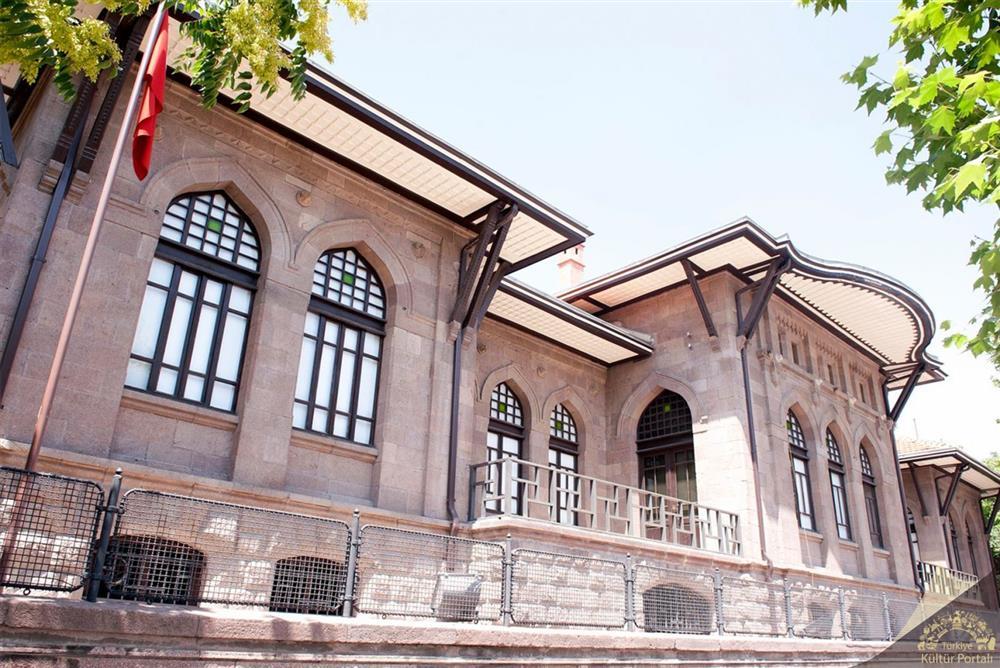
War of Independence Museum (Photo: Ankara Provincial Directorate of Culture and Tourism)
Location | Ulus - Ankara / Türkiye | ||||||||
|---|---|---|---|---|---|---|---|---|---|
Construction Date(s) | Completed as a parliament in 1920 Construction began in 1915 | ||||||||
Original Purpose | Designed as the club building of the Committee of Union and Progress | ||||||||
Usage Processes | 1961–1981: Museum of the Grand National Assembly of Türkiye 1981–present: Museum of the War of Independence Transferred to the Ministry of National Education in 1952 1924–1952: General Headquarters of the Republican People's Party, later Law School 1920–1924: First Grand National Assembly of Türkiye | ||||||||
Material | Pink-purple local andesite stone (Ankara stone) | ||||||||
Affiliated Institution | Presidency of the Grand National Assembly of Türkiye | ||||||||
Kurtuluş Savaşı Müzesi is located on Ulus Square in Ankara and reflects the current function of the building that hosted the First Grand National Assembly of Türkiye from 23 April 1920 to 15 October 1924. The building, which was decided to be converted into a museum in 1957, opened to the public on 23 April 1961 as the “Grand National Assembly of Türkiye Museum” and on 23 April 1981 as the “Kurtuluş Savaşı Müzesi”. The museum is one of the cultural assets that materialize the founding memory of the Republic of Türkiye through original documents, artifacts, and its architecture.
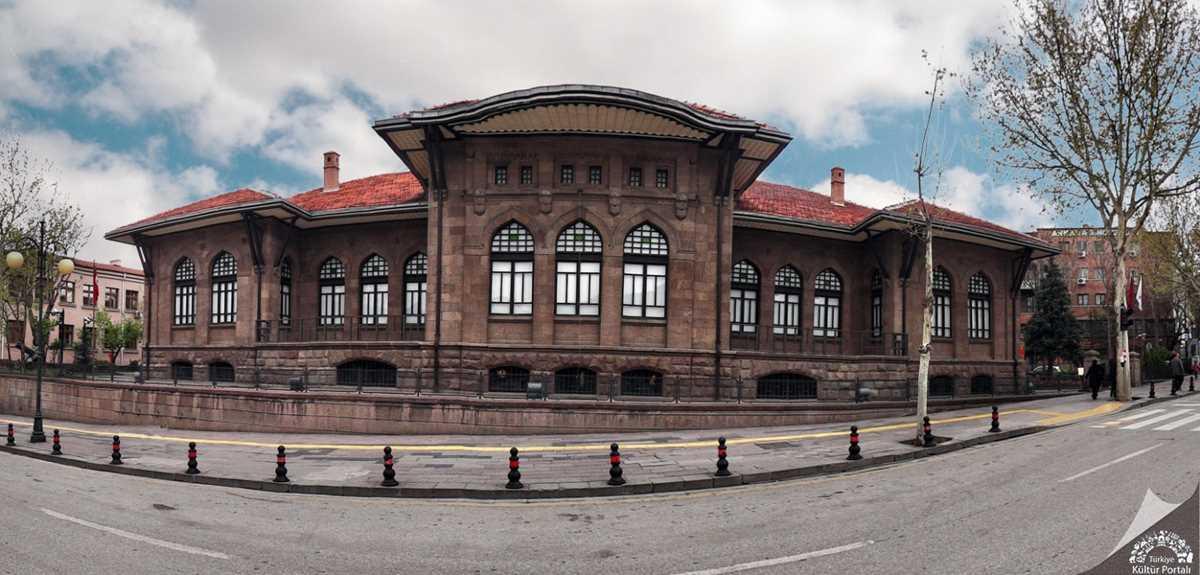
Kurtuluş Savaşı Müzesi (Türkiye Kültür Portalı)
The building of the First Grand National Assembly of Türkiye was originally designed in 1915 as a “club” structure for the Ankara branch of the Committee of Union and Progress【1】. The project was prepared by Salim Bey, architect of the Evkaf Ministry; construction supervision was assigned to Mahmut Şevket (Esendal) Bey, the committee’s representative in Ankara; and implementation was entrusted to the military architect Hasip Bey, who was serving in the corps. Due to material shortages during the war, the roof and interior sections remained unfinished; construction halted entirely when Hasip Bey was killed in action.
In the period following the Armistice of Mudros, British and French forces settled in various parts of Ankara in November 1918. The commander of the French detachment used this partially completed building as his headquarters. When Mustafa Kemal Pasha arrived in Ankara on 27 December 1919, the French forces vacated the building and left the city.
When it was decided that the Grand National Assembly of Türkiye would open on 23 April 1920, there was no other building in Ankara large enough to serve this purpose. The unfinished club building was rapidly completed with public financial and moral contributions under the supervision of Necati Bey, Deputy from Bursa, and converted into the First Grand National Assembly of Türkiye. The Assembly convened under this roof until 15 October 1924; foundational decisions such as the adoption of the 1921 Constitution, the abolition of the Sultanate, the ratification of the Treaty of Lausanne, and the proclamation of the Republic were all made here.
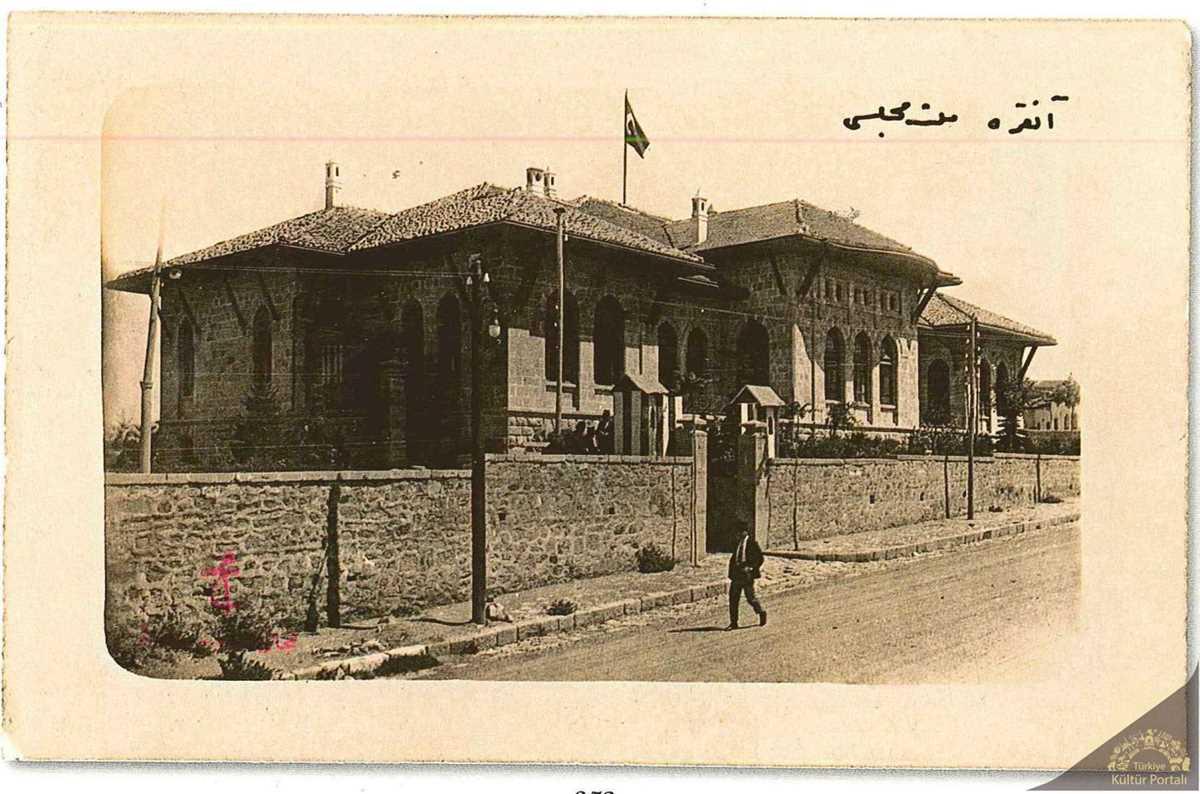
Ankara Millet Meclisi (Türkiye Kültür Portalı)
The building housing the Kurtuluş Savaşı Müzesi is an example of a public building from the First National Architecture Movement. Originally designed in 1915 as a club for the Committee of Union and Progress, the project was prepared by Salim Bey, architect of the Evkaf Ministry, and implementation was entrusted to the military architect Hasip Bey. Due to wartime conditions, the structure was not completed and was repurposed as a parliamentary building in 1920. Local pink-purple andesite stone (Ankara stone) was used in its construction; this material was applied with regular stonework on the façade.
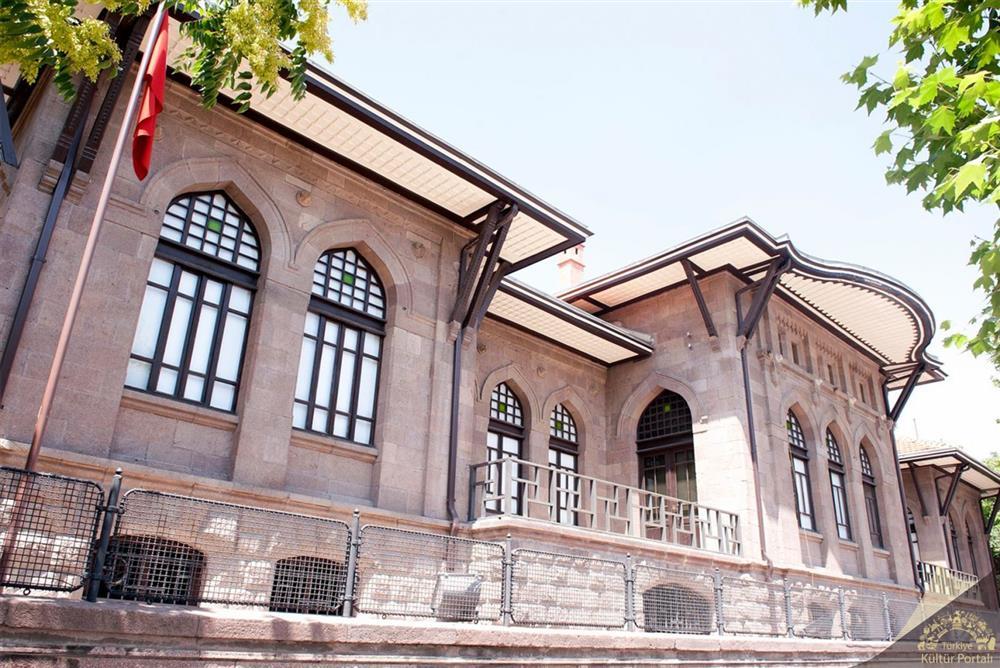
Kurtuluş Savaşı Müzesi Cephesi (Ankara İl Kültür ve Turizm Müdürlüğü)
The building has a symmetrical plan and consists of two floors. Rooms arranged along the corridor from the entrance were organized to suit the parliamentary activities of the period. Sections such as the Presidency Council, Committee Rooms, Sharia Council Room, Rest Room, Mosque, and President’s Office reflect this functional layout. The General Assembly Hall, located at the center of the building, has a rectangular plan and has been preserved in its original form. Distinct areas such as the Speaker’s podium, the Clerk’s desk, the Council of Ministers’ seating, and the deputies’ seating areas are clearly demarcated.
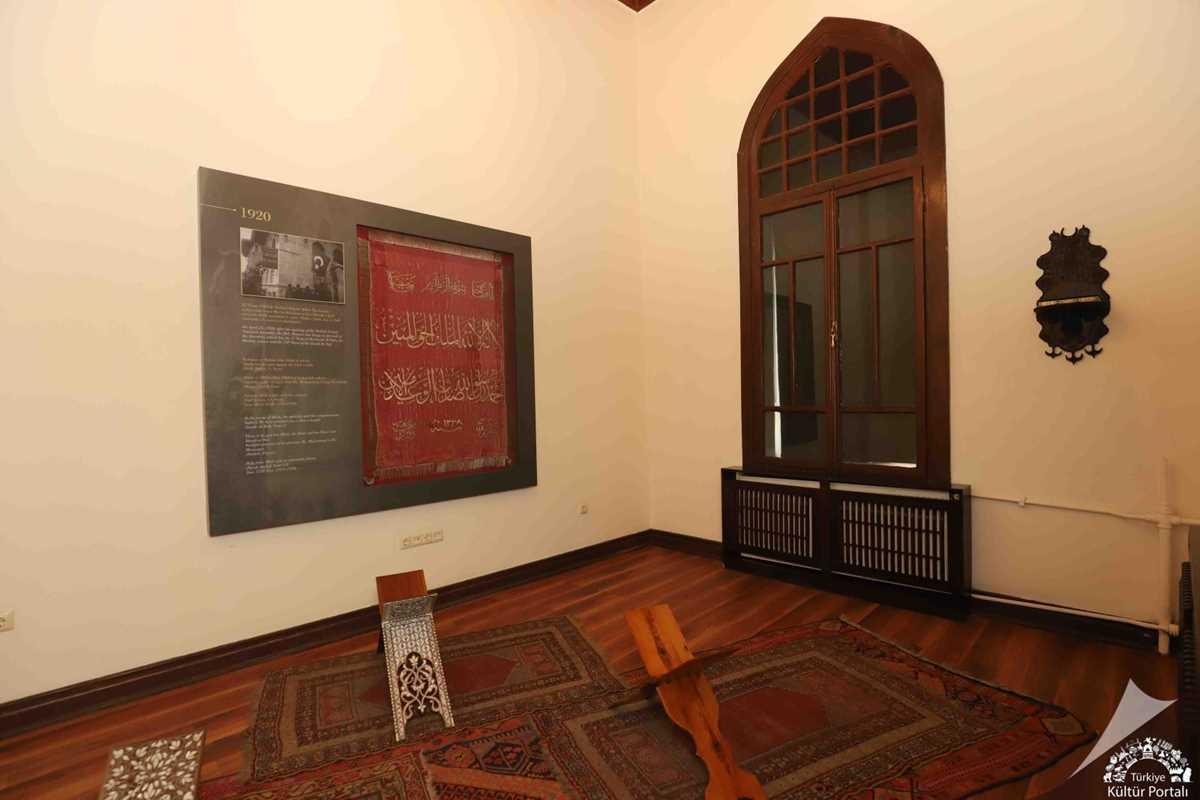
Mosque (Türkiye Kültür Portalı)
The furnishings within the interior spaces were collected according to the period’s usage and conditions. For example, the parliamentary podium was constructed by a local carpenter, and seating was sourced from educational institutions in Ankara. Lighting and heating equipment included oil lamps and sheet metal stoves.
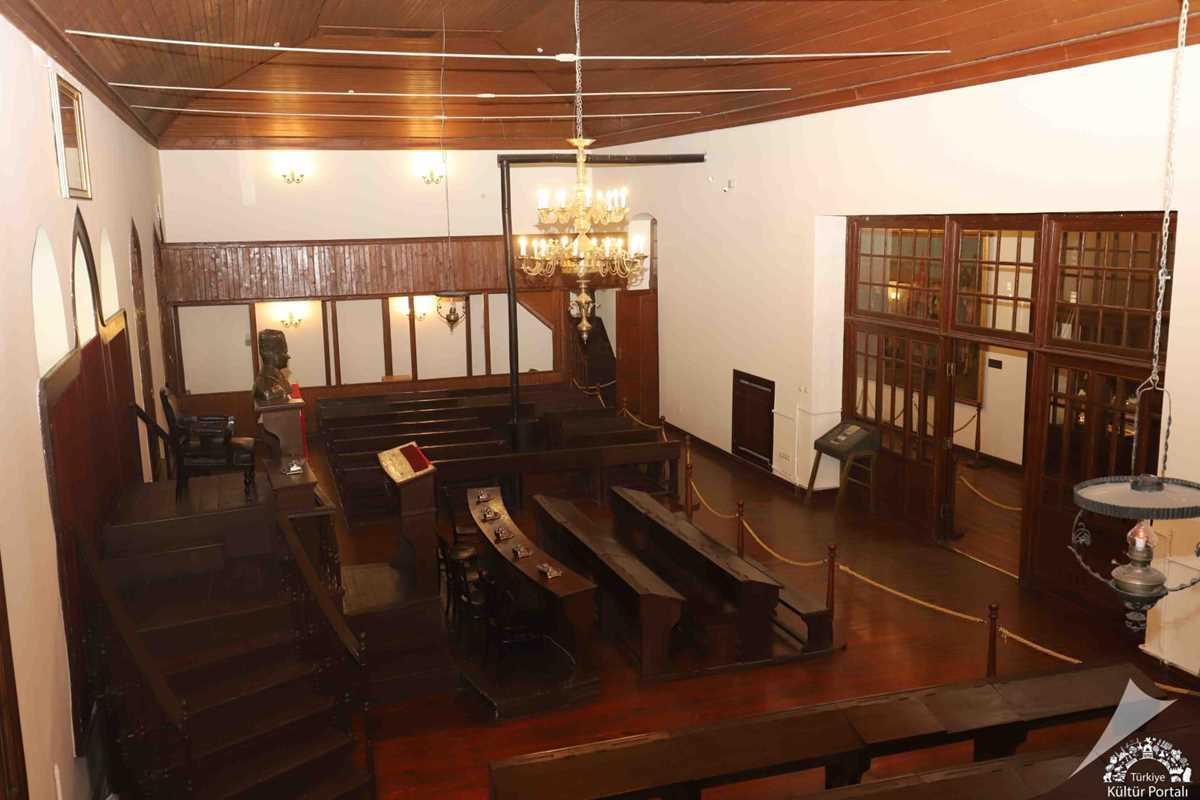
General Assembly Hall (Türkiye Kültür Portalı)
The collection of the Kurtuluş Savaşı Müzesi consists of diverse materials documenting the historical process between 1918 and 1923. The interior spaces of the museum building have been arranged to reflect the structure of the period’s parliament, with each room curated to convey a specific historical theme.
On the left side of the corridor and its connected rooms, a chronological display presents critical documents, photographs, oil paintings, and military artifacts beginning with the Armistice of Mudros, Mustafa Kemal’s landing in Samsun, the Amasya Circular, the Erzurum and Sivas Congresses, and the Misak-ı Millî. The rooms on the right side of the corridor contain documents, badges, medals, and memorabilia related to the deputies of the first and second terms of the Assembly.
The General Assembly Hall has been opened to visitors with its original seating arrangement preserved. The Speaker’s podium, the Clerk’s desk, the deputies’ seating, and period-appropriate oil lamps, stoves, and writing sets are exhibited here. In the Presidency Council Room, the presidential table used at the Sivas Congress and photographs of the first cabinet of the Republic are displayed; in the Council Room, technical materials such as the seal of the Erzurum Congress, communication equipment, and cipher devices are exhibited.
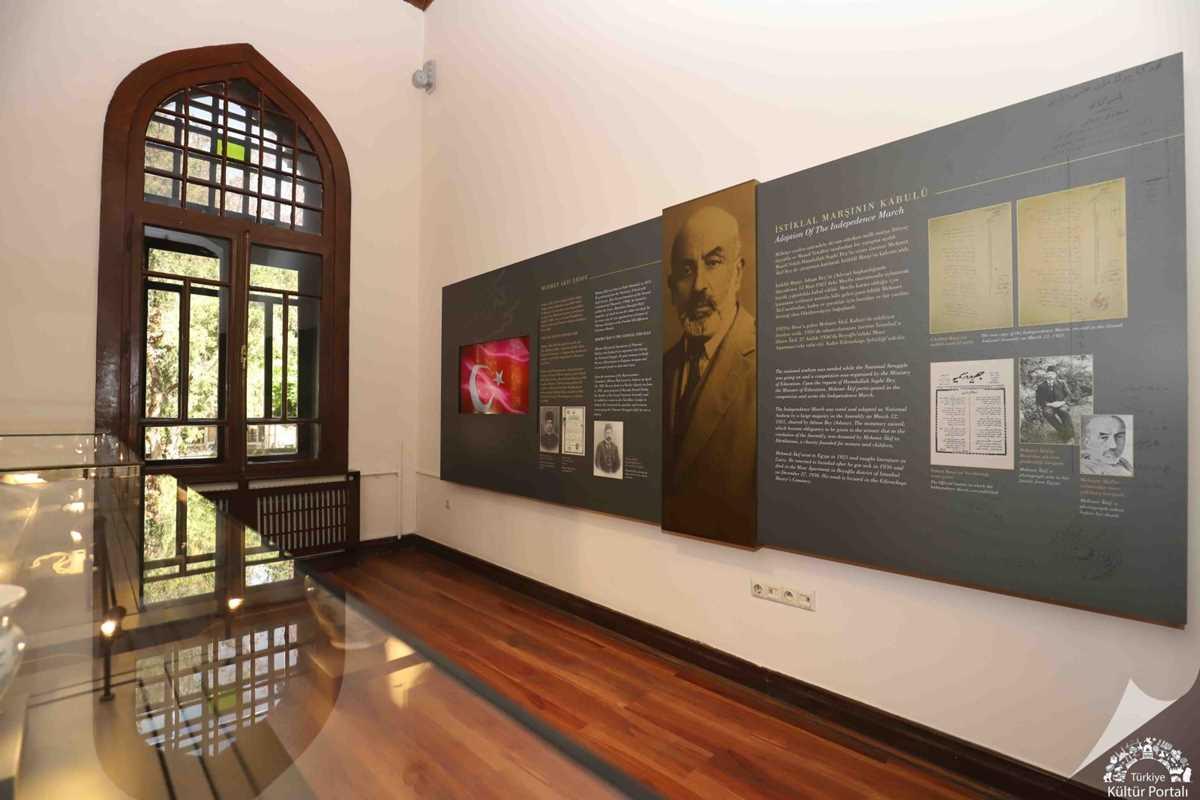
İstiklal Marşı Anı Odası (Türkiye Kültür Portalı)
In the Rest Room, the Lausanne Treaty table, gifts related to the Treaty of Gümrü, and various military objects from the war period are displayed; in the Sharia Council Room, the Misak-ı Millî carpet, draft constitutions, and symbols of independence are presented to visitors.
The President’s Office was designed as Mustafa Kemal’s workspace in the Assembly. Here, the Presidency seal, carpet panels, and office materials from the period are preserved in their original condition. Together, all these sections transform the museum’s collection into a multi-layered narrative that extends beyond documents to include functional objects and historical artifacts.
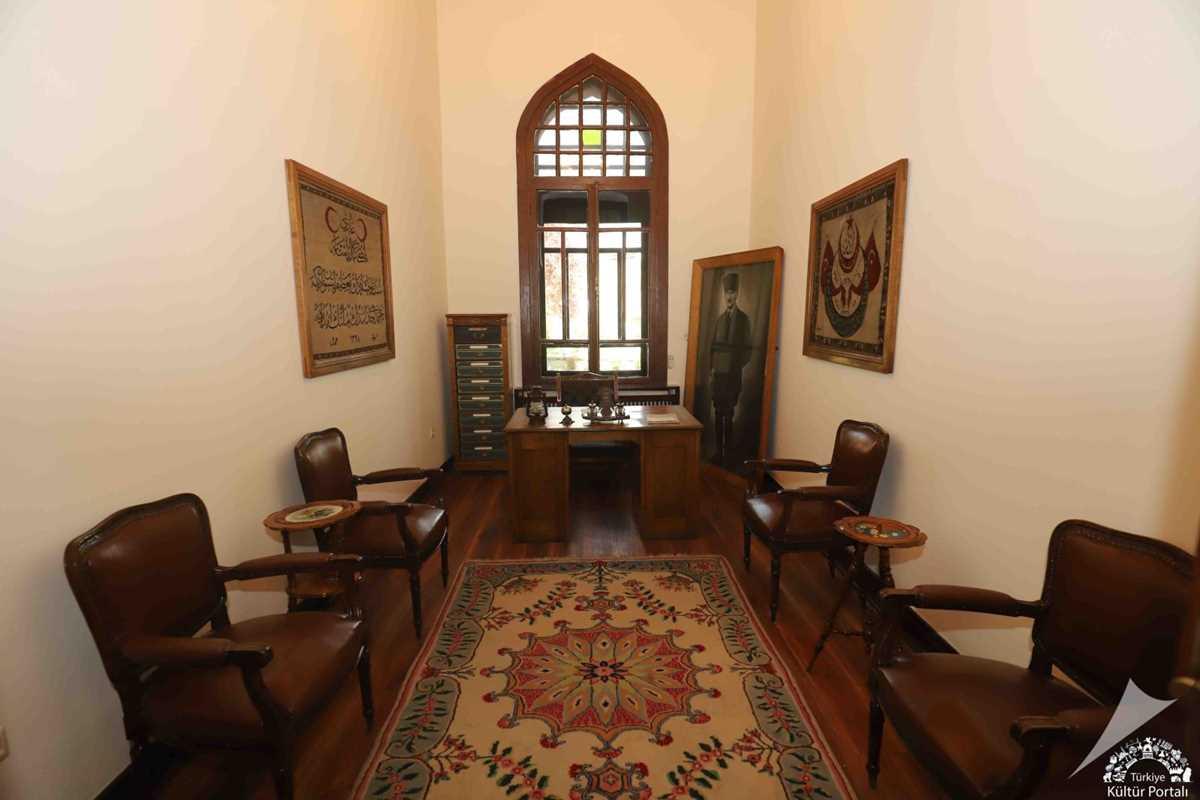
President’s Office (Türkiye Kültür Portalı)
HANİOĞLU, M. Şükrü. “İttihat ve Terakkî Cemiyeti.” *TDV İslâm Ansiklopedisi*. Accessed April 22, 2025.https://islamansiklopedisi.org.tr/ittihat-ve-terakki-cemiyeti
HANİOĞLU, M. Şükrü. “İttihat ve Terakkî Cemiyeti.” *TDV İslâm Ansiklopedisi*. Accessed April 22, 2025.https://islamansiklopedisi.org.tr/ittihat-ve-terakki-cemiyeti
HANİOĞLU, M. Şükrü. “İttihat ve Terakkî Cemiyeti.” *TDV İslâm Ansiklopedisi*. Accessed April 22, 2025.https://islamansiklopedisi.org.tr/ittihat-ve-terakki-cemiyeti
T.C. Ankara Valiliği. "Kurtuluş Savaşı Müzesi." T.C. Ankara Valiliği Web Sitesi. Accessed April 22, 2025.http://www.ankara.gov.tr/kurtulus-savasi-muzesi
T.C. Ankara Valiliği. "Kurtuluş Savaşı Müzesi." T.C. Ankara Valiliği Web Sitesi. Accessed April 22, 2025.http://www.ankara.gov.tr/kurtulus-savasi-muzesi
T.C. Ankara Valiliği. "Kurtuluş Savaşı Müzesi." T.C. Ankara Valiliği Web Sitesi. Accessed April 22, 2025.http://www.ankara.gov.tr/kurtulus-savasi-muzesi
T.C. Kültür ve Turizm Bakanlığı. "Kurtuluş Savaşı Müzesi (I. TBMM Binası)." Ankara İl Kültür ve Turizm Müdürlüğü. Accessed April 22, 2025.https://ankara.ktb.gov.tr/TR-260402/kurtulus-savasi-muzesi-i-tbmm-binasi.html
T.C. Kültür ve Turizm Bakanlığı. “Kurtuluş Savaşı Müzesi.” Türkiye Kültür Portalı. Accessed April 22, 2025.https://www.kulturportali.gov.tr/portal/kurtulussavasimuzesi
T.C. Ministry of Culture and Tourism. "Ankara - Museum of the War of Independence (1stTBMM Binası." T.C. Ministry of Culture and Tourism Website. Accessed April 22, 2025.https://www.ktb.gov.tr/TR-96356/ankara---kurtulus-savasi-muzesi-i-tbmm-binasi.html
T.C. Ministry of Culture and Tourism. "Ankara - War of Independence Museum (1stTBMM Binası." T.C. Ministry of Culture and Tourism Website. Accessed April 22, 2025.https://www.ktb.gov.tr/TR-96356/ankara---kurtulus-savasi-muzesi-i-tbmm-binasi.html
T.C. Ministry of Culture and Tourism. "Ankara - War of Independence Museum (1stTBMM Binası." T.C. Ministry of Culture and Tourism Website. Accessed April 22, 2025.https://www.ktb.gov.tr/TR-96356/ankara---kurtulus-savasi-muzesi-i-tbmm-binasi.html
T.C. Ministry of Culture and Tourism. "Kurtuluş Savaşı Müzesi (I. TBMM Binası)." Ankara İl Kültür veTurizm Müdürlüğü. Accessed April 22, 2025.https://ankara.ktb.gov.tr/TR-260402/kurtulus-savasi-muzesi-i-tbmm-binasi.html
T.C. Ministry of Culture and Tourism. "Kurtuluş Savaşı Müzesi (I. TBMM Binası)." Ankara İl Kültür veTurizm Müdürlüğü. Accessed April 22, 2025.https://ankara.ktb.gov.tr/TR-260402/kurtulus-savasi-muzesi-i-tbmm-binasi.html
T.C. Ministry of Culture and Tourism. "Kurtuluş Savaşı Müzesi." Türkiye Kültür Portalı. Accessed April 22, 2025.https://www.kulturportali.gov.tr/portal/kurtulussavasimuzesi
T.C. Ministry of Culture and Tourism. "Kurtuluş Savaşı Müzesi." Türkiye Kültür Portalı. Accessed April 22, 2025.https://www.kulturportali.gov.tr/portal/kurtulussavasimuzesi
Turkish Museums. "Ankara Kurtuluş Savaşı Müzesi (1.TBMM Binası)." Turkish Museums Web Sitesi. Accessed April 22, 2025.https://www.turkishmuseums.com/museum/detail/1945-ankara-kurtulus-savasi-muzesi-1tbmm-binasi/1945/1
Turkish Museums. "Ankara Kurtuluş Savaşı Müzesi (1.TBMM Binası)." Turkish Museums Web Sitesi. Accessed April 22, 2025.https://www.turkishmuseums.com/museum/detail/1945-ankara-kurtulus-savasi-muzesi-1tbmm-binasi/1945/1
Turkish Museums. "Ankara Kurtuluş Savaşı Müzesi (1.TBMM Binası)." Turkish Museums Web Sitesi. Accessed April 22, 2025.https://www.turkishmuseums.com/museum/detail/1945-ankara-kurtulus-savasi-muzesi-1tbmm-binasi/1945/1
[1]
“Bu döneme ait cemiyet ve Osmanlı arşiv belgeleri 1896 yılı itibariyle örgütün Paris, Cenevre, İstanbul ve Kahire merkezlerine ilâveten imparatorluk içinde Ankara, Beyrut, Edirne, Hama, Humus, Şam, Girit, Kastamonu, Limni, Ma‘mûretülazîz, Mersin, Rodos, Selânik, İzmir, Trabzon, Trablus (Suriye) ve Trablusgarp şubelerini kurduğunu, hukuken Osmanlı hâkimiyetinde olmakla birlikte fiilen Avusturya ve İngiliz yönetimi altındaki Bosna-Hersek, Kıbrıs, Romanya ve Bulgaristan’da Köstence, Filibe, Lom, Hacıoğlupazarcığı, Rusçuk, Tutrakan, Varna, Vidin ve Yanbolu’da teşkilât oluşturduğunu teyit etmektedir.’’ M. ŞÜKRÜ HANİOĞLU, “İTTİHAT ve TERAKKÎ CEMİYETİ,” TDV İslâm Ansiklopedisi, son erişim: 22 Nisan 2025, https://islamansiklopedisi.org.tr/ittihat-ve-terakki-cemiyeti

War of Independence Museum (Photo: Ankara Provincial Directorate of Culture and Tourism)
Location | Ulus - Ankara / Türkiye | ||||||||
|---|---|---|---|---|---|---|---|---|---|
Construction Date(s) | Completed as a parliament in 1920 Construction began in 1915 | ||||||||
Original Purpose | Designed as the club building of the Committee of Union and Progress | ||||||||
Usage Processes | 1961–1981: Museum of the Grand National Assembly of Türkiye 1981–present: Museum of the War of Independence Transferred to the Ministry of National Education in 1952 1924–1952: General Headquarters of the Republican People's Party, later Law School 1920–1924: First Grand National Assembly of Türkiye | ||||||||
Material | Pink-purple local andesite stone (Ankara stone) | ||||||||
Affiliated Institution | Presidency of the Grand National Assembly of Türkiye | ||||||||
No Discussion Added Yet
Start discussion for "Museum of the War of Independence (Building of the First Grand National Assembly of Türkiye)" article
History
Functional Changes
Architectural Features
Museum Collection