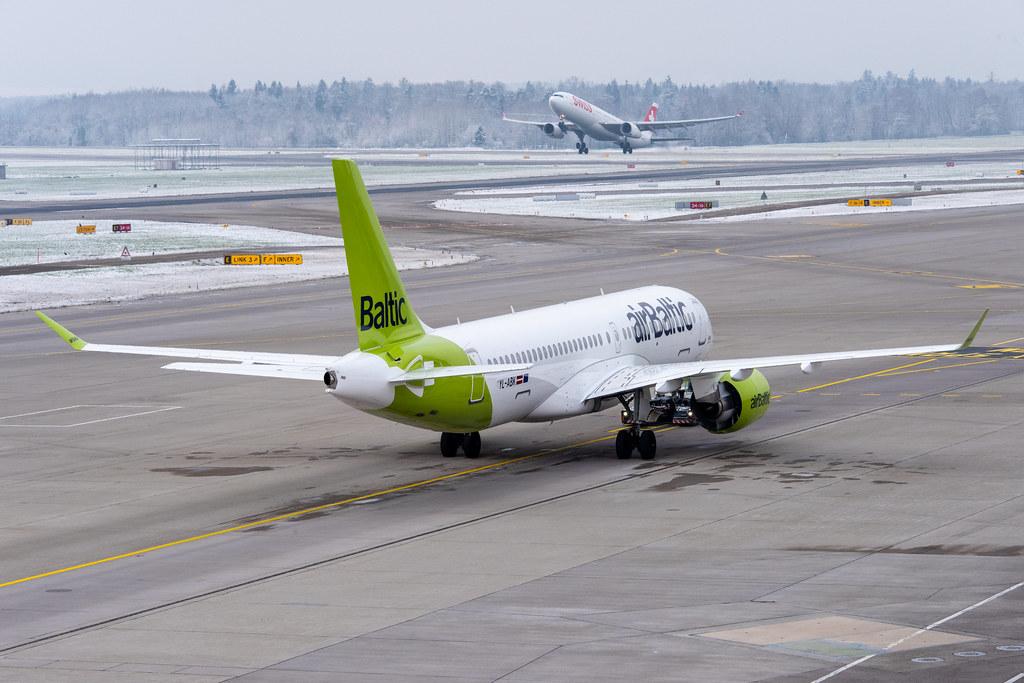


This article was automatically translated from the original Turkish version.
+2 More
Range(s) | 6390 - 6700 km | ||||||||
|---|---|---|---|---|---|---|---|---|---|
Engine(s) | Twin Turbofan (Pratt & Whitney PW1500G) | ||||||||
Manufacturer(s) | Airbus Canada Limited Partnership | ||||||||
Status | In Production | ||||||||
Origin(s) | Canada / Europe | ||||||||
First Flight(s) | 16 September 2013 | ||||||||
Maximum Speed | 829 - 871 km/h | ||||||||
Capacity | 100-160 Passengers | ||||||||
Crew | 2 Persons (Pilot) | ||||||||
Introduction into Service | 15 July 2016 | ||||||||
Role | Narrow-body Commercial Passenger Aircraft | ||||||||
Airbus A220 is a narrow-body, twin-engine regional to medium-range passenger aircraft produced under the Airbus Canada Limited Partnership joint venture between the European aerospace company Airbus and the Canadian manufacturer Bombardier. 【1】 The aircraft’s design and development process was initiated in 2008 by Bombardier under the name “C Series.” The first flight of the aircraft took place on 16 September 2013, and commercial service commenced for the first time on 15 July 2016 on the Zurich–Paris route operated by Swiss International Air Lines (SWISS). Following financial difficulties encountered by Bombardier in the program, Airbus acquired a majority stake in the project in 2018 for a nominal fee, rebranding the C Series aircraft as the A220-100 and A220-300 and integrating them into its product lineup.【2】 The main assembly operations for the aircraft are currently carried out at facilities in Mirabel, Canada, and Mobile, United States.
The A220 features a clean-sheet design specifically developed for the direct 100 to 160-seat market segment.【3】 In its structural design, advanced composite materials account for 40 percent of the total weight to reduce overall mass and enhance durability. Carbon fiber composites, particularly used in the wings, tail assembly, and rear fuselage, along with titanium, are the most prominent among these materials.【4】 The fuselage construction incorporates advanced aluminum-lithium alloys that offer higher resistance to corrosion and metal fatigue compared to conventional materials. In addition to these structural innovations, the aircraft integrates fly-by-wire flight control systems and high-aspect-ratio aerodynamic wing designs to optimize flight stability and operational responsiveness. All models in the A220 family share a common flight deck and system architecture, enabling pilots to operate both variants with a single type rating.
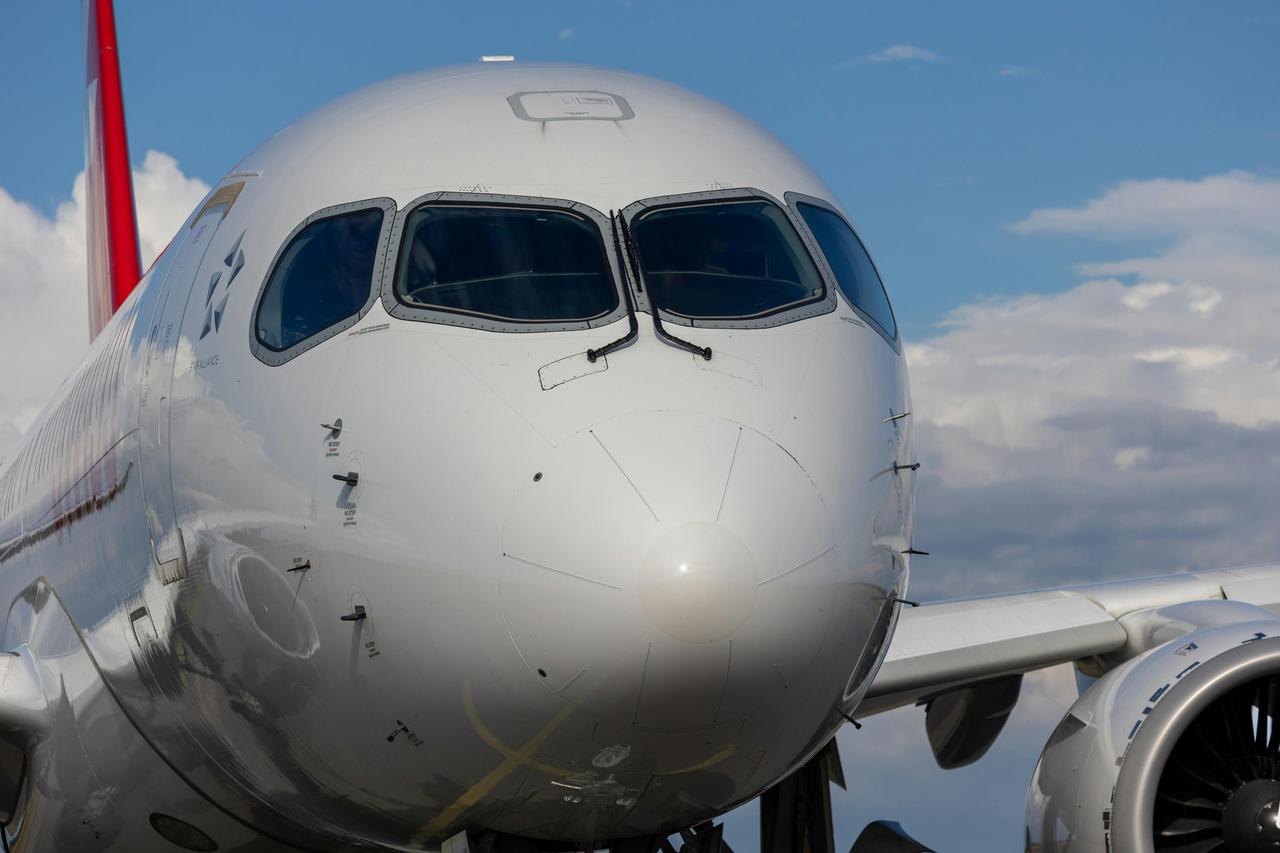
Airbus A220 (Pexels)
The aircraft’s propulsion system consists exclusively of PurePower PW1500G geared turbofan engines, specially developed by Pratt & Whitney for the A220 family. This engine technology employs a reduction gear mechanism positioned between the fan and the low-pressure compressor/turbine, allowing different engine components to operate at their optimal rotational speeds. Thanks to its high bypass ratio, this architecture delivers a 25 percent reduction in fuel consumption per seat and carbon dioxide emissions compared to previous-generation aircraft.【5】 In terms of environmental impact, the aircraft’s noise footprint is 50 percent lower than that of previous models.【6】 The A220 is currently certified to operate with up to 50 percent Sustainable Aviation Fuel (SAF), with plans to increase this to 100 percent by 2030. The integration of advanced materials and engine technology has also extended the aircraft’s periodic maintenance intervals, raising the “A” check limit to 850 flight hours and the “C” check limit to 8,500 flight hours.【7】
The A220 series is designed to accommodate Airbus’s “Airspace” cabin architecture. Despite being a narrow-body aircraft, it features a wider cabin cross-section, reducing the proportion of middle seats in economy class by half through a 2–3 seating configuration compared to standard narrow-body aircraft.【8】 The design achieves seat widths of up to 18.5 inches, supported by verticalized sidewalls and an elevated cabin ceiling. To enhance natural light intake, the largest panoramic windows in its class—measuring 11 by 16 inches—are installed. The Airspace XL overhead bins, with a 20 percent increased volume, are also provided. Cabin atmospheric conditions are optimized to minimize flight fatigue through noise-dampening insulation materials and LED lighting systems.
Airbus A220 (Flickr)
The A220 family serves the civil aviation market with two primary variants and one business jet model. The base model, the A220-100, has a fuselage length of 35 meters and can carry between 100 and 135 passengers depending on configuration, with a maximum range of 3,600 nautical miles.【9】 The stretched variant, the A220-300, with a length of 38.71 meters, offers a passenger capacity of 120 to 160 and a range of 3,400 to 3,450 nautical miles. These capabilities enable the aircraft to operate not only on high-density short-haul routes but also on intercontinental flights. In addition to commercial passenger variants, the ACJ TwoTwenty business jet version is produced with a specialized architecture capable of nonstop flights exceeding 12 hours. The model is also certified to operate from airports with short runways and operational restrictions, such as London City Airport.【10】
Since entering service, the A220 program has accumulated approximately 1,000 orders globally, with aircraft delivered to more than 30 airline operators worldwide. Major users include international carriers such as Delta Air Lines, JetBlue, Air France, and Air Canada, alongside airBaltic, which operates an all-A220 fleet.【11】 Overall operational reliability rates are reported to be around 99 percent; however, the model has encountered certain supply and maintenance challenges during its operational cycle. Specifically, issues such as corrosion and metal wear identified in the Pratt & Whitney PW1500G engine series have necessitated more frequent maintenance than originally planned. Due to consolidation in the maintenance infrastructure, portions of the global A220 fleet were temporarily grounded during certain periods, leading some airlines, such as Air Austral, to retire their A220 aircraft due to persistent maintenance continuity issues.
Airbus A220(Youtube)
Accessed November 26, 2025. https://www.aa.com.tr/tr/kultur/ahlatta-acilan-kurslarla-geleneksel-tas-isciligi-yasatiliyor/3116279.
Accessed November 26, 2025. https://www.aa.com.tr/tr/kultur/ahlatta-acilan-kurslarla-geleneksel-tas-isciligi-yasatiliyor/3116279.
Accessed November 26, 2025. https://www.aa.com.tr/tr/kultur/ahlatta-acilan-kurslarla-geleneksel-tas-isciligi-yasatiliyor/3116279.
Accessed November 26, 2025. https://www.aa.com.tr/tr/kultur/ahlatta-acilan-kurslarla-geleneksel-tas-isciligi-yasatiliyor/3116279.
Accessed November 26, 2025. https://www.aa.com.tr/tr/kultur/ahlatta-acilan-kurslarla-geleneksel-tas-isciligi-yasatiliyor/3116279.
Aero Icarus. "Air Baltic Airbus A220-300; YL-ABM@ZRH;28.03.2023 | LX638 to…". Flickr. Accessed March 15, 2026.
Air Austral. "Airbus A220". Air Austral. Accessed March 15, 2026.
Air France. "Welcome to the Airbus A220-300". Air France, Turkey. Accessed March 15, 2026.
Airbus. "A220 | Purpose-built for efficiency". Airbus. Accessed March 15, 2026.
Airbus. "Airbus A220 Family: comfort and efficiency". Airbus. Accessed March 15, 2026.
MTU AEROREPORT. "Airbus A220 – The innovative medium-haul jet from Canada". MTU Aero Engines. Accessed March 15, 2026.
Mangelsen, Joerg. "Close-up of the Nose of an Airbus A220". Free Stock Photo. Accessed March 15, 2026.
Skyships Eng. "Everything about the Airbus A220". YouTube Video. Accessed March 15, 2026.
Yu-Dawidowicz, Jasper. "Why The Airbus A220 Has Such Superior Passenger Comfort". Simple Flying. January 28, 2026. Accessed March 15, 2026.
https://aeroreport.de/en/good-to-know/airbus-a220-the-innovative-medium-haul-jet-from-canada
https://turkiyeturizmansiklopedisi.com/airbus-a220
https://www.air-austral.com/en/welcome-aboard/visite-panoramique/airbus-a220.html
https://www.airbus.com/en/products-services/commercial-aircraft/passenger-aircraft/a220-family
https://www.aircraft.airbus.com/en/aircraft/a220
Şekerli, Eyüp Bayram. "Airbus A220". Online Türkiye Turizm Ansiklopedisi, editor N. Kozak. 2020. Accessed March 15, 2026.
[1]
Şekerli, Eyüp Bayram. "Airbus A220". Online Türkiye Turizm Ansiklopedisi, editor N. Kozak. 2020. Access date: 15 March 2026
[2]
Airbus. "Airbus A220 Family: comfort and efficiency". Airbus. Access date: 15 March 2026.
https://www.airbus.com/en/products-services/commercial-aircraft/passenger-aircraft/a220-family
[3]
Airbus. "A220 | Purpose-built for efficiency". Airbus. Access date: 15 March 2026.
[4]
Şekerli, Eyüp Bayram. "Airbus A220". Online Türkiye Turizm Ansiklopedisi, editor N. Kozak. 2020. Access date: 15 March 2026
[5]
Airbus. "A220 | Purpose-built for efficiency". Airbus. Access date: 15 March 2026.
[6]
Yu-Dawidowicz, Jasper. "Why The Airbus A220 Has Such Superior Passenger Comfort". Simple Flying. 28 January 2026. Access date: 15 March 2026.
https://simpleflying.com/airbus-a220-superior-passenger-comfort/
[7]
Şekerli, Eyüp Bayram. "Airbus A220". Online Türkiye Turizm Ansiklopedisi, editor N. Kozak. 2020. Access date: 15 March 2026
[8]
Yu-Dawidowicz, Jasper. "Why The Airbus A220 Has Such Superior Passenger Comfort". Simple Flying. 28 January 2026. Access date: 15 March 2026.
https://simpleflying.com/airbus-a220-superior-passenger-comfort/
[9]
MTU AEROREPORT. "Airbus A220 – The innovative medium-haul jet from Canada". MTU Aero Engines. Access date: 15 March 2026.
https://aeroreport.de/en/good-to-know/airbus-a220-the-innovative-medium-haul-jet-from-canada
[10]
Yu-Dawidowicz, Jasper. "Why The Airbus A220 Has Such Superior Passenger Comfort". Simple Flying. 28 January 2026. Access date: 15 March 2026.
https://simpleflying.com/airbus-a220-superior-passenger-comfort/
[11]
MTU AEROREPORT. "Airbus A220 – The innovative medium-haul jet from Canada". MTU Aero Engines. Access date: 15 March 2026.
https://aeroreport.de/en/good-to-know/airbus-a220-the-innovative-medium-haul-jet-from-canada

Range(s) | 6390 - 6700 km | ||||||||
|---|---|---|---|---|---|---|---|---|---|
Engine(s) | Twin Turbofan (Pratt & Whitney PW1500G) | ||||||||
Manufacturer(s) | Airbus Canada Limited Partnership | ||||||||
Status | In Production | ||||||||
Origin(s) | Canada / Europe | ||||||||
First Flight(s) | 16 September 2013 | ||||||||
Maximum Speed | 829 - 871 km/h | ||||||||
Capacity | 100-160 Passengers | ||||||||
Crew | 2 Persons (Pilot) | ||||||||
Introduction into Service | 15 July 2016 | ||||||||
Role | Narrow-body Commercial Passenger Aircraft | ||||||||
Design Features and Structural Architecture
Engine Technology and Environmental Efficiency
Cabin Interior and Passenger Experience
Variants and Operational Capacity
Market Position and Operational Trials