

This article was automatically translated from the original Turkish version.
+1 More
Akşehir Cherry is a cherry variety registered by its place of origin, distinguished by its unique physical and aromatic characteristics, cultivated in the microclimatic region between Akşehir District of Konya Province and Sultandağı District of Afyonkarahisar Province in Türkiye. It has been officially registered as a geographical indication by the Turkish Patent Institute.
The Akşehir cherry has developed under the influence of the region’s specific climatic and soil conditions, exhibiting a long-lived, extensively branched tree structure. Its synonyms include “Akşehir Napoleon” and “Allahdiyen.” Production is limited to the areas of Konya-Akşehir and Afyon-Sultandağı. This region is surrounded by Akşehir Lake to the north, Eber Lake to the northwest, and Sultan Mountains to the south, providing ideal microclimatic conditions for cherry development.
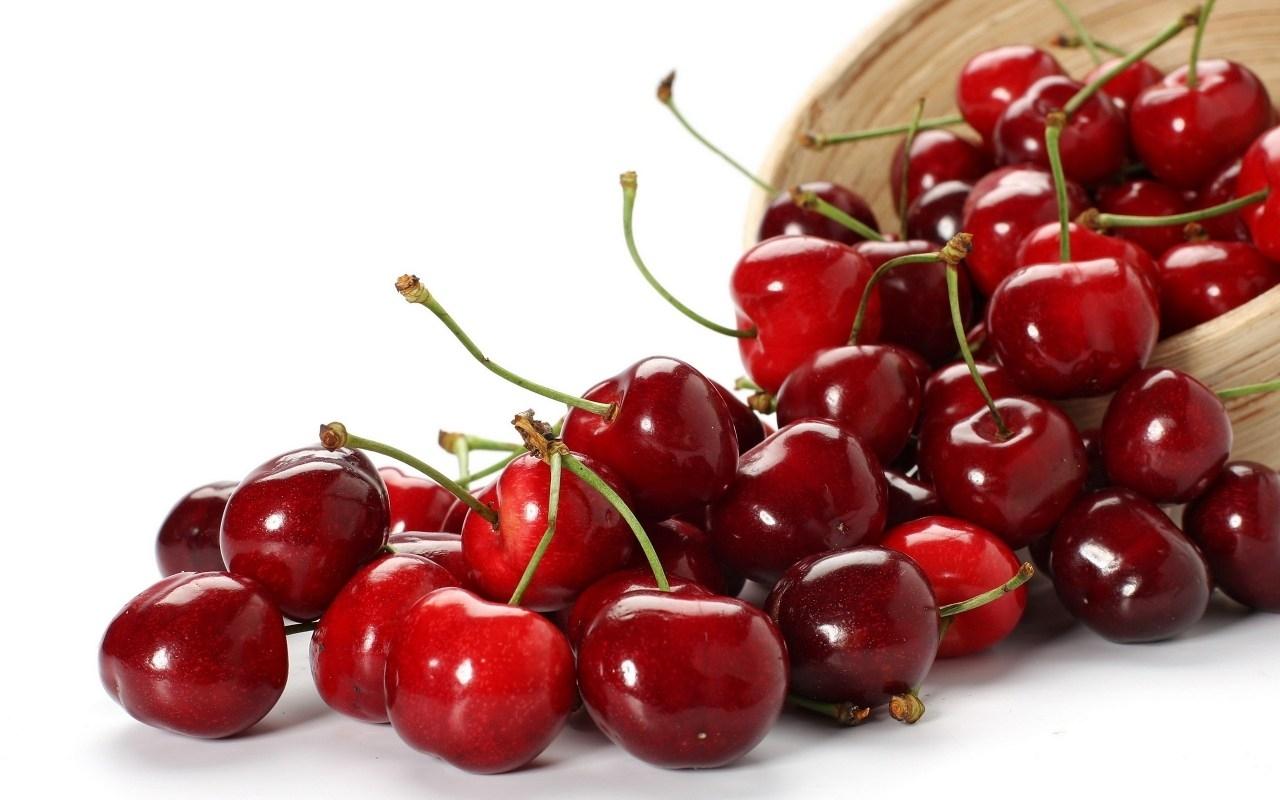
The Akşehir cherry is a late-ripening variety belonging to the Bigarreau group. The harvest period typically falls between June 20 and July 20. The fruit is broadly heart-shaped, very large, and has a bright dark red color. Its average weight ranges from 9 to 13 grams; the diameter measures 26.50–32 mm and the length 27–29 mm. The flesh is firm, crisp, juicy, and possesses a distinctive aroma. The lighter-colored portion of the flesh, adjacent to the skin, is particularly notable for its flavor. The stone is small (0.3–0.4 grams) and adheres minimally to the flesh. The fruit stem is slender and measures 48–50 mm in length, retaining its freshness and green color for an extended period during transport.
The primary factors distinguishing the Akşehir cherry from other regional varieties are the unique environmental conditions of the region and the fruit’s physiological structure. Eighty to ninety percent of the fruits exceed 26 mm in diameter. It exhibits a stable, non-periodic yield pattern. The microclimate formed by the region’s lakes and mountains imparts superior aroma, taste, and flavor characteristics to the cherry. Humidity levels during summer months never fall below 60%, reducing water loss and preventing premature ripening. The fruit’s crisp texture, firmness, and slightly tart-sweet flavor enhance its eating quality.
The soils in which the cherry is grown have a loamy structure, balanced in sand, clay, and silt content, providing optimal water retention and aeration. This well-drained and permeable substrate supports a rich organic ecosystem with high nutrient cycling. The long-term average annual rainfall in the region ranges between 550 and 610 mm. Chemical fertilizer use in agriculture is kept to a minimum; instead, regular and balanced farmyard manure is preferred. This practice strengthens the soil’s organic structure and enhances the fruit’s flavor and aroma profile.
The Akşehir cherry is primarily cultivated in settlements such as Atakent, Gölçayır, Değirmenköy, Yeniköy, Saray, Ulupınar, Engili, Gedil, Ilıcak, and Çakıllar.
The Akşehir cherry is self-incompatible and requires cross-pollination. Pollinator varieties include Starks Gold, Merton Late, Lambert, Bigarreau Gaucher, Noble, Jübilee, and the local variety Gılli.
The fruit does not crack and is highly resistant to long-distance transport conditions. Thanks to its stem structure, it retains its freshness and green color until it reaches the consumer.
The monitoring process is carried out by a commission composed of relevant professional associations and producer representatives, under the coordination of the Akşehir District Directorate of the Ministry of Agriculture and Forestry. At least three inspections are conducted annually, two of which coincide with the harvest and export periods. A protocol must be signed with the TKB Akşehir District Directorate for the use of the geographical indication. Required laboratory analyses can be performed at the Bursa Food Control and Central Research Institute.

Origin and Distribution
Botanical Characteristics
Distinguishing Features
Resilience and Transportability
Monitoring and Use