

This article was automatically translated from the original Turkish version.
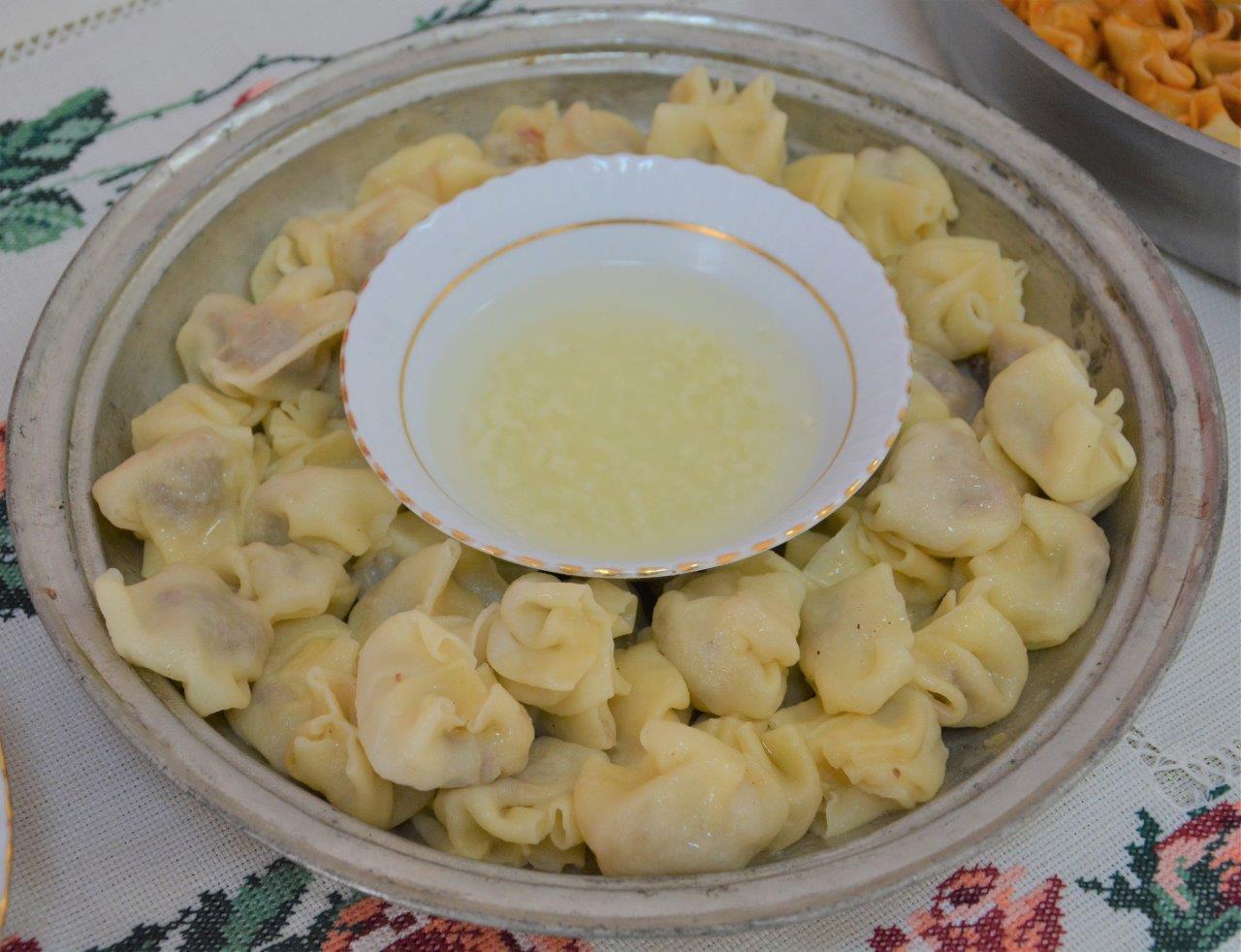
Alaca hingali is a traditional mantı variety unique to the Alaca district of Çorum, registered with a geographical indication mark. The filling, made from lean beef mince and finely chopped onion, is placed on square pieces of dough measuring 4 cm, prepared by kneading egg, flour, water and salt. The dough is folded into an eight-lobed pouch shape and boiled in salted boiling water. The cooked mantı are served with melted butter poured over them.
Alaca hingali is a mantı variety with deep roots in the traditional cuisine of the Alaca district, affiliated with Çorum province, and officially registered with a geographical indication mark. The filling consists of lean beef mince, onion and various spices. The dough is prepared by kneading egg, flour, water and salt. The thinly rolled dough is cut into 4 cm squares, filled with the mixture and folded into an eight-lobed pouch shape. This folding technique is one of the most fundamental distinguishing features of the product. Cooking is carried out in salted boiling water. Leaving the openings of the pouches unsealed during folding allows water to enter during boiling, directly affecting the quality of cooking.
During serving, butter made from cow’s milk is poured over Alaca hingali. Additionally, the dish is presented alongside a sauce prepared with garlic water or yogurt. Distinctive traditional methods are followed in the serving style and sauce usage, reinforcing the product’s geographical identity.
The basic ingredients and procedural steps for producing four portions of Alaca hingali are as follows:
Egg, flour, salt and water are mixed to form a firm dough. The dough is divided into portions and left to rest for approximately 30 minutes. It is then rolled out thinly and cut into large squares. For the filling, the onion is finely chopped and mixed with the mince and spices. A portion of this mixture is placed in the center of each dough square, which is then folded into an eight-lobed pouch shape.
The folded mantı are boiled in salted boiling water for approximately 4–5 minutes. After cooking, the mantı are removed from the water using a slotted spoon. For the sauce, garlic is crushed and mixed with a small amount of the water used for boiling the mantı. This mixture is served in a small bowl on the plate. The dish is completed by pouring melted butter over the mantı.
Alaca hingali has been an integral part of Alaca district’s culinary culture for many years. A meaningful link exists between the product and its geographical boundary due to its historically rooted recipe and the use of region-specific techniques in its preparation and presentation. Consequently, all production processes must take place exclusively within this defined geographical boundary.
In the production or sale of Alaca hingali, the product or its packaging must bear the designation “Alaca Hingali” alongside the official geographical indication emblem. If this is not feasible, the designation and emblem must be visibly displayed at the production site.
Monitoring to ensure compliance with the geographical indication registration and proper use of the emblem is conducted under the coordination of the Alaca Municipality. The monitoring body consists of a four-member committee representing the Alaca Municipality, the Alaca District Governorate, the Alaca Chamber of Commerce and Industry, and the Alaca District Directorate of Agriculture and Forestry.
This committee may inspect at least once annually, and additionally whenever necessary or in response to complaints, the suitability of ingredients used in production, the dough shaping method, the cooking and serving style, and compliance with registered standards. Technical support may be obtained from experts in the public or private sector as needed. The registering authority safeguards the product’s geographical indication rights through legal procedures.

Distinctive Features
Production Method
For the Dough:
For the Filling:
For the Sauce:
Geographical Boundary and Relationship to Production
Usage Requirements
Monitoring Process