This article was automatically translated from the original Turkish version.
+1 More
Type of Geographical İndication | Signpost | ||||||||
|---|---|---|---|---|---|---|---|---|---|
Application Date | 06.06.2022 | ||||||||
Registration Number | 1423 | ||||||||
Registration Date | 26.07.2023 | ||||||||
Product / Product Group(s) | Bakery and confectionery products sweets dough products | ||||||||
Province(s) | Manisa | ||||||||
Applicant/Registrant(s) | Alaşehir Chamber of Commerce and Industry | ||||||||
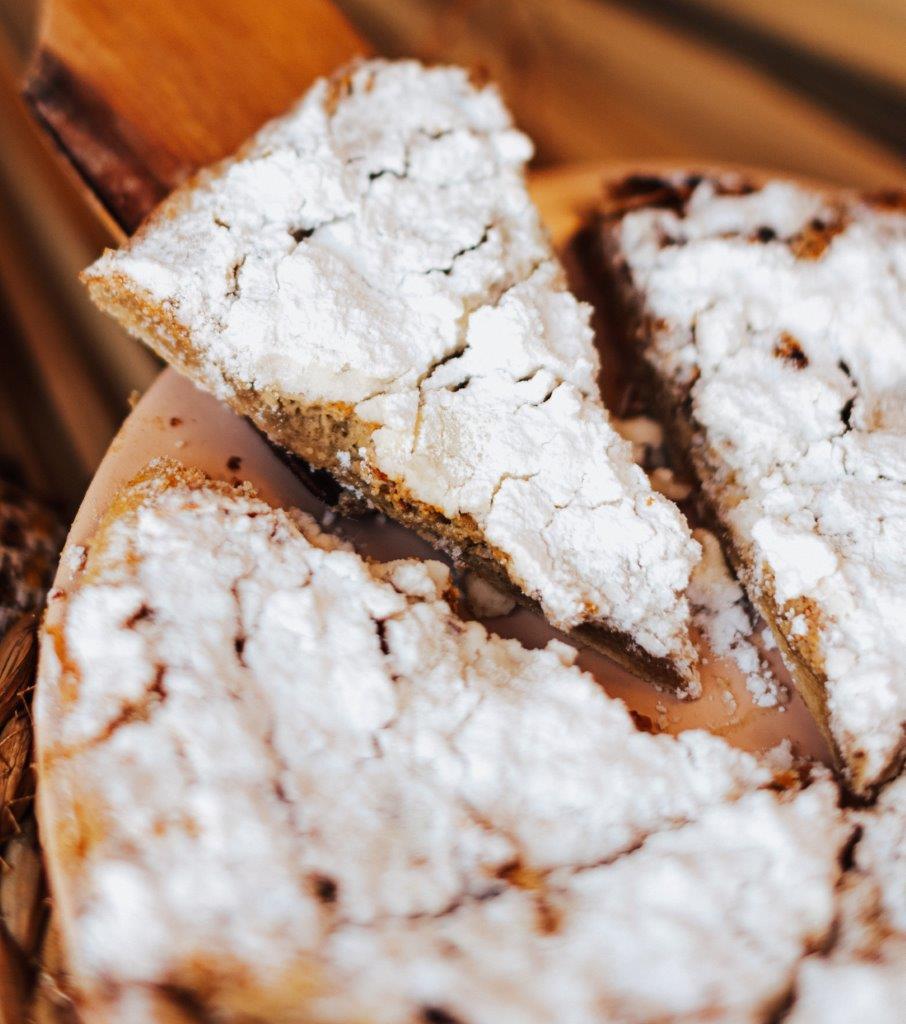
Alaşehir Tahinli Pidesi is a baked product unique to the district of Alaşehir in Manisa Province, registered as a geographical indication. The dough, made from pide flour, yeast, water, and salt, is spread with tahini both inside and on top, then baked in a stone oven. One of the distinguishing features of the product is that the baking process is completed in two sequential stages. Before baking is fully complete, the pide is removed from the oven, brushed with butter, and returned to the oven until its surface turns brown. It is served hot, optionally sprinkled with powdered sugar and finely chopped walnut kernels. Alaşehir Tahinli Pidesi holds a deep-rooted place in the culinary culture of the district and is a product whose reputation is intrinsically linked to its geographical origin.
Alaşehir Tahinli Pidesi was registered as a geographical indication on 26 July 2023 under Law No. 6769 on Industrial Property. The application was submitted by the Alaşehir Chamber of Commerce and Industry on 6 June 2022. The product is produced exclusively within the boundaries of the Alaşehir district in Manisa Province, and all production stages are carried out within this geographical region. The label “Alaşehir Tahinli Pidesi” and the geographical indication emblem must appear on the product or its packaging. If this is not feasible, the label and emblem must be displayed in a clearly visible location within the production facility.
Alaşehir Tahinli Pidesi is circular, with a diameter of 20–25 cm, a thickness of 1–1.5 cm, and a weight of 315–325 grams. The pide flour used in production contains a maximum of 65% ash and a minimum of 7% protein by dry weight. During baking in the stone oven, the tahini on the surface dries completely, turning brown. The two-stage baking process imparts a unique texture and flavor to the product. The pide is best consumed hot; if not consumed immediately, it should be stored at 4–6 °C and reheated before serving. Its shelf life does not exceed five days.
The production of Alaşehir Tahinli Pidesi requires specific ingredients and a meticulous process. Below are the required materials and steps for producing one pide:
The production standards for Alaşehir Tahinli Pidesi are annually inspected by a three-member inspection body coordinated by the Alaşehir Chamber of Commerce and Industry, including one expert representative each from the Alaşehir Municipality and the Alaşehir Restauranters, Pastry Makers, and Bakers Guild. Additional inspections are conducted upon complaint or need. The inspection verifies compliance with ingredient specifications, adherence to production methods, physical product characteristics, and correct use of the geographical indication emblem. The inspection body may obtain expert support or services from public or private institutions when necessary. The registrant is responsible for pursuing legal procedures to protect the rights associated with the geographical indication.
Alaşehir Tahinli Pidesi has a long-standing tradition in the culinary culture of Alaşehir. The two-stage baking method defines its unique geographical character and establishes its strong association with the district. The requirement that all production stages occur within the boundaries of Alaşehir district is fundamental to its geographical indication status. With these characteristics, Alaşehir Tahinli Pidesi constitutes an essential part of both the local culinary heritage and the cultural identity of the region.
T.C. Turkish Patent and Trademark Office. "Alaşehir Tahinli Pidesi – Coğrafi İşaretler Portalı." Accessed August 16, 2025. https://ci.turkpatent.gov.tr/cografi-isaretler/detay/6902
Turkish Patent and Trademark Office. "Mahreç İşareti: Alaşehir Tahinli Pidesi." Geographical Indication Certificate (PDF). Accessed August 16, 2025. https://ci.turkpatent.gov.tr/Files/GeographicalSigns/7fffe060-a321-4843-8a62-809004cab8df.pdf

Type of Geographical İndication | Signpost | ||||||||
|---|---|---|---|---|---|---|---|---|---|
Application Date | 06.06.2022 | ||||||||
Registration Number | 1423 | ||||||||
Registration Date | 26.07.2023 | ||||||||
Product / Product Group(s) | Bakery and confectionery products sweets dough products | ||||||||
Province(s) | Manisa | ||||||||
Applicant/Registrant(s) | Alaşehir Chamber of Commerce and Industry | ||||||||
No Discussion Added Yet
Start discussion for "Alaşehir Tahinli Pide" article
Geographical Indication and Registration Information
Product Characteristics
Production Method
Ingredients for Dough (1350 g dough)
Ingredients for One Pide
Production Steps
Inspection Process
Cultural and Geographical Significance