

This article was automatically translated from the original Turkish version.
+2 More
Alican Border Gate
Official Name and Location | Iğdır - Margara | ||||||||
|---|---|---|---|---|---|---|---|---|---|
Closure Date and Reason | The war and the occupation of the Kəlbəcər region | ||||||||
Infrastructure Completion Rate (2026) | 90% physical implementation by Türkiye | ||||||||
Alican Border Gate is a strategic crossing point long closed between Türkiye and Armenia. While the primary reason for the closure was the Nagorno-Karabakh conflict, historical disputes have also contributed to its prolonged closure.
However, since the beginning of a new normalization process after 2021, significant progress has been made in infrastructure upgrades and physical preparations have accelerated. Economic data indicate that opening the border could significantly boost regional development and commercial balances in Iğdır, Kars and surrounding provinces as well as across the South Caucasus.
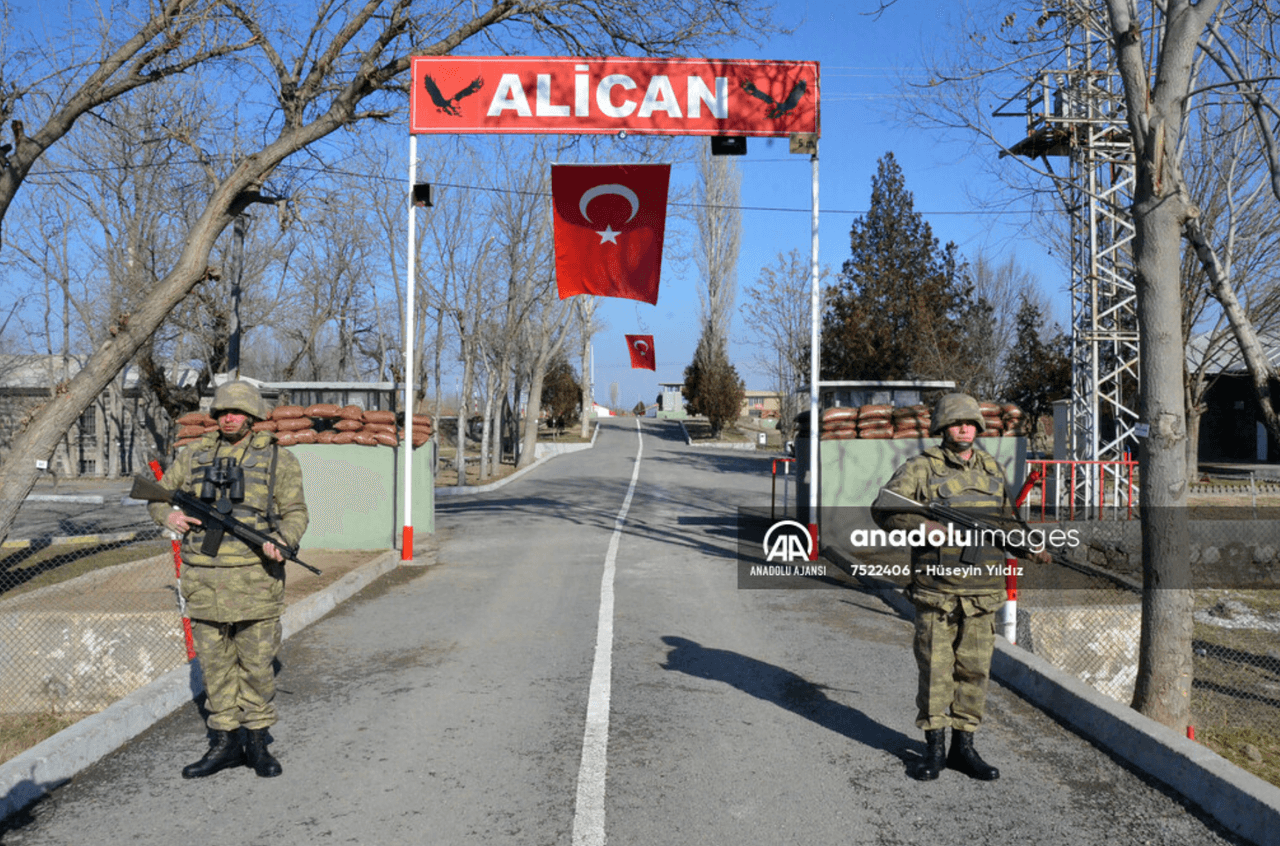
Alican border gate (AA)
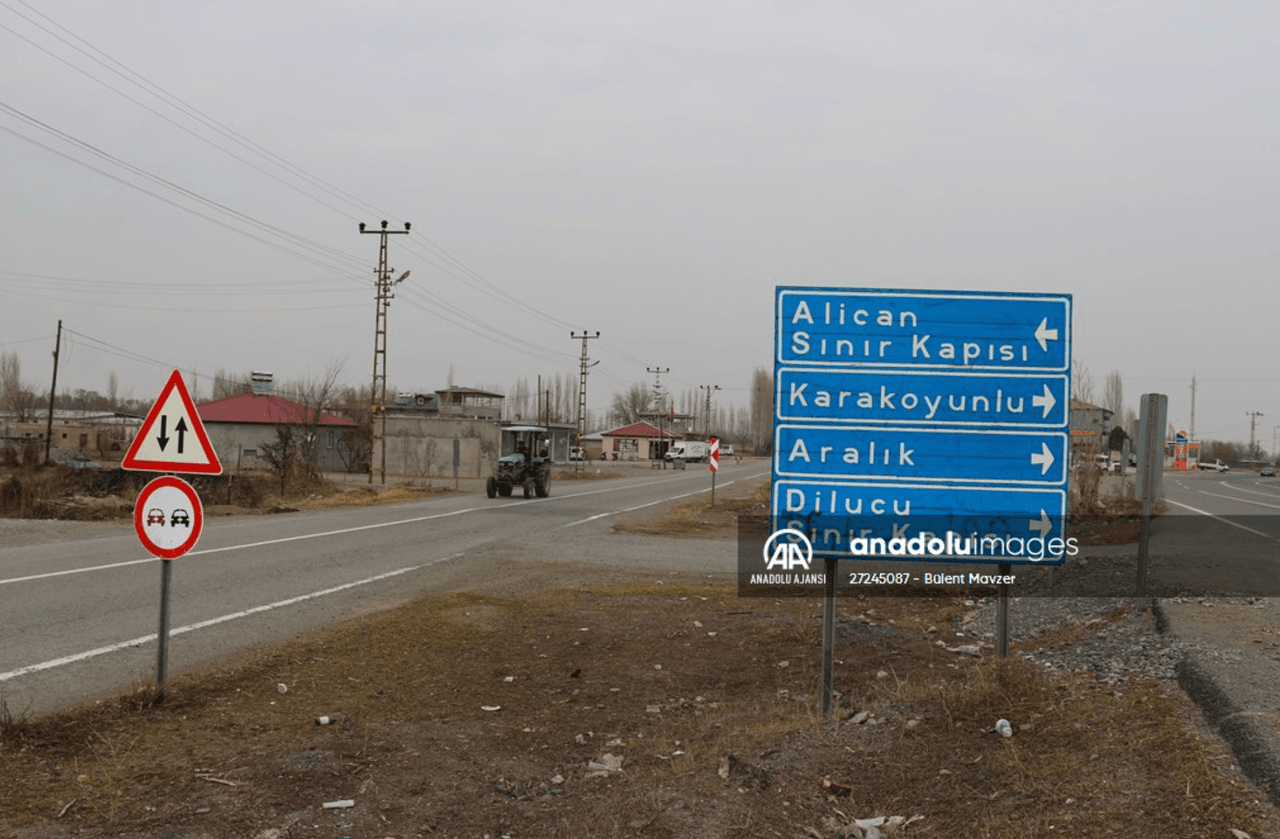
Alican Border Gate is the only land crossing point between Türkiye and Armenia. The gate is located in the Karakoyunlu district of Iğdır province, approximately 20.4 km from the city center of Iğdır; the distance to Yerevan, the capital of Armenia, is approximately 53.2 km. 【1】The border crossing is facilitated via the Markara Bridge over the Aras River.
The geographical area where the gate is located lies at the easternmost tip of the Eastern Anatolia Region, surrounded by Armenia to the north and northeast, and by the Nakhchivan Autonomous Region and Iran to the east and southeast, giving Iğdır province a privileged position in terms of border policy. Iğdır has three border gates: Alican (with Armenia), Dilucu (with Nakhchivan), and Boralan (with Iran); however, only the Dilucu Border Gate is currently operational. The Boralan and Alican gates remain closed for various reasons.【2】
Alican Border Gate entered a closure process shortly after a brief period of positive relations between Türkiye and Armenia following Armenia’s declaration of independence from the Soviet Union in 1991. Türkiye formally recognized Armenia’s independence in the same year and, in the early phase, provided various forms of support to Armenia amid its economic difficulties and invited it as a founding member of the Black Sea Economic Cooperation Organization.
However, relations were fundamentally damaged by the outbreak of the Nagorno-Karabakh conflict between Armenia and Azerbaijan. After Armenian forces seized the Azerbaijani region of Kelbajar in April 1993, Türkiye unilaterally closed its land border on 5 April 1993, a decision that also severed the railway connection in Kars. Since that date, neither diplomatic relations nor commercial transit routes have been reestablished between Türkiye and Armenia.
In addition to the Nagorno-Karabakh conflict, historical grievances have posed a major obstacle to normalization. Sensitive issues such as genocide allegations and territorial claims have formed the basis of the preconditions set by Türkiye for normalizing relations with Armenia. Within this context of historical tension, the closure of the Alican Border Gate became more than a mere border management decision—it became a concrete symbol of the freezing of all bilateral relations.
In academic literature, the Türkiye–Armenia border is described as one of the last remaining closed borders in the world following the Cold War. Unlike the borders of Georgia–Abkhazia or South Ossetia, which are direct products of post-Soviet conflicts, the Türkiye–Armenia border is viewed as a continuation of the already de facto closed Soviet–Turkish frontier since the 1920s, a condition that persisted even after the end of the Cold War. It has been documented that economic activity remains stagnant on both sides of the border, the tourism potential of the Ani Ancient City has not been realized, and regional development has been severely hindered.
The impacts of the closed border gate on Iğdır province have been extensively studied by researchers. The primary objectives of border trade include revitalizing the regional economy, raising living standards, increasing employment, and curbing smuggling. The closure of the Alican Border Gate means none of these functions have been fulfilled.
Iğdır survey studies reveal that 65% of local merchants support opening the border gate; among these supporters, 27% anticipate economic revitalization in border provinces if the gate opens. Participants identified political reasons as the main justification for the gate’s closure at 63%, historical reasons at 31%, and economic reasons at 6%.【3】
When asked about the most reliable and long-term trade partner, 45% of respondents identified Iran, 38% identified Azerbaijan (Nakhchivan), 15% identified Armenia, and 2% identified Georgia. These findings indicate that the local economy perceives the Armenian market as having relatively limited potential, with primary commercial expectations centered on Iran and Nakhchivan.
The economic disparity between Kars, where the border gate remains closed, and Iğdır, which benefits from border trade, is evident in foreign trade statistics. In 2015, Iğdır achieved exports worth approximately 132 million US dollars, while Kars recorded zero exports. Due to the closed border, Kars dropped from 62nd place in the Socioeconomic Development Index (SEDI) in 1996 to 69th place in 2017.【4】
This comparison demonstrates that the closure of the border gate has created a direct competitive disadvantage and deepened the region’s persistent migration problem. If the gate opens, employment growth is expected particularly in wholesale and retail trade, road transport, hotel and restaurant sectors. Estimates suggest that under an open-border scenario, total employment in the TRA2 Region (Ağrı, Ardahan, Iğdır, Kars) could increase by approximately 12,000 people.【5】
Armenia, due to its closed land border, faces significant transportation and foreign trade costs. As a landlocked country, Armenia’s dependence on transit nations is heightened because most of its western and eastern borders are closed. Consequently, trade between the two countries currently relies on routes through Georgia and Iran, increasing logistics costs and raising prices for traded goods.
Armenia’s foreign trade data reveal a structural trade deficit: in 2020, exports amounted to 2.5 billion US dollars while imports reached 4.5 billion US dollars, resulting in a trade deficit of approximately 2 billion US dollars.【6】In the same year, Türkiye ranked among Armenia’s top five import partners; however, due to indirect trade routed through Georgia and Iran, high logistics costs were incurred. Opening the gate would also enable Türkiye to use Armenia as a transit route for its trade with Central Asia and the Caucasus.【7】
The most comprehensive attempt at normalization between Türkiye and Armenia was the bilateral protocol signed by the foreign ministers of both countries in Zurich on 10 October 2009. These documents, which foresaw the restoration of diplomatic relations and the opening of the closed border, were widely regarded as a major step forward. However, immediately after the signing, then Türkiye Prime Minister Recep Tayyip Erdoğan announced that the protocols would not be ratified by the Grand National Assembly of Türkiye unless tangible progress was made on the Nagorno-Karabakh issue, and he visited Baku to reaffirm Türkiye’s support for Azerbaijan. Consequently, the protocols were never ratified by parliament and the border remained closed.【8】
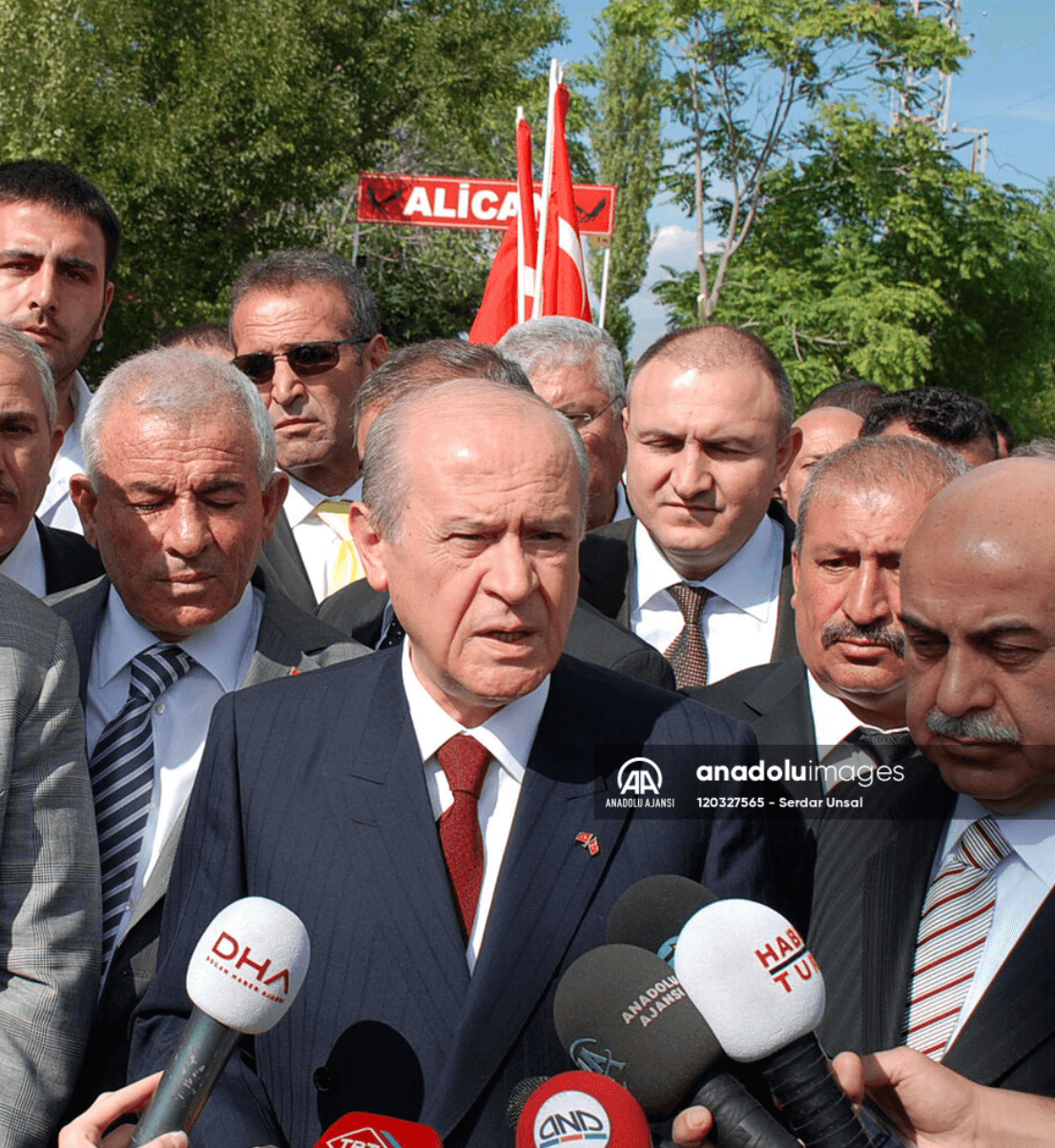
MHP Chairman Bahçeli at Alican border gate (AA)
This process clearly demonstrated that the normalization of Türkiye–Armenia relations remained entangled with the unresolved Nagorno-Karabakh issue and that Türkiye–Azerbaijan relations held decisive weight in shaping the dialogue between Türkiye and Armenia.【9】
Following thesecond war in the Nagorno-Karabakh region in 2020, which ended with a military advantage for Azerbaijan, normalization efforts between Türkiye and Armenia regained momentum. The issue of opening the border has been elevated to the top of the agenda, framed alongside potential socioeconomic benefits in foreign trade, regional development, tourism and logistics.
According to official statements from the Armenian Ministry of Foreign Affairs, special envoys from both countries continue to hold normalization talks, and a meeting on 30 July 2024 reported concrete progress in negotiations toward restoring relations.【10】
Infrastructure work continues at Alican (AA)
Alongside normalization talks, renewal efforts for the physical infrastructure of the Alican Border Gate have gained prominence. According to Anadolu Agency, approximately 90% of the work at the gate has been completed.【11】Demirören News Agency has also reported that the technical infrastructure of the gate has been assessed; this evaluation is crucial for determining the gate’s capacity and physical readiness ahead of a potential reopening. These developments indicate that both parties are taking practical steps beyond diplomatic rhetoric toward the gate’s operational reactivation.
Anadolu Ajansı. "Alican Sınır Kapısı'ndaki Çalışmaların Yüzde 90'ı Tamamlandı." Accessed June 9, 2026. https://www.aa.com.tr/tr/gundem/alican-sinir-kapisindaki-calismalarin-yuzde-90i-tamamlandi/3798833
Anadolu Images. "28 Yıldır Kullanılmayan Sınır Kapısı Son Teknolojiyle Korunuyor." Accessed June 9, 2026. https://www.anadoluimages.com/p/28-yildir-kullanilmayan-sinir-kapisi-son-teknolojiyle-korunuyor/8509090
Anadolu Images. "Doğudaki Esnaf ve Turizmciler Alican ve Zengezur Koridorundan Umutlu." Accessed June 9, 2026. https://www.anadoluimages.com/p/dogudaki-esnaf-ve-turizmciler-alican-ve-zengezur-koridorundan-umutlu/23979829
Anadolu Images. "Iğdır Alican Sınır Kapısı'ndaki Çalışmaların Yüzde 90'ı Tamamlandı." Accessed June 9, 2026. https://www.anadoluimages.com/p/igdir-alican-sinir-kapisindaki-calismalarin-yuzde-90i-tamamlandi/31024896
Anadolu Images. "MHP Genel Başkanı Bahçeli Alican Sınır Kapısı'nda." Accessed June 9, 2026. https://www.anadoluimages.com/p/mhp-genel-baskani-bahceli-alican-sinir-kapisinda/1575604
Council on Foreign Relations (CFR). "Nagorno-Karabakh Conflict." Global Conflict Tracker. Last Updated: 2026 Accessed June 9, 2026. https://www.cfr.org/global-conflict-tracker/conflict/nagorno-karabakh-conflict
Demirören Haber Ajansı (DHA). "Alican Sınır Kapısı'nın Teknik Altyapısı İncelendi." Accessed June 9, 2026. https://www.dha.com.tr/gundem/alican-sinir-kapisinin-teknik-altyapisi-incelendi-2781497
Künü, Serkan, Özlem Sökmen Gürçam, and Çiğdem Güneş. "Kapalı Sınır Kapılarının Yerel Ekonomiler Üzerine Yansımaları: Alican Sınır Kapısı Örneği." *I. Uluslararası Iğdır Sempozyumu Sosyal Bilimler Bildiri Kitabı*, pp. 393–410. Accessed June 9, 2026. https://ulk.ist/media/kitap/I-UKODTLK/kapali-sinir-kapilarinin-yerel-ekonomiler-uzerine-yansimalari-alican-sin_rx2uRut.pdf
Ministry of Foreign Affairs of Armenia. "Press Release on the Meeting of Special Representatives for Normalisation Process." July 30, 2024. Accessed June 9, 2026. https://www.mfa.am/en/press-releases/2024/07/30/arm_turk/12759
Reuters. "Turkey, Armenia make progress in normalisation talks." July 30, 2024. Accessed June 9, 2026. https://www.reuters.com/world/turkey-armenia-make-progress-normalisation-talks-2024-07-30/
Yulu, Adem. "Dilucu Sınır Kapısı'nın Iğdır Şehri Üzerindeki Etkileri." *Coğrafya Dergisi* 28 (2014): 20–35. Accessed June 9, 2026. https://www.researchgate.net/publication/349521745_Dilucu_Sinir_Kapisi'nin_Igdir_Sehri_Uzerindeki_Etkileri
Özyakışır, Deniz. "Türkiye-Ermenistan Sınır Kapısının (Doğu Kapı) Açılmasının Kars'a Olası Sosyoekonomik Etkileri." In *Küreselden Yerele: TR71 Bölgesi Sosyo-Ekonomisi*, edited by Mehmet Dikkaya, Nazan Şahbaz Kılınç, and Onur Bilgin, pp. 129–142. SAYDA, 2024. Accessed June 9, 2026. https://www.researchgate.net/publication/388354793_Turkiye-Ermenistan_Sinir_Kapisinin_Dogu_Kapi_Acilmasinin_Kars'a_Olasi_Sosyoekonomik_Etkileri
[1]
Serkan Künü, Özlem Sökmen Gürçam and Çiğdem Güneş, "Impacts of Closed Border Gates on Local Economies: The Case of Alican Border Gate," I. International Iğdır Symposium Social Sciences Proceedings, 393–410, accessed 9 June 2026,https://ulk.ist/media/kitap/I-UKODTLK/kapali-sinir-kapilarinin-yerel-ekonomiler-uzerine-yansimalari-alican-sin_rx2uRut.pdf
[2]
Adem Yulu, "Impacts of the Dilucu Border Gate on Iğdır City," 23–24, accessed 9 June 2026,https://www.researchgate.net/publication/349521745_Dilucu_Sinir_Kapisi'nin_Igdir_Sehri_Uzerindeki_Etkileri
[3]
Serkan Künü, Özlem Sökmen Gürçam and Çiğdem Güneş, "Impacts of Closed Border Gates on Local Economies: The Case of Alican Border Gate," I. International Iğdır Symposium Social Sciences Proceedings, 393–410, accessed 9 June 2026,https://ulk.ist/media/kitap/I-UKODTLK/kapali-sinir-kapilarinin-yerel-ekonomiler-uzerine-yansimalari-alican-sin_rx2uRut.pdf
[4]
Deniz Özyakışır, “Potential Socioeconomic Impacts of Opening the Türkiye-Armenia Border Gate (Eastern Gate) on Kars,” From Global to Local: The Socio-Economy of TR71 Region ed. Mehmet Dikkaya, Nazan Şahbaz Kılınç and Onur Bilgin (SAYDA, 2024), 129–142, accessed 9 June 2026, https://www.researchgate.net/publication/388354793_Turkiye-Ermenistan_Sinir_Kapisinin_Dogu_Kapi_Acilmasinin_Kars'a_Olasi_Sosyoekonomik_Etkileri
[5]
Deniz Özyakışır, “Potential Socioeconomic Impacts of Opening the Türkiye-Armenia Border Gate (Eastern Gate) on Kars,” From Global to Local: The Socio-Economy of TR71 Region ed. Mehmet Dikkaya, Nazan Şahbaz Kılınç and Onur Bilgin (SAYDA, 2024), 129–142, accessed 9 June 2026, https://www.researchgate.net/publication/388354793_Turkiye-Ermenistan_Sinir_Kapisinin_Dogu_Kapi_Acilmasinin_Kars'a_Olasi_Sosyoekonomik_Etkileri
[6]
Deniz Özyakışır, “Potential Socioeconomic Impacts of Opening the Türkiye-Armenia Border Gate (Eastern Gate) on Kars,” From Global to Local: The Socio-Economy of TR71 Region ed. Mehmet Dikkaya, Nazan Şahbaz Kılınç and Onur Bilgin (SAYDA, 2024), 129–142, accessed 9 June 2026, https://www.researchgate.net/publication/388354793_Turkiye-Ermenistan_Sinir_Kapisinin_Dogu_Kapi_Acilmasinin_Kars'a_Olasi_Sosyoekonomik_Etkileri
[7]
Deniz Özyakışır, “Potential Socioeconomic Impacts of Opening the Türkiye-Armenia Border Gate (Eastern Gate) on Kars,” From Global to Local: The Socio-Economy of TR71 Region ed. Mehmet Dikkaya, Nazan Şahbaz Kılınç and Onur Bilgin (SAYDA, 2024), 129–142, accessed 9 June 2026, https://www.researchgate.net/publication/388354793_Turkiye-Ermenistan_Sinir_Kapisinin_Dogu_Kapi_Acilmasinin_Kars'a_Olasi_Sosyoekonomik_Etkileri
[8]
Serkan Künü, Özlem Sökmen Gürçam and Çiğdem Güneş, "Impacts of Closed Border Gates on Local Economies: The Case of Alican Border Gate," I. International Iğdır Symposium Social Sciences Proceedings, 393–410, accessed 9 June 2026,https://ulk.ist/media/kitap/I-UKODTLK/kapali-sinir-kapilarinin-yerel-ekonomiler-uzerine-yansimalari-alican-sin_rx2uRut.pdf
[9]
Council on Foreign Relations (CFR), "Nagorno-Karabakh Conflict," Global Conflict Tracker, accessed 9 June 2026,https://www.cfr.org/global-conflict-tracker/conflict/nagorno-karabakh-conflict
[10]
Reuters, "Turkey, Armenia make progress in normalisation talks," 30 July 2024, accessed 9 June 2026,https://www.reuters.com/world/turkey-armenia-make-progress-normalisation-talks-2024-07-30/
[11]
Anadolu Ajansı, “90 Percent of Works at Alican Border Gate Completed,” accessed 9 June 2026,https://www.aa.com.tr/tr/gundem/alican-sinir-kapisindaki-calismalarin-yuzde-90i-tamamlandi/3798833.


Alican Border Gate
Official Name and Location | Iğdır - Margara | ||||||||
|---|---|---|---|---|---|---|---|---|---|
Closure Date and Reason | The war and the occupation of the Kəlbəcər region | ||||||||
Infrastructure Completion Rate (2026) | 90% physical implementation by Türkiye | ||||||||
Geographical Location
Closure of the Gate: Causes and Process
Nagorno-Karabakh Conflict and Türkiye’s Stance
Post-Cold War Context and the Last Remnant of the Iron Curtain
Economic Dimensions
Impacts on the Local Economy
Comparative Assessment with Kars
Assessment from Armenia’s Economic Perspective
Normalization Efforts
Zurich Protocols (2009)
Normalization Process After 2021
Physical Infrastructure Works