


This article was automatically translated from the original Turkish version.

Akyaka is a tranquil village nestled against the gentle waters of Gökova Bay,隶属于 Muğla’s Ula district. Today, no matter which coastal resort in Türkiye you visit, you will see concrete blocks rising parcel by parcel, multi-story hotels blocking each other’s views, and a chaotic, aesthetically indifferent urban layout. While nearly all of Türkiye’s coastlines have succumbed to this modern invasion, Akyaka transports you into a mesmerizing time tunnel. As you walk its streets, you find yourself surrounded by magnificent homes—unique yet free from monotony.
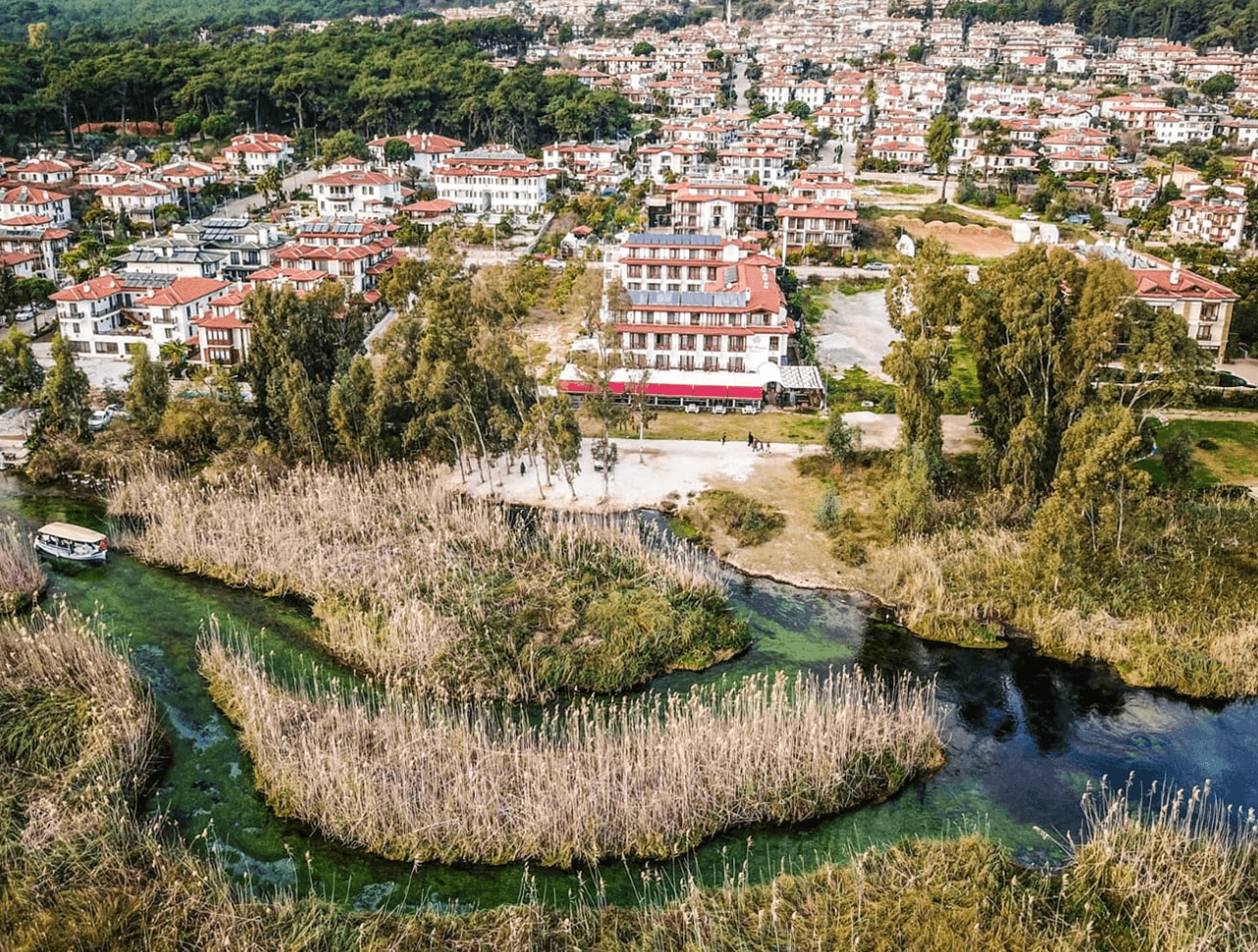
Akyaka (Ula Municipality)
So, in an era when global tourism operates with such ruthless efficiency, how did Akyaka manage to preserve its original architectural identity and distinctive culture?
The Story of an Architect Without Formal Training
The greatest hero behind Akyaka’s present silhouette and spirit—just as they say, “life becomes a film”—is Nail Çakırhan, who lived exactly such a life. He was never formally trained as an architect and held no diploma, yet he was a poet-soul “outsider” architect with a profound understanding of Anatolia’s building culture. Born in 1910 in a two-story traditional house built by his grandfather for his newlywed parents in Ula, Çakırhan described his childhood in Ula as follows:
“Ula was a beautiful place with a population of three thousand. I loved Ula deeply. Its long, snake-like alleys, single-story wooden houses nestled in gardens, and the bazaar shaded by ancient trees seemed enormous to my child’s eyes. Almost everyone lived under the same economic conditions. Everything was made at home.
Conversations lasted until midnight. Especially during Ramadan, people stayed up until dawn, eating and talking. These gatherings continued year-round. A few houses away, in a large garden, we had a spacious room with a stable beside it. Guests were hosted there, served the finest meals. Since there were no hotels or inns, visitors stayed in these homes. They brought news from their places of origin, and we listened carefully. Sometimes, master builders working on houses would also stay overnight. Craftsmen came from Rhodes—Greek artisans—and Armenian craftsmen too. Those wishing to build a house would come to the room, negotiate prices, and commission these artisans to construct their homes.”【1】
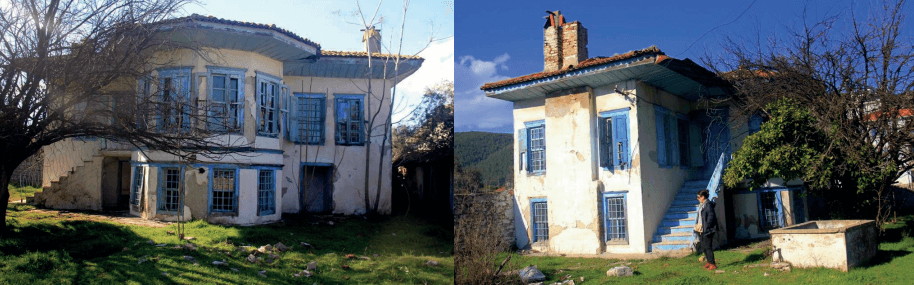
Nail Çakırhan's Grandfather's House (Oğuzhan Poyraz ve Hakan İmert)
Çakırhan’s life, rooted in these lands, continued in Konya as a student of Ahmet Hamdi Tanpınar. In Istanbul, he walked shoulder to shoulder with Nazım Hikmet and Sabahattin Ali, embarking on a political and literary journey shaped by membership in the Communist Party, years in Moscow, and periods of imprisonment. His marriage to the internationally renowned archaeologist Halet Çambel marked one of the turning points in his life.
The stones of his path toward architecture were laid when he took on the task of designing a protective canopy for artifacts unearthed during excavations at Karatepe in Adana—because no contractor could be found. There, Çakırhan carried out Türkiye’s first experiment with exposed concrete, and later assumed responsibility for the construction of the Turkish Historical Society building. In 1968, upon doctors’ advice to rest by the sea for health reasons, he redirected his life back to his birthplace: Akyaka.
While building his own home, he completely rejected the cold templates imposed by modern architecture and turned instead to the wooden Ula houses of his childhood. This was an era when traditional architecture was virtually ridiculed and concrete was sanctified. Isn’t this still largely true today?
When he sought skilled craftsmen, carpenters told him, “Are you mad? We’ve abandoned this work for years. Our hands no longer know how to cut wood like this—we’ve turned to concrete.””【2】 But he persisted. He convinced two elderly craftsmen—one with childhood paralysis, the other nearly blind—to complete his famous house in just seventy days.
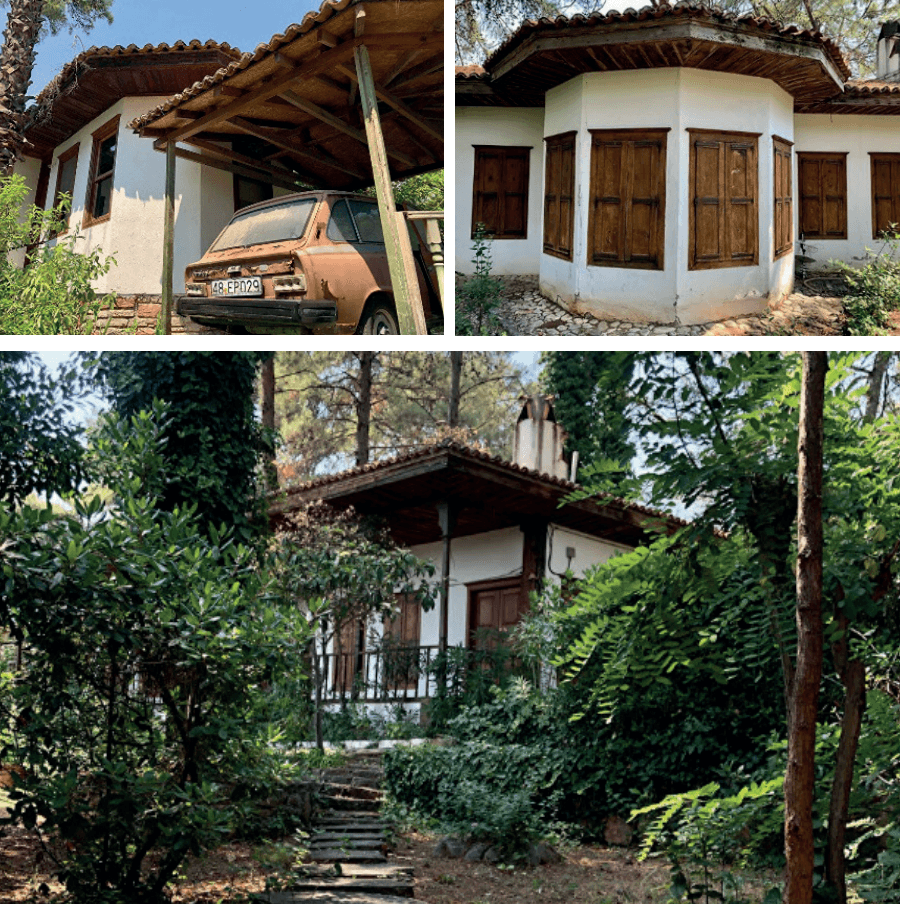
Exterior Views of Nail Çakırhan’s House (Oğuzhan Poyraz ve Hakan İmert)
That single house established such a profound cultural bond with nature that in 1983 it was awarded the prestigious Aga Khan Award for Architecture, often regarded as architecture’s Nobel Prize. Some Turkish academics and architects criticized the decision, even lodging formal complaints—but Çakırhan received the award nonetheless.
He distributed part of the 45,000-dollar prize to the workers who built his home. With the remainder, he restored the Muğla Cultural Center. He was devoted to culture, not profit. Perhaps it was precisely because he was not confined by academic molds that he was able to make this rebellion. Who knows?
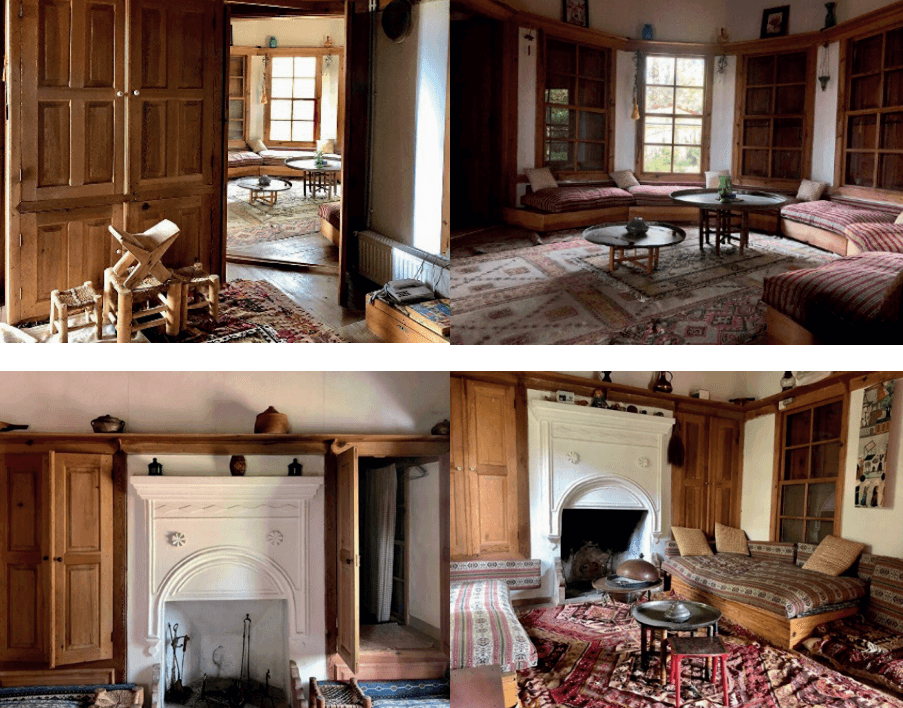
Interior Views of Nail Çakırhan’s House (Oğuzhan Poyraz ve Hakan İmert)
Architectural Codes That Make Akyaka Homes Unique
The sense of harmony you feel upon arriving in Akyaka is no accident. While in other coastal towns of Türkiye each homeowner strives to make their building more ostentatious than the next, Akyaka is governed by a collective aesthetic consciousness. This awareness was formalized into law when the area was designated a Special Environmental Protection Zone.
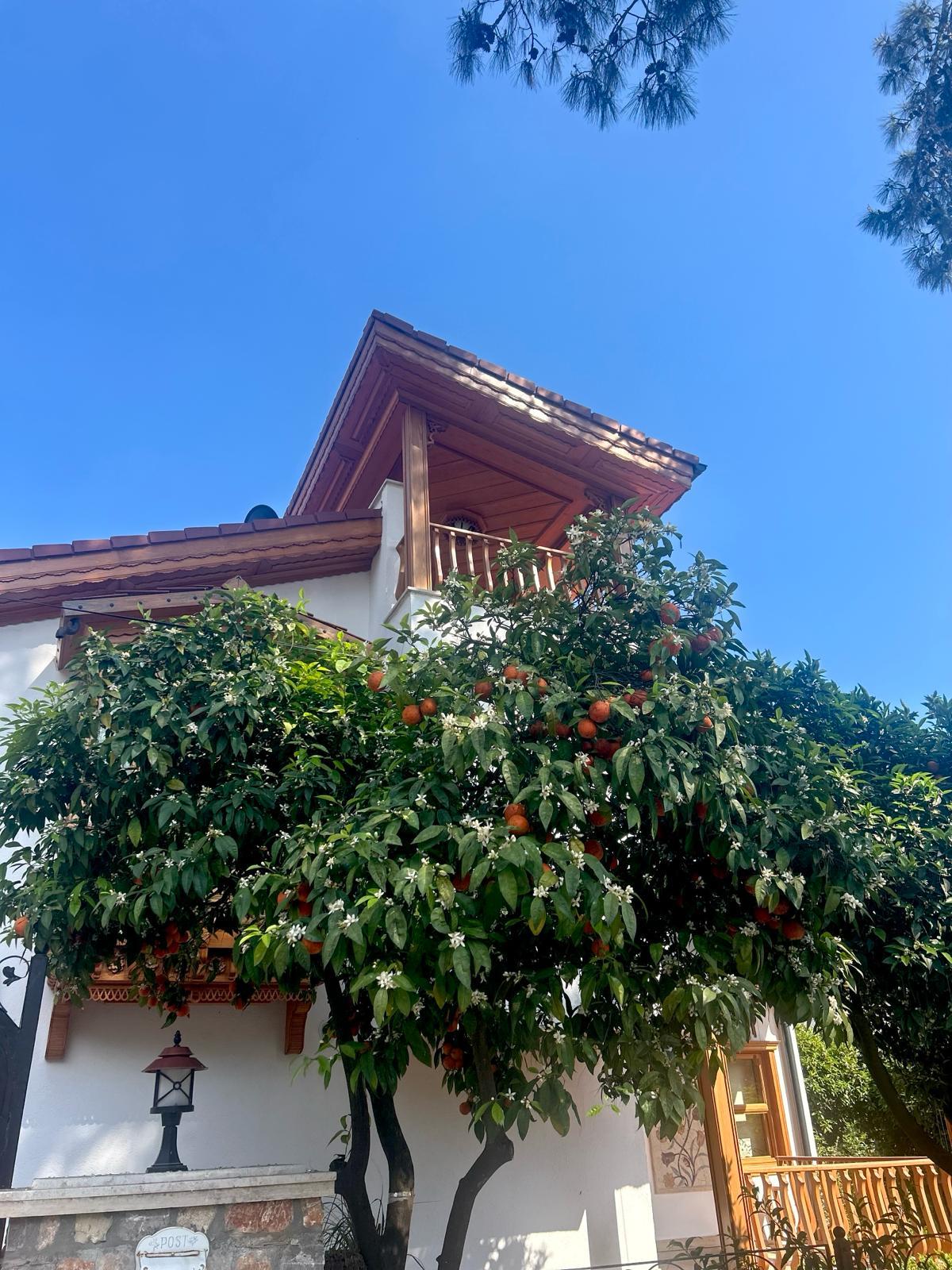
One of the Houses Built in the Style of Nail Çakırhan (Photo: Duygu Şahinler)
In Akyaka, buildings do not block the sky. According to zoning and preservation regulations, structures are limited to a maximum of two stories. They do not exceed the height of the surrounding trees and conform to the natural contours of the landscape.
Facades feature pure white plastered walls that reflect the region’s scorching summer heat. Windows, wide balconies, verandas, and eaves are dominated by natural wood and its warm, coffee-toned hues.
The traditional clay tiles used on roofs, along with the region’s iconic, wind-direction-specific, patterned Muğla chimneys, serve as the shared signature of every building in the village. From the single shop in the bazaar to the most remote residence, this mark remains unchanged.
Institutionalized Aesthetics
Leaving a culture or aesthetic solely to individual goodwill or personal efforts inevitably leads to failure in the long term. The remarkable homogeneity of Akyaka—and even the enduring charm of its bazaar—stem from scientifically and administratively developed urban design guidelines. Thanks to these guidelines:
Conservation master plans were created that treated entire streets, the banks of the Azmak River, and public spaces as a unified design language, rather than allowing isolated parcel-by-parcel solutions.
The facades, signage dimensions, awnings, and materials used in the bazaar area were strictly regulated to harmonize with the local character. Thus, the familiar plastic, eye-catching signs have given way to the quiet dignity of wood and stone.
Thanks to these strict preservation policies and their underlying philosophy, the village has earned one of the world’s few designations as a “Cittaslow” town. Yet we must not think of Akyaka merely as a fishing village that sleeps through winter. When summer arrives, Akyaka swells beyond its limits, transforming into a massive attraction hosting thousands of local and foreign tourists.
It is precisely within this cosmopolitan crowd that architecture ceases to be merely a visual element and becomes an active force shaping tourism itself.
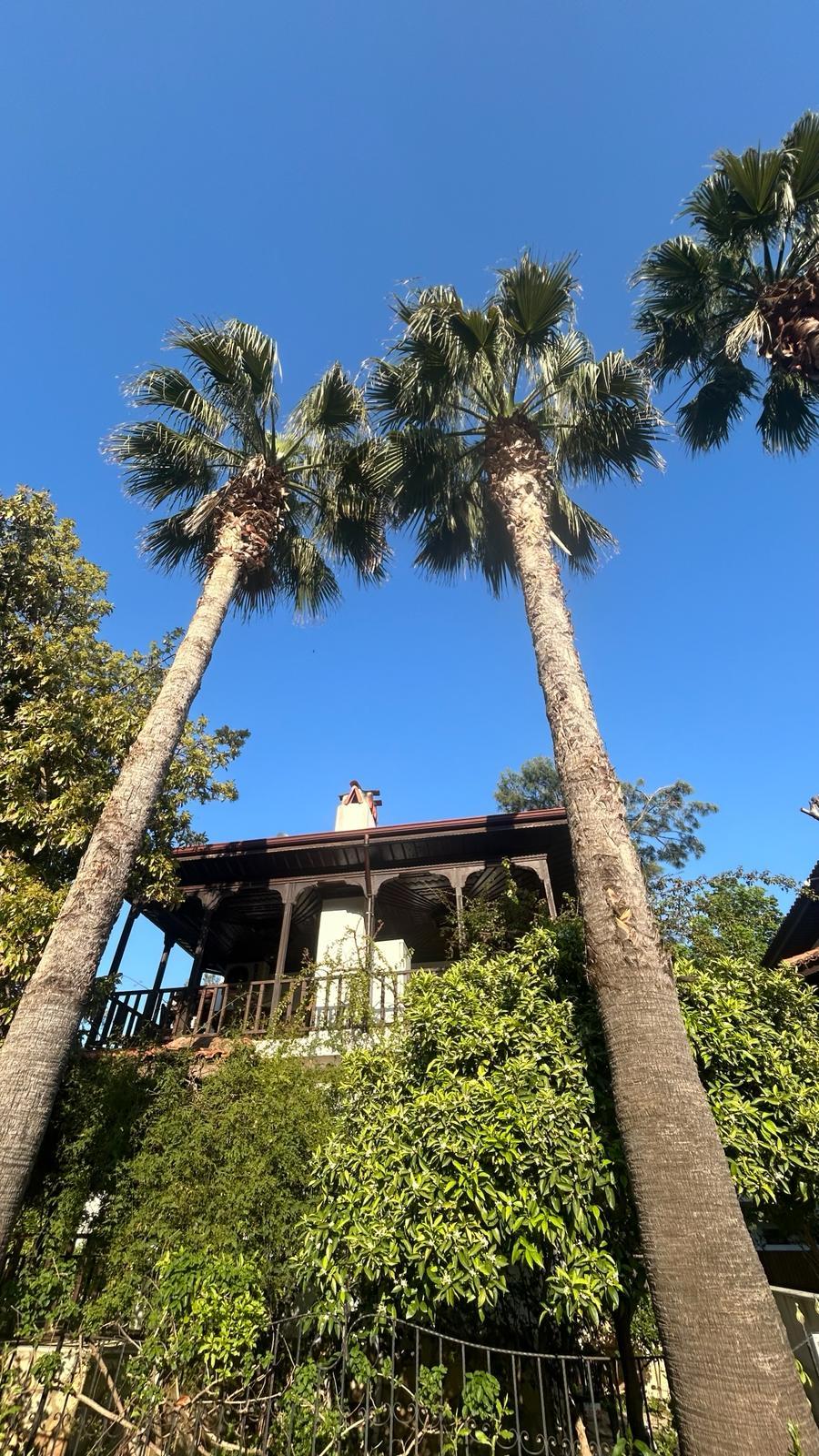
One of the Houses Built in the Style of Nail Çakırhan in Akyaka (Photo: Duygu Şahinler)
You can find magnificent seas and rivers anywhere in the world. But what draws both local and foreign tourists to Akyaka is not merely the icy waters of the Azmak River or the breeze of Gökova Bay. People come here to escape concrete jungles and “breathe.” Even on the busiest summer days, when you cannot drop a pin without hitting someone, if you raise your head and look at the wooden eaves of the bazaar shops or the white begonia-decorated houses lining the streets, you feel the urban serenity—the sanctuary offered by architecture.
For foreign tourists weary of the homogenized, all-inclusive resort villages, Akyaka’s bazaar and residential fabric appear as an organic exhibition, seamlessly blending Anatolia’s deep-rooted carpentry and building traditions with modern comfort.
"I Only Build What I Want": The Spatial Reflection of a Life Philosophy
When the Aga Khan jury once told Çakırhan, “It’s a beautiful single house, but it won’t make a village or a town,” he responded by transforming the entire village in his style, proving his point: “Maybe it’s not a city, but it became a village.””【3】
Understanding Çakırhan’s architecture means understanding his view of life. He never charged for the homes he designed, saying, “When you take high fees, you sell yourself—you become subject to someone else’s will. I only build what I want.””【4】 This simple life philosophy lives on in the sparse, cushioned, unadorned interiors of Akyaka homes.
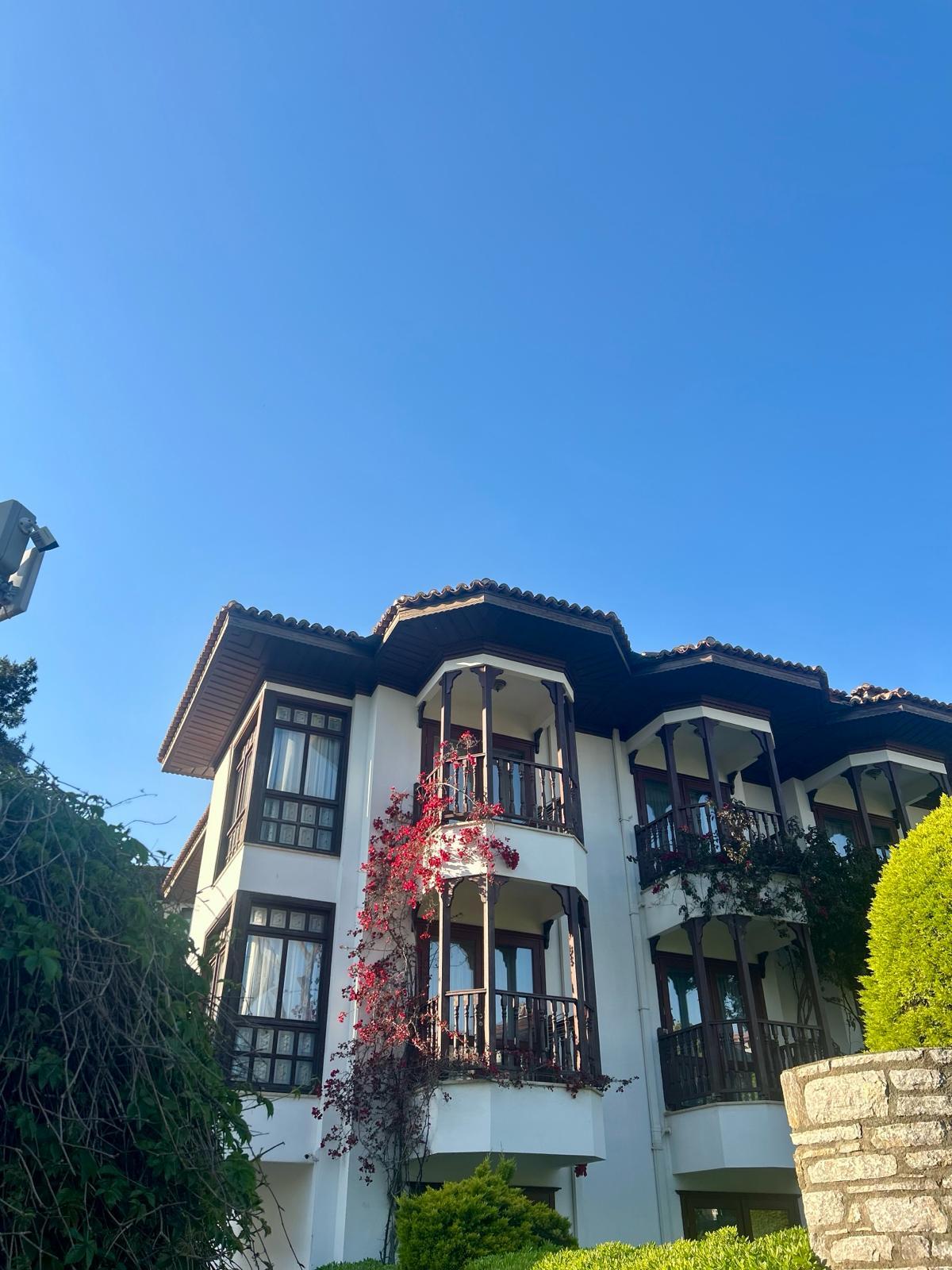
A Hotel Built in the Style of Nail Çakırhan in Akyaka (Photo: Duygu Şahinler)
His reverence for nature was also evident in a 1,500-bed resort project he designed in Fethiye. He tore up the original plan—which called for the felling of thousands of trees—and instead arranged the buildings among the trees without cutting a single one, demonstrating a profound submission to nature.
If your path one day leads you to Ula, Gökova Bay, or the bustling bazaar of Akyaka, do not limit yourself to merely enjoying the sea and nature. Step away from the crowds and look up at the wooden ceiling craftsmanship, the respectful white houses standing shoulder to shoulder. There, you will find deep reverence for humanity, history, and nature.
In this modern age, when we need more than ever to earn respect, show respect, and honor each other’s living spaces, Akyaka stands as a unique model of rehabilitation.
Duman, Serkan. "Mimar olmayan bir mimarın öyküsü: Nail Çakırhan’ın hayatından ilhamlar." Nihayet Dergi. Accessed May 14, 2026. https://www.gzt.com/kultur/mimar-olmayan-bir-mimarin-oykusu-nail-cakirhanin-hayatindan-ilhamlar-3515661
Poyraz, Oğuzhan, and Hakan İmert. "Nail Çakırhan Evinin Frank Lloyd Wright’ın Organik Mimarlık Düşüncesi Üzerinden Değerlendirilmesi." In *İç Mimarlık Alanında Uluslararası Araştırmalar III*, edited by Gözde Çakır Kıasıf, page range. Konya: Eğitim Yayınevi, 2024. Accessed May 14, 2026. https://openaccess.izu.edu.tr/entities/publication/09034a4c-bbf0-4e8d-b92c-a46e372a6b22
Ula Belediyesi Website. Accessed May 14, 2026. https://ula.bel.tr/
[1]
Serkan Duman, "Mimar olmayan bir mimarın öyküsü: Nail Çakırhan’ın hayatından ilhamlar." Nihayet Dergi. Son Erişim: 14.05.2026. https://www.gzt.com/kultur/mimar-olmayan-bir-mimarin-oykusu-nail-cakirhanin-hayatindan-ilhamlar-3515661
[2]
Serkan Duman, "Mimar olmayan bir mimarın öyküsü: Nail Çakırhan’ın hayatından ilhamlar." Nihayet Dergi. Son Erişim: 14.05.2026. https://www.gzt.com/kultur/mimar-olmayan-bir-mimarin-oykusu-nail-cakirhanin-hayatindan-ilhamlar-3515661
[3]
Serkan Duman, "Mimar olmayan bir mimarın öyküsü: Nail Çakırhan’ın hayatından ilhamlar." Nihayet Dergi. Son Erişim: 14.05.2026. https://www.gzt.com/kultur/mimar-olmayan-bir-mimarin-oykusu-nail-cakirhanin-hayatindan-ilhamlar-3515661
[4]
Serkan Duman, "Mimar olmayan bir mimarın öyküsü: Nail Çakırhan’ın hayatından ilhamlar." Nihayet Dergi. Son Erişim: 14.05.2026. https://www.gzt.com/kultur/mimar-olmayan-bir-mimarin-oykusu-nail-cakirhanin-hayatindan-ilhamlar-3515661